The short answer: mostly limited, sometimes fine, sometimes genuinely harmful
Chemist whitening products are everywhere and Australians spend hundreds of millions on them annually. Here is what I actually think about them, as a dentist who has seen the full range of results.
Why over-the-counter products are limited by law
In Australia, hydrogen peroxide (the active bleaching agent) is regulated by the TGA and the Poisons Standard. Over-the-counter products are limited to a maximum of 6% hydrogen peroxide, or 18% carbamide peroxide equivalent. Professional products used in dental practices can be prescribed at concentrations up to 38% hydrogen peroxide. That gap explains almost everything you need to know about why chemist products produce modest results at best.
The chemistry is identical. The dose is a fraction. A 6% strip sitting against your teeth for 30 minutes simply cannot achieve the penetration into dentinal tubules that a high-concentration professional application does.
What about products sold online
Some products available on platforms like Amazon and eBay from overseas suppliers contain hydrogen peroxide concentrations that exceed Australian legal limits. These are not subject to TGA oversight. I have seen the results in practice and they are not good. Chemical burns to the gum margin from ill-fitting trays, significant sensitivity, and in some cases enamel damage from repeated high-concentration exposure.
If you see a whitening kit priced cheaply from an overseas supplier that claims dramatic results, that is the likely explanation for how they work. I would avoid them.
What the evidence says about OTC efficacy
A systematic review published in the Journal of Dentistry found that whitening strips containing 6 to 10% hydrogen peroxide produced statistically significant but clinically modest whitening, typically one to two shade improvements on the VITA scale. Professional in-chair whitening typically produces six to eight shade improvements.
Whitening toothpastes work through abrasion, removing surface stains rather than bleaching. They do not change the intrinsic colour of the tooth. Charcoal toothpastes fall into this category and have no clinical evidence for bleaching and carry concerns about enamel erosion with regular use.
LED lights
Most chemist kits now include an LED light marketed as accelerating the whitening process. A 2019 Cochrane review found that light activation did not produce significantly better outcomes than peroxide alone at lower concentrations. The lights in OTC kits are largely marketing. They don't hurt, but they don't add meaningful benefit either.
When OTC whitening is reasonable
Over-the-counter strips from reputable brands are a reasonable option for maintaining results after professional whitening, or for patients with minimal intrinsic discolouration wanting a subtle improvement. They are unlikely to cause harm when used as directed on healthy teeth with no active decay, sensitivity, or gum disease.
When you should see a dentist first
Do not use any whitening products, professional or OTC, if you have untreated decay or broken fillings (peroxide entering a cavity causes severe pain), active gum disease, significant existing sensitivity, or visible restorations on your front teeth (whitening changes your natural teeth but not the restoration, creating a mismatch). If you are uncertain whether your teeth are suitable, ask before you start.
You may also find these related guides helpful: Are At-Home Teeth Whitening Kits Safe and Teeth Whitening While Pregnant or Breastfeeding. To talk through your options, you can also read about general dentistry at Lumi Dental.
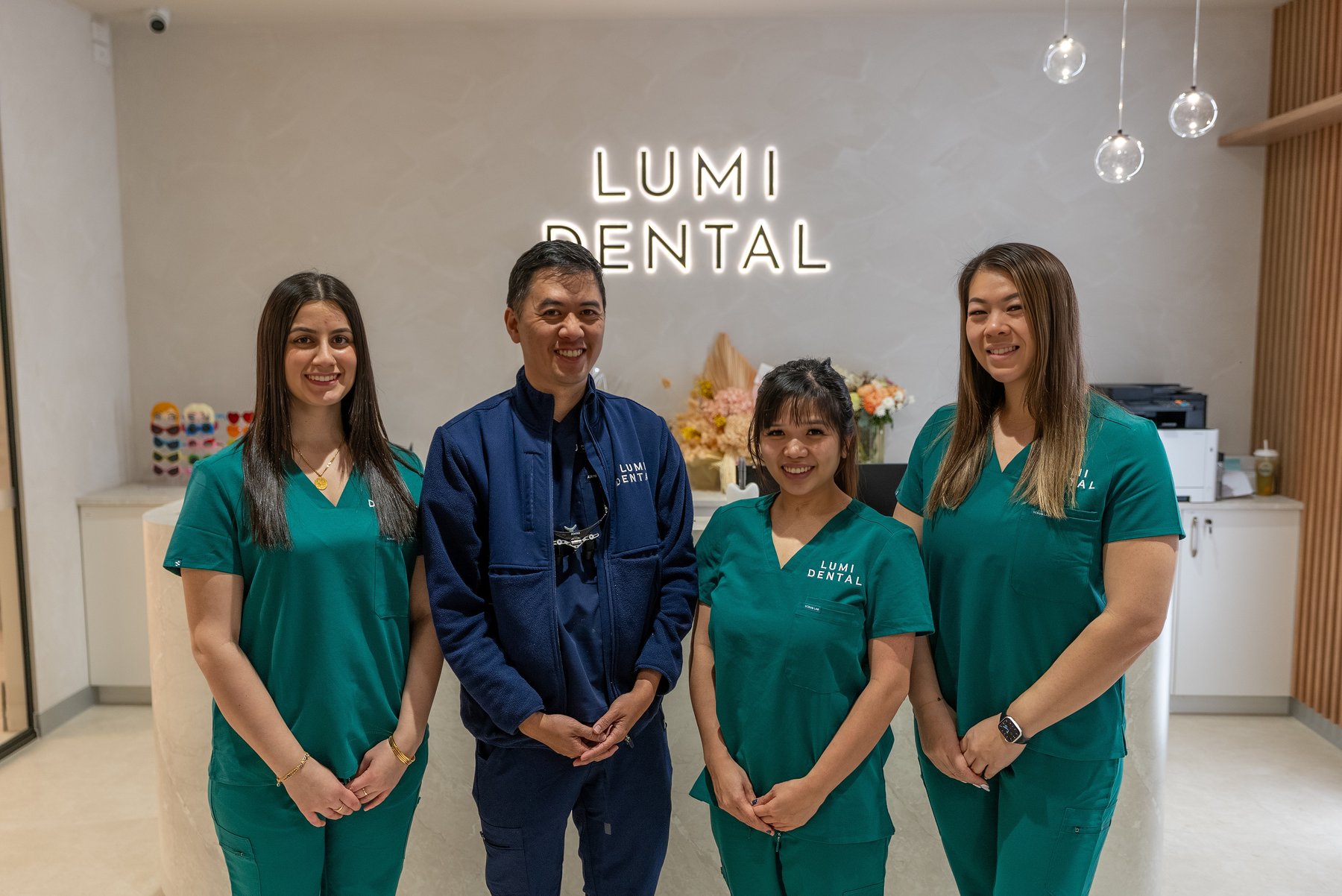
Professional whitening at Lumi Dental, Melrose Park
In-chair and take-home teeth whitening are both available, and your consultation includes a check to make sure your teeth are suitable before any whitening begins. You can see the latest packages and pricing on our current pricing page, or contact us for a free consult. Open 7 days at Melrose Central. Book online.