

The appointment that sets up a lifetime of dental confidence
Parents ask me regularly when to bring their child in for the first time, and whether they have left it too late if their child is already four or five with no dental visits on record. This guide covers timing, what to expect, and how to make the experience genuinely positive rather than something the child dreads.
When should a child first see a dentist
The Australian Dental Association recommends a child's first dental visit when the first tooth erupts, or by 12 months at the latest. Most children get their first tooth between six and 10 months of age. This surprises most parents who assume dentists only see children with full sets of teeth.
The purpose of an early visit is not to perform treatment. It is to establish a baseline, assess development, build familiarity with the dental environment, and give parents practical guidance on home care specific to their child's age and risk profile.
If your child is already three, four, or five and hasn't seen a dentist, don't worry. The most important thing is to start now. Most developmental concerns are straightforward to identify and manage when caught at any early stage.
What actually happens at a first visit
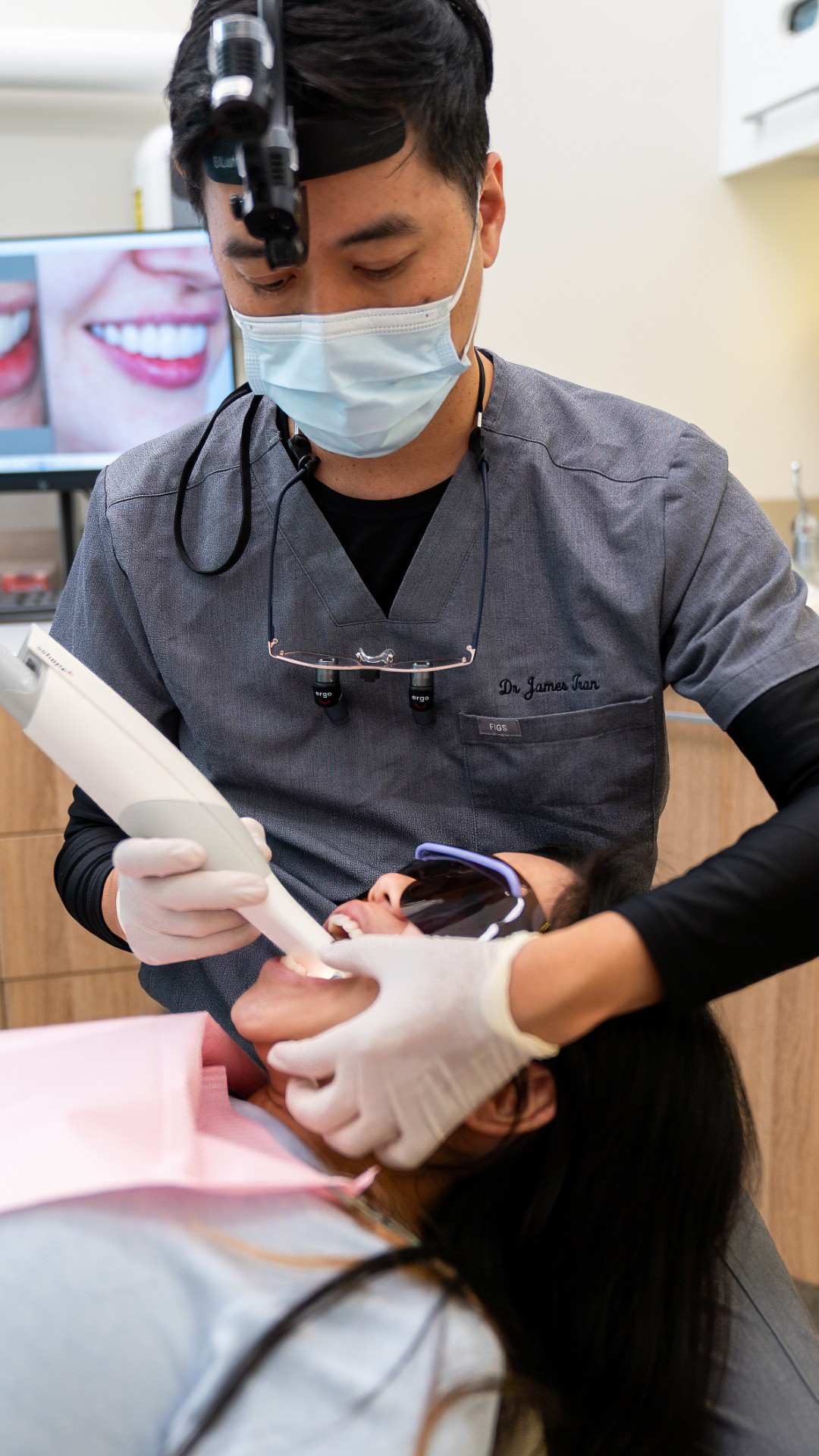
For a young child under three, a first visit is short, typically 15 to 20 minutes. We do a brief visual examination of the teeth, gums, and jaw development, check for early signs of decay or developmental issues, have a conversation about feeding habits, bottle use, dummy use and brushing technique, and apply fluoride varnish if appropriate. No X-rays for very young children unless there is a specific clinical concern.
The goal is familiarity. The child sits in the chair, sees the light, opens their mouth for a few minutes, and leaves. Nothing scary happens. This is how dental confidence is built, and it matters a great deal for every dental visit they will ever have.
How to prepare your child
Research in paediatric dentistry consistently shows that parental anxiety is one of the strongest predictors of child dental fear. Keep it matter of fact. Saying we're going to the dentist to count your teeth is far better than building it up with elaborate rewards, which signals to the child that something difficult is coming. Avoid words like hurt, needle, drill, or don't worry. These prime anxiety even in children who have no context for them yet. Reading books about dentist visits, role playing counting teeth at home, and arriving early to let the child explore the waiting room all help significantly.
X-rays for children
Dental X-rays for children are only taken when clinically necessary, typically from around age four to five to check for decay between back teeth that cannot be seen visually. Modern digital dental X-rays use very low radiation doses. The benefit of identifying early decay before it becomes symptomatic significantly outweighs the negligible radiation risk.
The Medicare Child Dental Benefits Schedule
Eligible children aged two to 17 whose families receive Family Tax Benefit Part A or other qualifying payments can access up to $1,052 in bulk-billed dental treatment over two consecutive calendar years under the Medicare CDBS. This covers check-ups, X-rays, scale and clean, fissure sealants, and fillings. At Lumi Dental we bulk bill eligible children. Bring your Medicare card and we'll check eligibility at the first appointment.
How often should children see the dentist
Most children should have a check-up every six months. Children at higher decay risk, those with a history of cavities, high sugar diets, or developmental enamel defects, may need three to four monthly fluoride treatments. I advise the right recall interval at each appointment based on the individual child's risk profile.
You may also find these related guides helpful: Your First Dental Visit as an Adult and Helping an Anxious Child at the Dentist in Sydney. To talk through your options, you can also read about general dentistry at Lumi Dental.
Book at Lumi Dental, Melrose Park
We see children of all ages at our children's dental practice at Lumi Dental, Melrose Central. Our approach is gentle, patient, and always child-paced. We never rush an appointment and we never proceed if a child is distressed. Open 7 days. Medicare CDBS bulk billing available. Book online.


