

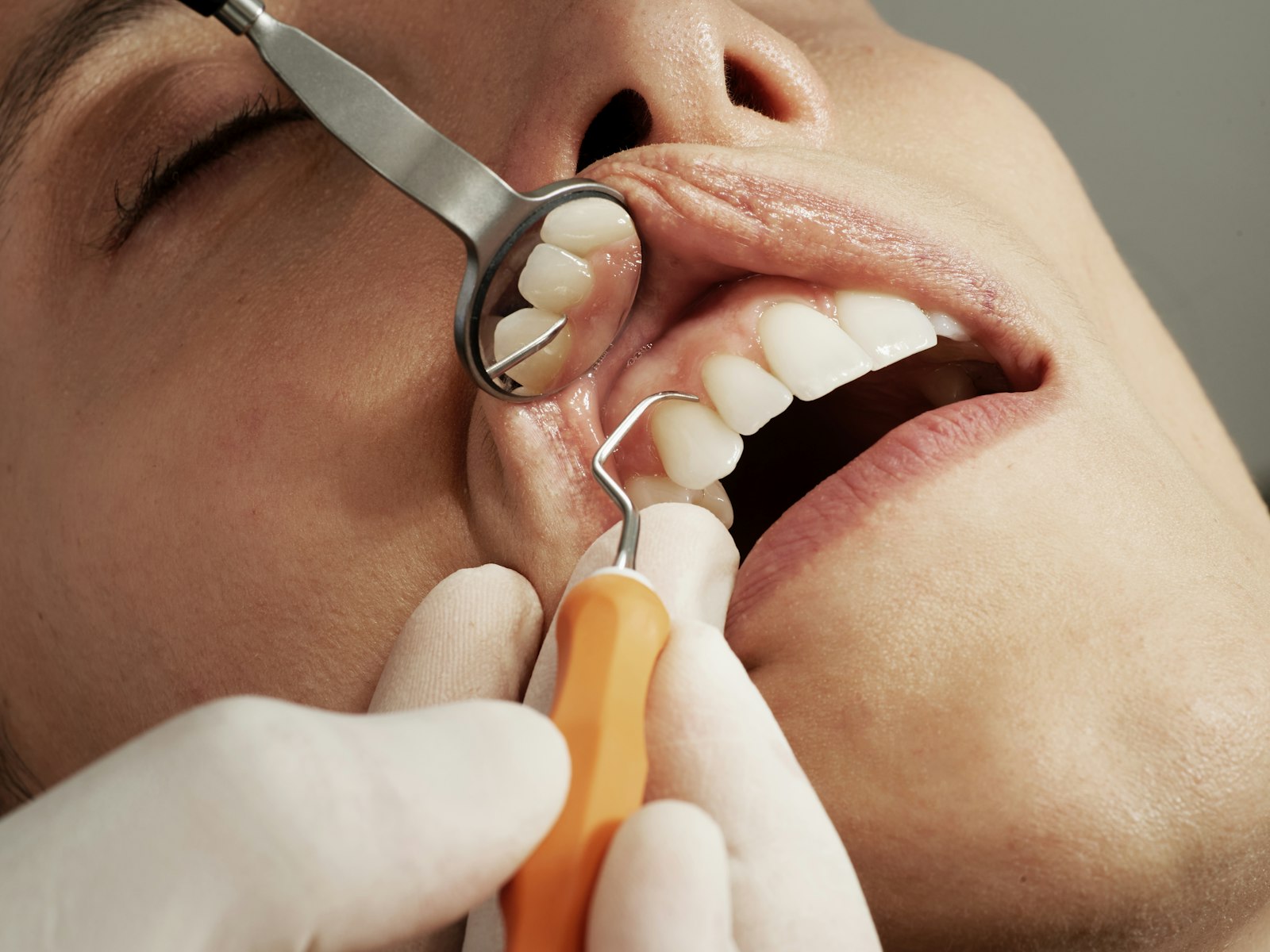

You catch your reflection in the bathroom mirror, lean in close, and notice that one of your front teeth looks a little longer than it used to. Or maybe it's a sharp twinge of cold sensitivity at the gumline. Or a tooth that suddenly feels loose at the edge of the gum. These are some of the earliest signs of gum recession — a slow, often painless change that affects roughly half of Australian adults to some degree by their fifties.
The good news: most causes of gum recession are manageable, and a lot of the damage can be slowed or halted with relatively simple changes. The not-so-good news: receded gum tissue does not grow back on its own. Catching it early matters.
This guide explains what gum recession actually is, the seven most common causes (and how each one is treated), how to tell if your case is mild or serious, what treatment costs in Sydney, and what you can start doing tonight to protect what you still have.
Key takeaways
- Gum recession affects an estimated 50% of adults aged 18–64, rising sharply after age 40 (Journal of Periodontology population studies).
- The two leading causes are brushing too hard with a hard-bristled brush and periodontal (gum) disease — both common, both preventable.
- Once gum tissue has receded, it does not grow back naturally, but progression can usually be stopped and surgical grafting can restore coverage if needed.
- Sydney treatment costs typically range from $50 for a soft toothbrush + technique coaching up to $1,800–$3,500 per tooth for a connective-tissue graft.
- If you notice increasing tooth sensitivity, visibly longer teeth, dark triangles forming between teeth, or any tooth that feels loose, book an exam — the earlier the cause is identified, the more conservative the fix.
What is gum recession?
Gum recession (also called gingival recession) is the gradual movement of the gum tissue away from the crown of the tooth, exposing more of the tooth — and sometimes the root surface beneath. The Australian Dental Association defines it as the apical migration of the gingival margin past the cemento-enamel junction.
It matters for three reasons. First, the exposed root surface has no enamel covering, so it is far more vulnerable to decay and abrasion. Second, the dentinal tubules in the root run directly to the nerve, which is why recession is one of the most common causes of sudden tooth sensitivity. Third, advancing recession can ultimately compromise the bone supporting the tooth — and bone loss is much harder to reverse than soft-tissue change.
How to tell if your gums are receding
Gum recession is usually slow enough that it is easy to miss until something prompts you to notice. The most common early signs include:
- A tooth that looks longer than the ones next to it, or longer than it used to
- A visible step, notch or yellow shadow at the gumline (the colour change is the exposed root)
- Sharp, brief sensitivity to cold drinks, cold air, or sweet foods at one specific tooth
- A "dark triangle" appearing between two teeth at the gumline
- A tooth that feels loose, or a gum margin that bleeds easily when you floss
- Bad breath or a persistent metallic taste (often signals gum disease, a major recession driver — see our bad breath guide)
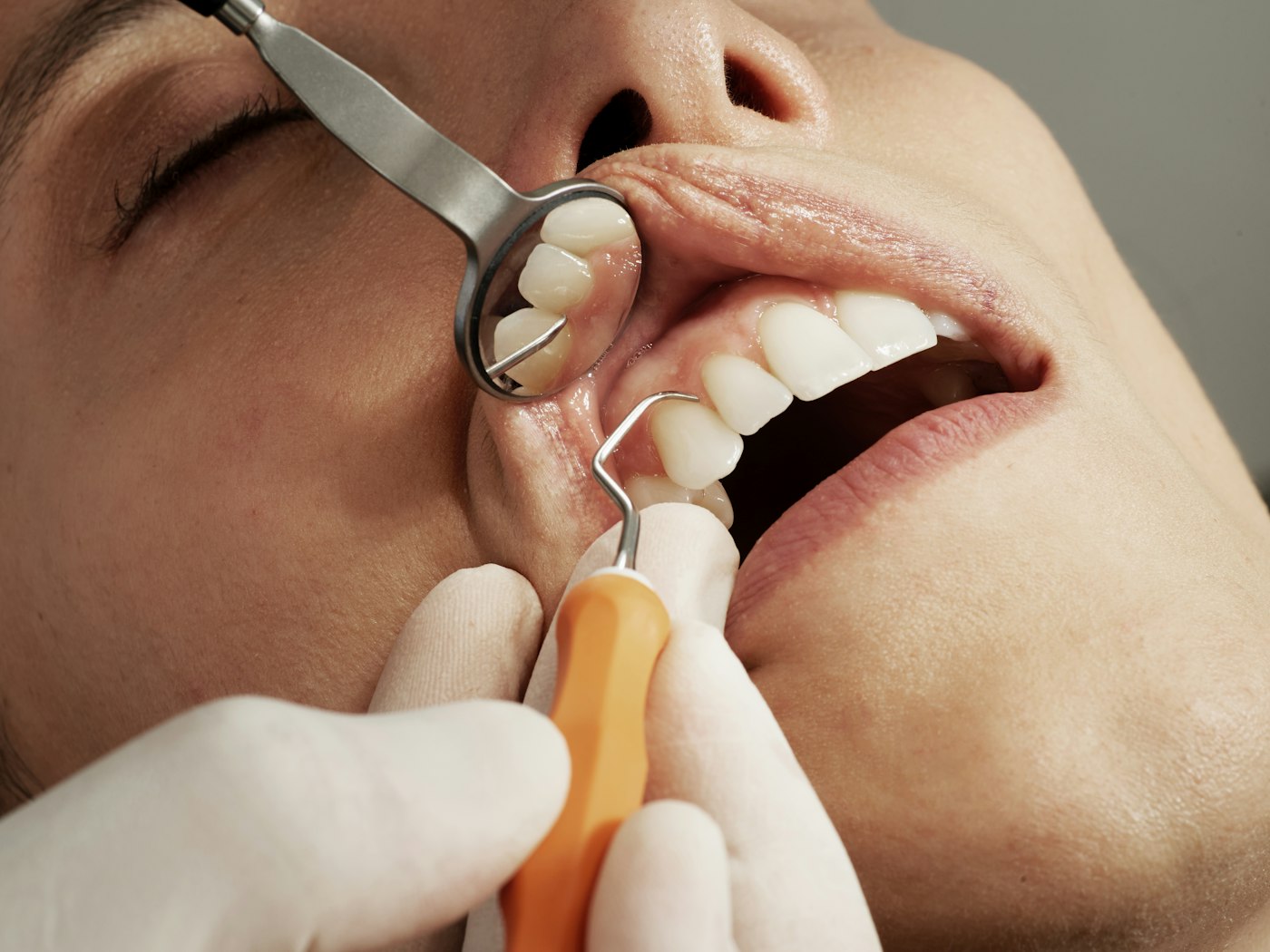
A simple at-home check: place your fingertip lightly on the gum just above your front teeth, then pull your lip up gently. Compare the height of the gum margin tooth-by-tooth. A normal margin sits as a smooth, scalloped line — clear differences in level between neighbouring teeth, especially at canines or premolars, are worth showing a dentist.
What causes receding gums?
Most cases of gum recession come down to one or a combination of seven causes. Each one has a slightly different remedy, which is why a thorough exam matters before settling on a treatment plan.
1. Brushing too hard or with a hard-bristled brush
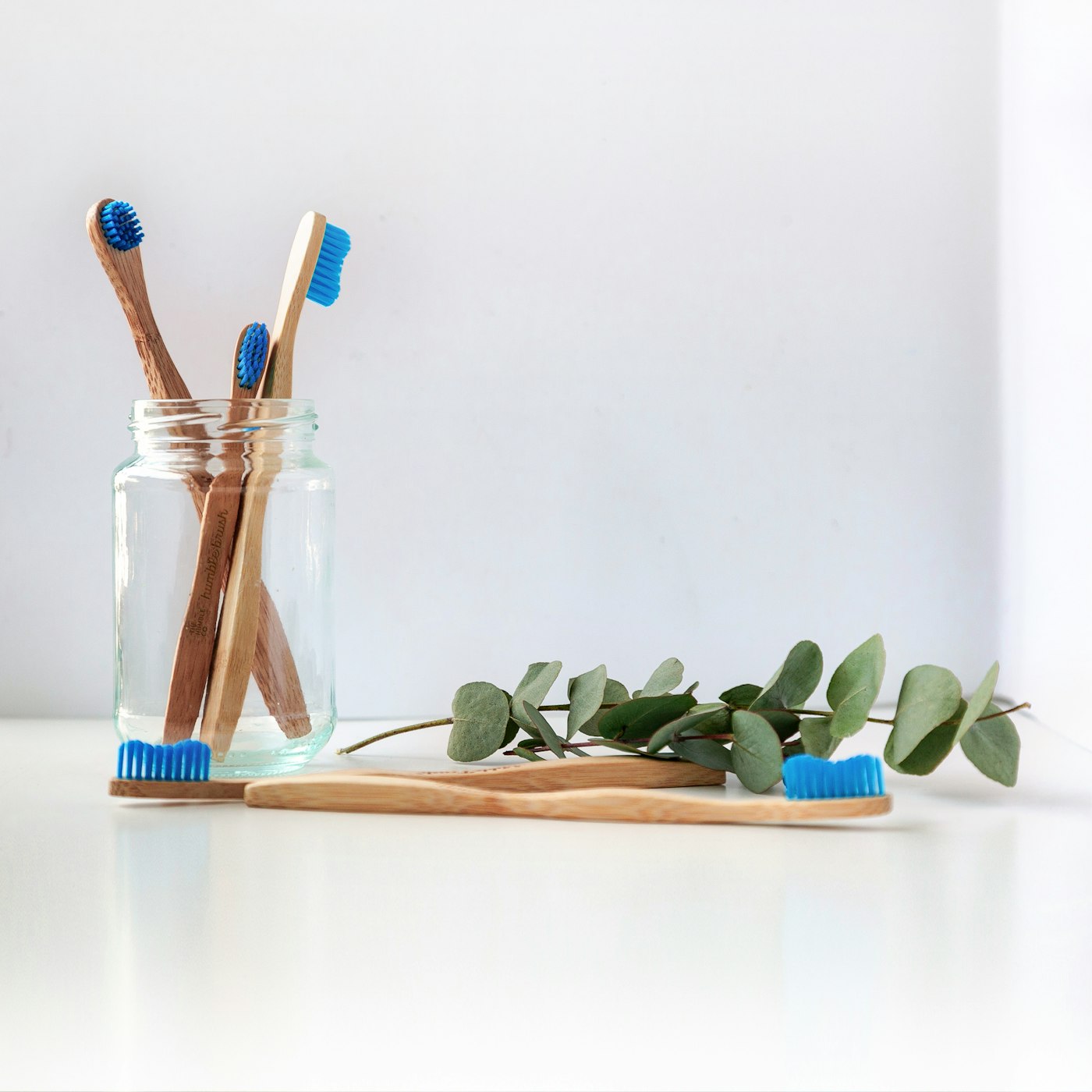
This is the single most common cause we see in patients without periodontal disease. The mechanical force of stiff bristles, an abrasive toothpaste, or a sawing horizontal stroke literally wears the gum tissue away over years — usually most visibly on canines and premolars on the side you favour. The fix is mechanical, not surgical: a soft or extra-soft brush, a gentle modified Bass technique (small circles at 45°, not back-and-forth scrubbing), and ideally an electric brush with a built-in pressure sensor. Many electric brushes flash a red light when you press too hard — that feedback alone reverses the habit faster than anything else.
2. Gum disease (periodontitis)
The leading cause of recession in adults over 40. Periodontitis is a chronic bacterial infection that destroys the connective fibres anchoring the gum to the tooth, and eventually the underlying bone. As bone is lost, the gum has nothing to attach to and migrates downward. Treatment is non-surgical first — a deep clean (scaling and root planing) to remove subgingival tartar — followed by 3-monthly periodontal maintenance. In advanced cases, surgical access or regenerative grafting may be needed.
3. Tooth grinding and clenching (bruxism)
The repeated lateral force of grinding flexes the tooth at the gumline, causing tiny stress fractures in the enamel and progressive recession in characteristic V-shaped notches (called abfraction lesions). The marker symptoms are flat-worn front teeth, jaw soreness on waking, and recession on multiple teeth at the same height. A custom night guard is the standard fix; sometimes muscle relaxant therapy is added if grinding is severe.
4. Misaligned teeth or bite
Teeth that are crowded, rotated, or sit outside the bony arch get less protective gum tissue and are physically harder to clean. Either factor accelerates recession. The remedy may be orthodontic (Invisalign or braces to bring the tooth back into the bone), or, if movement is impractical, a focus on optimal home care plus closer monitoring.
5. Smoking and vaping
Nicotine constricts blood vessels in the gum and impairs the immune response to bacteria. Smokers have around 2–3 times the rate of periodontal disease and lose attachment faster than non-smokers. Vaping is now linked to similar microcirculatory effects in the gum. The single most effective recession intervention for any smoker is quitting; until then, more frequent professional cleans help offset the elevated risk.
6. Lip and tongue piercings
The metal stud or barbell repeatedly knocks against the gum behind the lower front teeth or the inside of the lower lip, causing a localised, often dramatic recession at exactly that spot. We see this in patients in their 20s who are otherwise fastidious about their oral care. The fix is removing the piercing or switching to a softer (often acrylic) post; in established cases, a gum graft may be needed to restore coverage.
7. Genetic susceptibility
Some people inherit a thin gum biotype — the gum tissue is naturally thinner and less resilient, and recedes more easily under any of the forces above. If a parent or sibling lost teeth to gum disease, your screening interval should be shorter. Genetic susceptibility cannot be changed, but the modifiable causes layered on top of it can.
When recession means something more serious
Most early recession is uncomfortable rather than urgent. There are five patterns where it stops being routine and warrants prompt assessment:
- Recession on multiple teeth at once — usually points to periodontitis, bruxism or systemic disease rather than localised brushing trauma
- Bleeding gums that no longer stop after a week of better brushing and flossing — suggests active periodontal infection
- Any tooth that feels loose — bone loss has progressed to the point that the tooth is no longer adequately supported
- Pus, a bad taste, or a tender swelling at the gumline — possible periodontal abscess
- Recession progressing visibly within months — slow change is normal; fast change suggests an active, treatable cause
If anxiety is what is keeping you from booking, our dental anxiety guide walks through what a low-pressure first visit looks like, including options like longer appointments and happy gas.
Treatment options and Sydney costs
Because gum recession has so many causes, treatment ranges from a $5 toothbrush swap to several thousand dollars of surgery. The table below summarises the typical Sydney range for each option. Final fees vary by case complexity, the number of teeth involved, and whether the work is done by a general dentist, a periodontist or a specialist oral surgeon.
| Treatment | What it addresses | Typical Sydney range |
|---|---|---|
| Soft toothbrush + technique coaching | Brushing trauma (cause #1) | $5–$50 (brush) + included in exam |
| Desensitising toothpaste (Sensodyne, Colgate Pro Relief) | Sensitivity from exposed root | $10–$15 per tube |
| Scale and clean (ADA item 114 + 121) | Plaque and early gingivitis | $200–$350 |
| Deep clean / root planing (ADA items 221/222) | Active periodontitis | $200–$400 per quadrant |
| Custom night guard | Bruxism-driven recession | $600–$900 |
| Composite root coverage (bonded resin) | Hiding a small notch, sensitivity relief | $200–$400 per tooth |
| Orthodontics (Invisalign or braces) | Misaligned teeth driving recession | $5,500–$9,500 full case |
| Gum graft — connective tissue or pinhole technique | Restoring lost coverage on one or more teeth | $1,800–$3,500 per tooth |
| Periodontal maintenance (3-monthly review) | Long-term stability after treatment | $200–$300 per visit |
Most extras-level private health funds reimburse a portion of the diagnostic exam, scale and clean, and night guard. Surgical grafts and orthodontics are typically partially covered under "major dental" — annual limits and waiting periods apply, so check your individual policy before treatment.
Can receding gums grow back?
The short answer is no — receded gum tissue does not regenerate on its own. The gum margin you see today is the new baseline, and the goal of treatment is to stop further loss. The longer answer is that the surgical option of gum grafting can restore coverage on individual teeth in many cases, with success rates of 80–95% reported in periodontal literature for both the connective-tissue graft and the pinhole surgical technique. Pinhole grafting is less invasive than traditional grafting (no scalpel, no donor tissue from the palate) and is becoming more widely available in Sydney specialist practices.
Importantly, no toothpaste, mouthwash, oil-pulling routine or supplement currently has clinical evidence of regrowing receded gum tissue. The marketing claims you may have seen are not supported by the periodontal research.
How to prevent further recession (start tonight)
Even if some recession has already happened, the following habits reliably slow or halt progression. None of them require booking an appointment to start.
- Switch to a soft or extra-soft toothbrush. If you are using anything labelled "medium" or "hard", that single change will likely have more impact than any other on this list. Replace every 3 months, or sooner if the bristles splay.
- Use a modified Bass technique. Hold the brush at a 45° angle to the gumline and use small circular motions — not back-and-forth scrubbing. Two minutes total, twice a day. If you use an electric brush, just guide it; do not press.
- Floss or use interdental brushes daily. Recession often shows up first between teeth, where a brush cannot reach. Interdental brushes (TePe, Piksters) are easier to use consistently than string floss for most adults.
- Avoid abrasive whitening toothpastes for daily use. Most "whitening" pastes are abrasive enough to accelerate gumline wear. Save them for occasional use and stick to a regular fluoride toothpaste otherwise.
- Treat clenching and grinding seriously. If you wake with jaw soreness or your partner mentions night-time grinding, get a custom night guard. Off-the-shelf guards from the chemist do not protect the gumline reliably.
- Do not ignore bleeding gums. Bleeding when you brush or floss is the earliest sign of gingivitis, and gingivitis is the gateway to periodontitis. A scale and clean every six months catches it before it becomes recession.
Frequently asked questions
Will my gums grow back if I switch to a softer toothbrush?
No — the gum tissue that has already receded does not grow back. What changes is the rate of further loss. A soft brush plus correct technique typically halts brush-driven recession within weeks, and you will often notice that sensitivity improves first as the exposed root remineralises slightly with fluoride exposure.
Is it safe to whiten teeth if I have receding gums?
Whitening on exposed roots is more sensitive than whitening on enamel, and the bleach is not as effective on root dentine in any case. We typically recommend stabilising the recession first, addressing any active sensitivity with a desensitising regimen for two weeks, then deciding on whitening. A custom take-home tray usually causes less gumline irritation than in-chair light-activated whitening for patients with recession.
How long does a gum graft take to heal?
The gum tissue surface seals over within 2 weeks, and full integration of the graft takes around 4–6 weeks. Most patients return to work within 1–2 days. Discomfort is generally moderate and well-controlled with paracetamol and ibuprofen; bruising and swelling at the donor site (if a connective-tissue graft) usually peak at day 3 and resolve within a week.
Can a Waterpik or oral irrigator reverse gum recession?
An oral irrigator can reduce gingival inflammation and improve plaque control between teeth, which slows the progression of gum disease — but it cannot regenerate lost tissue. Think of it as a useful adjunct to brushing and flossing, not a replacement, and certainly not a treatment for established recession.
Are receding gums always a sign of gum disease?
No. Brushing trauma, grinding, piercings, orthodontic crowding and genetic biotype can all cause recession with completely healthy gum tissue elsewhere. Your dentist measures probing depths and bleeding indices at every site to distinguish localised mechanical recession from generalised periodontitis — the treatment paths are different.
Does private health insurance cover gum graft surgery?
Most extras policies that include "major dental" cover gum grafting (item codes 245, 247, 252) at 50–70% of fees, up to your annual major-dental limit. Waiting periods of 12 months from policy start are common. Always request a written quote with the relevant item codes and submit it to your insurer for a benefit estimate before booking.
Considering a check-up?
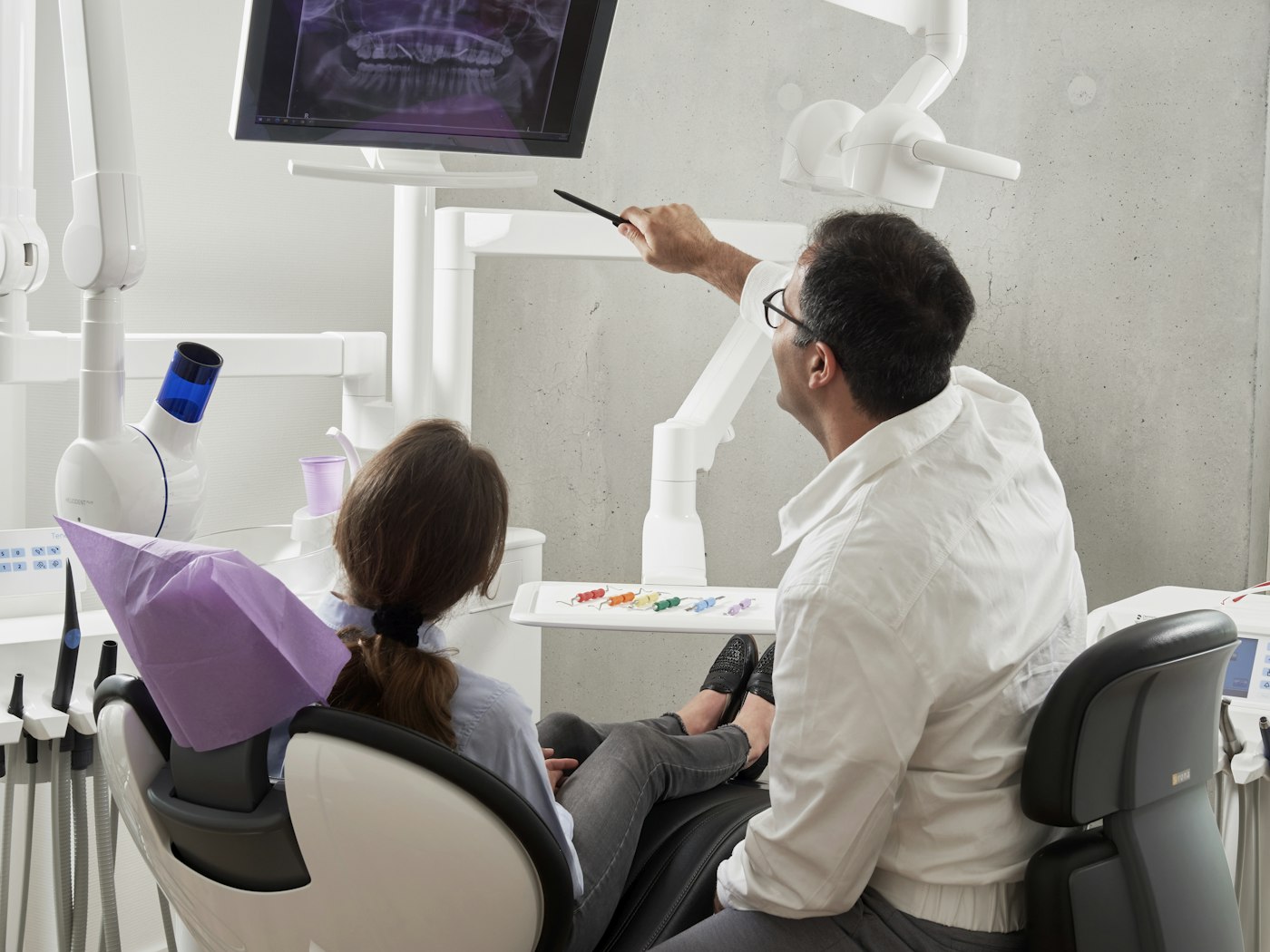
If anything in this guide felt familiar — a tooth that looks longer than it used to, sensitivity at the gumline, gums that bleed when you brush — a 45-minute new-patient exam at Lumi Dental in Melrose Park includes a full periodontal screening, a discussion of what we see, and a clear written plan with item codes and fees. No pressure, no upsell. Receding gums are very rarely the emergency they feel like — they almost always reward an early, calm conversation.

