
A full denture for one jaw usually costs somewhere between about $1,000 and $5,000 in Australia, and a partial denture between about $600 and $2,800, going by consumer price surveys published in 2025. Snap-in dentures held by implants, and fixed full-arch implant bridges, sit in a much higher bracket because they include surgery and implant parts. What ends up on your own quote often depends less on the denture than on the work needed before it can be made.
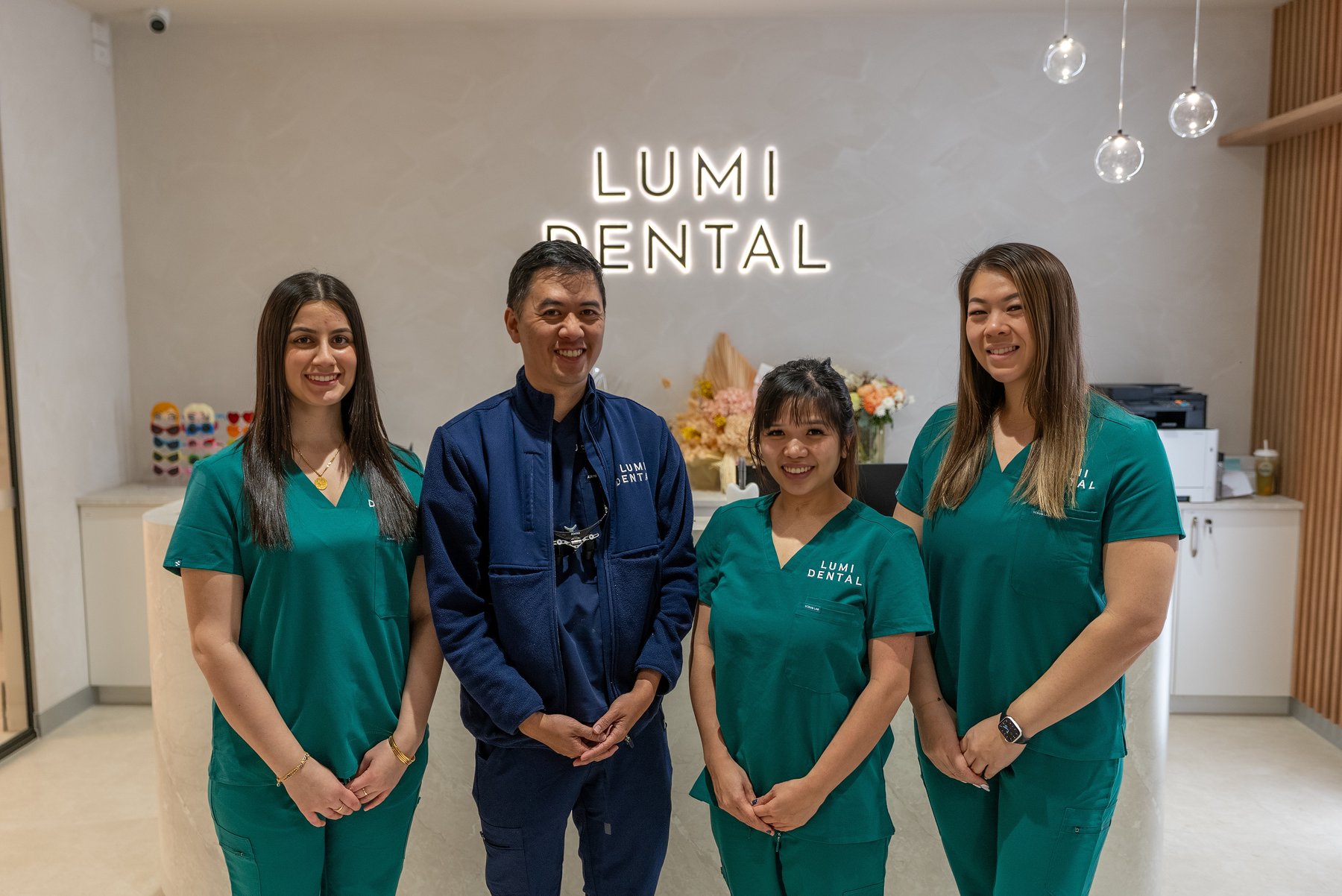
Written by Dr James Tran, dentist at Lumi Dental.
Typical costs for each type of denture
The table below brings together the ranges reported by Canstar (October 2025), Compare the Market (2025) and fees published by Australian clinics and denture providers in 2025 and 2026. They are typical market ranges, not Lumi Dental fees, and they leave out consultations, X-rays and extractions.
| Denture type | Typical market range | Notes |
|---|---|---|
| Complete denture, one arch (upper or lower) | About $1,000 to $5,000 | Acrylic base and acrylic teeth; the tooth grade and lab work move the price |
| Complete upper and lower set | About $2,000 to $7,000 | Often less than two arches quoted separately |
| Acrylic partial denture | Often $600 to $1,700 | The entry point for partials, and easy to add a tooth to later |
| Cobalt chrome partial denture | About $1,000 to $4,000, many quotes $1,700 to $2,500 | Thin cast metal frame, more lab steps |
| Flexible (nylon) partial denture | About $700 to $3,000 | No metal clasps; harder to reline or add to |
| Immediate denture | Similar to a conventional denture of the same type | Relines or a replacement during healing add to the total |
| Snap-in lower denture on two implants | About $7,500 to $10,000 per arch | Includes implant surgery and attachments; upper arches usually need more implants and cost more |
| Fixed full-arch implant bridge | About $20,000 to $35,000 per arch | Not removable at home; usually four or more implants |
A wide spread is normal. A denture made with stock teeth over two short visits and one made with higher grade teeth, a custom tray, a wax try-in and careful bite records are both called "a full denture", but they are not the same product.

Why two quotes for the same denture can be thousands apart
Work before the denture
Teeth that cannot be saved need to come out, and that is often the largest line on the plan. Typical market ranges are about $200 to $350 for a simple extraction and $400 to $900 for a surgical one. Gum treatment, removing sharp bone or treating a sore under an old denture can also come first. Our guide to tooth extraction costs covers that part of the bill.
Materials and teeth
Acrylic is the base material for most full dentures. Partial dentures can be acrylic, cobalt chrome or a flexible nylon, and each has a different lab process and price. The denture teeth themselves come in several grades, and better teeth tend to resist wear and look more natural for longer.
Number of appointments
A conventional denture usually takes several visits: first impressions, a custom-tray impression, bite records, a wax try-in, the fit, then reviews. Skipping steps can lower the price, but it also tends to give a denture that needs more adjusting.
Implants
Once implants are added, the cost moves into a different bracket because it now includes surgery, implant components and attachments as well as the denture.
Matching the type to the gap
Cost is easier to judge once you know which types are realistic for your mouth, because not every option on the table above will be.
One or two missing teeth
A small acrylic partial is the lowest cost way to fill a gap, and is often used as a temporary while other work heals. For a single gap, a bridge or an implant is frequently considered first; our dental bridge cost guide covers that option, with a typical market range of about $3,500 to $6,500 for a three-unit bridge.
Several missing teeth with healthy teeth remaining
This is where cobalt chrome and flexible partials come in. A chrome partial is thin and rests on the natural teeth as well as the gums, which suits longer gaps and back teeth. A flexible partial hides its clasps but is harder to reline or add to later.
No teeth left in the arch
A complete denture is the conventional choice. Upper dentures usually seal well against the palate; lower dentures move more, which is why many people with a loose lower denture end up asking about implants.
Item numbers make quotes easier to compare
Australian dental quotes use item numbers from the Australian Dental Association's schedule. A partial denture quote is often several lines long, because the clasps and each replacement tooth are charged as separate items. Comparing item by item is the fairest way to compare two quotes.
| Item | What it covers |
|---|---|
| 711 | Complete upper denture |
| 712 | Complete lower denture |
| 719 | Complete upper and lower dentures |
| 721 and 722 | Partial denture with a resin (acrylic) base, upper and lower |
| 727 and 728 | Partial denture with a cast metal (cobalt chrome) framework, upper and lower |
| 731 | Retainer (clasp), charged per tooth |
| 733 | Teeth on a partial denture, charged per tooth |
| 741 | Adjustment of an existing denture |
| 743 | Processed reline of a complete denture |
For a government reference point, the Department of Veterans' Affairs schedule for dental prosthetists from 1 July 2026 lists $1,061.25 for item 711 and $1,421.50 for item 727. These are the amounts DVA pays for eligible veterans, not typical private fees, which are usually higher.
Snap-in dentures and fixed implant bridges are a different kind of cost
A snap-in denture (an implant-retained overdenture) is still a removable denture. It clips onto two or more implants, so it stops rocking and lifting, and you take it out each night to clean it. On a lower jaw, two implants are a common starting point.
A fixed full-arch implant bridge goes one step further. It is screwed onto four or more implants, has no plate over the gums or palate, and only the dentist removes it. It costs more because it needs more implants, more planning and a stronger bridge. Many people weighing a snap-in denture end up comparing it with full-arch implants at Lumi, and the choice often comes down to bone, budget and how you feel about taking your teeth out to clean them. For implant fees in general, see our dental implant cost guide.

Health funds, Medicare and public dental
Medicare does not generally cover dentures for adults. Private extras cover usually pays a rebate per item number, up to an annual limit, and the amounts vary widely between funds and levels of cover. The quickest way to find out is to ask your fund what it pays for the exact item numbers on your quote.
In NSW, adults who live in NSW, are eligible for Medicare and hold (or are listed as a dependant on) a Health Care Card, Pensioner Concession Card or Commonwealth Seniors Health Card are eligible for public dental services. Waiting times apply, and the public service can tell you what is available. Eligible veterans should check what DVA covers before treatment starts. If spreading the cost would help, see our payment plan options.
Costs that come after the fit
A denture is not a one-off purchase. The Australian Dental Association notes that the shape of the mouth changes over time, so a denture can stop fitting well and may need material added to its fitting surface (a reline). Expect some or all of these over the years:
- Adjustments in the first weeks to ease sore spots.
- Relines as the gums and bone underneath shrink.
- Repairs to cracked acrylic or broken clasps.
- For snap-in dentures, new nylon inserts in the attachments as they wear.
- Eventually, a new denture.
Daily care helps a denture last. The ADA advises brushing it morning and night with a spare toothbrush or denture brush and a non-abrasive cleaner such as liquid hand soap rather than toothpaste, soaking it in a denture cleaning solution, and taking it out while you sleep so the gums can recover.
Questions about denture prices
Why is a cobalt chrome partial dearer than an acrylic one?
The metal framework is cast in a lab from a separate design, then the teeth and gum-coloured acrylic are added. That extra lab work and the material cost more, but the result is thinner and more rigid than an all-acrylic plate.
Are flexible partial dentures worth the extra?
For some people, yes, mainly when a metal clasp would show at the front. They are harder to reline, repair or add a tooth to, so the long-term cost can end up higher if your mouth changes.
Is an immediate denture cheaper because it is quicker?
Not usually. The denture itself is priced much like a conventional one, and the gums shrink as they heal, so relines or a replacement denture are normally part of the overall cost.
Do snap-in dentures cost less than fixed implant teeth?
Usually, yes, because they use fewer implants and a removable denture rather than a fixed bridge. They still cost several times more than a conventional denture.
Getting an accurate quote
A realistic figure needs an examination, X-rays and a conversation about what you want the denture to do. Lumi Dental at Melrose Central, Melrose Park, can examine your mouth and explain which denture types suit it. You will usually receive a written treatment plan, often by email, so you can check your health fund rebate. If implants are on the table, a free implant consult is listed on our current deals page, or you can book a denture consultation.
About the author
Dr James Tran is a general dentist at Lumi Dental in Melrose Central, Melrose Park. He holds a Bachelor of Dentistry (BDent) from the University of Sydney and a Graduate Diploma in Oral Implants, and is a Master of the International Congress of Oral Implantologists (MICOI). You can read more about his clinical background at drjamestran.com.au.
This article is general information only and is not a substitute for personalised dental advice. Costs are presented as typical Sydney ranges drawn from published consumer price surveys (Canstar, Compare the Market) and vary by individual case. Please book a consultation for advice specific to your situation.