

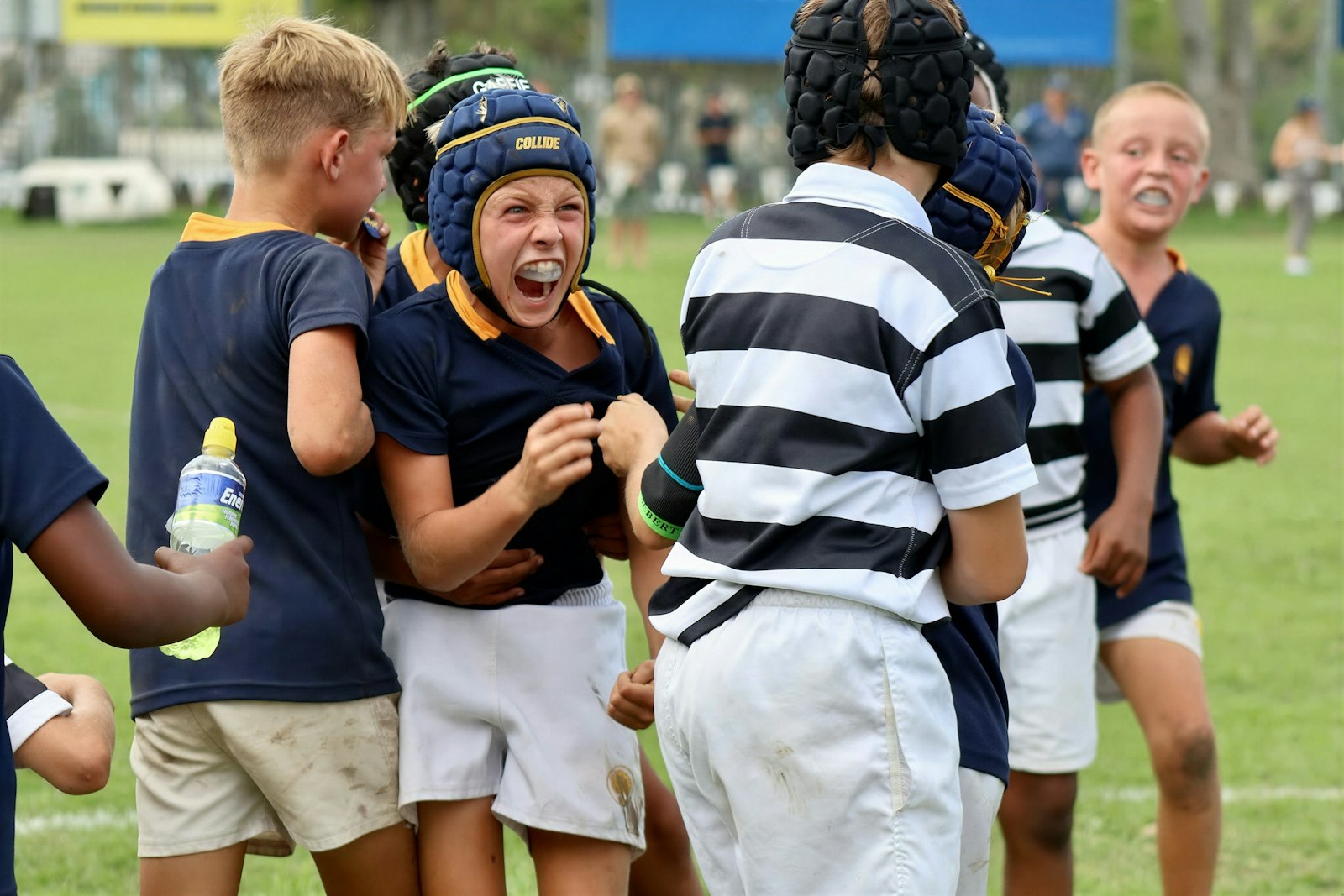
Around 40 percent of all dental injuries in Australia happen during sport, and roughly half involve children and teenagers playing junior football, rugby, hockey, basketball or AFL. A knocked-out front tooth at age 12 sets a person up for a lifetime of root canals, crowns and bridges that can cost more than $20,000 over a few decades. A custom sports mouthguard from a dentist costs $180 to $400 and lasts a full season.
This is one of the easiest and cheapest preventive decisions in dentistry, and yet only about 36 percent of Australians playing contact sport actually wear a mouthguard. Among juniors the wear rate is closer to 60 percent in matches and just 2 percent in training, even though training accidents account for a meaningful share of the tooth knock-outs we see in clinic.
This guide walks through the difference between a custom sports mouthguard and a boil-and-bite from the chemist, what each option actually costs in Sydney, what the research says about protection, and how to choose the right one for your sport and age. If you live in Ryde, Melrose Park or the surrounding suburbs and your child plays winter footy or summer hockey, this is the time of year to sort it.
Key Takeaways
- Custom-fitted sports mouthguards made from a dental impression offer significantly better protection, fit and breathing comfort than over-the-counter boil-and-bite alternatives.
- In Sydney, custom sports mouthguards typically cost $180 to $400 per arch (ADA item 151), with many private health funds rebating $80 to $250 once a year.
- Boil-and-bite mouthguards from the chemist or sports store cost $15 to $60 but lose shape after 3 to 4 months and offer inconsistent coverage of the back teeth and gums.
- The Australian Dental Association and Sports Medicine Australia recommend a custom mouthguard for any contact or collision sport, including AFL, rugby, hockey, soccer, basketball, netball, boxing, MMA and skateboarding.
- Children should have their custom mouthguard remade each year or whenever new adult teeth come through, because growing jaws change the fit faster than the material wears out.
- Replacing a single knocked-out front tooth with an implant and crown in Sydney typically costs $5,500 to $7,500, and the tooth will need ongoing maintenance and eventual replacement across the patient’s lifetime.
What a sports mouthguard actually does
A sports mouthguard is a layer of shock-absorbing plastic that sits over the upper teeth (occasionally the lower, in some boxing and grappling sports) and does three things at once. It spreads the force of a blow across all the teeth rather than concentrating it on the one tooth that was hit. It cushions the lower jaw and prevents it being driven up into the skull base, which is the mechanism behind a significant share of sports concussions. And it acts as a physical barrier between teeth and soft tissue, so a punch or knee to the face does not split the lip or push a tooth through the gum.
The Australian Dental Association NSW lists tooth loss, tooth fracture, jaw fracture, lip and tongue laceration, and dental concussion (the nerve dying inside an intact tooth) as the most common sports-related dental injuries. A well-fitted mouthguard reduces the risk of all five. A poorly fitted one reduces the risk of some, with the trade-off being that a loose guard can sit so awkwardly that the player removes it during play and then wears nothing at all.
The three categories of mouthguard
There are three categories sold in Australia, and the price gap between them is genuinely earned by differences in fit, comfort and protection.
Stock mouthguards (avoid)
These are the cheapest option, sold pre-formed in small, medium and large sizes for $5 to $20. They cannot be adjusted to the individual mouth. They sit loosely against the teeth, the player has to bite down constantly to keep them in place, and they typically only cover the front six teeth. The Australian Dental Association does not recommend them for any organised sport. If a stock guard is the only thing on hand the night before a game, it is better than no guard. The day after, replace it.
Boil-and-bite mouthguards
These cost $15 to $60 and are sold in chemists, sports stores and online. The mouthguard is softened in boiling water, then bitten into so the plastic moulds roughly to the shape of the upper teeth. The fit is much better than a stock guard, and a boil-and-bite is the default option for casual sport, primary school PE, and entry-level junior soccer or basketball. The limitations matter once contact intensifies.
Boil-and-bite material is thinner than custom material by design, because it has to be soft enough to mould at home. Once cooled it remains less rigid than a custom guard, which means less force is absorbed and more is transmitted to the teeth and jaw. Most boil-and-bites only cover the front teeth and do not extend back over the molars or up onto the gum line, leaving the back of the mouth unprotected. They lose shape after about 3 to 4 months of regular use, sooner if the player has a habit of chewing on the edges between plays.
Custom-made mouthguards from a dentist
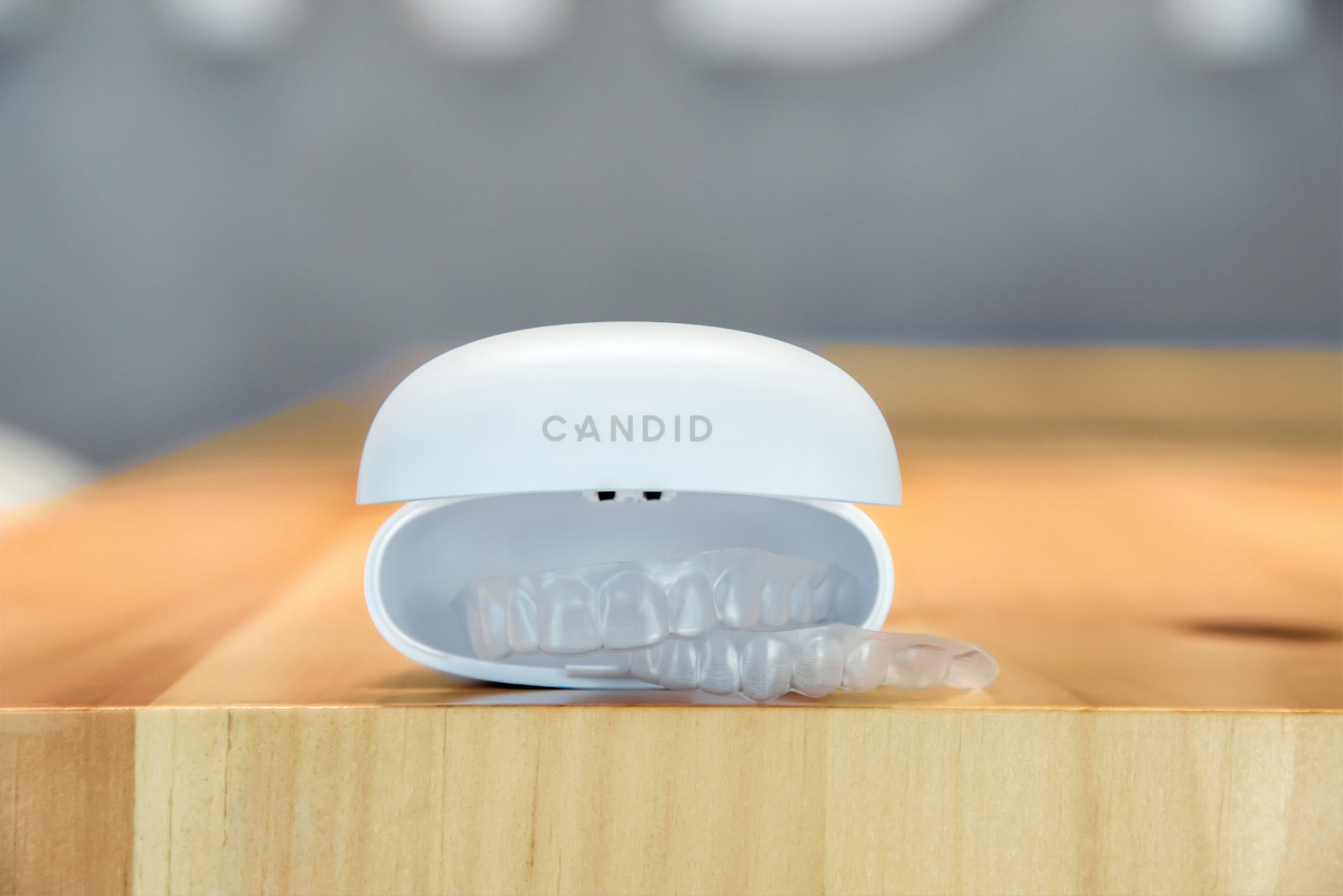
A custom mouthguard is made from a precise impression of the player’s teeth, taken at the dental clinic. The lab pours a stone model from the impression and then heat-vacuums or pressure-laminates a layered EVA (ethylene vinyl acetate) sheet over it to a controlled thickness, usually 3 to 5 millimetres depending on the sport. The result is a mouthguard that snaps onto the teeth without needing to be bitten down on, covers all the way back to the second molars, extends up over the gum line to spread impact load, and stays in place during shouting, breathing and drink breaks.
In Sydney this is what every elite, semi-elite and serious junior player wears. ADA item code 151 covers the standard single-arch custom mouthguard, and 153 covers the more complex variants (multi-layer for combat sports, dual-arch for boxing, mouthguards with orthodontic clearance for kids in braces).
Custom vs boil-and-bite: side-by-side comparison
| Feature | Boil-and-bite | Custom (ADA 151) |
|---|---|---|
| Typical price (Sydney) | $15 to $60 | $180 to $400 |
| Fit | Approximate, mouth-moulded | Precise, lab-fabricated from impression |
| Thickness | 2 to 3 mm (variable) | 3 to 5 mm (controlled) |
| Coverage | Front teeth, often not full molar coverage | Full arch including second molars and gum line |
| Retention | Player needs to bite down to keep it in | Snaps into place, stays put while talking |
| Breathing | Often restricts breathing and speech | Built around the bite for clear airway |
| Durability | 3 to 4 months | 12 months for adults, less for growing kids |
| Protection level | Reduces but does not minimise risk | ADA and Sports Medicine Australia preferred standard |
| Health fund rebate | Not claimable | $80 to $250 per year on most extras policies |
Sydney pricing in detail
Most Sydney general dental clinics charge between $180 and $400 for a standard single-arch custom mouthguard. The variation reflects the lab fees in the area, whether the guard is single-layer or multi-layer EVA, and whether the practice offers in-house thermoforming or sends impressions to an external lab. Mouthguards for sports with higher impact (rugby front-row forwards, boxing, MMA, BJJ) are usually made from pressure-laminated, multi-layer material and sit at the upper end of that range or slightly above.
| Item | ADA code | Typical Sydney fee | What it covers |
|---|---|---|---|
| Standard custom sports mouthguard, single arch | 151 | $180 to $300 | One-layer or two-layer EVA, single colour, low-to-medium impact sport |
| Multi-layer or laminated mouthguard | 153 | $280 to $400 | Pressure-laminated multi-layer EVA for collision sports, custom colours, team logos |
| Mouthguard with brace clearance (kids in orthodontics) | 151 | $220 to $350 | Extra internal space for brackets and wires, designed to remoulded as treatment progresses |
| Boil-and-bite (chemist or sports store) | n/a | $15 to $60 | Single-arch, self-fitted at home |
| Stock mouthguard | n/a | $5 to $20 | Not recommended for organised sport |
Private health funds with general dental extras typically rebate $80 to $250 of the custom mouthguard fee under item 151, once per calendar year. The exact rebate depends on the policy. Bupa, Medibank, HCF, NIB and CBHS all cover mouthguards under standard extras, although waiting periods of 2 to 6 months usually apply for new policies. Worth ringing the fund before booking to confirm the rebate.
Why a $200 mouthguard is cheaper than the alternative
The maths on a custom mouthguard is unusually clear because the cost of the injury it prevents is so high. A knocked-out front tooth (called avulsion) in Sydney usually leads to one of the following pathways, all of which cost considerably more than the mouthguard would have.
| Injury | Typical treatment | Sydney cost estimate |
|---|---|---|
| Cracked or chipped tooth (minor) | Composite bonding repair | $250 to $500 per tooth |
| Tooth fracture into the nerve | Root canal plus crown | $3,000 to $5,000 per tooth |
| Knocked-out adult tooth, successfully replanted | Splinting, follow-up root canal, often eventual crown | $3,500 to $6,000 over 2 years |
| Knocked-out adult tooth, not replantable | Implant and crown, or bridge | $5,500 to $7,500 initially, ongoing every 10 to 15 years |
| Lip or tongue laceration requiring sutures | Emergency room visit, suturing | $400 to $1,500 if private, public covered |
| Jaw fracture | Specialist oral surgery, often with hospital admission | $5,000 to $20,000 depending on complexity |
An implant placed in a 14-year-old’s mouth also has biological complications: the implant fuses to the jaw bone and does not move as the jaw continues to develop into the early twenties, which can leave the implant looking shorter than the neighbouring teeth a decade later and require re-treatment. Avoiding the injury is meaningfully better than treating it, and the cost gap is dramatic.
Which sports need a custom mouthguard
The Australian Dental Association recommends a custom mouthguard for any sport with a risk of direct or indirect contact with the face. The list is broader than most parents assume.
| Risk tier | Sports | Mouthguard recommendation |
|---|---|---|
| High collision | Rugby union, rugby league, AFL, boxing, MMA, BJJ, ice hockey, lacrosse, water polo | Custom-fitted, multi-layer where available; mandatory in most club rules |
| Moderate contact | Soccer, basketball, netball, hockey, futsal, touch football, oz tag, gymnastics, skateboarding, BMX | Custom-fitted strongly recommended |
| Lower-risk but face-impact possible | Surfing, snowboarding, mountain biking, weightlifting, baseball, softball, cricket (batting and wicketkeeping) | Custom-fitted recommended, boil-and-bite acceptable for casual play |
| Minimal contact | Swimming, running, golf, tennis, cycling (road), yoga | Not required |
Of note: basketball and soccer cause more dental injuries in Australia than parents typically expect, because elbows in basketball and the upper face in soccer headers are common impact mechanisms even though the sports are not labelled “contact”. Junior basketball and netball squads at Ryde and Marsfield clubs in particular have shown up regularly in published Sydney injury audits.

How a custom mouthguard is made (step by step)
The process at a Sydney general dental clinic is straightforward and usually takes two short appointments across about a week.
Step 1: Impression appointment (15 to 20 minutes)
The dentist or oral health therapist takes an alginate impression of the upper teeth using a small dental tray. Most clinics now offer a digital intraoral scan as an alternative, which is quicker and more comfortable than the traditional impression material. Both work equally well for mouthguard fabrication.
Step 2: Lab fabrication (5 to 7 days)
The impression is sent to a dental lab. The lab pours a stone model, heats a sheet of EVA, and either vacuum-forms or pressure-laminates the sheet over the model. Multi-layer guards have two or three sheets bonded together at staggered thickness to absorb impact across a wider force range. Trimming, polishing and (if requested) team-colour layering happen during this stage.
Step 3: Fitting appointment (10 to 15 minutes)
The mouthguard is checked in the mouth for fit, retention, bite balance and edge contour. Minor adjustments are made by trimming and smoothing the edges. The dentist will also confirm that the guard does not interfere with breathing or speech, because if it does the player will not wear it.
Step 4: Care instructions
Rinse the guard with cold water after every use, then store it in a perforated container so it can dry. Hot water will deform the material. Toothpaste is acceptable for cleaning once a week. Bringing the mouthguard to dental check-ups lets the clinician inspect it for cracks, biting wear and fit changes.
Kids, growing jaws, and replacement timing
Children’s mouthguards need more frequent replacement than adults’, and the limiting factor is usually jaw growth and tooth eruption rather than material wear. A 9-year-old playing junior footy will have a different bite by age 11, with permanent canines and second molars erupting in between, and the guard has to keep up. As a rough rule:
- Ages 6 to 12 (mixed dentition): expect to replace the custom mouthguard every 12 months, or sooner if a new adult tooth comes through and the guard no longer seats correctly.
- Ages 12 to 16: replace every 12 to 18 months, or earlier if the player is in orthodontic treatment and the teeth are actively moving.
- Ages 16 and up (adult dentition): one custom mouthguard typically lasts a full sporting year or longer with good care.
For kids in braces, a mouthguard designed with brace clearance is essential. A standard boil-and-bite moulded over braces will lock onto the brackets and become impossible to remove without damaging the orthodontic appliance. Lumi’s standard process is to take a fresh impression at each ortho review while braces are on, so the guard stays compatible with the moving teeth.
The three most common mistakes parents make
Buying a boil-and-bite for high-impact junior sport because the season starts next week. Custom mouthguards take about a week to make, so the time-saving argument disappears with even minimal planning. A boil-and-bite is acceptable as a one-off stopgap for the first match if the timing is genuinely tight, but it should not be the long-term plan for any junior playing rugby, AFL or hockey.
Assuming the school-issued mouthguard is enough. School-supplied mouthguards are usually stock or basic boil-and-bite. They cost the school very little and are issued as a default, not a recommendation. Parents should treat them as a minimum starting point and upgrade as soon as the child is committed to the sport.
Skipping training-day wear. Australian injury data consistently shows that a meaningful share of sports dental injuries happen at training, not on game day. Junior wear rates fall from around 60 percent in matches to about 2 percent in training, which is also when most coaches are not watching mouthpieces. A mouthguard that lives in the kit bag and only comes out for matches is doing half the job.
What to look for in a good Sydney custom mouthguard appointment
A few clinical details separate a careful mouthguard appointment from a rushed one:
- An impression or scan that captures the second molars. A mouthguard that only covers to the first molars leaves the back of the dental arch unprotected and is more likely to dislodge during impact.
- A bite check at the fitting appointment. The lower teeth should occlude evenly across the mouthguard, with no single tooth contacting harder than the others. Uneven contact transmits force unevenly and can cause sore jaw muscles after wear.
- Edges that finish above the gum line by at least 2 mm. Edges that finish on the gum will trap food and irritate the tissue; edges that finish too far above are floppy and less retentive.
- Multi-layer construction for collision sports. Ask whether the guard is pressure-laminated or single-vacuum-formed. Pressure-lamination produces a denser, better-impact-absorbing material and is the standard for elite players.
- A care kit included. Most Sydney clinics now include a perforated case and a wipe with the appointment, which makes the daily care routine more likely to happen.
Pre-season checklist for parents and players
If a junior player in the family is starting winter footy or summer hockey, the dental side of pre-season can be sorted in two visits:
- Book a dental check-up at the start of pre-season. Untreated decay or a wobbly milk tooth is far more dangerous on the field than at the kitchen table.
- If the player is in braces, confirm with the orthodontist that the current treatment phase is mouthguard-compatible.
- Take an impression for a custom mouthguard at the same check-up if possible, to save a separate visit.
- Confirm health fund rebate eligibility before the fitting, so the out-of-pocket cost is clear up front.
- Schedule the fitting appointment at least 2 weeks before round 1.
- Practise wearing the mouthguard for 20 to 30 minutes at home before the first training session, so the player gets used to the feel and the breathing pattern.
- Pack the mouthguard with the boots and shin pads, not in a separate sports-day-only kit, so it comes out at training too.
Frequently asked questions
How much does a custom sports mouthguard cost in Sydney?
Most Sydney general dental clinics charge between $180 and $400 for a standard single-arch custom mouthguard under ADA item 151. Multi-layer or pressure-laminated guards for collision sports tend to sit at the upper end of that range. Most private health funds with general dental extras rebate $80 to $250 per year on this item.
Is a boil-and-bite mouthguard better than nothing?
Yes. Any well-fitted mouthguard is better than no mouthguard, and for casual sport or for a one-off first match before the custom guard is ready, a boil-and-bite from the chemist provides meaningful protection. The reason dentists recommend upgrading is that boil-and-bites lose shape, restrict breathing, and offer inconsistent coverage of the back teeth and gums.
Do I need a mouthguard for soccer or basketball?
Most sports medicine bodies recommend one, even though these sports are not classified as “contact”. Elbows in basketball and headers in soccer cause a meaningful share of Australian dental injuries every year. A custom mouthguard is also strongly recommended for netball, hockey, futsal, touch football and oz tag.
How long does a custom mouthguard last?
For an adult with full permanent dentition, a custom mouthguard typically lasts a full sporting year of regular use. Children and teenagers will usually need a replacement every 12 months or sooner, because growing jaws and erupting permanent teeth change the fit faster than the material wears out.
Can I wear a mouthguard with braces?
Yes, but the mouthguard needs to be designed with internal clearance for the brackets and wires. A standard boil-and-bite moulded directly over braces can lock onto the brackets and damage the orthodontic appliance when removed. A custom mouthguard for someone in braces is taken from an impression that accounts for the appliance and is usually remade as the teeth move through treatment.
Does private health insurance cover sports mouthguards?
Most policies with general dental extras include item 151 (sports mouthguard) and rebate between $80 and $250 once per calendar year. The exact rebate depends on the fund and the level of cover. Waiting periods of 2 to 6 months usually apply for new policies. Worth confirming with the fund before booking.
Should the mouthguard cover the top or bottom teeth?
For almost all field, court and water sports the mouthguard sits on the upper teeth. Combat sports such as boxing and MMA sometimes use a dual-arch design that protects both jaws and provides additional support during heavy contact. The dentist will recommend the appropriate format for the sport.
Can a mouthguard prevent concussion?
The evidence is mixed but encouraging. A well-fitted mouthguard cushions the lower jaw and reduces the upward transmission of force into the skull base, which is one of the mechanisms behind contact-sport concussion. Studies show meaningful reductions in concussion risk for players wearing custom mouthguards in rugby and AFL, although a mouthguard is not a substitute for a properly fitted helmet or for safe-tackling technique.
Where can I get a sports mouthguard in Ryde or Melrose Park?
Several general dental clinics in the Ryde and Melrose Park area offer custom sports mouthguards, including Lumi Dental at Melrose Park (opening July 2026). The process is the same at most clinics: an impression appointment, around a week of lab time, and a short fitting visit. Walk-in mouthguards from the chemist are also widely available across the area for casual use.
The bottom line
A custom sports mouthguard is one of the cheapest pieces of preventive dentistry that exists, and the maths against the alternative (a single front-tooth implant or root canal) is not close. For any child or adult playing rugby, AFL, hockey, soccer, basketball, netball, boxing or MMA in Sydney, a $200 to $400 custom guard from the dentist is the right answer. For casual, lower-impact use, a $30 boil-and-bite from the chemist is acceptable as long as it is replaced every few months and the player accepts that it offers less protection. The worst option is no mouthguard at all, and the second-worst is an ill-fitting mouthguard left in the kit bag because it is uncomfortable to wear.
Lumi Dental opens on 1 July 2026 at Melrose Park and will offer custom sports mouthguards as part of standard preventive care, including brace-compatible guards for kids in orthodontic treatment. To register interest before opening day or to ask about pre-season fittings, visit lumidental.au/new-patient-offer.
Related reading on Lumi Dental: night guards for teeth grinding, bruxism (teeth grinding) explainer, dental implant cost in Sydney, children’s first dental visit.
Sources: Australian Dental Association NSW patient information, Australian Schedule of Dental Services 13th Edition (ADA item 151 and 153), Sports Medicine Australia mouthguard policy, Bupa “sport safety warning” release on junior mouthguard wear rates, Knapik et al. systematic review on mouthguard efficacy in sport.


