
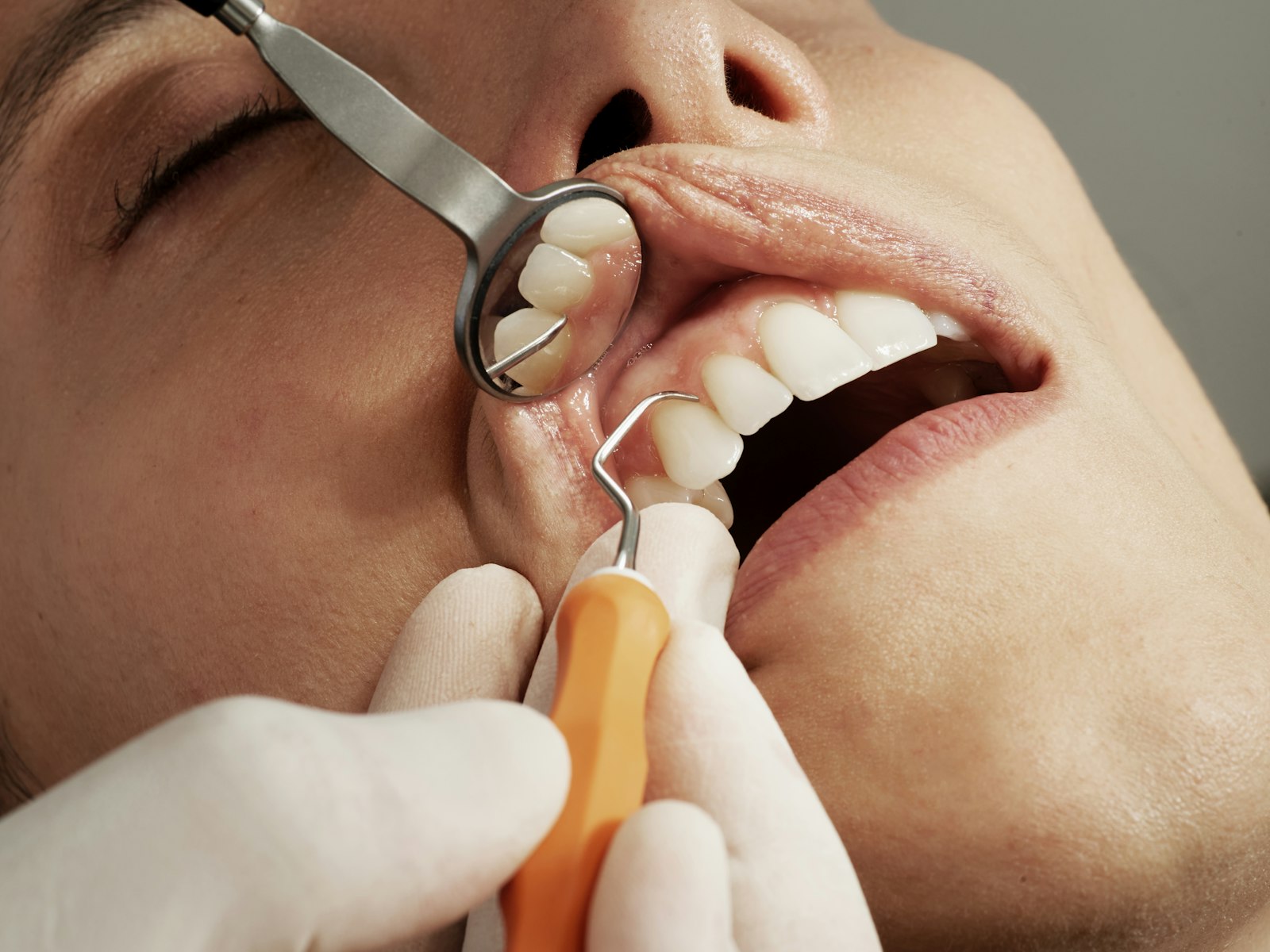

Two quite different appointments both get called "a clean". The routine scale and clean most adults book once or twice a year is a short preventive visit. A deep clean for gum disease is a course of treatment, usually done under local anaesthetic over more than one appointment, and it costs considerably more. Before comparing prices, it helps to know which of the two you are actually being quoted for.
A routine check-up and clean is billed as a handful of items
Across Sydney, a check-up and clean for an adult without insurance typically costs somewhere between $200 and $400. That is a general market range, not the fee at any particular practice. Where a visit lands in that range depends mostly on what gets added on the day: whether X-rays are due, how much tartar has built up, and whether a fluoride treatment is applied.
Australian dental practices describe each part of the visit with an item number from the Australian Dental Association's schedule. Your health fund pays its rebate per item, so the receipt is easier to read once you know what the common ones mean.
| Item | What it means | When it is usually used |
|---|---|---|
| 011 | Full oral examination | A first visit, or a full reassessment after a long gap |
| 022 | Intraoral periapical or bitewing radiograph, per exposure | Small X-rays that show decay between teeth and bone levels |
| 114 | Removal of calculus, first appointment | The "scale" part of a routine scale and clean |
| 115 | Removal of calculus, subsequent appointment | When heavy build-up needs a second visit to finish |
| 121 | Topical application of remineralising or cariostatic agents, one treatment | Fluoride or a similar protective agent painted on after cleaning |
| 221 | Clinical periodontal analysis and recording | Measuring and charting the gum pockets around every tooth |
| 222 | Periodontal debridement, per tooth | Deep cleaning of the root surfaces below the gum line |
A routine visit for a healthy adult often uses only a few of these: an examination, the calculus removal, sometimes X-rays and sometimes fluoride. Items 221 and 222 only appear when the gums need closer attention.

Deep cleaning is charged tooth by tooth
Gum disease that has moved below the gum line cannot be reached by a standard scale and clean. Plaque and hardened calculus collect on the root surfaces inside the gum pockets, and the body's response to them slowly breaks down the bone that holds the teeth in place. Treating this is called periodontal debridement, and you may also hear it described as root planing or a deep clean.
Because item 222 is charged per tooth, the total depends on how many teeth are affected. Someone with a few deeper pockets around the back molars may need a handful of teeth treated. Someone with widespread disease may need most of the mouth done, usually split into two or more appointments so each one is a manageable length. The full course therefore often costs several times what a routine clean does, and there is normally a separate charge for the gum charting (item 221) that comes first.
Ask for a written treatment plan with item numbers before you start. That lets you check your health fund rebate in advance, and it shows you exactly which teeth are being treated. A review appointment some weeks later is usual, so the dentist or OHT can measure whether the pockets have tightened up. Our article on gum disease in Australia covers the stages and treatment in more detail.
Signs your gums may need more than a routine clean
Gum disease is common in Australian adults and becomes more common with age, yet it is often painless in its early and middle stages. Many people only find out they have it when their gums are charted. These signs suggest it is worth asking for a gum assessment rather than simply booking a quick clean:
- gums that bleed when you brush or floss, most days
- gums that have pulled back, so teeth look longer than they used to
- bad breath or a bad taste that keeps coming back
- teeth that feel loose, or a bite that seems to have shifted
- pus or swelling around a tooth
Smoking, diabetes and a family history of gum disease all raise the risk. Smokers are worth singling out, because smoking reduces gum bleeding and can hide the most obvious warning sign.
What happens in the chair
A routine visit begins with a quick update on your health and any medicines, since some conditions and medications affect the gums or how the mouth heals. The dentist or OHT then examines your teeth, gums, tongue, cheeks and the soft tissues at the back of the mouth. If it has been a while since your last X-rays, small bitewing films may be taken to look for decay hiding between the teeth.
The cleaning itself starts with an ultrasonic scaler, a fine vibrating tip with a water spray that breaks up hard calculus. Hand instruments then remove what is left, particularly just under the gum edge and in the tight spaces between teeth. Polishing smooths the surfaces and lifts some of the staining from tea, coffee and red wine, and a fluoride treatment may be applied at the end. For most people with healthy gums, the whole appointment is short and needs no numbing.

A deep clean is a different appointment. The area is numbed first, then each affected root is cleaned carefully down to the base of the pocket. Gums are often tender for a few days afterwards, and teeth can feel more sensitive to cold for a while as the gums settle.
Six months suits many people, not everyone
Six-monthly recalls have become the default in Australia, and for many adults they work well. The better approach is to set the interval to your own risk. People with healthy gums, little tartar and no recent decay may be fine with longer gaps. People who have had gum disease, wear braces, smoke, have diabetes or have a dry mouth from medication often do better with visits every three or four months, at least for a while.
If you want to look at the reasoning behind the six-month habit, our piece on whether a check-up every six months is really necessary goes through the evidence.
What health funds and public schemes pay for
Most extras policies group examinations, routine cleans, X-rays and fluoride as general or preventive dental, and these items often attract a high rebate up to your annual limit. Periodontal items such as 221 and 222 may sit in a different category, depending on the fund and the level of cover, so the rebate can be lower and a longer waiting period can apply. The only reliable way to know is to give your fund the item numbers from your treatment plan and ask what they will pay. Our guide to how Australian health insurance covers dental explains annual limits and waiting periods.
Without private cover, there are two public options worth knowing about. NSW Public Dental Services treat eligible adults who hold a concession card such as a Health Care Card or Pensioner Concession Card, although waiting lists for routine care can be long. Children aged 0 to 17 from eligible families may be covered by the Medicare Child Dental Benefits Schedule, which in 2026 provides up to $1,158 over two calendar years for basic services, including check-ups and cleans. It does not cover orthodontics or cosmetic work.
Keeping tartar from building up again
Once plaque hardens into calculus, a toothbrush will not shift it. What you do between visits decides how much there is to remove next time, and how healthy the gums stay.
- Brush twice a day with a fluoride toothpaste and a soft brush, aiming the bristles at the gum line.
- Clean between your teeth once a day with floss or interdental brushes, whichever you will actually use.
- Spit out after brushing rather than rinsing, so some fluoride stays on the teeth.
- Drink tap water. Sydney's water supply is fluoridated.
- Keep sweet and acidic snacks to mealtimes rather than spreading them through the day.
Do not wait for the next routine visit if you notice swelling, a tooth that has become loose, bleeding that does not settle, or pain that wakes you at night. Dealing with problems early is usually less involved, and cheaper, than letting them reach the point where a filling or more extensive work is needed.
What patients ask about cleans
Does a deep clean hurt?
The teeth being treated are numbed with local anaesthetic, so the procedure itself should not be painful. Afterwards it is common for the gums to feel tender and the teeth to be a little sensitive for a few days. Over-the-counter pain relief is usually enough.
Will a scale and clean make my teeth whiter?
It removes surface staining, which can make teeth look brighter, but it does not change the natural colour of the tooth. Changing the shade is a separate cosmetic treatment, which we explain in our guide to teeth whitening options.
Why was I charged for a second calculus removal visit?
When there is a lot of hardened build-up, or the gums are inflamed, the clean may be split across two visits. The first visit is item 114 and the follow-up is item 115. Ask before the first appointment whether a second one is likely.
Can an oral health therapist do my clean?
Yes. Oral health therapists are trained in examinations, cleaning, X-rays and gum care, and many focus on prevention. Either a dentist or OHT can see you for a routine check-up and clean.
Booking a check-up and clean with us
Lumi Dental is an independent general and cosmetic practice at Melrose Central in Melrose Park, open Monday to Saturday with late appointments until 9pm on Thursdays and free undercover parking. Our dentists and oral health therapists see adults, children and families for check-ups, cleans and gum care, and we claim health fund rebates on the spot through HICAPS. Read more on our general dentistry page, or see our current offers before you book.








