

The question every patient asks in the wrong order
Most people come in asking "which aligner brand should I get?" when the real first question is "are aligners even the right choice for my case?" Let's answer both.
How clear aligners work
All aligner systems work the same way. A digital scan is taken, software plans the tooth movement through a series of stages, and custom plastic trays are fabricated. You wear each tray for 7 to 14 days, then advance to the next one. Treatment typically runs 6 to 18 months depending on complexity.
The key variables between systems are the tray material, the planning software, the precision of the attachments (small tooth-coloured buttons bonded to teeth that help grip and move teeth in specific directions), and the monitoring protocol your dentist uses during treatment.
What Invisalign actually is
Invisalign is a brand, not a category. Made by Align Technology, a US company founded in 1997. It was the original commercialised clear aligner system and has more published clinical research behind it than any competitor. It uses SmartTrack material and a planning software called ClinCheck.
Here's the thing Invisalign doesn't advertise: it's a franchise-like system. Dentists pay a per-case fee to access it. That fee is a significant reason why Invisalign cases cost more than other systems for equivalent complexity.
The alternatives worth knowing
- Angel Aligners: a Chinese-manufactured system with growing Australian uptake. Lower per-case material cost, comparable accuracy for mild to moderate cases. This is our cost-effective option at Lumi Dental, and in my clinical experience, the outcomes for suitable cases are excellent.
- Spark Aligners: made by Ormco, the same company behind the Damon braces system. TruGEN material that I think is genuinely clearer and more stain-resistant than Invisalign's SmartTrack. Competitively priced and well-regarded.
- 3M Clarity Aligners: a premium alternative with solid clinical backing.
What the evidence says
A 2019 systematic review in Angle Orthodontist found that precision of tooth movement across aligner systems was more strongly correlated with case complexity and clinician experience than with the brand used. For mild to moderate cases, multiple systems achieve comparable results. For complex cases, brand and software matter more.
When are Damon braces better than aligners?
This is the question most patients don't ask but should. Aligners aren't right for every case. Damon System self-ligating braces are generally better when significant bite correction is needed, when there are multiple complex rotations, when the patient isn't confident they'll wear aligners for 22 hours a day, or when extractions are part of the plan. Fixed braces work continuously regardless of patient compliance. Aligners only move teeth when worn. Most aligner treatment failures trace back to inconsistent wear, not system limitations.
Cost comparison, Sydney 2026
- Angel Aligners comprehensive: $4,500 to $6,500
- Spark Aligners comprehensive: $5,500 to $7,500
- Invisalign comprehensive: $6,500 to $9,500
- Damon Clear braces: $5,500 to $8,000
Health fund orthodontic lifetime limits typically run $1,500 to $3,500 and apply across all systems. Minor corrections are priced from $2,500.
Related reading: How to Clean and Care for Your Clear Aligners and How Much Does Invisalign Cost in Sydney.
Your consultation at Lumi Dental
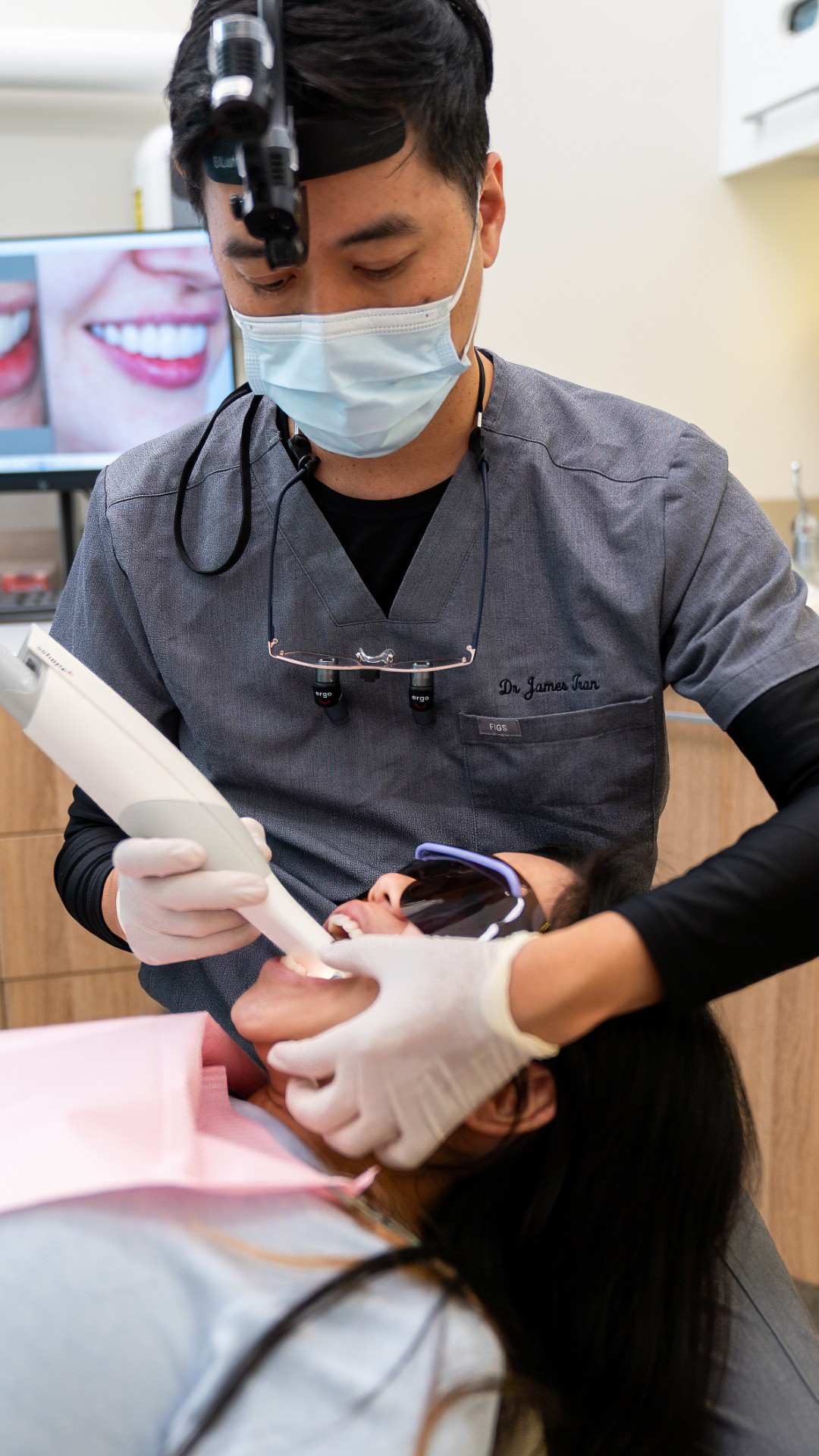
We do a 3D digital scan (no impressions), show you a digital simulation of the expected tooth movement, and give you an honest recommendation of which system is right for your case. If Damon braces are a better fit, we'll say so. Book a free aligner consultation — written quote, no pressure. Open 7 days at Melrose Central.


