Hot flushes and poor sleep get most of the attention, but menopause can change the mouth too. A drier mouth, gums that bleed more easily, a burning tongue or a change in taste are all reported more often by women around and after menopause. Many of these changes are easier to manage when they are recognised early, so it helps to know what to look out for.
The research points to several linked changes
A 2026 narrative review of 50 studies (Butera and colleagues, Journal of Clinical Medicine) found that menopause was associated with poorer gum measurements, including deeper gum pockets and more attachment loss, along with reduced saliva flow, dry mouth, burning sensations and taste changes in women around and after menopause. Higher rates of decay and tooth loss were also reported, although the authors noted that age and other factors make that harder to untangle.
The likely common factor is falling oestrogen, which influences the salivary glands, the gum tissues, the immune response and bone. Not every woman notices these changes, and many notice none at all.
A drier mouth leaves teeth less protected
Saliva does far more than keep the mouth comfortable. It rinses away food, neutralises acid, carries calcium and phosphate that help repair early enamel damage, and keeps bacteria in check. When there is less of it, decay can progress more quickly, particularly along the gumline and on any exposed root surfaces, and the mouth can feel sticky or sore.
Medicines are another common cause of dry mouth at this stage of life, including some blood pressure tablets, antidepressants and antihistamines, so it is worth looking at the whole picture. Our guide to dry mouth causes and treatment covers everyday management in detail.
Simple steps help:
- sip water through the day and keep a bottle by the bed
- chew sugar-free gum to encourage saliva
- try a dry-mouth gel or spray, especially at night
- go easy on alcohol, caffeine and acidic drinks
- ask your dentist whether a higher-strength fluoride toothpaste would suit you
Gums may become more reactive
Some women find their gums bleed more easily or feel tender around menopause. A smaller number develop gums that look pale, shiny and sore. Because drier mouths and more reactive gums often arrive together, this can be a time when gum disease starts or gets worse.
Bleeding when you brush is worth taking seriously. If your gums still bleed after three or four days of careful brushing and flossing, see a dentist or OHT. Our article on bleeding gums explains the common causes.
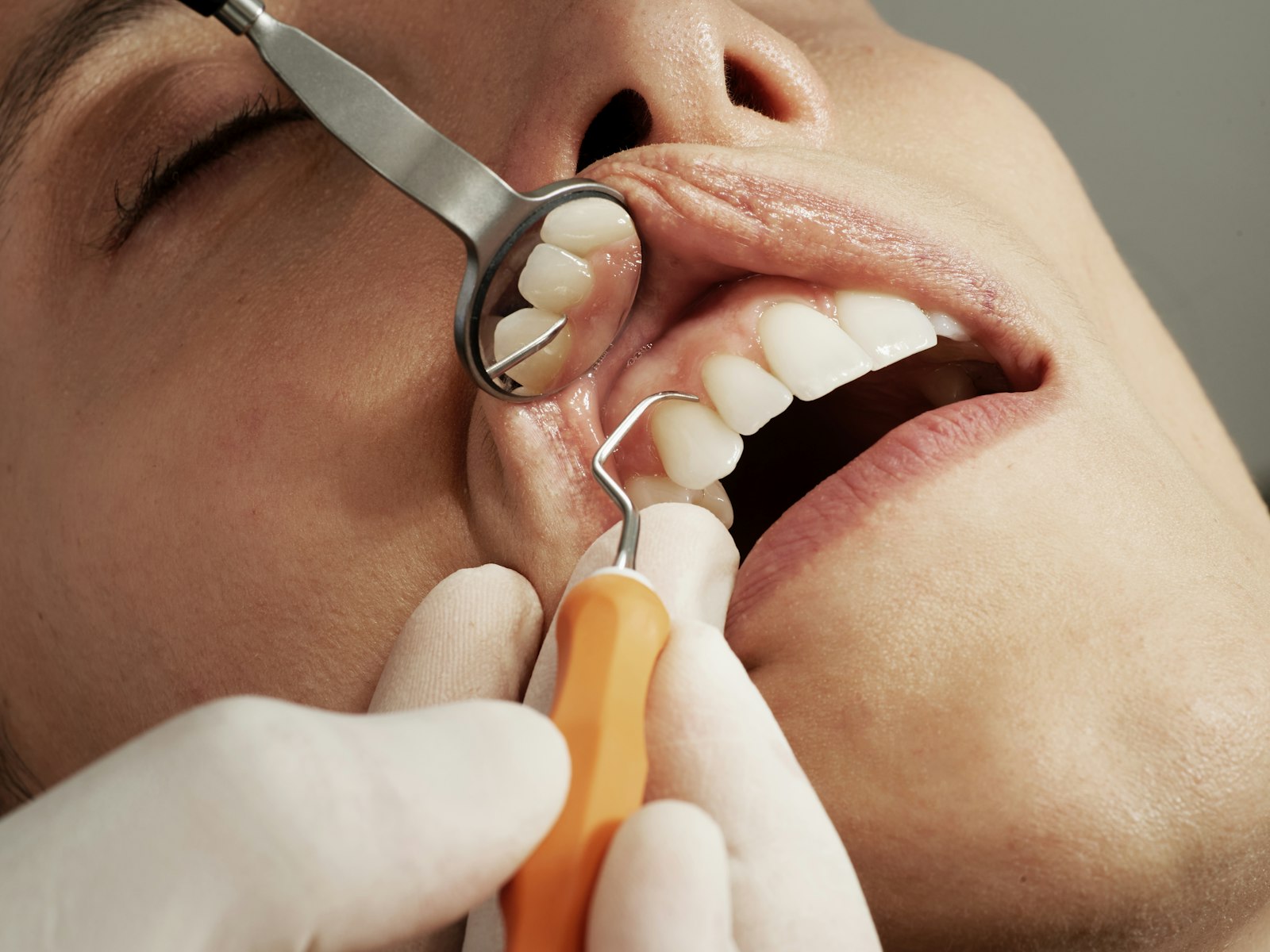
Burning mouth syndrome is more common after menopause
Burning mouth syndrome is a persistent burning, scalding or tingling feeling, often on the tongue, lips or palate, with nothing obvious to see. A 2026 review of 22 studies (Qaderi and colleagues, BMC Oral Health) found it was consistently associated with female sex and menopause, along with factors such as dry mouth, an underactive thyroid, long-term medicines, anxiety, depression and poor sleep. No single cause has been identified.
Before the diagnosis is made, a dentist or doctor will look for other explanations that can be treated, such as thrush, dry mouth, low iron or vitamin B12, or a reaction to a toothpaste or denture. While symptoms are being worked through, avoiding very acidic, spicy or strongly flavoured foods, alcohol and smoking may ease the burning.
Bone health and your jaw
Oestrogen helps maintain bone density, and the bone that supports the teeth is part of the same skeleton. Gum disease also destroys the bone around teeth, so keeping gums healthy matters even more when general bone density is falling. Talk with your GP about calcium, vitamin D and bone health.
If you take or start a medicine for osteoporosis, such as a bisphosphonate or denosumab, please tell your dental team. These medicines are important for bone health, but they can affect how extractions, implants and other surgical treatment are planned. Do not stop any medicine without speaking to your doctor.
Teeth can feel more sensitive
Gum recession and a drier mouth can leave the root surfaces of teeth more exposed, and roots are softer and more sensitive than enamel. A sensitivity toothpaste often helps, and a check-up can confirm whether recession or something else is the cause. Our article on sensitive teeth goes through the options.
Common questions
Will hormone replacement therapy help my mouth?
The research is mixed. The Butera review found that several studies reported better saliva flow and gum measurements in women using hormone therapy, but it is prescribed for wider reasons and is a decision for you and your doctor. Mentioning your mouth symptoms to your GP helps them see the full picture.
Does burning mouth go away?
It varies. Symptoms can come and go, and when contributing factors such as dry mouth, thrush or low iron or B12 are found and treated, they often ease. It is worth investigating rather than putting up with it.
Can menopause make me lose teeth?
Menopause does not cause tooth loss directly, but dry mouth, gum disease and bone changes together can raise the risk if they are not managed. Daily cleaning and regular check-ups keep that risk lower.
Looking after your mouth through menopause
Our dentists and oral health therapists can check your gums and saliva, adjust your prevention plan and talk through anything that has changed. Contact our Melrose Park practice, read more about general dental care at Lumi, or see our current offers.