



Around two in three Australians over 50 have osteoporosis or low bone density, and women are affected far more often than men. The same disease that weakens the hip and spine also affects the jaw bone that holds your teeth in place. People with osteoporosis tend to have more gum disease and more tooth loss, and a small number who take bone-strengthening medicines need extra planning before certain dental procedures. Understanding the link early lets you protect your jaw bone and your teeth at the same time.
Key takeaways
- Osteoporosis and gum disease share a two-way relationship, and both speed up the loss of bone around teeth.
- Low jaw bone density is linked with more tooth loss and looser teeth over time.
- Bone medicines such as bisphosphonates and denosumab rarely cause a jaw healing problem called MRONJ, with the risk from oral tablets sitting around 0.02 to 0.1 percent.
- You should never stop a prescribed bone medicine on your own. Tell your dentist about it instead, so treatment can be planned safely.
- Keeping gums healthy and finishing any needed dental work before starting a bone medicine is the single best way to lower risk.
How osteoporosis affects the jaw
Osteoporosis means bone is being broken down faster than the body rebuilds it, so the internal scaffolding becomes thinner and more fragile. The jaw is not exempt. The ridge of bone that surrounds each tooth root, called the alveolar bone, can lose density just like the spine. When that supporting bone thins, teeth have less anchorage, which can show up as teeth that feel slightly loose, gums that recede, or dentures that stop fitting the way they used to.
Research consistently links lower bone mineral density with greater tooth loss and with deeper gum pockets. The relationship appears to run both ways. Gum disease drives chronic inflammation that can worsen bone loss, while weaker bone gives gum disease an easier path to destroy the support around teeth. This is why your dental check matters more, not less, once osteoporosis is diagnosed.
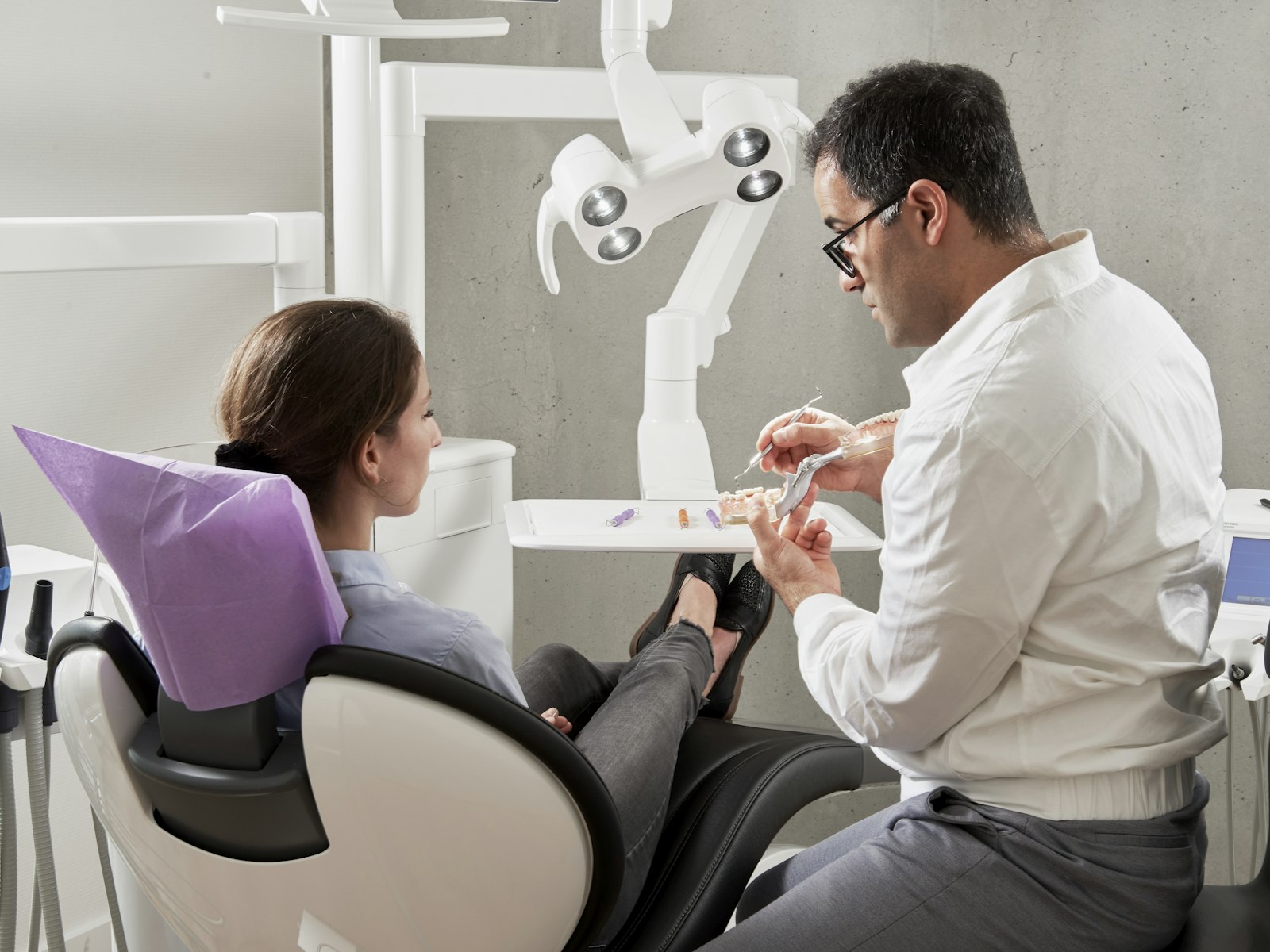
The one thing your dentist needs to know first
Before any planning, the question that matters most is simple: are you taking, or about to start, a medicine for your bones? The answer changes how some treatments are timed, particularly extractions and implants. The common options include oral bisphosphonates such as alendronate and risedronate, the injection denosumab, and intravenous bisphosphonates used at higher doses in some cancer care. These medicines work by slowing bone breakdown, which is exactly what protects the hip and spine, but it also slows the way the jaw heals after a tooth is removed.
What is MRONJ and how likely is it?
Medication-related osteonecrosis of the jaw, or MRONJ, is an area of jaw bone that fails to heal and stays exposed after dental surgery or an extraction. It is the reason bone medicines get attention in dentistry, but for people taking these medicines for osteoporosis the risk is genuinely low. For oral bisphosphonate tablets the risk sits roughly between 0.02 and 0.1 percent, and it tends to rise the longer the medicine is taken, reaching around 0.21 percent after more than four years of use. The much higher doses used intravenously in cancer treatment carry a higher risk, which is a separate situation.
Importantly, gum disease and dental infection are themselves risk factors for MRONJ. A tooth removed because of advanced gum disease in someone on a bone medicine carries more risk than a planned, healthy extraction. That is the practical message: healthy gums lower the odds.
| Situation | General MRONJ risk level | What it means for planning |
|---|---|---|
| Oral bisphosphonate, under 4 years | Very low (around 0.02 to 0.1 percent) | Most routine dentistry proceeds normally |
| Oral bisphosphonate, over 4 years | Low (around 0.2 percent) | Extra planning before extractions or implants |
| Denosumab injection | Low, timing-sensitive | Surgery often timed within the dosing cycle |
| High-dose IV bisphosphonate (cancer care) | Higher | Specialist coordination needed |
Planning dental work safely
The goal is to get the mouth as healthy as possible before a bone medicine starts, and to keep it that way afterwards. If you have a dental issue that may need an extraction, it is far better to deal with it before beginning treatment for osteoporosis. Once you are taking a bone medicine, most everyday dentistry, including fillings, cleans, crowns and root canal treatment, carries no special concern. It is mainly surgery into the jaw bone that needs thought.

What you can do at home
Protecting jaw bone overlaps with protecting the rest of your skeleton. Adequate calcium and vitamin D, weight-bearing activity, not smoking and limiting alcohol all support bone health. For the mouth specifically, the priorities are brushing twice a day with a fluoride toothpaste, cleaning between the teeth daily, and keeping regular dental visits so any gum inflammation is caught while it is still reversible. If you wear dentures, having them checked for fit matters, because a denture that rubs can irritate the gum and bone underneath.
Warning signs to mention
See your dentist promptly if you notice a tooth becoming loose without obvious cause, gums that bleed persistently, an area of gum that will not heal after a few weeks, exposed bone, numbness in the jaw, or a denture that suddenly stops fitting. These are worth checking on their own merit, and they matter more if you take a bone medicine. For a wider look at gum inflammation, our guide on bleeding gums when brushing is a useful companion, and the article on bone medicines and the jaw covers MRONJ in more detail.
Frequently asked questions
Can I still get a dental implant if I have osteoporosis?
Often yes. Osteoporosis alone does not rule out implants, and success rates remain high for many patients. The key factors are how dense the jaw bone is, whether you take a bone medicine, and how long you have taken it. Your dentist will assess this case by case, sometimes with a 3D scan. You can read more in our dental implant guide.
Should I stop my bone medicine before a tooth extraction?
Do not stop it on your own. Stopping suddenly can raise your fracture risk, and any decision about pausing a medicine is one for your doctor and dentist together. In most osteoporosis cases the medicine is continued and the extraction is simply planned carefully.
Does osteoporosis cause tooth loss directly?
Not directly, but it is associated with more tooth loss because thinner jaw bone gives teeth less support and makes gum disease more damaging. Good gum health offsets much of this.
Will my dentist need to talk to my doctor?
Sometimes. For routine care, usually not. Before jaw surgery in someone on a long course of a bone medicine, your dentist may coordinate with your prescribing doctor to plan timing and aftercare.
Are dental X-rays safe if I have low bone density?
Yes. Dental X-rays use very low radiation doses and actually help by letting your dentist monitor the bone around your teeth over time.
The bottom line
Osteoporosis and your mouth are more connected than most people expect, but the practical steps are straightforward. Keep your gums healthy, tell your dentist about any bone medicine, and time any jaw surgery thoughtfully. The team at Lumi Dental can review your situation and build a plan that protects both your teeth and your jaw bone. New patients can see current options on our current offers page or arrange a check-up through our general dentistry team. We do not list our own prices here, and any treatment estimate is provided as a written quote after an assessment.

