

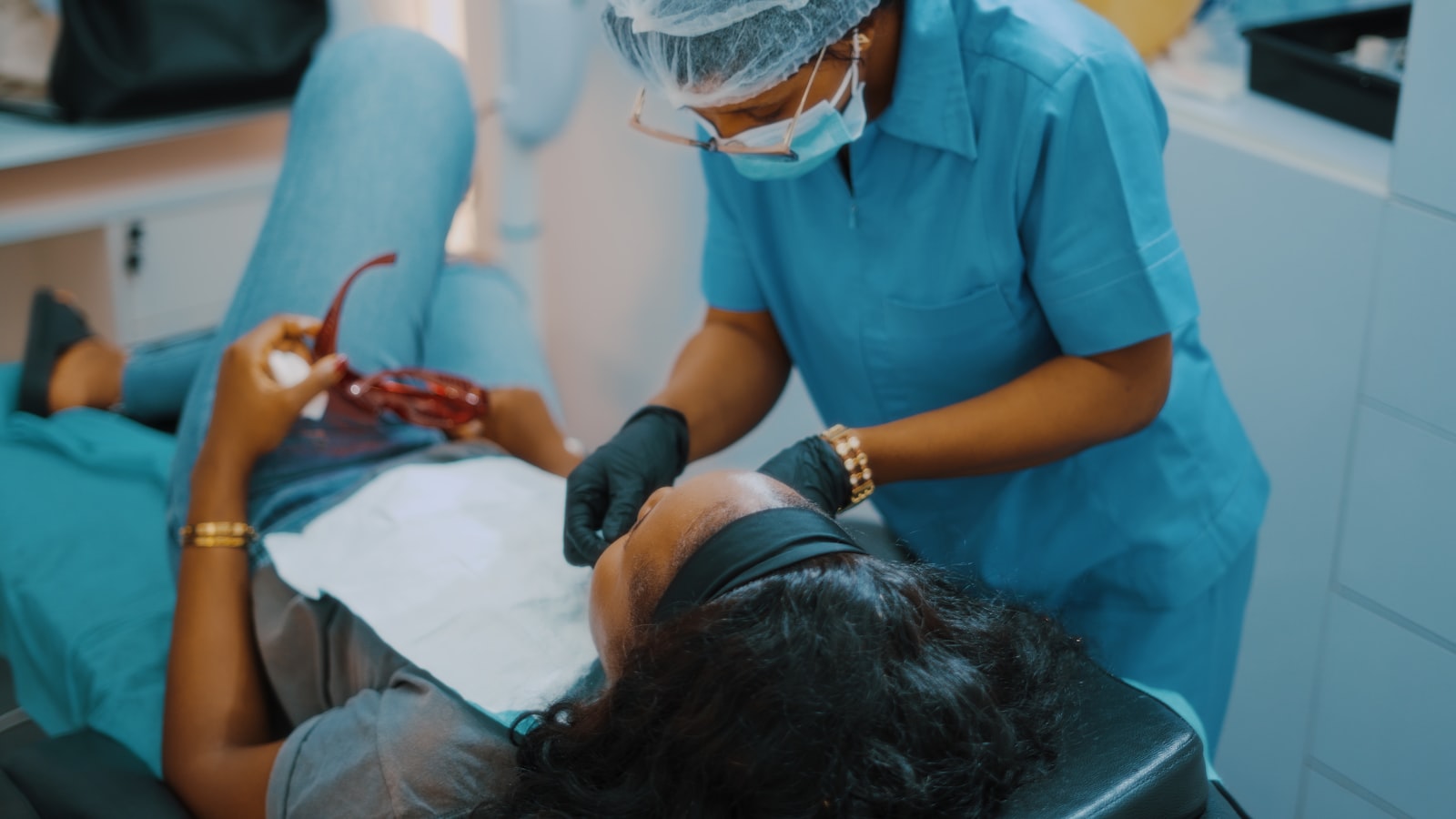

If you want a brighter smile for a wedding, a milestone birthday, or any big photo day, the single most important thing is timing. Whitening should be finished with time to spare, not squeezed in the day before. A sensible plan is to start the process around four to six weeks ahead and to have any final top-up done about two weeks before the event, so your shade has settled and any sensitivity has passed.
That buffer matters because freshly whitened teeth are briefly more porous and more sensitive, and they also stain more easily for a day or two. Plan around those facts and the result looks its best on the day.
Key takeaways
- Begin whitening around four to six weeks before the event to allow for assessment, treatment, and the shade settling.
- Schedule any final in-chair boost about two weeks ahead, so any sensitivity has time to fade.
- For 24 to 72 hours after whitening, teeth stain more easily, so avoid coffee, red wine, and other strongly coloured foods.
- See a dentist first, since whitening only works on natural teeth and any decay or gum problems should be sorted beforehand.
- Crowns, veneers, and fillings do not whiten, which affects planning if they are at the front.
Why timing is everything
Professional whitening uses hydrogen peroxide or carbamide peroxide to lift stains from within the enamel. For a short period afterwards the tiny channels in the enamel are more open, which is why teeth can feel sensitive and why they are temporarily more vulnerable to picking up colour. Leaving a gap between your last whitening session and the event lets the enamel settle, the shade stabilise, and any sensitivity resolve. Rushing it risks turning up on the day with sensitive teeth or a result that has not evened out.
A simple countdown plan
Six to eight weeks before
Have a dental check and a clean. Whitening works best on healthy teeth that are free of plaque and surface stain, and your dentist can spot anything, such as decay or gum inflammation, that should be treated first. A clean alone often brightens teeth noticeably before any whitening.
Four to six weeks before
Start whitening. In-chair treatment gives a faster jump, while a custom take-home kit works more gradually over a couple of weeks. Many people combine the two. Our guide to in-chair versus take-home whitening explains the difference.
About two weeks before
Do any final top-up now. This is late enough to look fresh on the day but early enough that any sensitivity has settled, which is why dentists often suggest a final boost around the two-week mark.
The final days
Maintain rather than whiten. Stick to a whitening-friendly diet, keep up gentle brushing, and avoid anything that could trigger sensitivity right before the event.
Managing sensitivity
Some sensitivity is normal and usually short-lived, though it can last up to a week for some people after a strong in-chair session, which is the main reason not to whiten at the last minute. To reduce it, use a sensitivity toothpaste for a couple of weeks beforehand, avoid very hot or cold foods straight after treatment, and follow your dentist's spacing for take-home gel rather than overusing it. If you have a history of sensitive teeth, tell your dentist so the strength and schedule can be adjusted. Our guide to whitening with sensitive teeth goes into more detail.
What to avoid after whitening
For the first 24 to 72 hours the enamel is more likely to take up colour, so a short stretch of care protects your result. Limit coffee, tea, red wine, cola, and dark juices, go easy on richly coloured foods such as berries, beetroot, curries, and tomato-based sauces, and avoid smoking. Water, milk, plain chicken, rice, and pale foods are all fine. After a couple of days the enamel has resealed and normal eating resumes.
A note on crowns, veneers, and fillings
Whitening only lightens natural tooth enamel. Crowns, veneers, and tooth-coloured fillings keep their original shade, so if you have any at the front, whitening can leave them looking darker by comparison. If a front crown or veneer no longer matches a newly whitened smile, replacing it is a separate step that needs its own lead time, which is another reason to start early and plan with your dentist.
What it costs
Costs depend on whether you choose in-chair, take-home, or a combination. As a general guide only, professional take-home kits and in-chair whitening in Australia span a broad range, with in-chair generally the higher option. These are general market ranges, not a quote, and the team at Lumi Dental does not list its own prices here. For current pricing see our current deals page, or book a whitening consultation for a written quote and a plan that fits your event date.
Frequently asked questions
How long before a wedding should I whiten my teeth?
Start around four to six weeks ahead and have any final top-up about two weeks before, so the shade settles and any sensitivity passes well before the day.
Can I whiten my teeth the day before an event?
It is not advised. Teeth can be sensitive and stain-prone for a day or more afterwards, so last-minute whitening risks discomfort and an uneven look.
What should I not eat after whitening?
For 24 to 72 hours avoid coffee, tea, red wine, cola, dark juices, berries, beetroot, curries, and tomato sauces, and avoid smoking, as teeth stain more easily during this window.
Does whitening work on veneers or crowns?
No. Whitening only lightens natural enamel, so crowns and veneers keep their shade. If they are at the front, plan early in case they need to be matched.
Will whitening make my teeth sensitive on the day?
Not if you time it well. Finishing about two weeks ahead and using a sensitivity toothpaste beforehand usually means any sensitivity has resolved by the event.
If you have a big day coming up, the team at Lumi Dental in Melrose Park can plan whitening around your date with the right lead time. Related reading: in-chair versus take-home whitening, whitening with sensitive teeth, and are chemist whitening kits safe.
This article is general information and not a substitute for personal advice from a dentist.

