

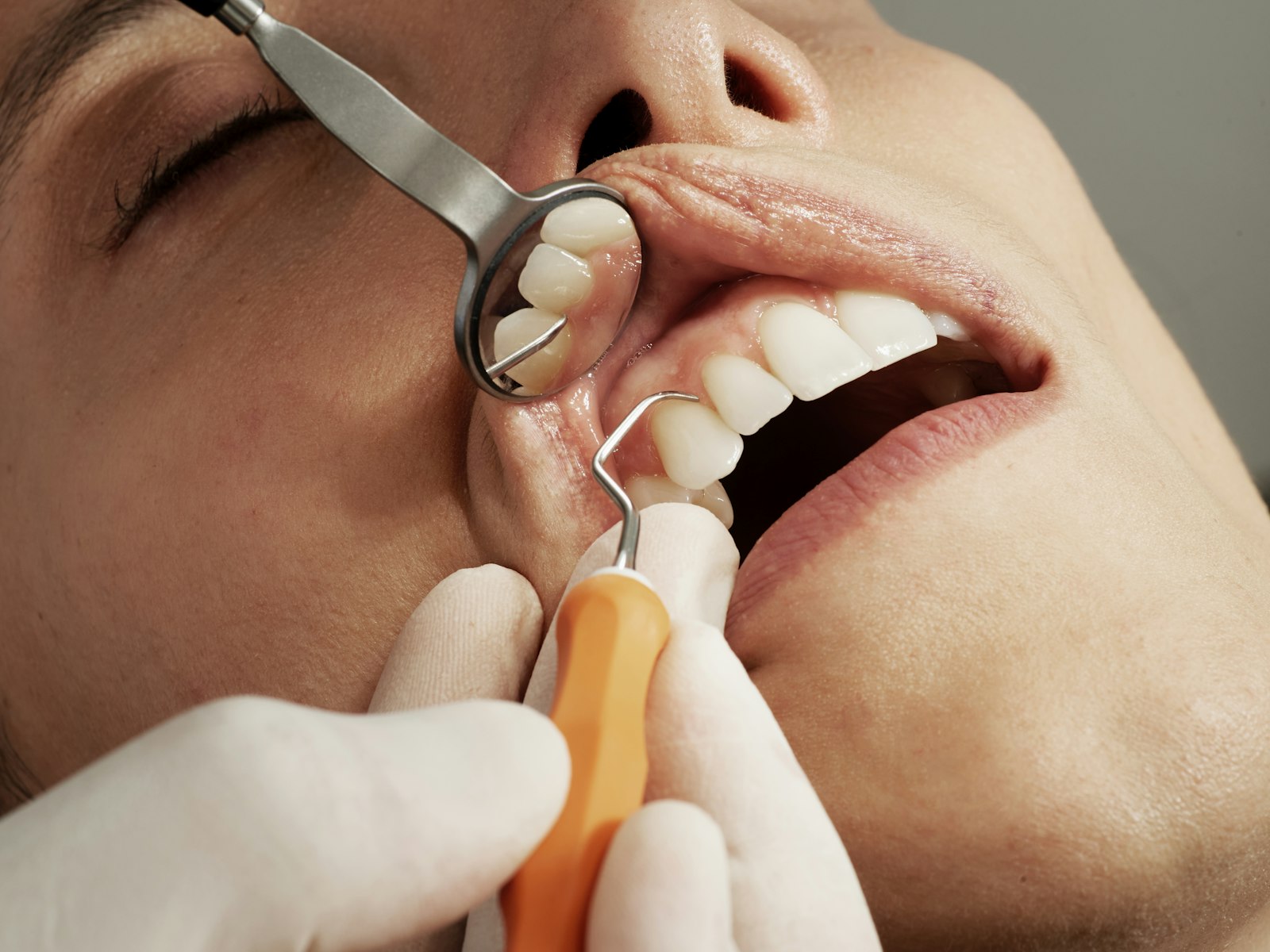

Children's sleep apnoea often shows early warning signs at the dentist's chair before it is picked up anywhere else, simply because paediatric dentists and orthodontists tend to see children more regularly than most other health professionals. A routine six-monthly check gives a dentist repeated opportunities to notice things like mouth breathing, enlarged tonsils, or a narrow palate, and to flag these to parents and the child's GP or paediatrician for proper assessment. Dentists do not diagnose sleep apnoea themselves, but they are often well placed to notice that something is worth investigating further.
Key Takeaways
- Paediatric dentists see children frequently enough that they can sometimes notice early signs of sleep-disordered breathing before other professionals do.
- Signs that may prompt a dentist to raise a concern include habitual mouth breathing, visibly enlarged tonsils, a narrow high palate, snoring reported by parents, or teeth grinding.
- Diagnosing paediatric obstructive sleep apnoea requires a sleep study and assessment by a paediatrician or ENT specialist, not a dental exam alone.
- Long-term mouth breathing has been linked with changes in facial and jaw growth over time, which is one reason dentists take the habit seriously.
- Orthodontic appliances such as palate expanders are sometimes used as part of a broader treatment plan, but current evidence on how much they affect sleep apnoea specifically, versus simply widening the arch, is still developing.
- Snoring alone does not mean a child has sleep apnoea, and a sleep study is the only reliable way to tell the difference.
Signs a Dentist Might Notice at a Routine Check
During a standard check-up, a dentist looks inside the mouth and throat for reasons well beyond cavities. A few findings can prompt a closer conversation with parents about sleep and breathing. Habitual mouth breathing is one of the more common ones: children who breathe through an open mouth at rest, rather than through the nose, often show dry gums, a low-hanging tongue posture, and sometimes a longer, narrower facial appearance over time. Enlarged tonsils are sometimes visible at the back of the throat during a routine look, and swollen adenoids or tonsils are one of the more common physical contributors to obstructive breathing problems in children.
A narrow, high-arched palate can also be a visual clue, since it is often associated with long-term mouth breathing and can go hand in hand with a smaller nasal airway. Parents may separately mention that their child snores most nights, breathes noisily during sleep, or grinds their teeth, and dentists take note of these reports alongside what they see in the mouth. None of these signs on their own confirms sleep apnoea, but together they can be enough to suggest a referral is worthwhile. For a closer look at mouth breathing itself, see our guide on mouth breathing in children.

Why Mouth Breathing Matters for Growing Jaws
The way a child breathes at rest can influence how the face and jaws develop, because normal nasal breathing encourages the tongue to rest against the roof of the mouth, which in turn supports the palate widening naturally as a child grows. When a child breathes through the mouth for extended periods, often because the nasal airway is partly blocked by enlarged adenoids, allergies, or a deviated septum, the tongue tends to sit lower, and the upper jaw can develop more narrowly and vertically instead of broadening out.
This is not a fast process, and an occasional stuffy nose during a cold is not a concern. The pattern that matters is a long-term, habitual one. Dentists who see the same child every six months over several years are in a good position to notice whether mouth breathing looks like a passing phase or a persistent habit worth investigating. Left unaddressed for years, this pattern is one of the reasons some children later need orthodontic treatment such as a palate expander to correct a narrow arch that formed during growth. You can read more about that process in our guide to palate expanders for kids.
What Happens After a Referral
If a dentist raises a concern about possible sleep-disordered breathing, the next step is usually a conversation with the child's GP or paediatrician, who can arrange further assessment. A sleep study, either in a lab or increasingly via validated home-based monitoring, is the standard way to confirm whether a child has obstructive sleep apnoea and how severe it is. An ENT specialist may also be involved, particularly where enlarged tonsils or adenoids are suspected, since removing them is one of the most common and effective treatments for paediatric obstructive sleep apnoea where they are the main cause.
| Who | Role in the Process |
|---|---|
| Dentist or orthodontist | Notices possible signs during routine checks; refers on rather than diagnosing |
| GP or paediatrician | Coordinates further assessment and referrals; monitors overall health |
| ENT specialist | Assesses tonsils, adenoids and the nasal airway; may recommend surgery |
| Sleep physician / sleep study | Confirms diagnosis and severity through overnight monitoring |
| Orthodontist (in select cases) | May be involved later if a narrow arch or crossbite also needs correcting |

Where Orthodontic Treatment Fits In
Orthodontic appliances are not a first-line treatment for paediatric sleep apnoea, and it is important to be cautious here. In some children, particularly those with a genuinely narrow upper arch and a diagnosed crossbite, an orthodontist may use a palate expander as part of the overall treatment plan. Some research has looked at whether widening the upper arch this way can improve breathing during sleep in selected children, and early findings are of interest, but the evidence is still developing and results vary between studies and patients. An expander should be considered an orthodontic tool for arch width, with any possible airway benefit treated as a secondary and unproven effect rather than the primary reason for treatment. Decisions like this are best made together with the treating paediatrician or sleep specialist, not by a dental team acting alone.
Frequently Asked Questions
Can a dentist diagnose sleep apnoea in my child?
No. A dentist can notice signs that suggest a closer look is warranted, but a formal diagnosis requires a sleep study and assessment by a paediatrician, sleep physician, or ENT specialist.
Is snoring the same as sleep apnoea?
Not necessarily. Many children snore occasionally without having sleep apnoea. Frequent, loud snoring alongside pauses in breathing, gasping, or very restless sleep is more concerning and worth mentioning to your GP.
Could it just be allergies?
Allergies and seasonal congestion can cause temporary mouth breathing and snoring. The pattern that concerns dentists most is one that persists for months rather than coming and going with a cold or hay fever season.
Will my child grow out of it?
Some children do improve as the airway develops or after their tonsils and adenoids naturally shrink with age, but this cannot be assumed, particularly if snoring or mouth breathing has been present for a long time. A proper assessment is the safest way to know.
What can I do at home while waiting for an assessment?
Keep a simple diary of what you notice, such as snoring frequency, breathing pauses, restless sleep, or daytime tiredness, and share this with your GP or dentist. It helps guide the referral.
Does a palate expander cure sleep apnoea?
No. It is an orthodontic appliance for widening a narrow upper jaw. Any effect on breathing during sleep is still being studied and should not be relied on as a treatment for diagnosed sleep apnoea on its own.
At what age should my child first see an orthodontist?
Many orthodontists suggest an initial check around age seven, even if no treatment is needed yet. Our guide to the first orthodontic check age explains why this timing is often recommended.
If a recent dental visit has raised questions about your child's breathing, snoring, or jaw development, the team at Lumi Dental can talk through what was noticed and help coordinate the next steps. Visit current deals to see what is currently available, or contact our general dentist in Melrose Park team to book a check-up.

