Most buried canines can be kept. When an upper canine stays stuck in the bone, the usual plan is to make room for it with braces, uncover it with a small surgical procedure, and then draw it slowly into line. Removing the tooth is kept for cases where that is not realistic, and age has a real effect on which option makes sense.
A common problem with a long path
Canines are the second most frequently impacted teeth after wisdom teeth. A 2026 systematic review in Medicina (Pop and colleagues) found reported rates of upper canine impaction ranging from about 1% to 7% across studies, with lower canines affected much less often. The upper canine forms high in the upper jaw and has a long way to travel before it reaches the mouth, which gives it more chances to go off course.
The same review found that the most common pattern is a canine sitting towards the roof of the mouth (palatal). Factors linked with impaction include a baby canine that is not lost on time, a narrow or crowded upper arch, extra teeth or growths in the way, and a missing or small neighbouring lateral incisor. Our articles on crowding and crooked teeth and on extra teeth in children explain two of these causes.
Planning starts with a precise position
An ordinary X-ray shows that a canine is buried, but treatment planning depends on knowing exactly where it is: towards the palate or the cheek, how high it sits, and how close it is to the roots of the front teeth. A 3D scan (cone beam CT) is often used for this. Lumi Dental has an Orthophos 3D X-ray, which takes both panoramic X-rays and 3D scans.
The scan also shows whether the canine has started to damage a neighbour. A 2018 systematic review in the Journal of the American Dental Association (Schroder and colleagues) found that root resorption of the incisors next to an impacted canine was usually slight, but around 31% of the resorption reported was severe, and delays in eruption or treatment can allow it to progress.
How a buried canine is brought into place
When the tooth is in a position that can be moved, treatment usually follows this order:
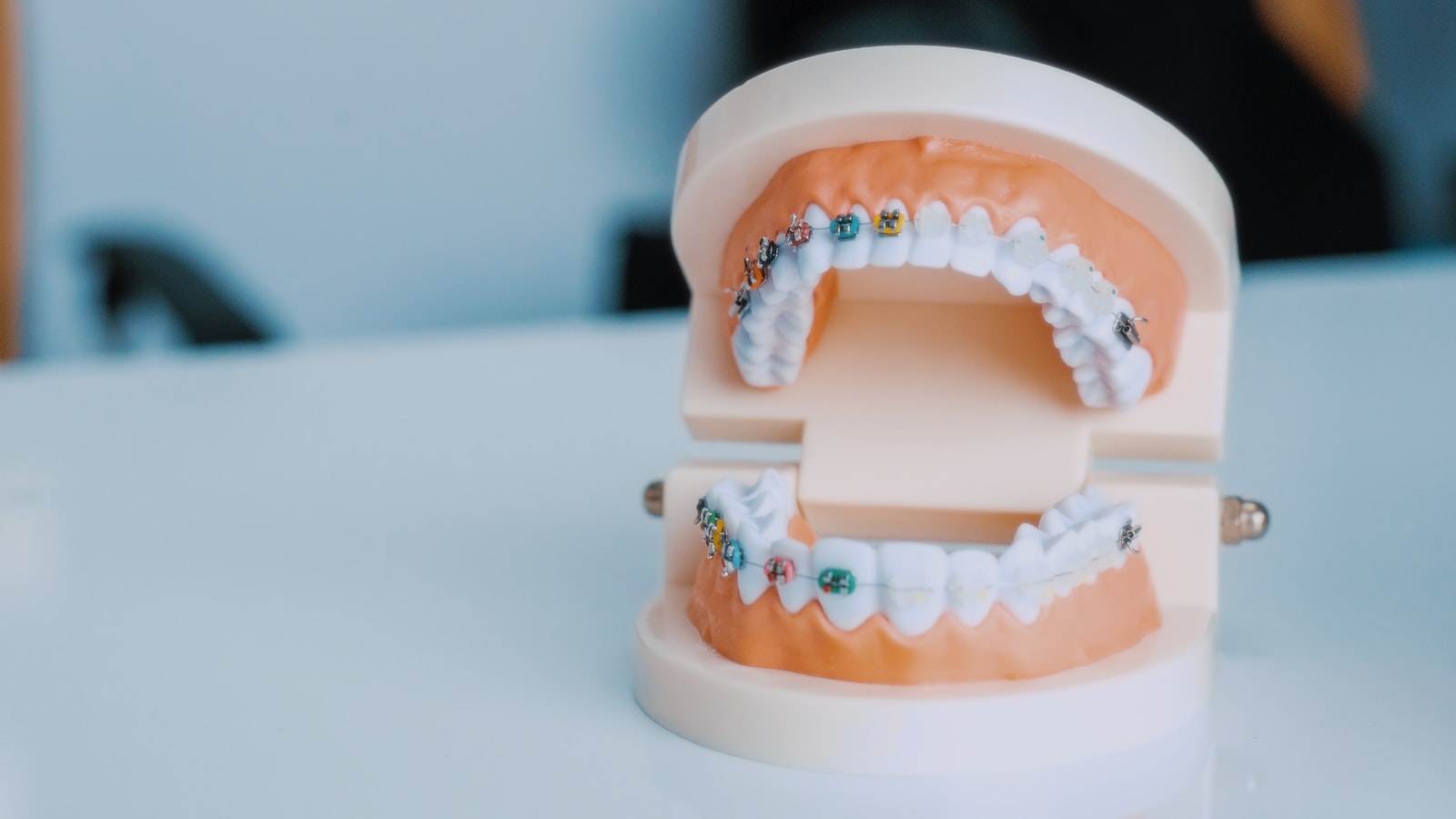
- Make space. Braces are fitted to create a gap in the arch large enough for the canine.
- Uncover the tooth. In a minor surgical procedure under local anaesthetic, sometimes with sedation, the gum and a little bone over the crown are moved aside. This is often done by an oral surgeon or periodontist.
- Attach a small bracket. A button or bracket with a fine gold chain or wire is bonded to the exposed tooth, and the gum is usually closed back over it.
- Apply gentle traction. At each adjustment, the chain is connected to the braces, which pull the canine slowly towards the arch.
- Align and finish. Once the canine is in the mouth, the braces line it up with the rest of the teeth, then a retainer holds the result.
This takes time. Moving a buried tooth often adds many months to a course of braces. Our guide to what to expect with braces covers the orthodontic side in more detail. At Lumi, our general dentists provide orthodontic treatment with fixed braces and clear aligners, and more complex cases may be referred to a registered orthodontist.
Age changes the odds
Impacted canines in teenagers usually respond well to this approach. In adults the outlook is less certain. A study by Becker and Chaushu (American Journal of Orthodontics and Dentofacial Orthopedics, 2003) compared 19 adults with matched teenagers who had palatally impacted canines in similar positions. Treatment succeeded for 69.5% of the adults' impacted canines compared with all of the teenagers' canines, every failure was in a patient over 30, and the adults needed noticeably more time and visits to resolve the impaction.
That does not mean adults should not try. It means the plan should be discussed with realistic expectations and a fall-back option.
When removing the canine is the better choice
Extraction may be recommended if the tooth is in a very difficult position, is fused to the surrounding bone (ankylosed), has damaged neighbouring roots, or if the patient would prefer not to have a long course of braces. The space can then be closed with orthodontics, or filled later with a bridge or an implant once growth has finished. Occasionally a buried canine is left alone and monitored with X-rays if it is causing no harm, because an untreated canine can, in some cases, develop a cyst around its crown or damage neighbouring roots.
Common questions
Does the exposure procedure hurt?
It is done with local anaesthetic, so you should not feel pain during it. Most people have some tenderness and swelling for a few days, which is usually managed with standard pain relief.
What if the canine does not move?
If a tooth stays fixed despite traction, it may be fused to the bone. The plan then usually changes to removing it and managing the space.
Can this be done with clear aligners?
The traction stage generally relies on fixed attachments. Some plans combine aligners with other appliances, but this depends on the case and is decided at assessment.
If you or your child has been told a canine is buried, or a baby canine is still in place in the teenage years, our dentists can take the right images and talk through the options. Children are often first seen with early orthodontic problems like this at a routine visit. To book an assessment, contact the team at Lumi Dental or see our current deals page.