Which method will straighten your teeth depends far more on how far each tooth has to travel, and on how your upper and lower teeth meet, than on which product you have seen advertised. A slightly twisted incisor and a mouth with no room left for the canines are very different problems, even though both get called crooked teeth. Clear aligners, fixed braces and, for a small group of people, cosmetic bonding or veneers can all play a part. Working out which group you belong to comes first.
Teeth crowd for a handful of reasons
The most common cause is a mismatch between the size of the teeth and the space available in the jaw. If the jaws are narrow or the teeth are on the larger side, the teeth that erupt last have to squeeze in wherever they can, so they rotate, overlap or sit forward of the arch. Jaw size and tooth size tend to run in families.
Other things can push teeth out of line as well:
- long-standing thumb, finger or dummy habits while the adult teeth are coming through
- a tongue that rests or pushes forward against the front teeth
- a baby tooth lost early, or an adult tooth taken out and never replaced, which lets the neighbours tip into the gap
- gradual change through adult life, when the lower front teeth in particular often become more crowded
- teeth that were straightened years ago and moved again once a retainer was no longer worn
The cause can change the plan. A single tooth that has leaned into an old extraction space is a different job from a whole arch that is short of room. If your concern is the lower front teeth getting worse with age, our article on crowded lower front teeth in adults covers that pattern in more detail.

Straightening is a choice, not an obligation
Plenty of people have teeth that are a little out of line and never need to do anything about it. Mild irregularity on its own is not a disease.
There are practical reasons some people choose treatment beyond appearance. Overlapping teeth leave narrow spaces where a brush and floss struggle to reach, so plaque can sit there longer. A systematic review by Bollen in the Journal of Dental Education (2008) found that people with more marked malocclusion tended to have more gum disease, although the studies were of weak quality and the link was an association, not proof that crooked teeth cause gum problems. The same review did not support orthodontic treatment purely to prevent future gum disease, apart from some unusual bite problems.
So the sensible questions are personal. Are some teeth hard to clean? Is one tooth taking heavy or uneven contact when you bite? Does the appearance bother you enough to commit to months of treatment and long-term retainers? If the answers are yes, an assessment is worth having. If they are no, leaving things alone is a reasonable decision too.
Small movements and large movements need different tools
Every tooth that moves has a crown you can see and a root you cannot. Tipping a crown a short distance is relatively easy. Rotating a tooth with a rounded root, closing a large space, or moving a root bodily through bone needs more control, and the way the upper and lower teeth fit together adds another layer.
Clear aligners
Aligners are thin, removable plastic trays, each one shaped to move the teeth a small step further than the last. They are usually changed every week or two, and aligner makers instruct patients to wear them about 20 to 22 hours a day, taking them out only to eat, drink anything other than water and clean their teeth. Small tooth-coloured bumps called attachments are often bonded to some teeth so the trays can grip and steer them.
Aligners suit many cases of mild to moderate crowding and spacing, and they are popular with adults who would rather not have brackets on show. Results depend heavily on wear time, because a tray left in its case does nothing. Some complex rotations and bite corrections are more predictable with fixed braces. Lumi offers Invisalign, Angel and Spark aligners, and our guides on what Invisalign costs and how different clear aligner systems compare go further into the choice between them.
Fixed braces
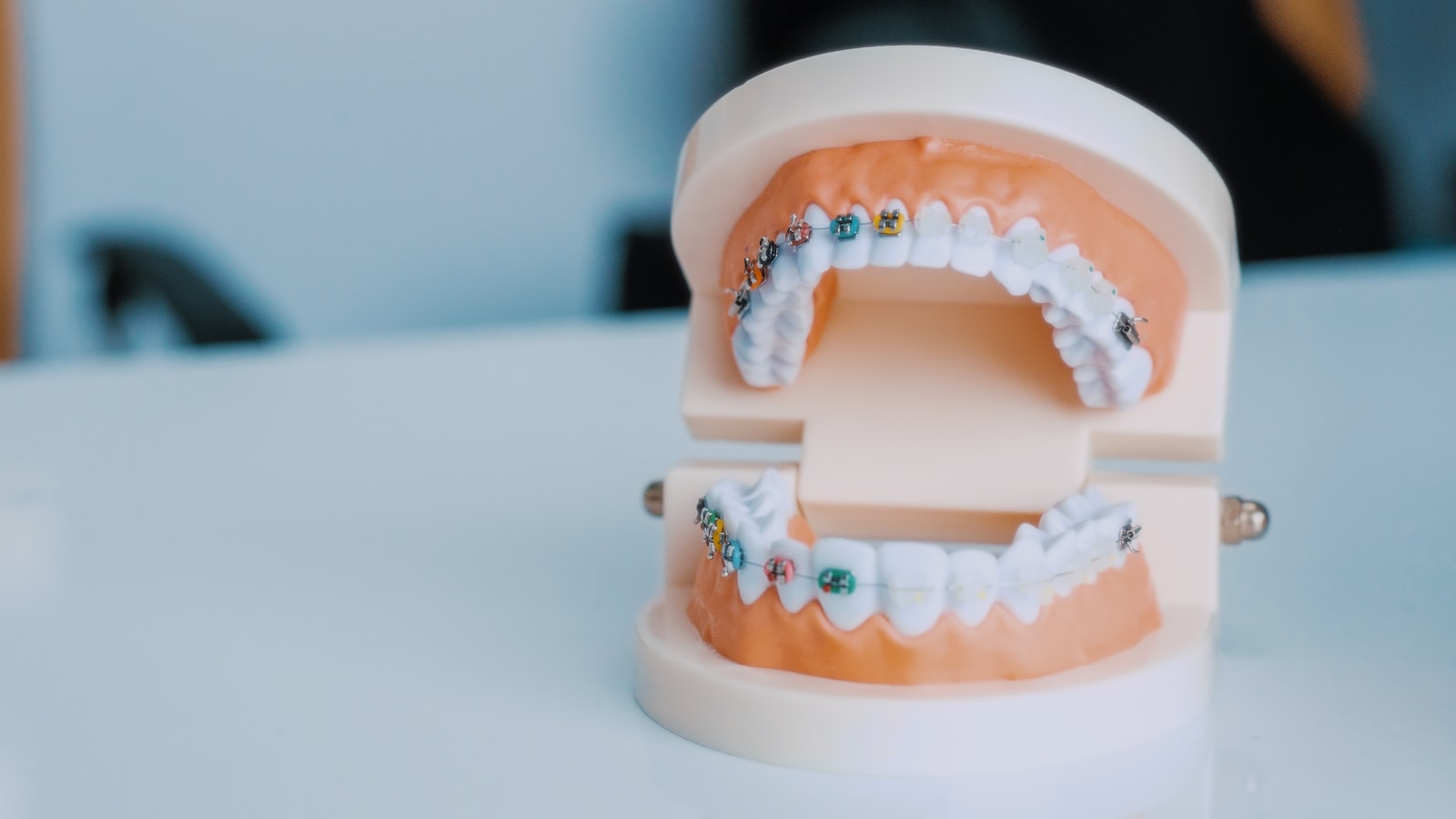
Braces use brackets bonded to the teeth and an archwire that is changed or adjusted at regular visits. Because they are attached all the time, they do not rely on you remembering to wear them, and they give the dentist fine control over roots and bites. Metal brackets are the most familiar. Ceramic, tooth-coloured brackets work the same way and are less noticeable, though they can be a little more fragile.
Self-ligating brackets, such as Damon braces, hold the wire with a built-in clip rather than elastic ties. Our comparison of Damon braces, conventional braces and aligners sets out what the research does and does not show about the differences.
Lingual braces
Brackets can also be bonded to the tongue side of the teeth, where they cannot be seen from the front. They can treat a wide range of problems, but the tongue takes time to get used to them, speech can be affected at first, and fees tend to be higher. Not every practice offers them.
When moving teeth is not the answer
If teeth are close to straight and the concern is a chipped edge, an uneven length or a small gap, adding composite resin or fitting veneers can change how the smile looks without moving anything. These are cosmetic fixes. They do not correct the bite, and building up or covering teeth that are genuinely crowded can leave awkward shapes and areas that are hard to clean. Veneers also involve removing some enamel in many cases. Our articles on composite bonding versus veneers and crowns versus veneers explain where each fits.
What decides the cost
Fees for straightening vary more than for most dental treatment, because two people asking for the same thing can need very different amounts of work. The main drivers are:
- how many teeth need to move and how far
- whether the bite needs correcting as well as the alignment
- the appliance: conventional metal braces are usually at the lower end, tooth-coloured and lingual options cost more, and aligner fees depend on how many trays the plan needs
- how long treatment runs and how many review visits it takes
- work needed first, such as fillings, gum treatment or, occasionally, removing a tooth to make room
- retainers at the end, and whether replacements are included
For cosmetic-only changes, typical Australian market ranges (not Lumi fees) are about $250 to $800 per tooth for composite bonding and $1,500 to $2,500 per tooth for porcelain veneers. For braces and aligners, a meaningful figure only comes from a written treatment plan with fees after records are taken, so we do not quote a general range here.
Extras cover with an orthodontic component may pay part of the cost, usually with waiting periods and a lifetime limit that differ between funds and policies. It is worth asking your fund what your limit is before you start. Our article on how health insurance treats dental work explains the common rules. The Child Dental Benefits Schedule does not cover orthodontic treatment.
The assessment that comes before any of this
A straightening assessment starts with the health of the teeth and gums, because moving teeth through inflamed gums or around untreated decay can make those problems worse. These are dealt with first.
Records follow: a 3D scan of the teeth, clinical photographs and X-rays. The X-rays show the roots and bone, which a mirror cannot. From there the dentist can explain which approaches are realistic for your case, roughly how long each would take, what the trade-offs are and what it would cost in writing.

At Lumi we are general dentists who provide orthodontic treatment with both fixed braces and clear aligners. Some cases, such as those with significant jaw discrepancies, are better looked after by a registered orthodontist, and we refer when that is the right call. You do not need a referral to see an orthodontist directly in Australia.

Straight teeth stay straight only with retainers
Teeth tend to drift back towards where they started once braces or aligners finish. A Cochrane review updated in 2023 (Martin and colleagues) describes this relapse as the reason a retention phase is needed after treatment, and it is also why many adults who had braces as teenagers notice crowding returning years later.
Retainers are either a clear removable tray, usually worn at night, or a thin wire bonded behind the front teeth. Most people are advised to keep some form of retention long term. The same drift can reopen a gap that was closed, which we discuss in our article on the gap between the front teeth.
Moving teeth at home is risky
Rubber bands, paper clips, an old retainer belonging to someone else, or trays posted out without anyone having examined your mouth all carry real risk. Teeth moved without X-rays or supervision can be pushed out of their bone support, gum disease can be missed, and roots can be damaged. Any tooth movement should be planned and monitored by a registered dentist or orthodontist who has examined you in person.
What patients ask about straightening
How long does treatment take?
It depends on the case. A small correction can take a matter of months, while crowding combined with a bite problem can take considerably longer. Your dentist should give you an estimated range after looking at your records.
Am I too old to straighten my teeth?
There is no upper age limit as long as the teeth, gums and supporting bone are healthy. Adults often need their gum health checked more closely before treatment starts.
Can aligners fix severe crowding?
Sometimes. Severe crowding, large rotations and significant bite problems are often more predictable with fixed braces, and some cases are best referred to a registered orthodontist. An assessment will show whether aligners are a realistic option for you.
Will I need to wear a retainer forever?
Most people are advised to keep wearing a retainer in some form long term, often only at night after the first months. Stopping is the most common reason teeth move again.
Book a straightening assessment
If you would like to know which options suit your teeth, we can examine your teeth and bite, take a scan and photographs, and talk you through the choices and a written plan. Lumi offers free consultations for braces and aligners at Melrose Park; see our current offers for details or book a time online.