Superannuation early release for dental treatment is only available through the compassionate release rules, and the ATO will only consider it when two separate conditions are both met. This page sets out what the Australian Taxation Office actually requires, what it says it will not approve, and what the Dental Board of Australia tells patients to watch for. It is general information only. It is not financial, tax or insurance advice, and nothing here is a suggestion that you should access your super.
Key takeaways
- Compassionate release for medical treatment requires two ATO conditions to be met, not one.
- The ATO does not publish a list of eligible dental procedures, so eligibility turns on the condition being treated rather than the name of the treatment.
- You have to show there is no other reasonable way to pay, and the ATO can ask for evidence of that.
- ATO approval is not payment, because your super fund decides separately whether it will release anything.
- Money released this way is taxed as an ordinary super lump sum, so the balance has to cover the treatment and the tax.
- The Dental Board of Australia lists a dentist encouraging you to access your super as a red flag.
What compassionate release actually is
Superannuation is preserved, which means it is normally locked away until you reach a condition of release. Compassionate release is one of a small number of exceptions. The ATO administers it for most people, and medical treatment is one of the grounds it can be granted under.
The ATO's own guidance defines medical treatment for these purposes as the application of medicines or the practice of medicine, such as surgery or psychotherapy, to a person. Dental treatment is expressly named on the ATO's medical treatment page as something that may be eligible where specific evidence is provided. It sits alongside surgery, psychiatric treatment, medicinal drugs and IVF on that list.
Condition 1: the treatment has to be for a qualifying reason
The ATO requires that the treatment is needed to treat a life-threatening illness or injury, to alleviate acute or chronic pain, or to alleviate acute or chronic mental illness. That is the whole of condition 1. If the treatment does not sit inside one of those three categories, the application does not get past the first gate.
The ATO is direct about how far pain alone goes. Its guidance states that experiencing pain or distress does not automatically mean you may be eligible. Where treatment options have varying cosmetic outcomes, the ATO expects practitioners to certify and quote only for the treatment that is necessary, and says it can only approve what is absolutely necessary to treat the eligible condition.
Condition 2: the treatment is not readily available through the public system
This is the condition almost nobody talks about, and in my experience it is the one patients have never heard of when they first raise the topic. The ATO requires that the treatment is not readily available to you through the public health system. If you are eligible for public dental care and the treatment you need is available through it, that is directly relevant to your application.
Public dental eligibility in New South Wales is narrower than many people assume, and waiting times vary by service and by clinical priority. If you have not checked where you sit, our guide to public dental eligibility and waiting lists in Sydney is a reasonable starting point. It is also worth understanding what Medicare does and does not do for adult dental care, which we cover in Medicare and dental: what is and is not covered.
Dental is listed, but there is no list of dental procedures
A lot of pages on this subject publish a list of "eligible" dental treatments. Implants, crowns, bridges, full arch replacement, orthodontics, veneers. Those lists are not drawn from the ATO. The ATO does not publish a list of eligible dental procedures anywhere in the guidance covered here.
The reason matters. Eligibility is assessed against the condition being treated and the two conditions above, patient by patient. Any page telling you a named procedure "qualifies" is telling you something the ATO has not said.
The ATO is also explicit that cosmetic procedures that are not required to treat a life-threatening illness, or to alleviate acute or chronic pain or mental illness, are not eligible. Treatment the practitioner does not consider necessary is not eligible. Neither is treatment for a condition you might develop but do not currently have. Third-party fees charged for preparing the application are not eligible either.
If you are researching a specific treatment because of what it may cost, understanding the treatment itself is a better starting point than a funding pathway. Our guide to dental implants in Sydney explains what the treatment involves and what changes the amount of work required.
What the ATO looks at
| Requirement | What it means | What you provide | Common reason it fails |
|---|---|---|---|
| Condition 1: a qualifying condition | Treatment is needed for a life-threatening illness or injury, or to alleviate acute or chronic pain, or acute or chronic mental illness | Medical reports that set out the condition and why the treatment is required for it | The reports describe a problem but never tie the treatment to one of the three qualifying reasons |
| Condition 2: not readily available publicly | The treatment is not readily available to you through the public health system | Information about your circumstances and public system access | The application never addresses the public system at all |
| Two reports | One from a relevant registered medical specialist in the area applied for, and one from a registered medical practitioner or another registered medical specialist | Two separate reports meeting the ATO's content requirements | Only one report, or reports written without a proper consultation |
| Itemised quote or unpaid invoice | The specific cost of the specific treatment being applied for | An itemised quote, or an invoice that is still unpaid | A lump figure with no itemisation, or an expense already paid |
| Dental treatment plan | A dental application needs the treatment plan with details of all stages of treatment | A written, staged treatment plan | A quote with no plan behind it, or stages that do not match the quote |
| No other way to pay | You have no other reasonable means of meeting the expense | Evidence of your financial position, which can include bank statements, lender or provider letters, or statutory declarations | The ATO identifies an available option the application did not account for |
| Your fund will release it | The fund has its own rules and must be willing and able to pay | Confirmation from your fund before you apply | Approval is granted, then the fund will not or cannot release the money |
| Documents within the required age | The ATO sets maximum ages for supporting documents | Quotes no more than six months old, invoices no more than 30 days old, medical reports no more than six months old at the time of application | Documents gathered months earlier have aged out by the time the application is lodged |
The evidence you have to produce
A dental application carries an extra requirement that other medical treatment applications do not. As well as the medical reports and the itemised quote or unpaid invoice, the ATO says applicants will also need to provide a copy of the treatment plan, with details of all stages of the treatment.
That is a higher bar than a one-line estimate. It means the plan and the quote have to agree with each other, stage by stage. A written, itemised quote is something you should be given for significant treatment anyway, and we explain why in our piece on informed financial consent and getting a written quote. If the numbering on a dental quote is unfamiliar, how to read an itemised dental invoice walks through what the item numbers mean.
On the two reports, the ATO's language throughout refers to a registered medical practitioner and a relevant registered medical specialist who is a specialist in the area you are applying for. Many pages online state confidently that this means one report from your dentist and one from your GP. I could not confirm that specific combination against the ATO's own published material, so treat it as unconfirmed and ask the ATO directly who is appropriate to write the reports in your situation. The same goes for whether an oral and maxillofacial surgeon, a periodontist or an endodontist satisfies the specialist requirement. That is not addressed in the ATO guidance reviewed here.
The test most people are not expecting
The ATO requires you to have no other way to pay. That is not a soft question. Its guidance points to savings, a partner's savings, mortgage redraw, existing credit cards or personal loans, selling shares, investments or other assets, a payment plan with the provider, and taking a loan. If you can pay part of the expense, you apply only for the remainder.
The ATO may ask for bank statements, letters from lenders or providers, or statutory declarations to support what you have said. This is the point where a lot of applications come unstuck, because people assume the test is whether the money is convenient to find rather than whether it is available at all.
A payment plan offered by the provider is on the ATO's list of alternatives, which means it is worth understanding what options exist before assuming super is the only route. Our overview of dental payment plans and affording treatment sets out how those arrangements usually work.
Your super fund is a second, separate gate
ATO approval is not the money arriving. It is permission for your fund to release an amount. The fund then makes its own decision under its own trust deed and rules.
Before applying, the ATO tells you to check whether your fund allows early release at all, to confirm the balance covers the expense and the tax, to check whether the fund charges a fee to release funds, and to understand what the withdrawal does to any insurance attached to the account. Members of a self managed fund still apply through the ATO. Members of exempt public sector schemes generally apply to their scheme rather than to the ATO.
Tax, and the balance trap
The ATO states that super withdrawn on compassionate grounds is paid and taxed as a normal super lump sum. The rate depends on factors including your age, your preservation age, and the components of the lump sum. Taxable amounts have to be included in your tax return.
I am not going to publish a rate, because the applicable rate depends on your circumstances and a registered tax agent is the right person to tell you what yours would be. The practical consequence is the part worth holding on to: the balance has to be large enough to cover the treatment and the tax on the withdrawal. A balance that exactly matches a quote is not a balance that covers a quote.
What accessing super early can affect
The ATO lists several downstream effects of accessing super early. It notes it may affect your future retirement income, your income protection insurance, your life and total and permanent disability cover, family tax benefit and child support.
The insurance point is easy to miss. Many people hold income protection and TPD cover inside their super account without realising it, funded from the balance. Reducing that balance can have consequences for cover that has nothing to do with dentistry, and a financial adviser is the right person to work through it with you.
What the Dental Board tells patients to watch for
The Dental Board of Australia has published patient-facing guidance on using superannuation for dental treatment, and it reads as a list of warnings. The red flags it identifies include advertising compassionate release as an easy way to fund treatment, the dentist encouraging you to access your super, being charged a fee to prepare the application, being asked to pay upfront, being asked for your myGov details, and a clinical report that does not match what you were told in the chair.
The ATO adds its own list of practitioner conduct it considers inappropriate or illegal: writing reports without a proper consultation, using telehealth where an in-person examination is required, recommending more expensive options where cheaper comparable ones exist, giving unlicensed financial product advice, collecting patients' myGov details, and charging for application help without being a registered tax agent.
On myGov specifically, the ATO is blunt. Sharing your details breaches the myGov terms of use, can lead to the account being locked, suspended or deactivated, and you remain responsible for any penalties. No practice, adviser or service should ever ask for them.
The Dental Board also says a dentist should support continuity of care if the relationship ends, must obtain financial consent before starting treatment, and should disclose ongoing and maintenance costs.
Sequencing: do not book before the money has landed
The ATO's own advice is that because an application may not be approved, you should wait for the outcome and receive payment from your fund before you book the treatment. It also notes applications generally need to be for an expense that has not yet been paid, although where an expense was paid with borrowed money, the outstanding balance of that borrowing may be claimable under additional criteria.
What a dental practice can and cannot do here
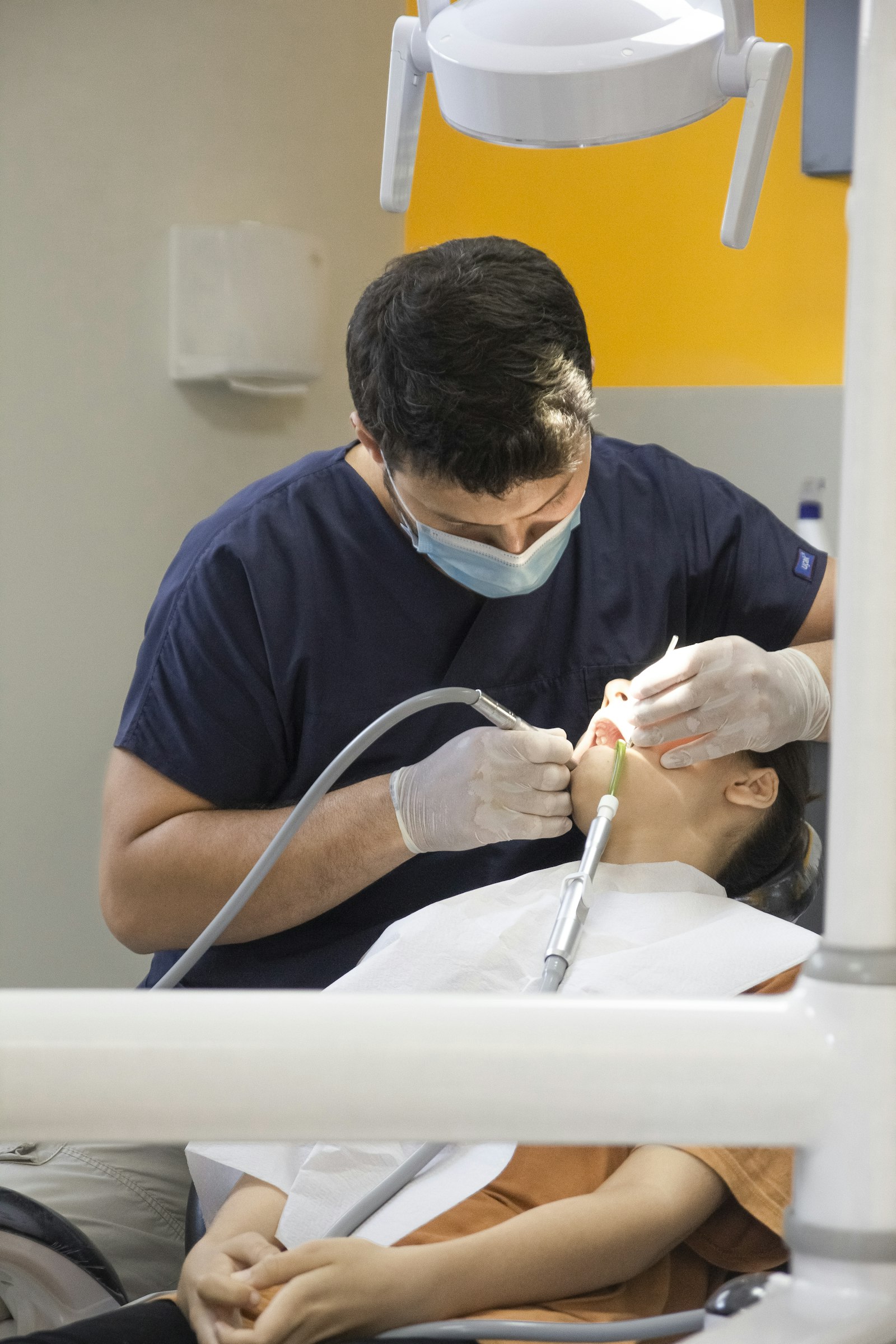
The team at Lumi Dental can do what any practice should do for any patient: examine you properly, explain what is going on, write a staged treatment plan, and give you a written itemised quote. Those documents exist because you are entitled to them, not because of any funding pathway.
What a dental practice cannot do is advise you on your superannuation, prepare or lodge an application for you, or tell you that accessing super is a good idea. Dentists are not licensed to give financial advice, and the Dental Board treats encouragement to access super as a red flag. If you want advice on whether early release makes sense for you, that conversation belongs with a licensed financial adviser and, on the tax side, a registered tax agent.
One related point, since the ATO's definition of medical treatment mentions surgery. Lumi Dental does not provide general anaesthetic. For patients who find treatment difficult to tolerate, sedation options are explained on our page about IV sedation.
Frequently asked questions
Can I use my super to pay for dental treatment in Australia?
Only through compassionate release, and only if the ATO is satisfied that both of its conditions are met and that you have no other reasonable way to pay. Approval also depends on your super fund being willing and able to release the money.
What dental treatments qualify for early release of super?
The ATO does not publish a list of qualifying dental procedures. Eligibility is assessed against the condition being treated and the two conditions, so lists of "eligible treatments" published on clinic websites are not drawn from ATO guidance.
Do I need two doctors to approve super release for dental?
Two reports are required: one from a relevant registered medical specialist in the area you are applying for, and one from either a registered medical practitioner or another registered medical specialist. Exactly who is appropriate for a dental application is not something I could confirm against the ATO's own published material, so ask the ATO directly.
How much tax do you pay when you withdraw super for dental treatment?
The ATO says the withdrawal is taxed as a normal super lump sum and that the rate depends on your age, your preservation age and the components of the lump sum. There is no single rate, and a registered tax agent is the right person to tell you what applies to you.
Can my super fund refuse to release my super after the ATO approves it?
The fund makes its own decision under its own rules, so ATO approval is not a guarantee of payment. The ATO tells applicants to check with their fund before applying, including whether it allows early release and whether it charges a release fee.
Can I use my super for cosmetic dentistry or veneers?
The ATO states that cosmetic procedures not required to treat a life-threatening illness or to alleviate acute or chronic pain or mental illness are not eligible. It also says experiencing pain or distress does not automatically make someone eligible.
What happens if my compassionate release application is rejected?
The ATO does not publish a processing timeframe or an outcome guarantee, which is exactly why it recommends waiting for the outcome and for payment before booking treatment. If you are unsure about your options after a decision, the ATO is the right body to ask about the decision itself, and a licensed financial adviser about what to do next.
If cost is the reason you are reading this, the more useful first step is usually a proper examination and a written, staged plan so you know what actually needs doing and in what order. The team at Lumi Dental in Melrose Park is open Monday to Saturday, and you can see what is currently available on our current offers page or book a visit when you are ready.
This article is general information only. It is not financial, tax or insurance advice, and it is not a recommendation to access your superannuation. It is also not personalised dental advice, because that requires an examination. Rules and guidance change, so check the ATO's current guidance and speak to a licensed financial adviser and a registered tax agent about your own circumstances.