



Most stubborn discolouration that will not budge with whitening is intrinsic, meaning it sits deep inside the tooth rather than on the surface. Tetracycline staining is the classic example: an antibiotic taken during tooth development can leave permanent grey, brown or yellow bands locked beneath the enamel. Because the colour is built into the tooth structure, surface whitening often falls short, and the right fix depends on how deep and how dark the staining is.
Key takeaways
- Intrinsic stains sit within the tooth, so they respond poorly to ordinary whitening.
- Tetracycline taken during tooth formation can cause permanent grey or brown banding.
- Mild cases may lighten with supervised professional whitening; deeper banding usually needs bonding, veneers or crowns.
- The best option depends on stain severity, how many teeth are affected and how much tooth structure is healthy.
- A proper assessment matches the treatment to the cause rather than defaulting to one fix.
Intrinsic versus extrinsic stains
Understanding the difference is the whole game here. Extrinsic stains sit on the outer surface of the enamel and come from things like coffee, tea, red wine and smoking. These respond well to cleaning and whitening. Intrinsic stains are different. They are inside the tooth, in the dentine layer beneath the enamel, and they form during development or after trauma. Because whitening gels work mainly on the surface and outer enamel, they struggle to reach colour locked deeper in. Our guide to yellow teeth and how to whiten them covers the surface stains that whitening handles well.
What causes intrinsic staining
Tetracycline and antibiotics
Tetracycline antibiotics taken while teeth are forming, typically in young children or during pregnancy, can bind into the developing tooth and create lasting grey, brown or yellow bands. This is why these antibiotics are generally avoided in pregnancy and early childhood. The staining is permanent because it is part of the tooth structure.
Other causes
Fluorosis from excess fluoride during development can cause white or brown mottling, covered in our piece on dental fluorosis. Trauma to a tooth can cause it to darken from the inside as the nerve changes, and a tooth that has had a root canal can grey over time. Certain conditions present from birth can also affect enamel and dentine colour.
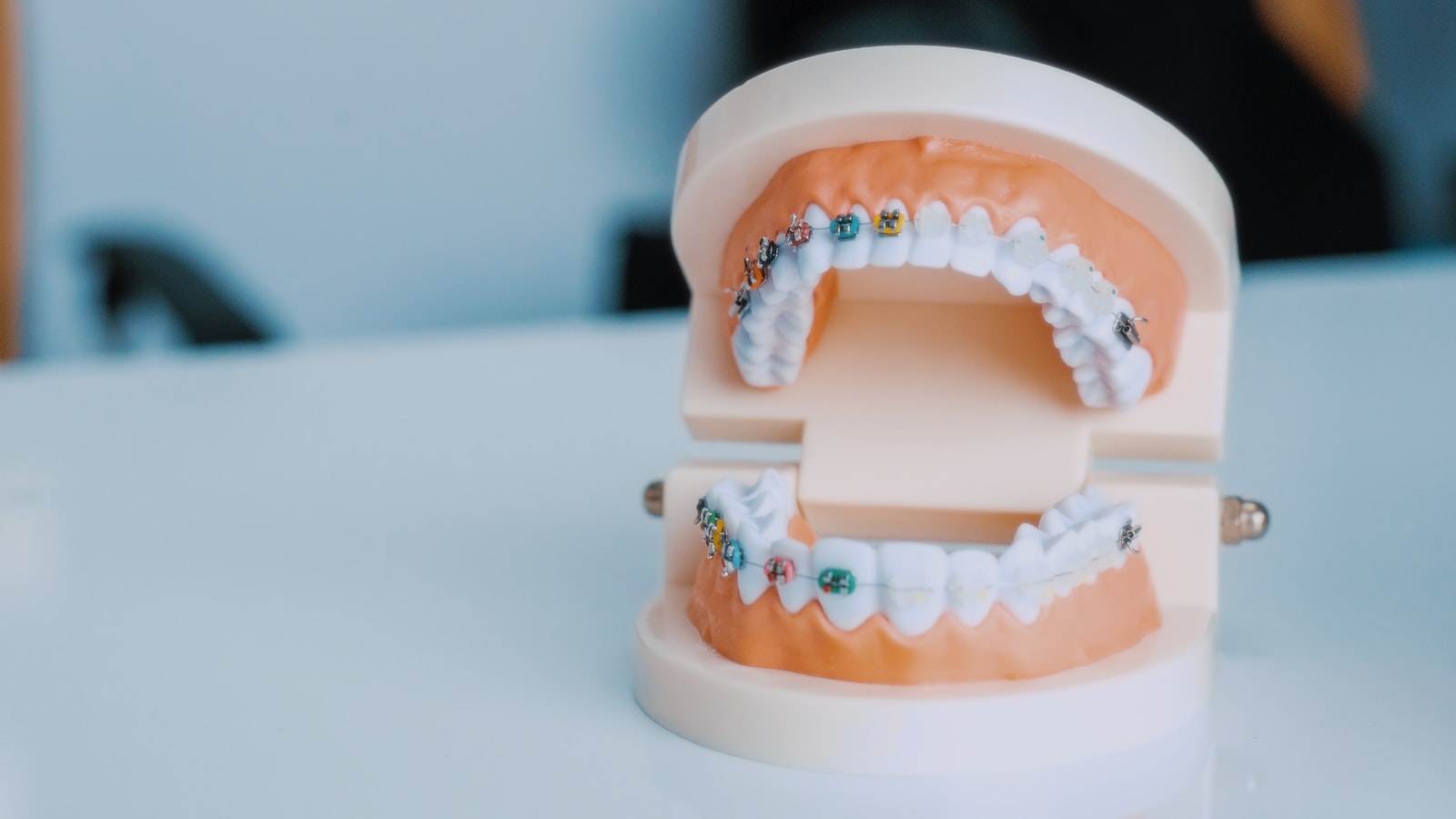
Treatment options compared
There is no single right answer. The best choice depends on how dark the staining is, whether it forms bands or an even tone, and how much healthy tooth you have. Here is how the main options compare in general terms.
| Option | Best for | Trade-offs | General market cost |
|---|---|---|---|
| Professional whitening | Mild, even discolouration | May need extended treatment; limited on deep bands | $300 to $1,000+ |
| Composite bonding | One or a few teeth, mild to moderate stain | Can stain over time; needs upkeep | $150 to $450 per tooth |
| Porcelain veneers | Moderate to severe banding, front teeth | Irreversible; removes some enamel | $1,500 to $3,000+ per tooth |
| Crowns | Severe stain with weakened teeth | Most tooth removal; full coverage | $1,500 to $3,000+ per tooth |
These are general Australian market ranges to help you plan, not a quote. For an accurate, written estimate based on your teeth, see our current offers and pricing or ask for a consultation.
Why severity decides the plan
For mild, evenly toned intrinsic staining, a course of supervised professional whitening can sometimes lighten the teeth enough to satisfy. The deeper and more banded the stain, the less whitening alone achieves, and the more likely a covering option becomes the better path. For moderate to severe tetracycline banding on the front teeth, veneers are often the most predictable way to mask the colour while keeping a natural look. In some cases, whitening first and then bonding or veneers gives the best result with the least intervention. Our comparison of composite bonding versus veneers and our overview of veneer types help weigh those choices.
A note on single dark teeth
If only one tooth has darkened, often after trauma or a root canal, the answer can be different again. Internal bleaching, where the whitening agent is placed inside the tooth, can be a conservative option that avoids covering the tooth at all. Our article on internal bleaching of a dark tooth explains when this works well.
What to expect at an assessment
A careful look matters because matching the treatment to the type and depth of stain avoids over-treating. The team will check whether the discolouration is intrinsic or extrinsic, how the teeth respond to light, the health of the enamel and nerve, and what result you are hoping for. From there, the options can be ranked from least invasive to most, so you can make an informed choice. Whitening, where suitable, is always worth considering first because it removes no tooth structure.
Frequently asked questions
Can whitening remove tetracycline stains?
Sometimes it can lighten mild cases, but deep or banded tetracycline staining usually does not respond well to whitening alone because the colour is locked inside the tooth. These cases more often need bonding, veneers or crowns.
Are intrinsic stains permanent?
Many are, in the sense that the colour is part of the tooth structure and will not wash off or fully whiten away. They can, however, be effectively masked with modern cosmetic options.
Will veneers fix deeply stained teeth?
Veneers are one of the most reliable ways to cover moderate to severe intrinsic staining on the front teeth. They do involve removing a small amount of enamel and are not reversible, so they suit cases where whitening cannot deliver.
Why did my child's adult teeth come through discoloured?
Discolouration in newly erupted adult teeth can stem from causes during development, including certain antibiotics, excess fluoride or an early infection in the baby tooth above. A dentist can identify the likely cause and advise whether treatment is worthwhile.
The bottom line
Intrinsic stains like tetracycline banding are stubborn because they live inside the tooth, which is why whitening alone often is not enough. The right fix, from whitening to bonding, veneers or crowns, depends on how deep the colour goes. The team at Lumi Dental can assess the type of staining and walk you through the options. To plan a visit, see our current offers and pricing or book with a cosmetic dentist in Melrose Park.

