A twin block is only worth wearing while a child is still growing. It works by holding the lower jaw in a forward position so that growth and tooth movement can close a large overbite, and once the growth years are over that lever is mostly gone. So the first question a dentist or orthodontist asks is less about the teeth and more about where your child is in their development.
Parents often call the problem buck teeth. Clinically it is usually a Class II bite, where the upper front teeth sit well ahead of the lower ones, often because the lower jaw is set further back than the upper jaw.
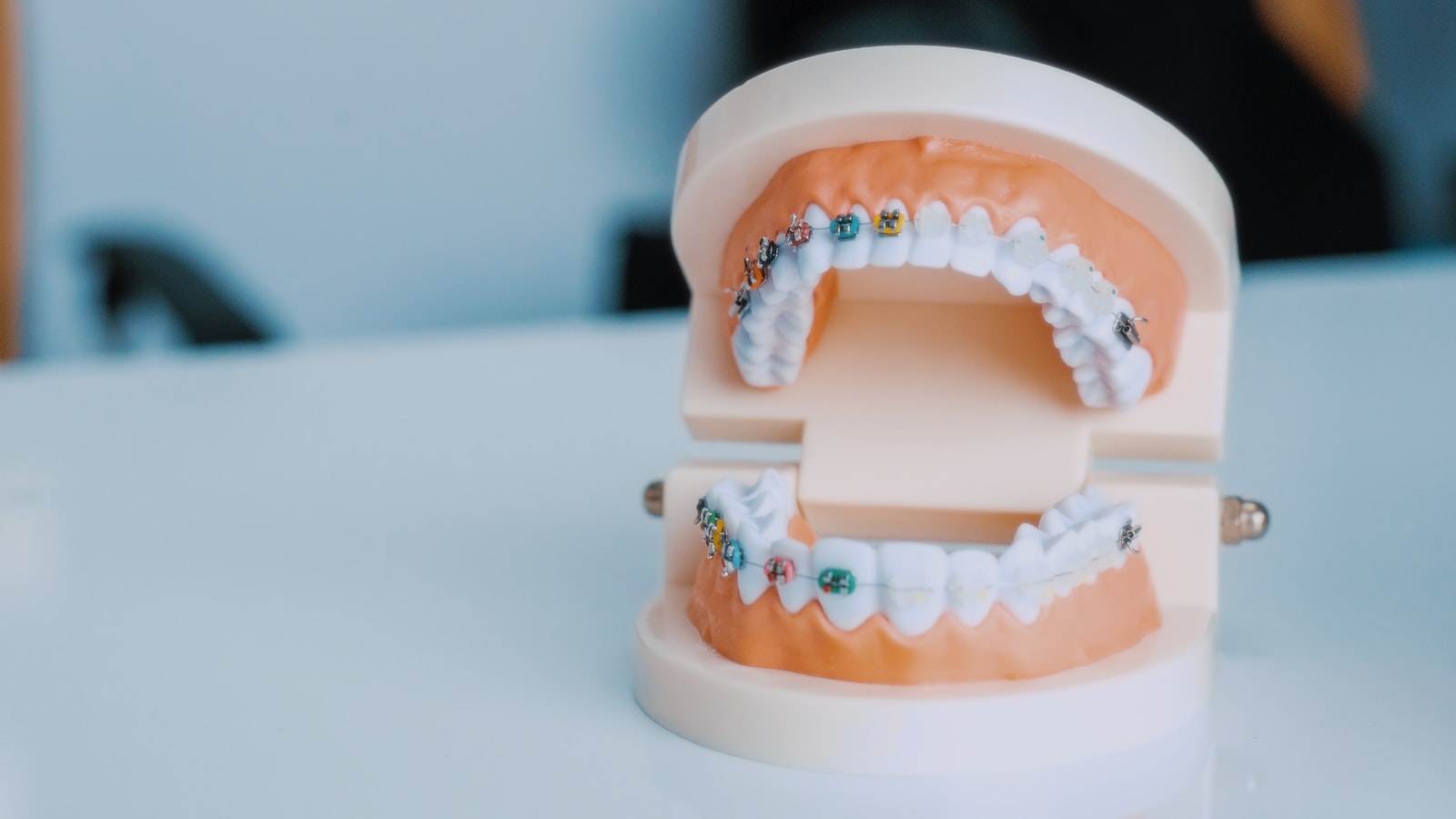
Two plates with angled blocks that meet when your child bites
The appliance has an upper and a lower removable plate, each clipped to the teeth with small wire clasps. Each plate carries a sloped block of acrylic. When your child closes their mouth, the slopes meet and steer the lower jaw forward into a new resting position. Because it relies on the normal action of biting and chewing rather than on pushing teeth one by one, it belongs to the family called functional appliances.
It is designed for a jaw position problem. A child whose main issue is crowded or twisted teeth, with the jaws in a good relationship, needs a different kind of treatment. Our article on overbite, underbite and crossbite explains how these bite types differ.
The growth spurt sets the timetable
A functional appliance tends to be most useful around the pubertal growth spurt, which arrives at different ages for different children and usually earlier in girls than in boys. The dentist or orthodontist judges this from the stage of tooth development, height changes and sometimes X-rays, rather than from birthday alone.
Starting much earlier is not always better. A Cochrane review of 27 randomised trials (Batista and colleagues, 2018) found that when children aged about 7 to 11 were treated early with a functional appliance and then finished later, their final bite was no better than in children who had a single course of treatment in adolescence. Early treatment did have one clear benefit: fewer children had new injuries to their front teeth (about 19% compared with 30%). Prominent upper teeth are more easily knocked, so for a child with a very large overbite who plays contact sport, that can tip the decision. Our guide to early orthodontic treatment for children looks at these trade-offs in more detail.
What wearing one involves day to day
The appliance is worn close to full time, often including meals, and comes out for cleaning the teeth and the plates. Speech is usually lisped and the jaw feels tired for the first week or two, and then most children adapt. Regular reviews let the dentist check progress and make small adjustments as the bite changes.
Wear time matters more than anything else. A twin block can only guide the jaw while it is in the mouth, and growth that passes while it sits in its case does not come back. If your child is struggling, it is better to tell the dentist early than to let wear quietly slip.
Braces usually come next
Once the jaws are in a better relationship, the teeth themselves still need straightening and the bite needs fine-tuning. That second stage is normally fixed braces or clear aligners. Our article on what to expect with braces covers that part.
Retainers keep the result
Teeth tend to drift after any orthodontic treatment, so a retainer follows at the end. See retainer types and how long to wear them.
The correction is part jaw and part teeth
A twin block is sometimes described as making the lower jaw grow longer. The evidence suggests a more mixed picture. A systematic review in the European Journal of Orthodontics (Ehsani and colleagues, 2015) found that treatment consistently tipped the upper front teeth back and the lower front teeth forward, moved the molars, and increased the length of the lower jaw. Each change on its own was fairly small, but together they were enough to correct the bite. That review had no long-term data, so how much of the jaw change lasts into adulthood is still uncertain.
For most families the practical goal is a bite where the upper teeth no longer stick out and the teeth meet comfortably. For a growing child who wears the appliance well, that is often achievable, but results vary from child to child.
When growth has already finished
For an older teenager or an adult, a functional appliance has far less to work with. A similar bite is then usually managed with braces or aligners, and a severe jaw difference may need jaw surgery planned with an orthodontist and an oral and maxillofacial surgeon. Our guide to braces versus aligners for adults outlines those options.
Costs depend on the whole plan
Fees for functional appliance treatment vary with how complex the bite is, how long each stage runs and whether braces or aligners follow. Ask for a written treatment plan with fees that covers the appliance, review visits, the second stage and retainers so there are no surprises. We do not list fees in our articles, but current offers are on our deals page.
Questions parents ask
Does it hurt?
It usually feels tight and strange rather than painful. Sore spots from the plates can be eased with an adjustment at a review visit.
Can my child play sport with it?
Ask the dentist for advice for your child. A twin block is not a mouthguard, and contact sport usually still calls for proper protection.
Is mouth breathing connected to bite problems?
Long-term mouth breathing can be associated with how the face and jaws develop. Our article on mouth breathing in children explains when it is worth having it checked.
If you would like your child's overbite checked, the team at Lumi Dental in Melrose Park can check their bite and growth stage and talk you through the options. Braces and aligner consults are free; see our current deals page to book.