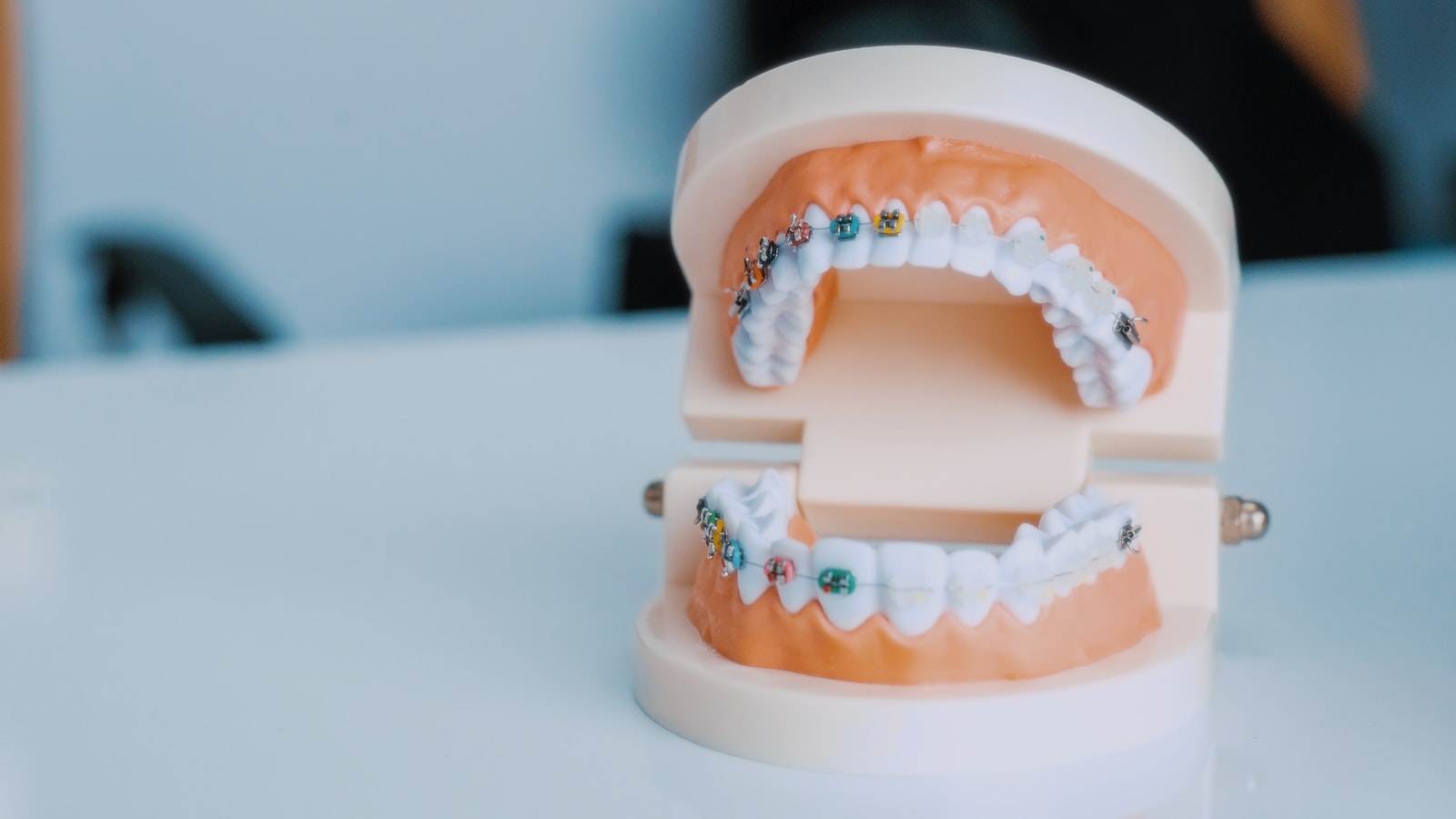

Roughly one person in five has a deeper than ideal overlap of the front teeth, and about the same share have a Class II bite, where the upper teeth sit forward of the lower teeth. Those figures come from a 2018 global review by Alhammadi and colleagues, which also found posterior crossbites in close to one in ten people and underbites and open bites in around one in twenty. In other words, a less than perfect bite is normal. The useful question is which bites cause problems and what can be done about them.
A bite can be out in three directions
Dentists describe the way teeth meet as the occlusion, and a bite that departs from the ideal as a malocclusion. It helps to think in three directions. Front to back covers protruding upper teeth and underbites. Up and down covers deep bites and open bites. Side to side covers crossbites and a jaw that shifts when you close. A single person can have issues in more than one direction, and the cause can be the position of the teeth, the size and position of the jaws, or both.
Front to back: overjet and underbite
When people say they have an overbite, they often mean their upper front teeth stick out. The technical term for that is increased overjet, the horizontal distance between the upper and lower front teeth. Prominent upper teeth are more likely to be chipped in a fall or knock, which is one reason they are often treated in childhood. Our article on overbite versus overjet explains the difference in more detail.
An underbite is the reverse: the lower front teeth close in front of the upper ones. Some underbites are purely dental, with upper teeth tipped back, and these can often be corrected with braces or aligners. Others come from a lower jaw that is long or forward, or an upper jaw that is small, and these become harder to correct with tooth movement alone once growth has finished. Adults with a marked skeletal underbite may need orthodontics combined with jaw surgery.
Up and down: deep bite and open bite
Some vertical overlap of the front teeth is healthy. A deep bite means the upper teeth cover most or all of the lowers, and in some people the lower teeth touch the gum behind the upper teeth. Over time that can cause gum irritation and wear on the front teeth.
An open bite is the opposite, a gap between the front teeth when the back teeth are together, so biting into a sandwich or noodles with the front teeth is difficult. In young children, a persistent thumb sucking or dummy habit is a common cause, and the bite may improve on its own once the habit stops. In teenagers and adults, tongue posture and jaw growth patterns are often involved, and open bites can be among the harder bites to keep stable after treatment.
Side to side: crossbite
In a crossbite, one or more upper teeth bite inside the lower teeth instead of just outside them. It can affect a single front tooth or a group of back teeth on one or both sides. A back tooth crossbite often means the upper jaw is narrow, and the lower jaw may slide sideways to find a comfortable bite. That shift is often corrected in children, because a long-standing shift may contribute to uneven jaw growth and wear, although evidence on the long-term effects is limited.
In children, a narrow upper jaw is commonly widened with an expander, because the midline joint of the palate (the midpalatal suture) has not yet matured. Maturation of that suture varies widely between individuals, and conventional expanders become less effective as it matures through the teenage years. Older teens and adults may be suited to MARPE, a bone anchored expander that Lumi places for suitable adults, or to surgically assisted expansion.
Age changes the options
Growth is the main reason timing matters. While a child's jaws are still developing, appliances can work with that growth, for example widening a narrow upper jaw or reducing protruding upper teeth with a functional appliance. Once growth is complete, the same correction usually has to come from moving teeth within the existing bone, using bone anchored devices, or repositioning the jaws surgically. That is why an early check is useful even if no treatment starts straight away; the American Association of Orthodontists suggests one by about age seven.
Adults are not left out. Many adult bite problems are dental rather than skeletal and respond well to braces or clear aligners. Our guides to straightening crooked teeth and aligner options describe the everyday choices. At Lumi Dental, our general dentists provide both fixed braces and clear aligners, and complex jaw based cases may be referred to a registered orthodontist.
When a bite is worth treating
Plenty of imperfect bites cause no harm and can be left alone. Treatment is more likely to be recommended when a bite is causing uneven or rapid tooth wear, gum damage, a jaw that shifts on closing, difficulty biting or chewing, crowding that makes cleaning hard, or concerns about appearance that matter to you. Whatever is done, retainers are needed afterwards to hold the result, as covered in our article on retainers after treatment.
Common questions
Can clear aligners fix an underbite or open bite?
Aligners can correct many mild to moderate dental bite problems. Bites caused mainly by jaw size or position may need fixed braces, bone anchored devices or a combined surgical plan.
Will my bite get worse if I leave it?
Some bites stay stable for life. Others lead to gradual wear, gum recession or jaw strain. An assessment can give you a good idea of which group yours falls into, even if you decide not to treat it.
Is it too late to fix my bite as an adult?
Usually not, although the methods differ from those used in children. The plan depends on whether the problem is in the teeth, the jaws or both.
Having your bite checked
If you are not sure your bite needs attention, an orthodontic assessment can answer that and outline the options. Free consults are available for braces and aligners, so see our offers page or get in touch to arrange one.
This article is general information and not a substitute for an individual orthodontic assessment.