
Bruising after a tooth extraction or dental implant surgery is common, usually appears a day or two after the procedure, and fades on its own over one to two weeks. It often shows up lower than the surgical site and changes colour as it heals. The NHS lists bruising on the cheek as an expected part of recovery for up to two weeks after wisdom tooth removal. The job is telling it apart from the swelling and pain that point to a problem.
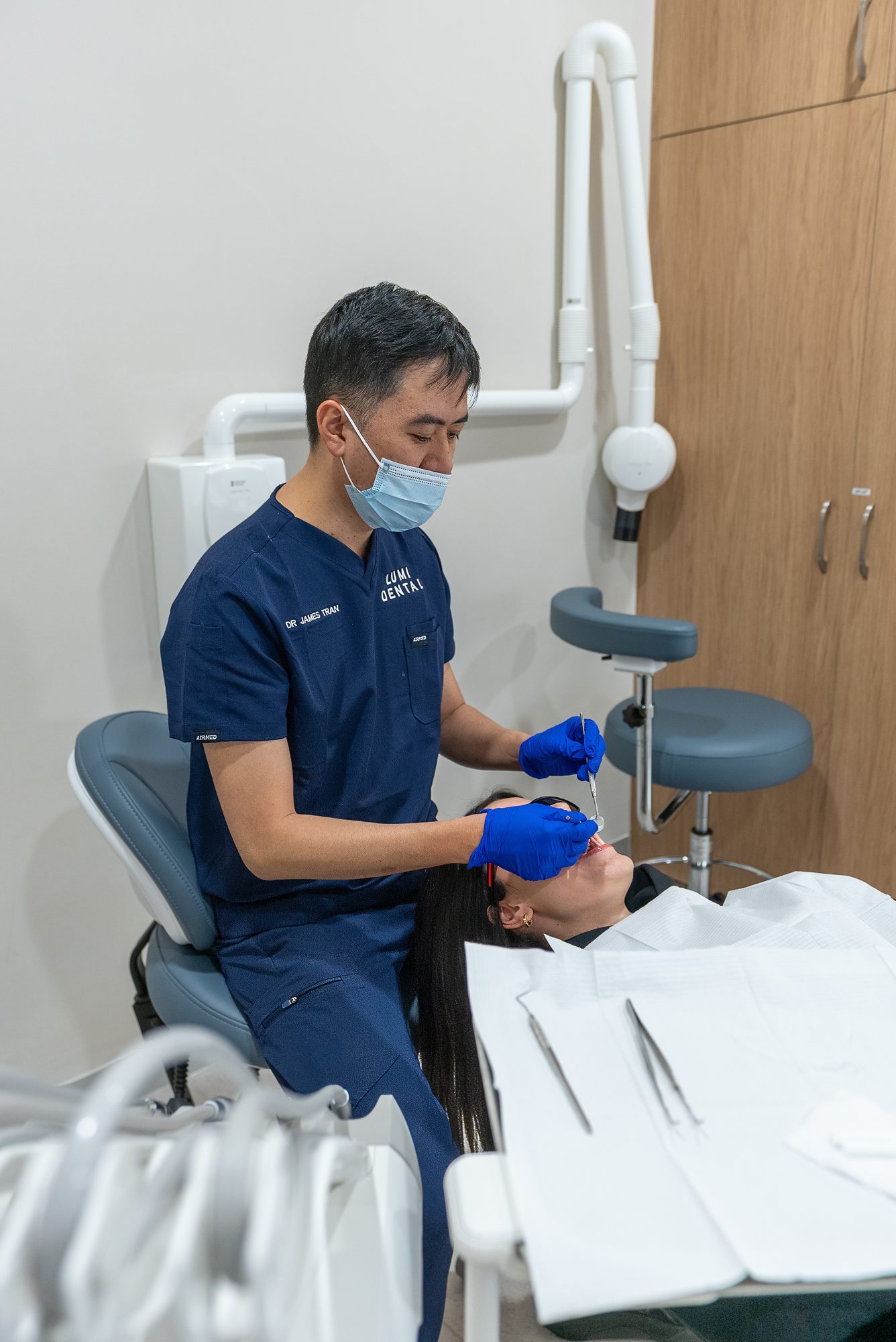
Written by Dr James Tran, BDent (University of Sydney), MICOI, GradDip (Oral Implants), general dentist at Lumi Dental in Melrose Park.
The short version
- Bruising is blood that has leaked from the surgical site into loose facial tissue, and it is part of normal healing.
- It appears on day 1 to 2, looks worst around day 2 to 3, then turns purple to green to yellow and fades over 7 to 14 days.
- Gravity pulls it downward, so a bruise from a lower wisdom tooth can finish up on the jawline, neck or upper chest.
- Older adults, people on blood thinners and anyone who had a long or difficult procedure bruise more. Our tooth extraction recovery timeline covers the rest of healing.
- Cold packs for the first 24 to 48 hours, then gentle warmth, head raised, no hard exercise.
- Firm, hot swelling still growing after day 3, fever, pus, trouble swallowing, or severe pain with a bad taste are not bruising. Call.
Why bruising happens after dental surgery
Removing a tooth or placing an implant means lifting gum, sometimes trimming bone, and working close to small blood vessels, so a little blood always escapes into the surrounding tissue. The tissue of the cheek and under the jaw is loose, so over a day or two that blood tracks along the planes between muscle and skin and shows as a bruise.
Gravity then takes over. Blood that started near a lower molar drifts down and settles along the jawline, the side of the neck and occasionally the top of the chest. Patients sometimes ring me worried that the bruise is "moving". Downward drift of a bruise that is softening and changing colour is the usual pattern. Upper teeth bruise less visibly because there is less loose tissue to collect in.
Who bruises more
In my experience the amount of bruising varies far more between people than between procedures. The same lower wisdom tooth might leave one person with nothing and the next with a patch to the collarbone. Age comes first. Older adults have thinner skin and more fragile vessel walls, so blood leaks more easily and shows more readily, and their bruises take longer to clear. Lower wisdom teeth and lower jaw surgery bruise more than upper, and so do longer procedures: a tooth that needed sectioning, a flap, bone removal. Implant surgery with a bone graft or sinus lift involves more tissue handling and more time, which our guide to bone grafts and sinus lifts explains.
Medicines matter too. Anticoagulants, antiplatelet medicines, aspirin and high-dose fish oil all make bruising more likely. Never stop a prescribed blood thinner on your own; tell the dentist what you take, as our article on blood thinners and tooth extraction explains. Some people simply bruise easily.
The colour timeline, day by day
A bruise is blood breaking down under the skin, and its colour follows that chemistry: red or purple first, then green, then yellow-brown before the body clears it.
| Day range | What you may see | What to do |
|---|---|---|
| Day 0 to 1 | Little or no bruise yet. Swelling begins. | Cold packs 20 minutes on, 20 off. Head raised. |
| Day 1 to 2 | Bruise appears near the site or lower on the cheek. Swelling building. | Cold packs to 48 hours. Soft food. No sport, alcohol or smoking. |
| Day 2 to 3 | Bruise at its darkest, purple or blue. Swelling usually peaks. | Switch to gentle warmth. Warm salt water rinses after meals. |
| Day 4 to 7 | Bruise drifts downward and turns green. Swelling shrinking. | Light activity. If swelling is growing, call. |
| Day 7 to 14 | Yellow-brown fading patch, often on the neck. | Return to exercise gradually. |
Healthdirect gives up to two weeks for an extraction wound to heal; a single implant with no graft usually sits at the milder end, as our implant surgery recovery timeline sets out.
What helps: cold first, then warmth
For the first 24 to 48 hours the aim is to limit how much blood and fluid collects, and cold does that by narrowing the small vessels. A wrapped ice pack against the cheek, 20 minutes on and 20 off, is the standard advice, and healthdirect notes an ice pack can help with pain and swelling. Sleep with an extra pillow so fluid does not pool in the face.
After 48 hours the job changes to helping the body clear the blood. Gentle warmth, a warm face washer or a heat pack on low for 15 to 20 minutes a few times a day, increases circulation and may help the bruise resolve. Heat in the first two days tends to make swelling worse.
Avoid hard exercise, heavy lifting and bending for several days; a rise in blood pressure pushes more blood into the tissue. Better Health Channel advises no smoking for 48 hours and avoiding alcohol and excessive physical activity. Arnica is popular. The evidence is limited and mixed, and I would not rely on it, though cream on unbroken cheek skin is unlikely to cause harm.

Colour that is fading is healing; swelling that is growing after day three is a phone call
Bruising moves through its colours and drifts downward while the face gets softer. Trouble is firm rather than soft, warm or hot to touch, and getting bigger when it should be shrinking. Call the practice the same day for any of the following.
- Swelling still increasing after day 3, especially if firm and hot. Healthdirect lists swelling that does not go down or gets worse as a reason to contact your dentist.
- Difficulty swallowing or breathing, or less mouth opening than yesterday. Swelling spreading under the jaw or toward the throat is urgent; our article on spreading facial swelling explains why.
- Fever above 38°C, feeling unwell, or pus or a foul taste from the site.
- Pain that eases and then gets sharply worse around day 3 to 5, with a bad taste or smell. That is typical of dry socket, which is painful but treatable.
- Numbness of the lip, chin or tongue unchanged by the end of the first week.
Bruising, infection or haematoma: telling them apart
This table is a guide only; if unsure, a phone call sorts it out in a minute.
| Sign | Bruising | Infection | Haematoma |
|---|---|---|---|
| Timing | Day 1 to 2, worst day 2 to 3 | Usually builds from day 3 | Often within the first day or two |
| Feel | Soft, mildly tender | Firm, hot, increasingly painful | Tense, raised lump |
| What to do | Cold, then warmth, then time | Same-day call; may need antibiotics or drainage | Call; small ones settle, larger ones may need releasing |
Work, school and being seen in public
Bruising does not stop you working, but it may stop you wanting to. For a simple extraction most people are back at a desk the next day. The NHS suggests 1 to 3 days off after a more difficult wisdom tooth removal or one done under general anaesthetic. For implant surgery with a graft, I usually suggest two or three quiet days. If appearance matters for your work, book a Thursday or Friday so the worst of the colour lands on the weekend. Driving after sedation is covered in our guide to time off work and driving after dental surgery.
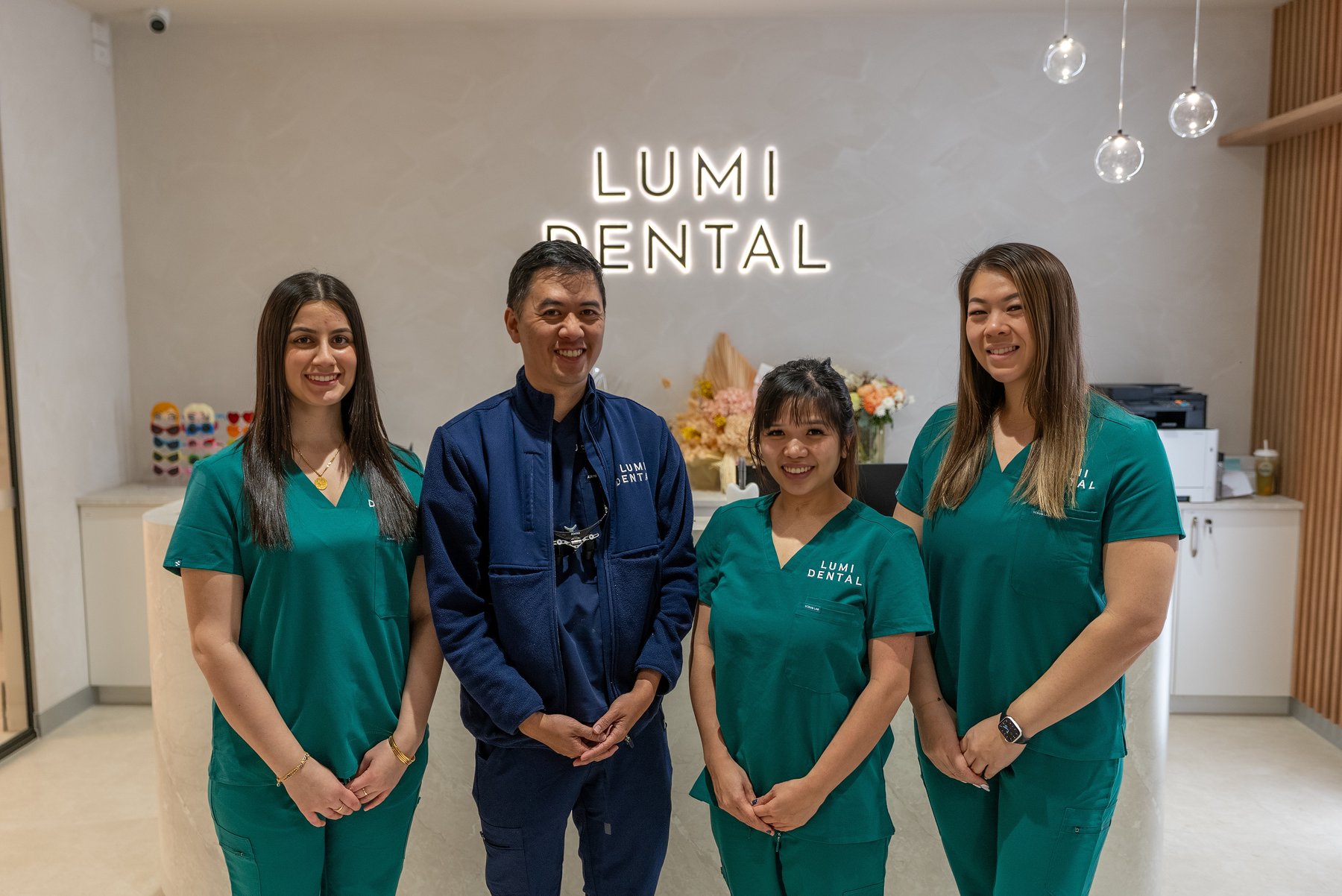
How we approach this at Lumi Dental
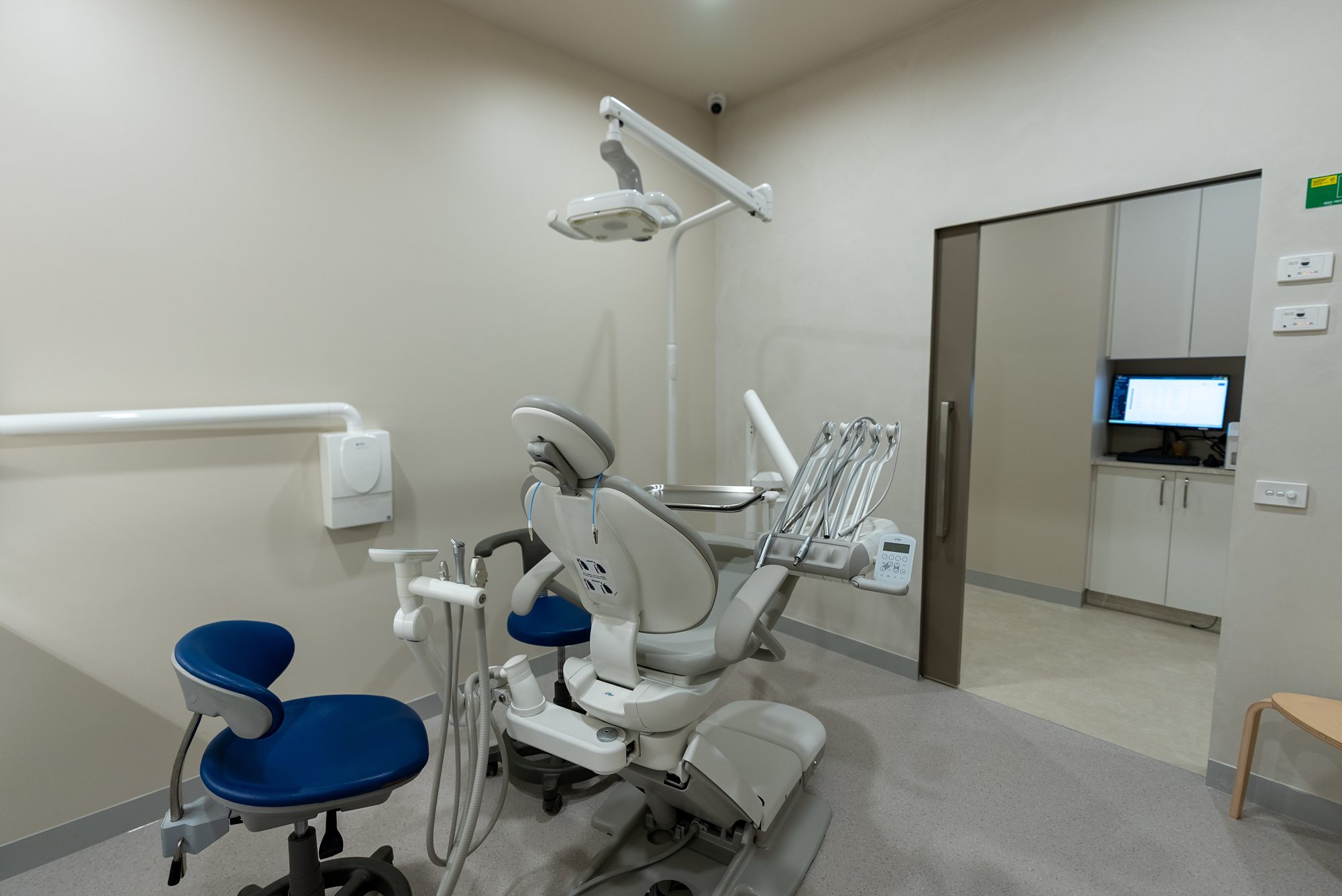
The team at Lumi Dental in Melrose Park provides tooth extractions, wisdom teeth removal and dental implant surgery, and before any of them we go through what to expect in the first two weeks, bruising included. Patients leave with written aftercare and a number to call. A 3D X-ray (OPG or CBCT) is taken in-house where needed, so roots, nerves and sinuses are mapped in advance, which helps keep surgery shorter and gentler on the tissue. Lumi Dental does not provide general anaesthetic itself and refers where it is needed, though IV sedation is available at the practice. Complex surgical cases are referred to registered specialists.
Questions patients ask
Is a bruise on the neck normal after wisdom teeth removal?
Yes, it is one of the most common places. Blood from a lower wisdom tooth socket drifts down along the jaw and neck over the first few days. As long as it is softening and turning from purple toward yellow, it is healing.
How long does bruising last after a tooth extraction?
Usually 7 to 14 days from when it first appears. Older adults, people on blood thinners and anyone who had a larger procedure may find a faint yellow patch lingers longer.
Can you use heat on your face after an extraction?
Not in the first 48 hours. After that, gentle warmth for 15 to 20 minutes a few times a day can help the bruise clear.
Why is the bruise getting bigger instead of smaller?
A bruise that spreads downward and lightens over the first few days is blood settling. A swelling that is firmer, hotter and more painful after day 3 is not bruising and needs a same-day call to the practice or an emergency dentist.
Does dental implant surgery bruise as much as wisdom tooth removal?
Often less, for a single implant in healed bone, because the surgery is shorter and gentler on the tissue. Lower jaw implants, grafts, sinus lifts and full-arch surgery sit closer to wisdom tooth territory.
Worried about bruising or swelling? Call Lumi Dental
If something in the first two weeks after an extraction or implant surgery does not fit the pattern above, the team at Lumi Dental in Melrose Park would rather hear from you than have you wait. Emergency appointments are available for patients from Melrose Park, Ryde, Parramatta, Ermington, Rydalmere and nearby suburbs. New patients can ask about the new patient offer on our current deals page; a written quote follows an examination.
Sources
- healthdirect: Tooth extraction
- healthdirect: Removing wisdom teeth
- NHS: Wisdom tooth removal
- Better Health Channel: Wisdom teeth
About the author
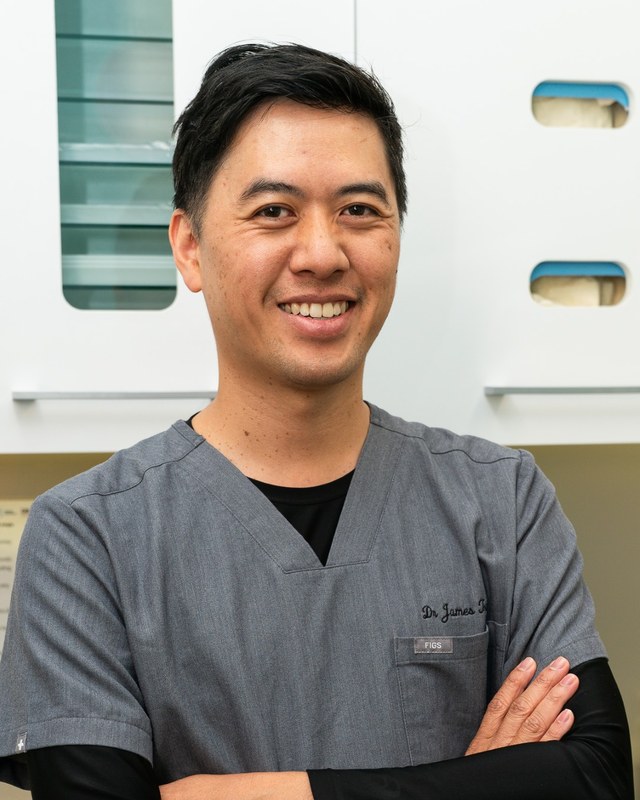
Dr James Tran is a general dentist at Lumi Dental in Melrose Park. He holds a BDent from the University of Sydney and a Graduate Diploma in Oral Implants, and is a Member of the International Congress of Oral Implantologists (MICOI).
This article is general information only and is not a substitute for an examination and individual advice from a registered dental practitioner. Suitability for any treatment varies from person to person.