

Gram for gram, a bubble tea often has less sugar than cola. CHOICE found its 21 supermarket bubble teas averaged about 6.3 g of sugar per 100 g, against 10.6 g in classic cola. The trouble for teeth is less the recipe than the ritual: big cups, sticky pearls and a drink that is often sipped for an hour or more.
Written by Dr James Tran, BDent (University of Sydney), MICOI, GradDip (Oral Implants), general dentist at Lumi Dental in Melrose Park.
A large cup adds up quickly
Supermarket figures are a useful starting point but shop-made drinks are different. The cups are larger, syrup is added by hand, and sugar levels are chosen from a menu of percentages rather than printed on a label. Even at the supermarket average, a large cup can carry several teaspoons of sugar before any toppings are added.
For comparison, the Australian Dental Association's teeth.org.au suggests the average adult keep sugar to about 6 teaspoons, or 24 g, a day. One sweetened bubble tea can take a big share of that, and sometimes all of it.
Ordering "half sugar" does not reliably solve the problem. A 2023 study in Frontiers in Nutrition (Liu and colleagues) examined the labelled sugar content of 1,581 hand-shaken tea drinks from 60 brands in northern Taiwan. It found 60.2% of drinks sold as half sugar, and 13.0% of those sold as low sugar, still exceeded 25 g of sugar per cup. Half of a very sweet drink is still sweet.
Sipping keeps teeth under attack
Tooth decay starts on the tooth surface. Plaque bacteria turn sugar into acid within minutes, and that acid draws minerals out of enamel. Saliva then gradually neutralises the acid and helps put some of the mineral back. Our guide to how sugar causes tooth decay explains this cycle in more detail.
A drink finished in one sitting means one acid challenge followed by a recovery period. The same drink sipped across an afternoon restarts the acid challenge with every mouthful, so the enamel has little chance to recover. That repeated exposure is what tips the balance towards decay. A bubble tea on the desk from lunch until home time is a much bigger risk to teeth than the same drink enjoyed with a meal.
The wide straw also sends liquid and pearls straight to the back teeth, whose deep grooves are the hardest places to clean. Decay can also start between back teeth where it is invisible in a mirror, as our article on cavities between the teeth describes.
What toppings do
Tapioca pearls are balls of starch, usually cooked and stored in syrup. Starch on its own is less of a problem for teeth than sugar, but syrup-soaked pearls are sticky, get chewed into the grooves of the molars and wedge between teeth, holding sugar against the enamel after the drink is gone.
Brown sugar drinks add a thick syrup that coats the inside of the cup and the teeth with each sip. Jellies, puddings and cream tops are generally sweetened too. Choosing one topping, or none, cuts down on both the sugar and the stickiness.
Fruit teas bring acid as well
Fruit-flavoured teas can seem lighter, but fruit syrups are acidic, and acid wears enamel directly without needing bacteria. This is erosion rather than decay, and it tends to show as thinning, sensitive or yellowing teeth rather than holes. Our guide to enamel erosion covers the signs.
Sugar-free versions remove the main fuel for decay but not the acid. Teeth.org.au makes the same point about sugar-free soft drinks: they can have a low pH, and regularly drinking acidic drinks can wear teeth away. Some reduced-sugar bubble teas in the CHOICE test got much of their sweetness from erythritol and stevia, sweeteners that plaque bacteria do not ferment the way they do sugar, but a low-sugar or sugar-free drink can still come with sweetened pearls.
Milk teas carry one more cosmetic effect. Black tea stains teeth, and slow sipping gives that stain more time to build. A professional clean usually removes it, and our article on black tea and oral health looks at the wider picture.
Ordering with your teeth in mind
You do not have to give bubble tea up. A few choices at the counter make a real difference:
- pick the smallest size, which means less sugar and a cup you finish sooner
- ask for low or no sugar rather than half
- choose one topping, or skip them
- drink it with a meal, or in one sitting, rather than across the afternoon
- follow it with a few mouthfuls of plain tap water, which in many Australian communities has fluoride added
Rinsing with water straight afterwards is reasonable. There is no need to delay brushing: a 2024 scoping review in Caries Research (Fernández and colleagues) found that brushing with fluoride toothpaste soon after an acid challenge did not add measurable wear. Chewing sugar-free gum afterwards stimulates saliva, which helps neutralise acid; our article on sugar-free gum and your teeth explains how.
Children and teenagers
Young people are among the biggest bubble tea drinkers, often on the way home from school or while studying. A 2022 study in Community Dentistry and Oral Epidemiology (Lin and colleagues) followed 494 Taiwanese children aged 8 to 9 for a year. Children who often had handmade drinks such as bubble tea had about 1.7 times the risk of new decay in their permanent teeth compared with those who seldom had them, after adjusting for other factors.
For children, an occasional small, low-sugar cup finished in one go is a more sensible pattern than a regular habit. Our guide to tooth-friendly snacks for kids covers the bigger picture of eating patterns that protect young teeth.
Catching early damage at a check-up
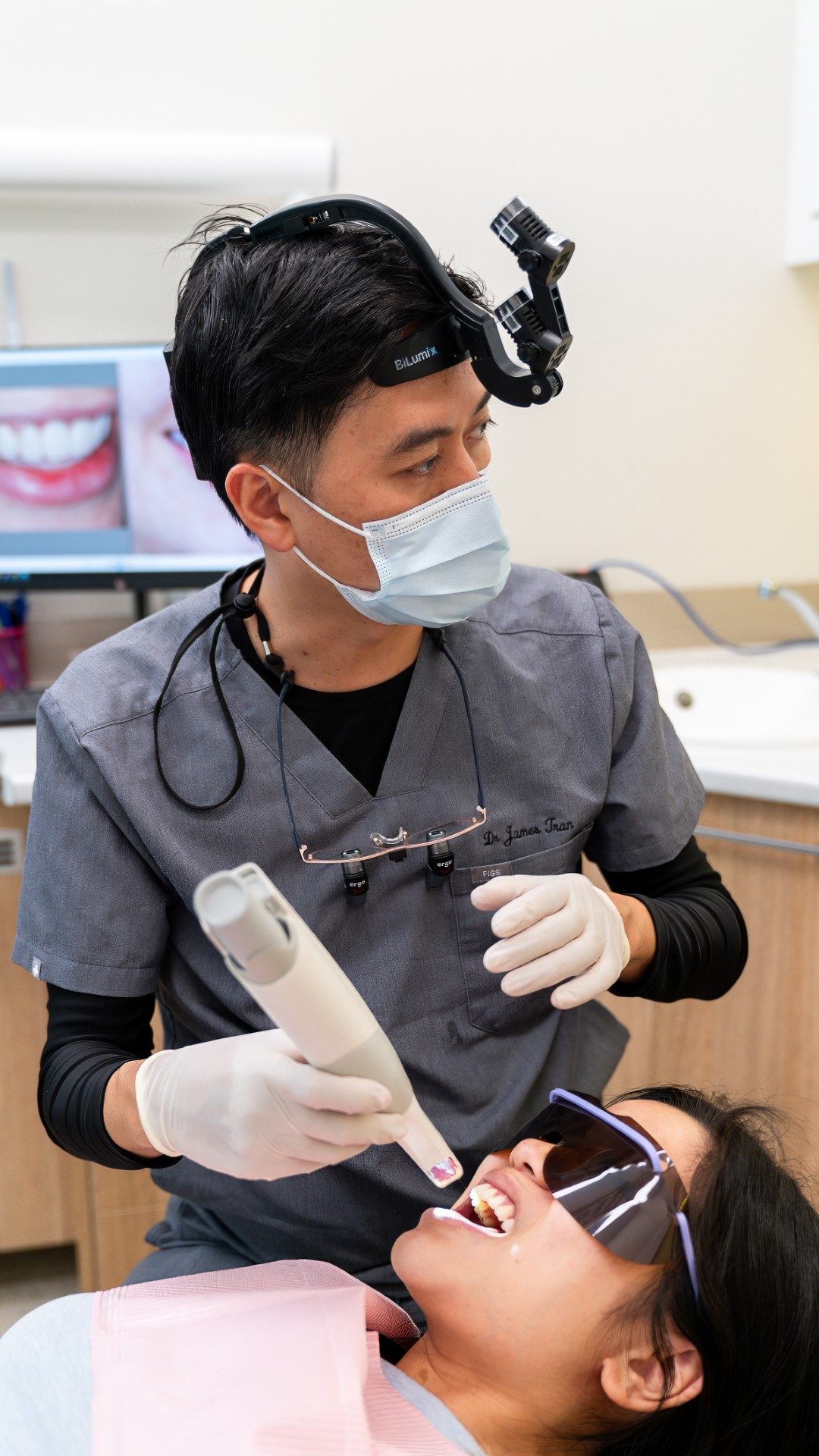
Questions about drinks and snacking are part of a check-up, because habits like daily bubble tea help explain what we see. A dentist examines the teeth and takes X-rays when needed, which is how early decay in molar grooves or between teeth is found while it may still be managed with fluoride and a change in habits. Our oral health therapists can remove tea stain and plaque packed into the grooves and apply fluoride where it helps. You can read more on our general dentistry page.
Common questions
Is one bubble tea a week a problem?
An occasional cup finished fairly quickly and followed by water is a small risk for most people. A daily cup sipped slowly over hours is a much bigger one.
Is sugar-free bubble tea fine for teeth?
It is better, though not risk-free. Fruit flavours can still be acidic, and pearls are often sweetened even when the tea is not. If a tooth already twinges with sweet or cold drinks, contact us for an examination.
Are pearls worse than the drink?
They are a different problem. The drink bathes the teeth in sugar, while the pearls are sticky and lodge in grooves and gaps. Fewer pearls and a water rinse afterwards both help.
Keep enjoying it, and keep up your check-ups
If bubble tea is part of your week, regular check-ups and cleans at our Melrose Park practice can pick up early decay and stain before they cause bigger problems. You can see our current offers or find out more about general dentistry at Lumi.
Sources
- CHOICE: Australia's best supermarket bubble tea
- Australian Dental Association (teeth.org.au): Sugary drinks effect on teeth
- Liu CH and colleagues. Sugar labeling information and online marketing strategies for hand-shaken tea drinks in northern Taiwan. Frontiers in Nutrition, 2023
- Lin PY and colleagues. Association between sugary drinks consumption and dental caries incidence among Taiwanese schoolchildren with mixed dentition. Community Dentistry and Oral Epidemiology, 2022
- Fernández CE and colleagues. Should we wait to brush our teeth? A scoping review regarding dental caries and erosive tooth wear. Caries Research, 2024
About the author

Dr James Tran is a general dentist at Lumi Dental in Melrose Park. He holds a BDent from the University of Sydney and a Graduate Diploma in Oral Implants, and is a Master of the International Congress of Oral Implantologists (MICOI).
This article is general information only and is not a substitute for an examination and individual advice from a registered dental practitioner. Suitability for any treatment varies from person to person.








