



Jaw disorders and tinnitus travel together far more often than chance would predict, but the research is observational, so no one can say with confidence that one causes the other. If you are asking whether TMJ can cause tinnitus, that nuance matters, because it changes what you should do about it. The short version: get your ears assessed first, consider a jaw assessment alongside it, and be cautious about any treatment plan that promises to fix ringing in your ears by rebuilding your teeth.
Key Takeaways
- The jaw joint sits immediately in front of the ear canal and shares nerve supply and close anatomical relationships with ear structures.
- A systematic review and meta-analysis estimated pooled tinnitus prevalence of roughly 32 percent among people with temporomandibular disorders, with individual studies ranging very widely.
- One study reported new ear symptoms in around three quarters of people with a temporomandibular disorder, with a blocked or full feeling in the ear the most common.
- These studies are observational. They cannot establish which came first or whether one causes the other.
- New, sudden, one-sided or pulsatile tinnitus, or tinnitus with hearing loss or dizziness, warrants medical or audiology review first.
- Where jaw treatment does help ear symptoms, improvement is typically partial rather than complete.
Why the Jaw and Ear Are So Closely Linked
The anatomy here is genuinely striking, and it explains a lot.
Your temporomandibular joint sits directly in front of your ear canal. If you put a finger just in front of your ear and open and close your mouth, you can feel the joint moving. Only a thin wall of bone separates the back of the joint from the middle ear space.
The nerve supply overlaps too. The mandibular branch of the trigeminal nerve supplies both the jaw joint and structures in and around the ear, including muscles that attach to the eardrum and the tube connecting the middle ear to the throat. When a nerve carries information from two neighbouring regions, the brain can have difficulty telling it apart, which is the basis of referred pain.
Muscles complete the picture. The muscles that close and move your jaw are large, they sit right beside the ear, and some of the small muscles that control tension in the middle ear share embryological origins and nerve supply with jaw muscles. Sustained tension in a jaw muscle can produce symptoms felt in the ear.
None of this proves causation. What it does explain is why ear symptoms are so common in people with jaw problems, and why the two are difficult to separate clinically.

What the Research Actually Shows
The evidence here is worth reading carefully, because it is often overstated.
A systematic review and meta-analysis estimated a pooled tinnitus prevalence of roughly 32 percent among people with temporomandibular disorders. Individual studies within that body of work ranged very widely, which reflects real differences in how studies defined both conditions and who they recruited. The same body of work estimated a high prevalence of temporomandibular disorders among people presenting with tinnitus, so the relationship appears to run in both directions.
One study reported new-onset ear symptoms in around three quarters of people with a temporomandibular disorder. A blocked or full feeling in the ear was the most commonly reported symptom, followed by tinnitus and dizziness. Research has also associated a diagnosis of temporomandibular disorder with markedly higher odds of tinnitus compared with control groups.
Here is the limitation that matters. These are observational studies. They count how often two things occur together in the same people. They cannot tell you whether the jaw problem produced the tinnitus, whether the tinnitus and the discomfort it causes led to clenching and a jaw problem, or whether some third factor such as stress, poor sleep or a shared pain-processing pattern produced both. All three explanations fit the data equally well.
So the honest position is this: the association is real and consistently reported, and a causal direction has not been established. Anyone telling you confidently that your jaw is definitely causing your tinnitus is going beyond what the evidence supports.
Where to Start
| Sign | Suggests | First step |
|---|---|---|
| Tinnitus started suddenly, especially in one ear | Needs medical assessment, several causes require prompt attention | See your GP promptly, ask about audiology referral |
| Tinnitus pulses in time with your heartbeat | Pulsatile tinnitus, assessed differently from ordinary tinnitus | See your GP, this warrants proper medical investigation |
| Tinnitus with hearing loss or dizziness | Points towards the ear itself rather than the jaw | Medical and audiology assessment first |
| Significant noise exposure at work or through hobbies | Noise-related hearing change is a common tinnitus cause | Hearing test, review hearing protection |
| Ear symptoms change when you open, close or move your jaw | Jaw involvement is plausible | Dental assessment for temporomandibular disorder, alongside ear review |
| Jaw pain, clicking, locking or limited opening on the same side | Jaw involvement is plausible | Dental TMD assessment |
| Waking with a tight or sore jaw, worn or sensitive teeth | Clenching or grinding may be a shared factor | Dental assessment, discuss a splint if indicated |
| Ear symptoms worse after a stressful stretch or heavy chewing | Muscle involvement is plausible | Self-care measures, dental review if it persists |
The ordering here is deliberate. Tinnitus has many causes, several of which are not dental at all, including age-related and noise-related hearing loss, earwax, middle ear problems, certain medications and, uncommonly, conditions that need prompt medical assessment. A jaw assessment is complementary to an ear assessment, not a substitute for one.
What a Dental TMD Assessment Involves
If you do go down the jaw route, it is useful to know what a proper assessment looks like, so you can tell whether you are getting one.
It starts with history. When did the symptoms begin, what makes them better or worse, is there jaw pain, clicking or locking, do you clench or grind, how is your sleep, what has been going on in your life. Ear symptoms that fluctuate with jaw use are a useful signal.
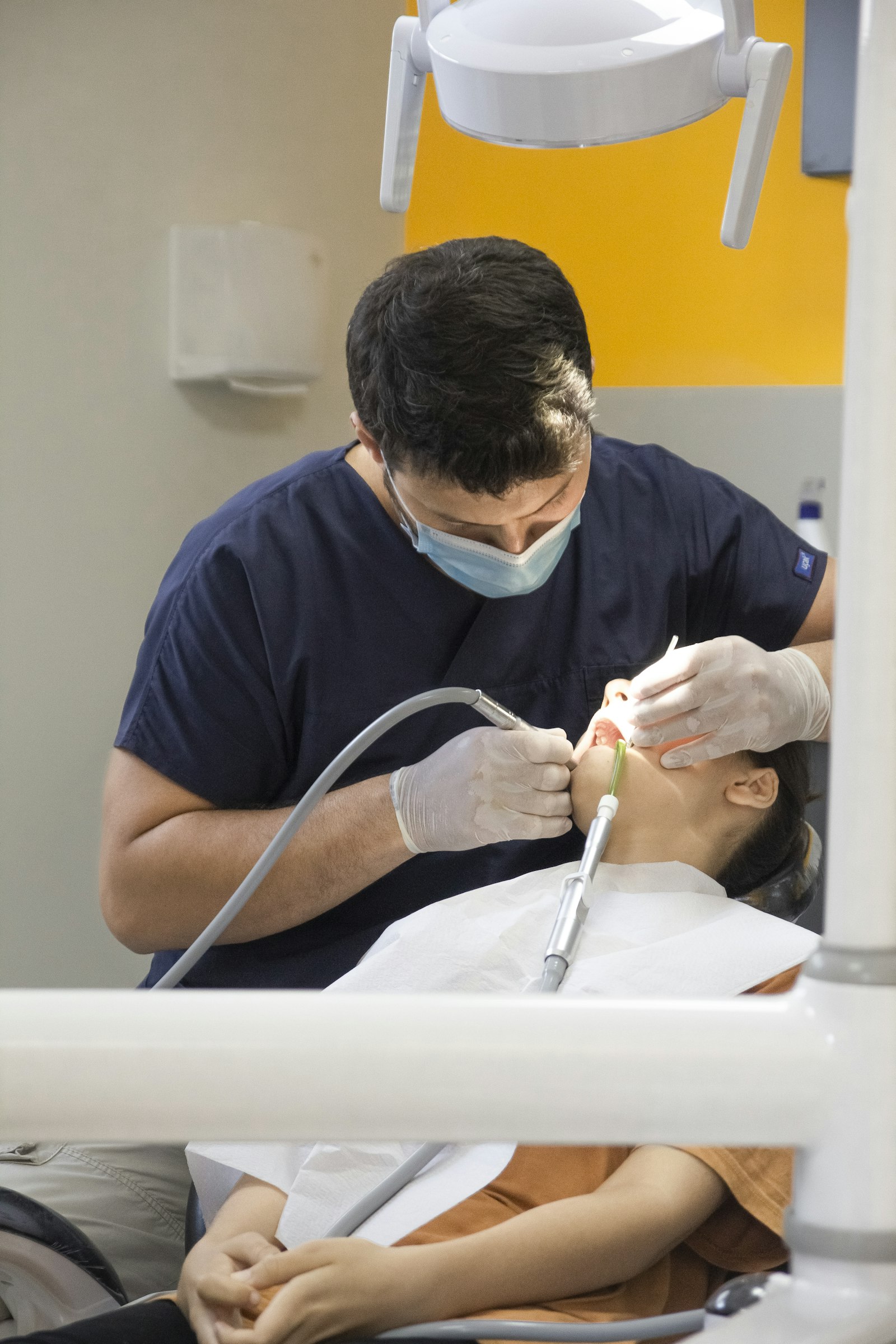
Then examination. The clinician measures how far you can open, watches the path your jaw takes as it opens and closes, listens and feels for joint noises, palpates the jaw muscles and the joint for tenderness, and checks the neck too, since neck muscles refer into this region. They look at the teeth for wear patterns, cracks and sensitivity that suggest clenching or grinding.
Imaging is used selectively rather than routinely. Most temporomandibular disorders are muscular and do not require scans. Where a joint problem is suspected, further imaging may be discussed.
What a good assessment does not do is jump straight to reshaping your bite.
Conservative Management Comes First
The first-line approach for most temporomandibular disorders is conservative, reversible and low-risk.
- Jaw rest through a flare. Softer foods for a period, smaller bites, avoiding chewing gum, hard crusty bread, tough meat and anything that requires wide opening.
- Heat. A warm compress over the jaw muscles for ten to fifteen minutes can help muscles that are holding tension.
- Habit awareness. Many people clench during the day without noticing, particularly while concentrating, driving or scrolling. At rest, teeth should be apart and lips together. Simply catching yourself and releasing can make a difference over weeks.
- Physiotherapy. Physiotherapists who work with jaw and neck problems can offer targeted exercises, manual therapy and posture work.
- An occlusal splint where indicated. A well-made splint can protect teeth from grinding and may reduce muscle load. It is reversible, which is the key point.
- Managing the load. Stress, poor sleep and clenching feed each other. Addressing sleep and stress is often more useful than anything done to the teeth.
One thing deserves emphasis. Irreversible treatment, such as grinding down teeth to adjust the bite, or crowning and rebuilding teeth to change the way they meet, is not a first-line answer for temporomandibular disorder, and it is certainly not a first-line answer for tinnitus. Given that the evidence cannot even establish that the jaw is causing the ear symptoms, permanently altering your teeth in the hope of resolving ringing is a poor trade. Be cautious about any plan that leads there quickly.
Clenching has plenty of everyday triggers. Our articles on weightlifting and teeth clenching and gaming and jaw clenching look at two common ones, and exam stress and teeth grinding covers the stress side.
Realistic Expectations
This is the part that often goes unsaid, so it is worth stating plainly.
Where jaw treatment does help ear symptoms, the improvement reported is typically partial rather than complete. Some people find their tinnitus becomes less intrusive, less frequent or less bothersome. Fewer find it disappears entirely. And some people get good relief from their jaw pain while their tinnitus continues unchanged, which is itself informative about how loosely the two are tied together.
That is not a reason to skip jaw treatment if you have a genuine temporomandibular disorder. Jaw pain, restricted opening, headaches and tooth wear are all worth treating on their own merits. It is a reason to go in with accurate expectations rather than being sold a cure.
Orthodontics is often raised in this conversation too. The relationship between orthodontic treatment and jaw problems is more complicated than either side of the argument usually admits, and we cover it in does orthodontic treatment cause or fix TMJ. If cost is on your mind, dental costs without private health insurance gives a general picture.
On cost generally, across the Australian market a custom occlusal splint commonly falls somewhere in the range of roughly 500 to 900 dollars, and a dedicated assessment appointment often sits somewhere around 100 to 250 dollars. Those are general market figures rather than any one clinic's fees, and they vary a great deal. Some private health policies contribute towards splints, so it is worth checking your cover.
Common Questions
Can TMJ cause tinnitus?
The honest answer is that they occur together far more often than chance would predict, but observational research cannot establish causation. A systematic review estimated pooled tinnitus prevalence of roughly 32 percent among people with temporomandibular disorders. That is a strong association, not proof that one produces the other.
Will a night guard stop my ears ringing?
It may help if clenching or grinding is contributing, but there is no basis for expecting it to reliably stop tinnitus. Where jaw treatment helps ear symptoms, the improvement reported is usually partial. A splint is worth considering for its own reasons if you grind, with any ear benefit treated as a possible bonus.
Should I see a dentist or an audiologist first?
For new tinnitus, see your GP first and ask about hearing assessment, particularly if it started suddenly, affects one ear, pulses with your heartbeat, or comes with hearing loss or dizziness. Once the ear side has been assessed, a jaw assessment is a reasonable addition if you also have jaw symptoms.
Why does my tinnitus change when I move my jaw?
Tinnitus that changes with jaw movement, head position or pressing on the face or neck is sometimes described as somatosensory tinnitus. It is reported reasonably often and suggests the muscular and joint system is influencing the sound in some way. It is worth mentioning to both your GP and your dentist, because it is a useful clinical detail.
Can stress make both worse at the same time?
Many people report that both jaw symptoms and tinnitus intensify during stressful periods. Stress commonly increases clenching, worsens sleep and makes people more aware of internal sensations. That shared pathway may be part of why the two are so often reported together.
Is it safe to have my bite adjusted to treat this?
Grinding down teeth or rebuilding them to change the bite is irreversible and is not considered a first-line treatment for temporomandibular disorder, let alone for tinnitus. Conservative, reversible measures should be tried properly first. If a plan moves quickly towards permanently altering your teeth for ear symptoms, a second opinion is reasonable.
Where to From Here
If you have ringing in your ears, start with your GP so the ear side gets assessed properly. If you also have jaw pain, clicking, limited opening or signs of clenching, a jaw assessment alongside that is worth having. The team at Lumi Dental can examine your jaw joints and muscles, look at tooth wear and talk through conservative options honestly, including being upfront about what jaw treatment is and is not likely to do for ear symptoms. See our current offers or read more about general dental care at Lumi Dental. A consult to talk it through costs nothing, and we can provide a written quote for anything recommended.
This article is general information only and is not a substitute for personalised medical or dental advice. Tinnitus has many causes and should be assessed by your GP or an audiologist. Please discuss your own situation with an appropriate health professional.

