
If your child has a toothache tonight, give children's paracetamol or ibuprofen at the packet dose for their age and weight, check for stuck food, hold a cold compress against the cheek and book a dentist for the morning, unless there is facial swelling, fever or trouble swallowing or breathing, in which case go to the emergency department now. Parents searching for what to do about a child's toothache, or for kids' toothache relief at two in the morning, want a clear line between "wait until morning" and "go now". Healthdirect advises seeing a dentist as soon as possible when toothache lasts more than two days or does not ease with pain-relief medicine.
Written by Dr James Tran, BDent (University of Sydney), MICOI, GradDip (Oral Implants), general dentist at Lumi Dental in Melrose Park.
The short version
- Children's paracetamol or ibuprofen, dosed by the packet for age and weight; ask a pharmacist if unsure. Never aspirin, and never a tablet or gel rubbed on the gum.
- Look for the cause: packed food, a hole, a swollen gum or gum pimple, a chipped or loose tooth.
- Cold compress on the outside of the cheek. No heat packs.
- Salt-water rinse only for a child old enough to spit it out reliably.
- Facial swelling, fever, trouble swallowing or breathing: emergency department tonight, not the morning.
- Pain that wakes a child often means decay has reached the nerve; our guide to toothache at night explains why lying down makes it worse.
Tonight's steps, in order
- Ask and look. Ask where it hurts and whether anything happened: a fall, a knock, a hard lolly. With a torch, look for a hole, a grey or chipped tooth, a swollen gum, or a pimple on the gum beside the tooth. Raising Children Network describes early decay as a dull white band along the gum line, and later decay as brown spots or blackened holes.
- Check for stuck food. Popcorn husks and meat fibres wedged between back teeth cause surprising pain. Floss gently once. If the pain settles, still book a check, because food packs where a hole has started.
- Pain relief by the packet. Children's paracetamol or children's ibuprofen, measured with the syringe in the box, at the dose printed for your child's age and weight. Healthdirect and the NHS both name these two as the pain relievers for toothache. Check that no other medicine given today contains the same ingredient, and ask a pharmacist first if your child is under one, has asthma, is vomiting or takes other medicines. Our guide to ibuprofen versus paracetamol for tooth pain explains the differences; for children, the packet and the pharmacist come first.
- Never aspirin, nothing on the gum. The NHS is explicit that children under 16 should not take aspirin. Do not rub tablets or adult numbing gel onto the gum; crushed tablets burn the gum. Ask the pharmacist before using any numbing gel on a child.
- Cold, not heat. A wrapped ice pack or cold flannel against the outside of the cheek eases pain and limits swelling. Skip heat packs.
- Salt water, only if your child can spit. Healthdirect suggests a salt-water gargle for mild toothache, never swallowed; the NHS says children should not try it in case they swallow. In my experience the sensible line is a school-age child who already rinses and spits after brushing, so not toddlers.
- Settle for sleep. Prop the head up on an extra pillow; Healthdirect notes that lying flat can make dental pain feel worse. Soft food, nothing very hot, cold or sweet. Book the dentist first thing.

What you see, what it probably is, how soon to be seen
| What you see | Likely cause | How soon to be seen |
|---|---|---|
| Pain only with sweets, cold drinks or chewing; no swelling | A hole from decay, or a worn filling | Dentist within a few days |
| Pain that settles after flossing | Food packed between teeth, often where a hole has started | Routine, within a week or two |
| Throbbing ache that wakes the child, worse lying down | Deep decay reaching the nerve | Same day if possible |
| Pimple or lump on the gum, bad taste, tooth sore to tap | An abscess: an infected tooth | Same day; see the red flags below |
| Red, puffy gum behind the last baby molar in a 5 to 7 year old | A six-year molar coming through | Routine, unless swelling or fever |
| Pain after a fall or knock; chipped, grey or loose tooth | Dental injury | Same day |
| Swollen face or jaw, fever, child unwell | Infection spreading beyond the tooth | Emergency department tonight |
In children, decay is the usual cause. Raising Children Network notes that advanced decay can produce lumps or pimples on the gums or swelling of the face. Erupting first adult molars are the other common culprit around age six; our guide to six-year molars covers what is normal there.
Red flags: go to the emergency department tonight
These cannot wait for morning:
- Swelling of the cheek, under the jaw or around the eye.
- Toothache with a fever, or a child who is unusually drowsy or unwell.
- Trouble swallowing, drooling, or not being able to open the mouth fully.
- Any difficulty breathing or speaking: call triple zero (000).
Healthdirect lists breathing or speaking problems and swelling around the eye or neck as reasons for emergency care, and Raising Children Network advises a dentist, GP or hospital emergency department straight away when a child has fever or facial swelling that may be dental. Our guide to dental abscesses in children explains what the hospital and the dentist each do.
What the dentist visit looks like for a child
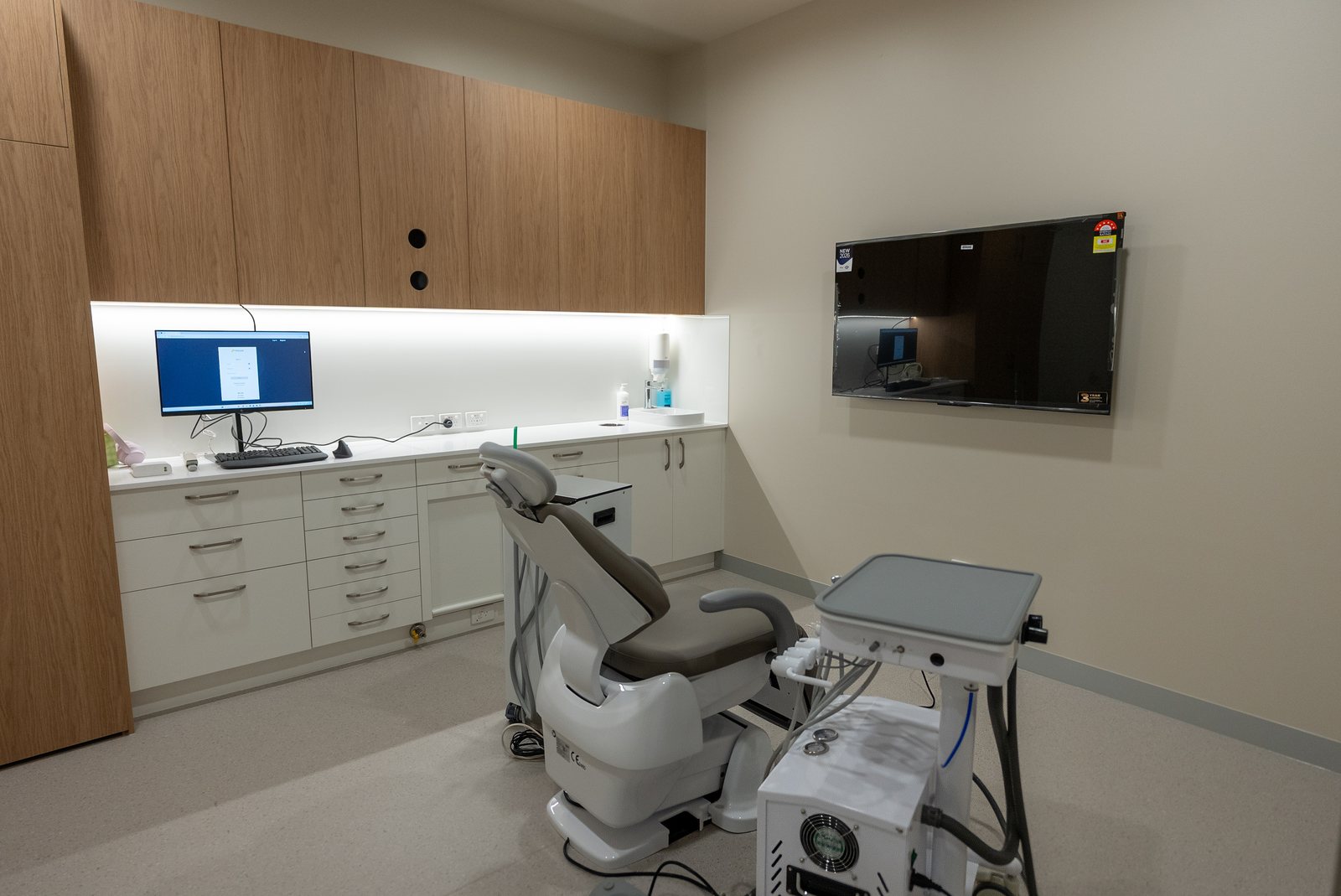
The appointment starts with your account of the night. Small children often sit on a parent's lap facing the dentist. The dentist checks the teeth with a mirror and light, gently taps the suspect tooth, and takes a small X-ray if the child can hold still for it.
What happens next depends on what is found. Early decay may be treated with fluoride and watched. A hole gets a filling, with numbing gel before the local anaesthetic. A baby tooth whose nerve is involved may have a pulpotomy, a small nerve treatment that keeps the tooth until it is due to fall out, or may be removed if it cannot be saved. Antibiotics alone do not fix a toothache; Healthdirect notes they are usually not used unless there is a clear infection. Children who are very young, very anxious or need a lot of work at once are often better served by a paediatric dentist or a hospital dental service, and should be referred.
The Child Dental Benefits Schedule in plain terms
Services Australia runs the Child Dental Benefits Schedule (CDBS), which pays part or all of the cost of basic dental care for eligible children. A child qualifies in a calendar year when all three apply: they are eligible for Medicare, they are aged 0 to 17 for at least one day of that year, and they or a parent, carer or guardian receive an eligible Centrelink payment at least once that year. There is nothing to apply for; Services Australia sends a letter if your child is eligible.
Covered services include check-ups, X-rays, cleaning, fissure sealing, fillings, root canals and extractions. Orthodontic and cosmetic work, and any dental service in a hospital, are not covered. The benefit is capped per child over two consecutive calendar years and indexed each January; the current figure is on the Services Australia page.
Preventing the next one
Raising Children Network boils prevention down to three habits: brushing teeth and gums twice a day, a low-sugar diet with set meal and snack times rather than grazing, and regular check-ups, usually every 6 to 12 months. Only water belongs in a bedtime bottle, since settling a baby with milk or juice bathes the teeth in sugar while saliva flow is low. Fissure seals on the six-year molars, which the CDBS covers, protect the grooves where much childhood decay begins. The children I see with the fewest toothaches usually have parents who still supervise brushing well into primary school.
How we approach this at Lumi Dental
At Lumi Dental in Melrose Park, a child with a toothache is examined by a dentist, who makes the diagnosis and explains the options before anything is done. The practice has 3D X-ray on site for cases where a small X-ray does not show enough, is open Monday to Saturday, and accepts the CDBS for eligible children. Where a child needs a paediatric dentist or hospital-based care, the team refers. You can read more about children's dentistry at Lumi Dental.
Questions patients ask
What can I give my child for a toothache at night?
Children's paracetamol or ibuprofen at the packet dose for their age and weight, a cold compress on the cheek, and an extra pillow. Never aspirin, and nothing rubbed on the gum.
Should I take my child to hospital for a toothache?
Only if there is facial swelling, fever, trouble swallowing or breathing, or the child is unusually drowsy. Otherwise a dentist is the right place; I usually see these children the same or next day.
Why is my child's toothache worse at night?
Lying flat increases pressure in an inflamed tooth, and Healthdirect notes it can make dental pain feel worse. A toddler's toothache at night is harder to read because they cannot tell you where it hurts; a hand held to one cheek and refusing to chew on that side are the usual clues. Pain that wakes a child usually means the nerve is involved.
Do baby teeth with toothache need treating if they fall out anyway?
Yes. A baby tooth with deep decay can abscess, damage the adult tooth forming underneath and cost sleep and school days. Our article on whether baby teeth cavities need treating goes through the reasoning.
Is a child's toothache covered by Medicare?
Not by Medicare itself, but eligible children can use the Child Dental Benefits Schedule for check-ups, X-rays, fillings and extractions. Our guide to the CDBS explained covers eligibility and what is and is not included.
Child in pain? Children's dentist in Melrose Park, CDBS accepted
If your child has a toothache, the team at Lumi Dental in Melrose Park can find the cause and settle the pain. Book with our children's dentist, or for swelling or severe pain ask for an emergency dental appointment. The CDBS is accepted for eligible children; see our current deals page for current offers. Patients visit from Ryde, Parramatta, Ermington, Rydalmere and nearby suburbs.
Sources
- healthdirect: Toothache and gum swelling
- Services Australia: Who can get the Child Dental Benefits Schedule
- Raising Children Network: Tooth decay in babies, children and teenagers
- NHS: Toothache
About the author
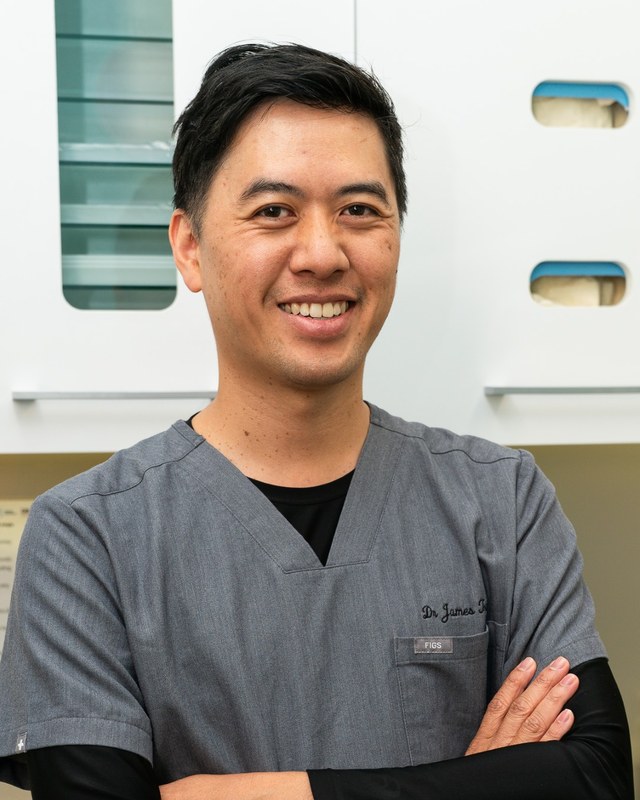
Dr James Tran is a general dentist at Lumi Dental in Melrose Park. He holds a BDent from the University of Sydney and a Graduate Diploma in Oral Implants, and is a Member of the International Congress of Oral Implantologists (MICOI).
This article is general information only and is not a substitute for an examination and individual advice from a registered dental practitioner. Suitability for any treatment varies from person to person.