
Not having a fixed address does not shut you out of dental care in NSW. If you hold a Health Care Card or Pensioner Concession Card, public dental treatment is free, and NSW Health policy names homelessness as a reason to be seen sooner for a full course of care, not later. Pain, swelling and injuries are dealt with on a separate, much shorter timeline.
This page explains how to get in, how long things should take, and what you can do in the meantime.
This applies to more people than you might think
On Census night in 2021, the Australian Bureau of Statistics estimated that 122,494 people were experiencing homelessness, 5.2 per cent more than in 2016. Most were not sleeping outside. Two in five were living in severely crowded dwellings, one in five were in supported accommodation, and about 6 per cent were in tents, improvised dwellings or sleeping out. If you are couch surfing, staying in a refuge or boarding house, or living in a car, the information below is for you.
Who can get free public dental care
NSW Health's eligibility policy (PD2026_023) sets three tests for adults: you live in NSW, you are eligible for Medicare, and you hold, or are listed as a dependant on, an eligible concession card such as a Health Care Card or Pensioner Concession Card. If you meet those, the treatment costs you nothing.
Children under 18 who live in NSW and are eligible for Medicare can also be treated free, once a parent or guardian signs a Child Dental Benefits Schedule bulk billing consent form. Our guide to the Child Dental Benefits Schedule explains that scheme.
If you cannot prove eligibility right now
The same policy has a specific provision for people experiencing homelessness who cannot show their documents. The local oral health service may provide an episodic course of emergency or urgent dental care at its discretion. You can refer yourself, or bring a formal letter from a recognised homelessness agency. That letter can also be accepted as identification. If your concession card has lapsed or been lost, Centrelink can reissue it, but do not wait for that before calling about pain.
One phone number to start
NSW Health asks people to contact the public dental service before visiting, and the starting point is the statewide number, 1800 679 336. Staff ask questions about your mouth and your health, and those answers decide how urgently you are booked.
Be specific when you call. Say if the pain wakes you at night, if your face is swollen or you have a fever, and how long it has been going on. Playing the problem down can put you in a slower category. Give a phone number where you can be reached, even if it belongs to a support worker or a service.
For an interpreter, the Translating and Interpreting Service is on 131 450. The National Relay Service is on 1300 555 727 for people who are deaf or have a hearing or speech impairment.
How long you should wait depends on what is wrong
NSW Health's oral health access policy (PD2024_034) uses a single waiting list with a recommended maximum waiting time for each category. For adults:
| What is happening | Recommended maximum wait |
|---|---|
| Facial swelling from a tooth, recent injury to the teeth, or bleeding that will not stop after an extraction | 1 day |
| Tooth pain that disturbs your sleep | 7 days |
| Tooth pain during the day | 30 days |
| A full course of care for people who are homeless or living in a refuge, boarding house, group home or care facility | 365 days |
| A full course of routine care for most other adults | 545 days |
For children who are homeless, the recommended maximum wait for a full course of care is 90 days.
NSW Health reported that on 30 June 2026, 96 per cent of people on the waiting list had been waiting less than their recommended maximum time. That is useful to know, but the targets for routine care are long. A year is still a year, which is why urgent symptoms need to be described clearly so they are triaged as urgent.
Pain right now
Some dental problems belong in a hospital, not on a waiting list. Go to an emergency department or call 000 if you have swelling of the face or neck, a fever with a bad tooth, difficulty opening your mouth, swallowing or breathing, or bleeding that will not stop. Our article on when to go to hospital for a dental problem explains these warning signs.
For pain without those signs, call 1800 679 336. Out of hours, healthdirect on 1800 022 222 gives free advice from a registered nurse at any time. Over-the-counter pain relief such as paracetamol or ibuprofen, taken as the packet directs and only if it is safe for you, can help in the meantime. Never hold an aspirin against the gum, because it can burn the tissue. Our guide to toothache at night has more practical tips.
Vouchers for treatment at a private clinic
Under the NSW Oral Health Fee for Service Scheme, a public dental service can give an eligible patient a voucher to be treated at a participating private practice. There are three types: urgent care, general care and denture care. Not every treatment is available on every voucher, and the public dental service will tell you what yours covers.
Vouchers expire. Urgent care vouchers are valid for one month, and general care and denture care vouchers for three months, with the date printed on the voucher. You do not pay for treatment the voucher covers. If you need more than that, the private clinic should refer you back to the public service. Questions about lost or expired vouchers go to 1800 679 336.
Charity clinics
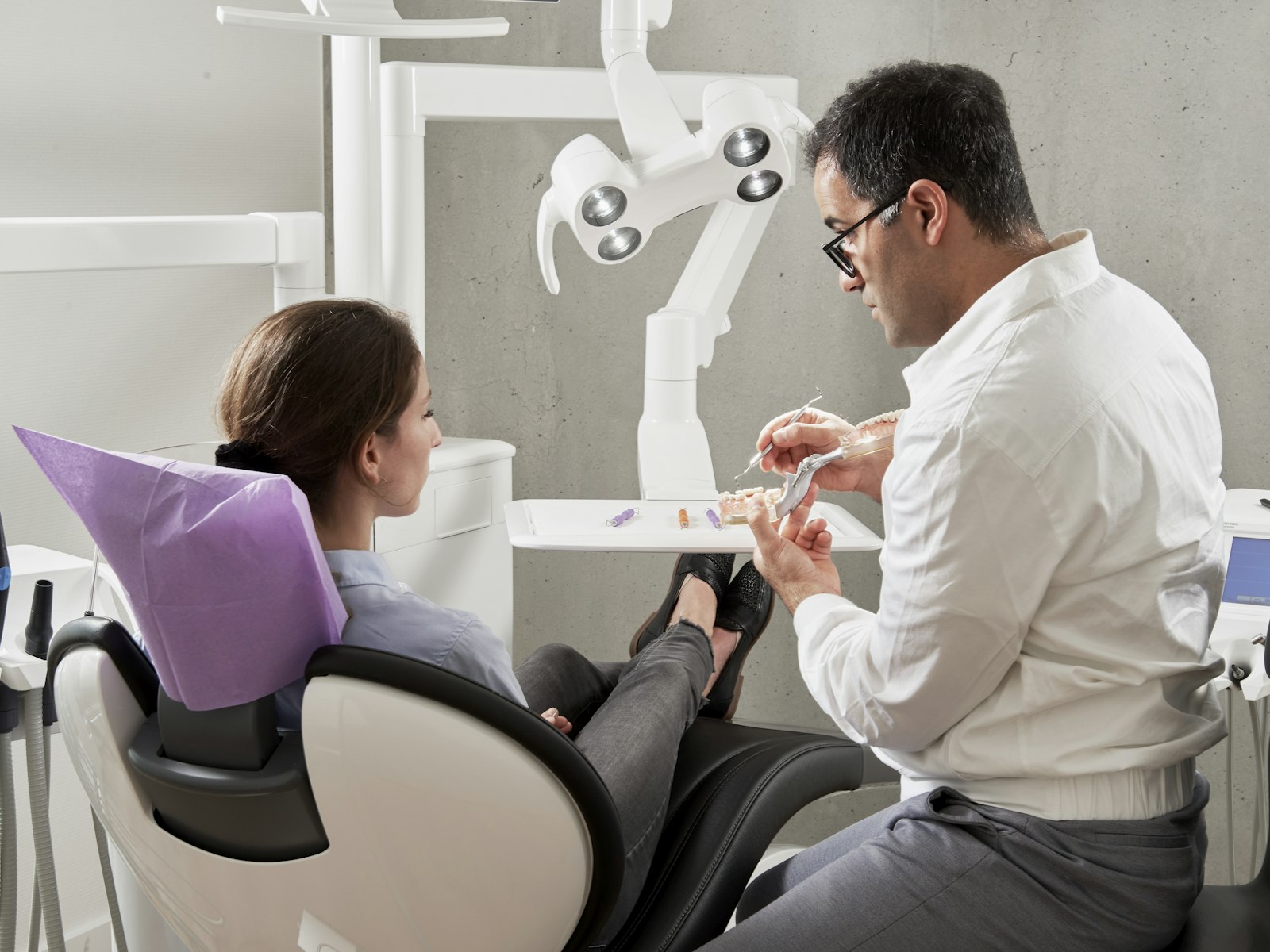
ADA NSW runs a program called Filling the Gap, where volunteer dentists and dental assistants hold charity clinics for people with poor access to dental care, including people who are homeless. Patients attend through partner organisations such as homelessness services and other charities, so ask your caseworker or support service whether they can arrange a place.
Support services can also help with the practical side: a phone number for appointment reminders, help with transport, or somewhere to keep medicines. These small things often decide whether an appointment happens.
Looking after your teeth without a bathroom
Twice-daily brushing is hard to manage with no sink, no privacy and nowhere safe to keep things. Some steps still make a real difference:
- Brushing without water still removes plaque. A toothbrush in your pocket is better than a routine you cannot keep.
- Use fluoride toothpaste and spit it out afterwards rather than rinsing, so the fluoride stays on your teeth.
- With no brush, wiping your teeth with a clean cloth or a finger may help a little, though it does not replace brushing.
- Sipping sugary drinks slowly over hours does more harm than having the same drink in one go. Water in between helps.
- Sugar-free gum after eating boosts saliva, which helps protect teeth.
- A dry mouth from medicines, drug use or not drinking enough water speeds up decay. Mention it at your appointment.
If you can pay something
This page is about care that does not depend on paying. If you are able to pay over time, our guides to dental payment plans and the cost of avoiding the dentist look at private care. Some of the same barriers come up for people leaving custody, covered in our guide to dental care in prison and after release.
Common questions
Do I need an address to get public dental care?
No. Homelessness is a named priority group in NSW policy. The service does need a way to contact you, so give a support worker's number, a service address or a friend's phone.
What if my concession card has expired?
Call 1800 679 336 anyway and explain. People experiencing homelessness who cannot prove eligibility may be offered urgent or emergency care, and Centrelink can help replace the card.
Is all treatment free?
Treatment provided by the public service, or covered by a voucher, is free for eligible patients. Not every type of treatment is available through vouchers, so ask what yours includes.
If you are looking for a regular dentist near Melrose Park, Lumi Dental sees new patients. You can contact the practice to ask what an appointment involves, or see our current deals.
Sources
- NSW Health. PD2026_023 Eligibility for Public Dental Services. health.nsw.gov.au
- NSW Health. PD2024_034 Oral Health Access. health.nsw.gov.au
- NSW Health. NSW public dental service data. health.nsw.gov.au
- NSW Health. Oral Health Fee for Service Scheme: information for patients. health.nsw.gov.au
- Australian Bureau of Statistics. Estimating homelessness: Census 2021. abs.gov.au
- ADA NSW. Filling the Gap charity dental clinic. adansw.com.au
This article is general information only and is not personal advice. Eligibility rules and waiting times change, so confirm the current position with NSW Health.