
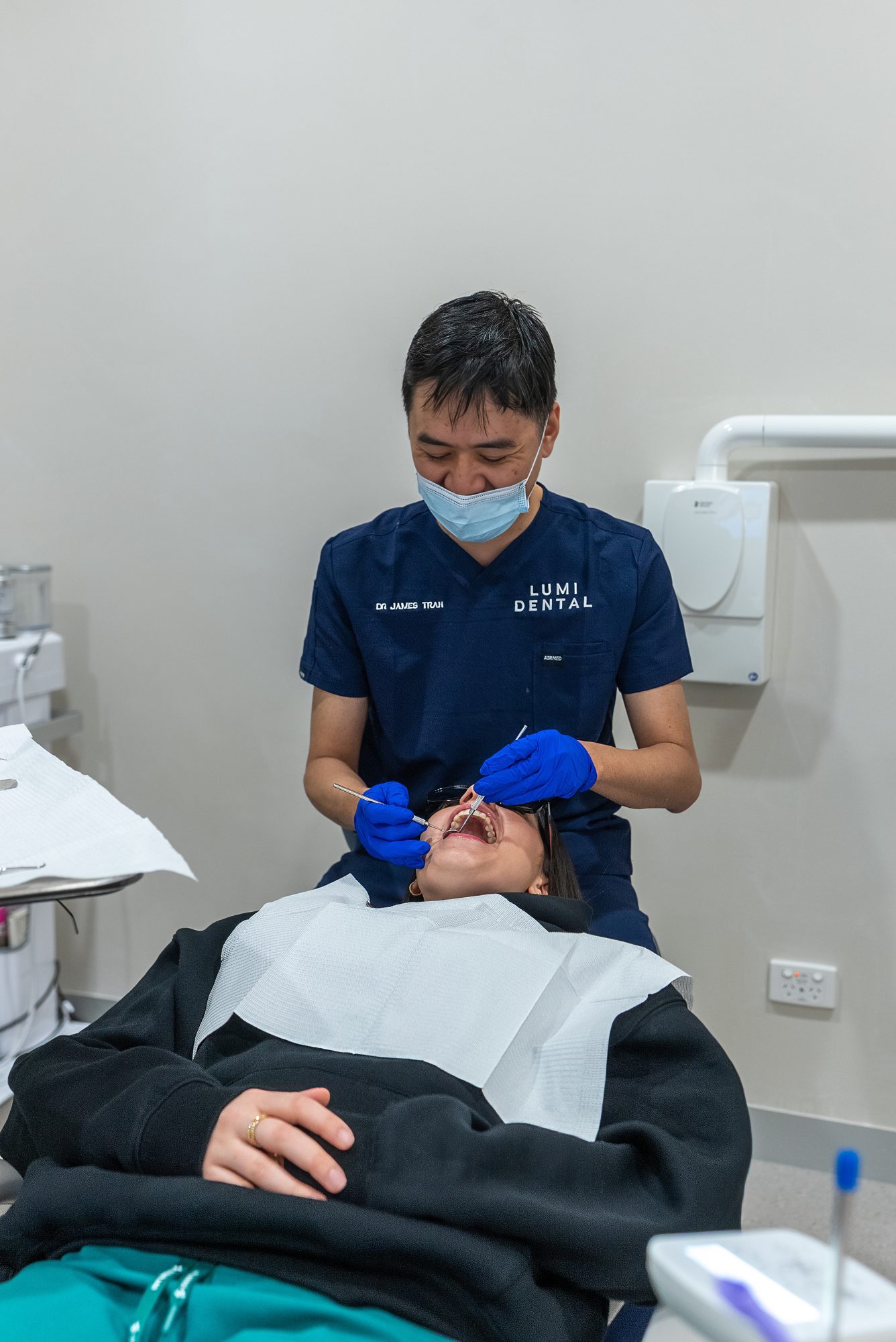

Many people expect to leave implant surgery with a week of antibiotic tablets, because that was the routine for years. The research now points the other way. For a healthy adult having an implant placed into bone that has already healed, the evidence supports a single dose taken before surgery, and some dentists use none at all. A longer course is kept for situations where the risk of infection is genuinely higher.
Written by Dr James Tran, BDent (University of Sydney), MICOI, GradDip (Oral Implants), general dentist at Lumi Dental in Melrose Park.
A dose before surgery is where any benefit comes from
Antibiotics given to prevent a surgical infection work by being in the blood and tissues at the moment bacteria could enter the wound. That moment is the surgery itself. Once the gum has been stitched closed, more tablets add side effects without adding much protection.
The largest summary of the evidence agrees. A Cochrane review updated in 2026 (Esposito and colleagues) pooled 15 randomised trials with 2,874 participants, all having implants placed without bone grafting. Most of the trials used a single 2 g dose of amoxicillin by mouth before surgery. Compared with no antibiotic or a placebo, that preventive dose probably reduced implant failures from about 80 in every 1,000 people to about 27 in every 1,000. Put another way, around 19 people need to take it for one person to avoid a failed implant. Infections after surgery were probably reduced as well.
The same review found there may be little to no difference between one dose and several doses. Whether a dose before or after surgery works better could not be judged, because the evidence was very uncertain. Side effects were uncommon in the trials, but one person in the multiple-dose group had a major allergic reaction that needed a hospital stay. That single event is a useful reminder that every extra dose carries a small cost.
A Swedish trial found an even smaller effect
Not every study shows a clear benefit. A double-blind trial run across several clinics in Sweden (Momand and colleagues, Clinical Implant Dentistry and Related Research, 2022) gave 474 patients either 2 g of amoxicillin or a dummy tablet before implant surgery. Implants failed in 2.5% of the antibiotic group and 3.0% of the placebo group. The differences in implant failure and in infection were not statistically significant, and the authors concluded that prophylaxis is likely of small benefit and should be avoided in most cases.
The two sources are less at odds than they look. Both suggest the gain is small, both place it in a dose before surgery rather than a course afterwards, and both imply that a healthy patient having straightforward surgery has the least to gain.
When a dentist is more likely to prescribe
The Cochrane authors describe the usual reasons for surgical antibiotic cover: a risk of infective endocarditis, a reduced ability to fight infection, surgery at an infected site, long or extensive operations, and placing large amounts of foreign material. In implant dentistry those reasons translate into a handful of common situations.
- Bone grafts and sinus lifts. Graft material and membranes are foreign material, and the operation is longer. These cases sit outside the review above, which excluded grafting. Our guide to bone grafts and sinus lifts explains how these procedures differ.
- An implant placed the same day a tooth is removed. A socket that has just held a broken or infected tooth is not a clean site.
- Several implants, or a whole arch, in one sitting. More surgical time means more opportunity for contamination.
- Health conditions that slow healing. Poorly controlled diabetes, medicines that suppress the immune system, past radiotherapy to the jaw and smoking all affect how well the site heals. Our article on implants and smoking looks at the last of these.
Active gum disease is handled differently. It is treated and brought under control before an implant is placed, rather than covered with antibiotics on the day. Our guide to implants with gum disease covers this in more detail.
Heart conditions are a separate question
Some heart conditions, such as a prosthetic heart valve or a past episode of infective endocarditis, can call for antibiotic cover before certain dental procedures. That decision follows Australian guidelines for the heart condition and is made whatever kind of dental treatment is planned. Our article on antibiotics before dental treatment explains when it applies. Tell your dentist about any heart, joint or other implanted device so the right guidance can be checked.
Extra antibiotics carry their own risks
Antibiotics commonly upset the stomach and bowel, and nausea and diarrhoea are familiar side effects. Less often, a true allergy causes a rash, swelling or difficulty breathing, and a severe reaction needs emergency care. For a single healthy patient those risks are small, but so is the expected benefit, which is why the Cochrane reviewers advise using prophylaxis only when it is clearly justified.
There is also a cost that reaches beyond one person. Every course of antibiotics gives bacteria a chance to develop resistance, and antibiotics prescribed "just in case" after dental surgery add to that problem without helping the patient much. Reducing unnecessary prescribing is part of good practice, not a shortcut.
If you have been told you are allergic to penicillin
Describe what actually happened when you took it. Feeling sick or having loose bowels is a side effect, not an allergy, and a recorded allergy is sometimes inaccurate or outdated. If antibiotic cover is warranted and the allergy is real, an alternative can be used. One small trial in the Cochrane review compared amoxicillin with clindamycin, and the choice of drug is always made by your dentist with your medical history in front of them.
Most protection comes from things other than tablets
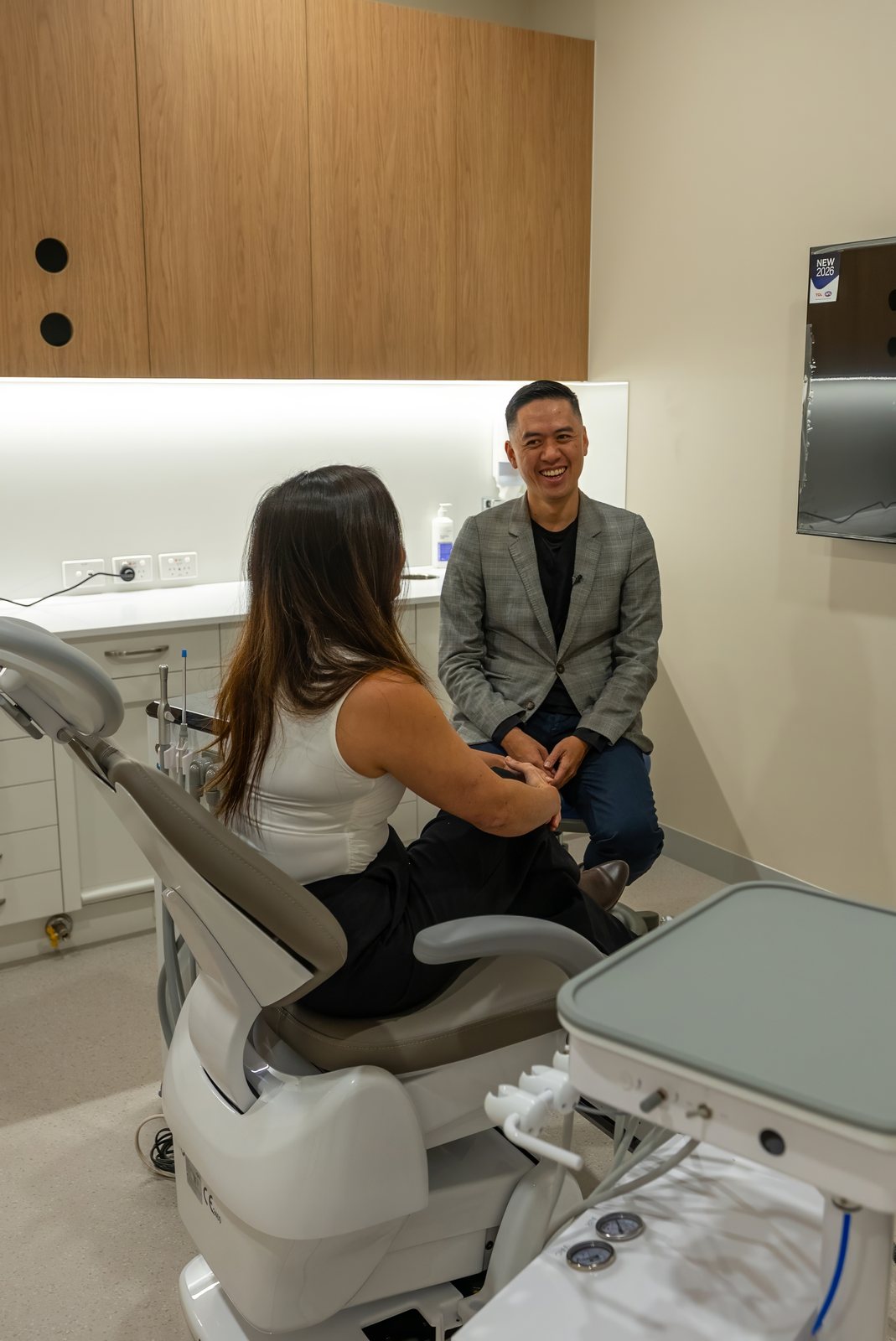
An implant's best defence against infection is built well before the day of surgery. Healthy gums matter, so gum treatment with a dentist or OHT (oral health therapist) comes first when it is needed. On the day, a sterile set-up, careful handling of the tissues and an antiseptic mouth rinse all reduce the number of bacteria at the site. Planning from a 3D X-ray helps place the implant in sound bone with as little disturbance as possible.
After surgery, much of the work is yours. Not smoking, keeping blood sugar in range if you have diabetes, eating soft food, cleaning gently as instructed and coming back for your review all support healing. Our implant recovery timeline describes what normal healing looks like, and our guide to signs of implant failure lists the changes that should prompt a call.
How the antibiotic decision is made at Lumi
Implant planning at Lumi Dental starts with an examination, a full medical history, a 3D X-ray on our Orthophos unit and an intraoral scan. With that information, the dentist can explain whether an antibiotic is recommended in your case and why. Where a medical history is complex, the dentist may check with your GP or specialist before surgery is booked. Lumi does not provide general anaesthetic, but IV sedation is available for implant surgery, as are happy gas, inhaled pain relief and oral sedation, if you are anxious about the procedure. You can read more about dental implants at Lumi Dental.
Questions we are often asked
Will I definitely be given antibiotics?
Not necessarily. For a healthy person with a healed site, a single dose before surgery or no antibiotic at all are both reasonable based on current evidence. Grafting, same-day placement after an extraction and certain medical conditions make a prescription more likely.
Should I expect a course of tablets after surgery?
Often not. The Cochrane review found little to no difference between one dose and several. If your dentist does recommend a course afterwards, it is fair to ask what specific risk it is addressing.
Can an implant site become infected without antibiotics?
It can, but it is uncommon in healthy patients with good surgical technique. Increasing pain, swelling or discharge in the first weeks after surgery should be checked promptly, so contact us rather than waiting for your review.
Talk it through before surgery
The right answer depends on your health, your mouth and the surgery planned. Lumi Dental in Melrose Park offers a free implant consult, where the site can be examined, a 3D X-ray taken and the antibiotic question discussed alongside the rest of your plan. Get in touch to arrange a time, or read more about implant treatment at the practice.
Sources
- Cochrane: Antibiotic prophylaxis for dental implant placement without bone augmentation (Esposito and colleagues, CD004152, 2026 update)
- Momand and colleagues, Clinical Implant Dentistry and Related Research, 2022: Effect of antibiotic prophylaxis in dental implant surgery, a multicentre placebo-controlled randomised trial
- healthdirect: Antibiotics
About the author

Dr James Tran is a general dentist at Lumi Dental in Melrose Park. He holds a BDent from the University of Sydney and a Graduate Diploma in Oral Implants, and is a Master of the International Congress of Oral Implantologists (MICOI).
This article is general information only and is not a substitute for an examination and individual advice from a registered dental practitioner. Suitability for any treatment varies from person to person.








