

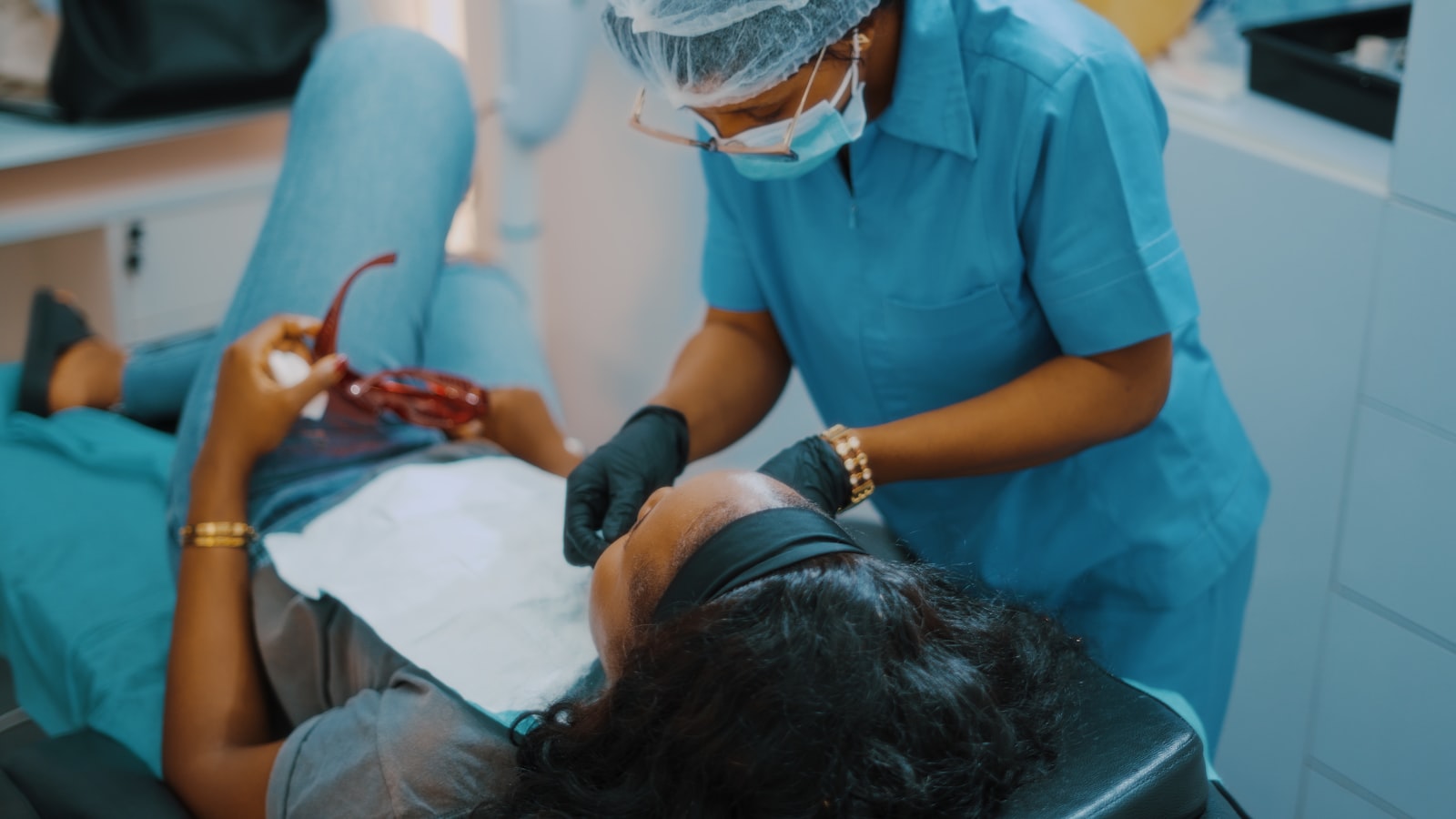

Placing a dental implant is done under local anaesthetic, so you should not feel pain during the surgery itself, and most people describe the recovery as more comfortable than they expected. The area is fully numbed, so what you notice during the procedure is pressure and vibration rather than pain. Afterwards there is usually mild to moderate soreness for a few days, which simple pain relief manages well. Many patients say it felt easier than having a tooth taken out.
Key takeaways
- Implant surgery is carried out under local anaesthetic, so the procedure should be pain free.
- You may feel pressure and vibration, but not sharpness, while the implant is placed.
- Mild to moderate soreness for a few days afterwards is normal and usually eased by simple pain relief.
- Sedation is available if you feel anxious about the surgery.
- Ongoing pain, spreading swelling, or a loose implant later on are reasons to be reviewed.
During the procedure
An implant is a small titanium or ceramic post placed into the jawbone to replace the root of a missing tooth. Before it goes in, the gum and bone are thoroughly numbed with local anaesthetic, the same kind used for fillings and extractions. Because bone itself has very few pain sensors, the placement is often surprisingly comfortable. You will feel some pushing and a gentle vibration while the site is prepared, along with the sounds of the instruments, but not pain. If you feel anything sharp, your dentist simply tops up the anaesthetic. For a full walk through of the stages, see how dental implants work.

What recovery feels like
Once the anaesthetic wears off, expect some tenderness around the site, a little swelling, and sometimes minor bruising. For most single implants this is mild and settles within a few days. Larger cases, or surgery that included a bone graft or sinus lift, can feel more tender and take a little longer. The full picture is in our implant recovery timeline.
How implant discomfort compares
| Procedure | During | Typical soreness after |
|---|---|---|
| Simple filling | Numb, painless | Little to none |
| Tooth extraction | Numb, pressure | A few days |
| Single implant | Numb, pressure and vibration | Usually a few days, mild to moderate |
Staying comfortable afterwards
Simple steps make recovery easier: take pain relief as directed before the anaesthetic fully fades, use a cold compress on the cheek in the first day, eat soft foods, and avoid smoking, which slows healing. Keep the area clean as instructed and avoid vigorous rinsing on the first day. If you feel anxious about the surgery, ask about sedation options, which can make the appointment far more relaxed. Good long term care, covered in our implant aftercare guide, helps the implant last for many years.
When to contact your dentist
Some soreness is expected, but pain that increases after the first few days, swelling that spreads, a fever, or a bad taste should be checked. Later on, an implant that feels loose or a gum that becomes sore around it also warrants review. Most implants heal without any of these issues.
Frequently asked questions
Is implant surgery painful?
Not during the procedure, because the area is numbed. Expect mild to moderate soreness for a few days afterwards.
Is an implant more painful than an extraction?
Many people find it similar or even more comfortable, because bone has few pain sensors and the surgery is planned and precise.
How long does the soreness last?
For a single implant, usually a few days. Larger cases or grafts can take longer.
Will I be awake during the surgery?
Yes, under local anaesthetic you are awake but numb. Sedation is available if you prefer.
What helps with discomfort afterwards?
Simple pain relief, a cold compress, soft foods, rest, and avoiding smoking all help.
Thinking about an implant?
If missing teeth or worry about the procedure have been holding you back, a conversation can clear up a lot. The team at Lumi Dental offers a complimentary implant consultation to assess whether an implant suits you. You can learn more on our dental implants page or view current options on our offers page.
This article is general information and is not a substitute for personal dental advice. Suitability for implants depends on an in person assessment.

