
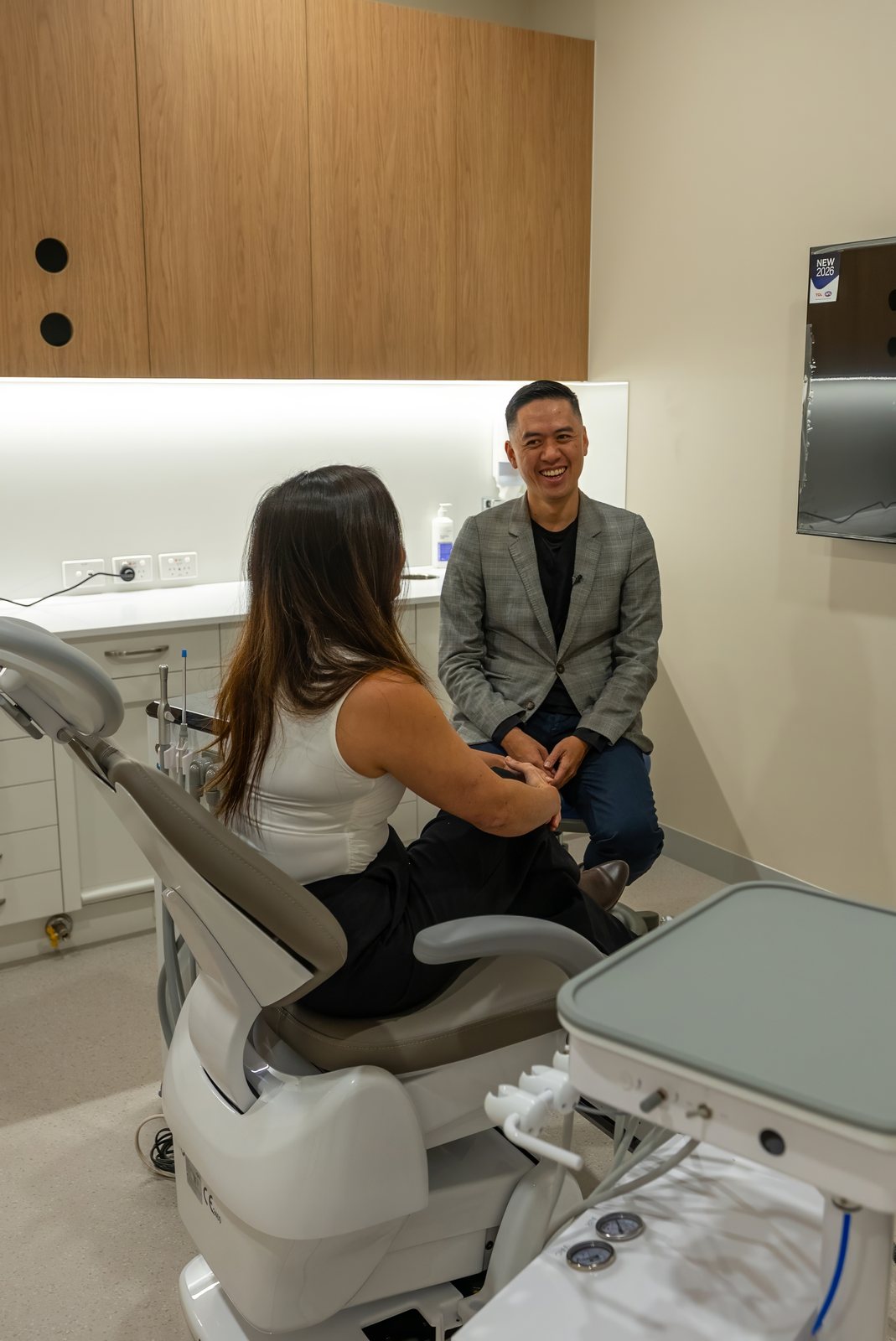

If you have Ehlers-Danlos syndrome or joint hypermobility, tell the dental team before your first visit, because the jaw joint, local anaesthetic and the gums are the three things most likely to change how your appointment is run. A review in the Rambam Maimonides Medical Journal reports that one study found resistance to local anaesthetic in 58% of people with hypermobile Ehlers-Danlos syndrome, compared with 21% of controls. Knowing this in advance lets the dentist plan shorter sessions, protect the jaw and allow more time for numbing.
Written by Dr James Tran, BDent (University of Sydney), MICOI, GradDip (Oral Implants), general dentist at Lumi Dental in Melrose Park.
The short version
- Ehlers-Danlos syndromes are a group of inherited conditions affecting connective tissue; hypermobile EDS is the most common type.
- A loose jaw joint can slip out of place during long or wide-open appointments, so shorter sessions, a bite block and breaks often help.
- Local anaesthetic may work less well or wear off sooner. Our article on when local anaesthetic does not work explains what a dentist can try.
- Gums and the lining of the mouth can bruise, bleed or ulcerate more easily, so gentle brushing technique matters.
- Dizziness and a racing heart after sitting up or standing can happen with hypermobile EDS, so the chair is raised slowly.
- Your GP, rheumatologist or geneticist manages EDS; the dental team plans around their advice.
Hypermobile EDS and hypermobility spectrum disorder in brief
The NHS describes Ehlers-Danlos syndromes (EDS) as a group of rare inherited conditions affecting connective tissue, the material that supports skin, ligaments, blood vessels and bones. There are 13 types, most of them rare, and hypermobile EDS (hEDS) is the most common. People with hEDS may have loose, unstable joints that dislocate easily, joint pain, fatigue, skin that bruises easily, and dizziness with a faster heart rate after standing up. There is no test to confirm hEDS; it is diagnosed from history and examination.
Some people have problems caused by hypermobility without meeting the criteria for any type of EDS. The NHS notes they may be diagnosed with hypermobility spectrum disorder (HSD), which is treated in the same way as hEDS. Joint hypermobility on its own is common, affecting around 1 in 30 people, and is unlikely to be EDS without other symptoms.
This article focuses on hEDS and HSD. Vascular EDS affects blood vessels, so the dentist will want to hear from your medical team before any surgery.
The single rule: tell the team before the first visit
If you have hEDS or HSD, start by telling the dental team when you book, not when you are already in the chair. That one step lets the dentist plan for the three things that most often change a visit: protecting the jaw joint, allowing extra time for local anaesthetic, and handling gums and the lining of the mouth gently.
In my experience, patients with EDS often know their own bodies very well: which positions hurt, which anaesthetic has failed before, and how long they can keep their mouth open. I usually ask for exactly that history at the first appointment and write it into the notes, so every later visit starts from it.
The jaw joint: clicking, subluxation and dislocation
The Hypermobility Syndromes Association (HMSA), in a dental health page written by a professor of oral medicine, explains that the jaw joint can be lax in classical, hypermobile and vascular EDS, so the lower jaw may slip forward out of its socket and leave you unable to close your mouth. Sometimes it goes back by itself; otherwise a clinician relocates it. Repeated dislocation can damage the joint.
A small French study of 14 people with non-vascular EDS, mostly classical types, found jaw joint disorders in 64.3% of them, compared with 16.7% of 30 people without EDS, and three of the 14 had a history of true jaw dislocation. It did not study hEDS directly, so it is a pointer rather than a figure for everyone.
What helps in the chair
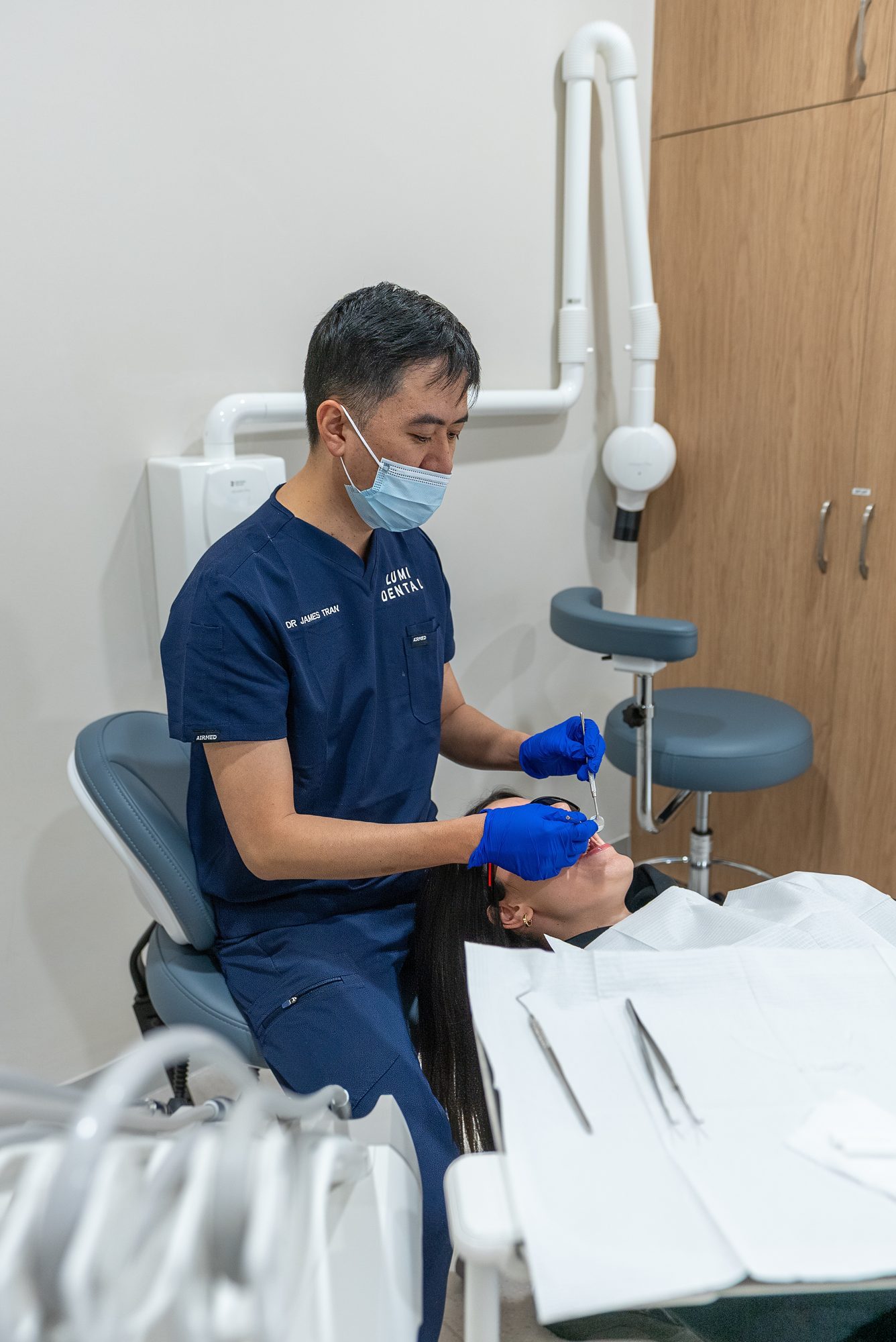
HMSA advice centres on not opening the mouth too wide. In practice, that often means shorter sessions, a soft bite block so the jaw muscles can rest, regular breaks to close and relax, and support for the neck. If your jaw has ever locked open or closed, read our article on a jaw locking open or closed. A jaw that will not close is an emergency and needs same-day care.
Local anaesthetic that works less well
The Rambam review notes that partial or complete failure of local anaesthetic has been described during dental procedures in hEDS. A survey of people with non-vascular EDS having joint surgery, published in the Orphanet Journal of Rare Diseases, found 47% reported being insensitive to local or regional anaesthesia. The studies are small, the reasons are not well understood, and many people with EDS numb normally.
If anaesthetic has failed for you before, say so. A dentist may allow more time before starting, check numbness carefully, use a different injection technique or give a top-up. Our article on why local anaesthetic does not always work the first time explains these options. If you feel sharp pain, raise a hand; stopping to top up is routine, not a failure on your part.
Gums, bruising and the lining of the mouth
The Rambam review describes easy bruising and a bleeding tendency in hEDS, including bruises on the lining of the mouth, even though standard clotting tests are usually normal. HMSA notes that some people with EDS get mouth ulcers more easily from sharp teeth, braces or loose dentures.
Periodontal EDS is a separate, rarer type
For most people with hEDS, HMSA states the gums are not specifically affected, and decay and gum disease follow the same plaque-driven pattern as anyone else. Periodontal EDS is different. A systematic review in the Journal of Clinical Periodontology found early severe gum disease in 98.4% and gum recession in 87.1% of reported cases, and no evidence that early severe gum disease is part of other EDS types. If you developed gum disease unusually young, mention it.
Gentle cleaning at home
HMSA suggests a small-headed, soft toothbrush, a gentle rolling action rather than scrubbing sideways, careful flossing and fluoride toothpaste twice a day. Our guide to gum recession explains why gentle technique protects exposed roots.
Dizziness, fainting and long appointments
The NHS lists dizziness and an increased heart rate after standing up among the features of hEDS, and the Rambam review links these with autonomic symptoms such as light-headedness and near fainting. Sitting up quickly after lying back can bring this on, so the chair is raised in stages, with a pause before you stand. Our article on fainting at the dentist covers what the team does if you feel faint.
What may help, issue by issue
| Issue | What may help |
|---|---|
| Jaw subluxation or dislocation | Shorter sessions, a bite block, breaks to close the mouth, avoiding very wide opening |
| Numbing that wears off fast or does not take | Tell the dentist beforehand, more time before starting, careful checking, top-ups |
| Bleeding or receding gums | Soft brush, gentle technique, regular professional cleans, check for periodontal EDS if gum disease starts early |
| Dizziness on sitting up | Chair raised slowly, a pause before standing, water nearby |
| Mouth ulcers or fragile lining | Smoothing sharp edges, well-fitting dentures, protective wax over any appliance |
| Long appointments | Splitting treatment into shorter visits, neck support, a longer booking so nothing is rushed |
Extractions, healing and orthodontic retainers
HMSA notes that invasive procedures such as extractions may be complicated by slower wound healing and possibly more bleeding, though it also says there is little evidence that extraction sites heal poorly in EDS. A dentist typically places a dressing in the socket and stitches carefully. On orthodontics, HMSA reports that teeth in some people with EDS move faster than expected, so a retainer may be needed for longer to hold them in place.

How we approach this at Lumi Dental
At Lumi Dental in Melrose Park, a dentist takes your history, examines your teeth, gums and jaw joint, and notes what has helped or failed at past visits. Appointments can be booked longer, with breaks built in and mouth props to rest the jaw, and treatment can be split across shorter visits. The oral health therapists provide cleans and gum therapy with a gentle approach. For adults, IV sedation is available at the practice after a medical review; Lumi Dental does not provide general anaesthetic itself and refers where it is needed. Your GP, rheumatologist or geneticist manages your EDS, and the team at Lumi Dental can write to them when planning surgery. Read more about general dentistry at Lumi Dental.
Questions patients ask
Can a dentist dislocate your jaw if you have EDS?
It can happen if the mouth is held wide open for a long time, which is why shorter sessions, a bite block and breaks are used. Tell the dentist if your jaw has dislocated before.
Why does local anaesthetic not work on people with Ehlers-Danlos syndrome?
The reason is not well understood. Small studies report reduced or shorter-lasting numbing in some people with hEDS, but many people numb normally. Extra time, careful checking and top-ups usually help.
Does hypermobility affect your gums?
In hEDS the gums are usually not specifically affected, though the lining of the mouth may bruise or ulcerate more easily. Periodontal EDS, a rarer type, is linked with early severe gum disease and needs close gum care.
Should I tell my dentist I have hEDS or HSD?
Yes, ideally when you book. It lets the team allow a longer appointment, plan for the jaw and anaesthetic, and raise the chair slowly. Our article on jaw exercises and self-help for TMJ pain may help between visits.
Can I have sedation for dental treatment with EDS?
For adults, often yes, after a medical review. Lumi Dental does not provide general anaesthetic and refers where it is needed, though IV sedation is available at the practice. For teenagers, referral to an appropriate hospital or specialist service is discussed instead.
Book a check-up at Lumi Dental, Melrose Park
If you live with Ehlers-Danlos syndrome or joint hypermobility, mention it when you book and the team at Lumi Dental will allow time for breaks, jaw support and careful numbing. Book a check-up with a general dentist in Melrose Park, and see current offers at Lumi Dental. Patients visit from Ryde, Parramatta, Ermington and Rydalmere, with on-site parking at Melrose Central.
Sources
- NHS: Ehlers-Danlos syndromes
- Hypermobility Syndromes Association: Dental health
- Rambam Maimonides Medical Journal: Ehlers-Danlos syndrome, hypermobility type, a much neglected multisystemic disorder (PMC)
- Oral Diseases: Oral manifestations of non vascular Ehlers-Danlos syndrome, cross-sectional study (PMC)
About the author

Dr James Tran is a general dentist at Lumi Dental in Melrose Park. He holds a BDent from the University of Sydney and a Graduate Diploma in Oral Implants, and is a Member of the International Congress of Oral Implantologists (MICOI).
This article is general information only and is not a substitute for an examination and individual advice from a registered dental practitioner. Suitability for any treatment varies from person to person.







