Picture a Sunday afternoon: a child's front tooth is knocked out at the park, or a crown pops off over dinner. The first few minutes after some dental injuries make a real difference, and that is exactly when people waste time searching cupboards. A small, ready-made box of supplies lets you act straight away, then get to a dentist with the best chance of a good outcome.
A kit buys time, it does not replace treatment
Nothing in a home kit fixes a broken tooth or saves a knocked-out one on its own. Its job is to control bleeding, protect a damaged tooth, ease pain and keep a knocked-out tooth alive until a dentist can see it. Nearly every dental injury still needs a same-day or next-day appointment, even when the pain settles quickly.
What to put in the box
Everything here is available from a pharmacy or supermarket, and a small plastic container with a lid is enough to hold it.
- Sterile gauze squares for pressing on bleeding gums, lips or a tooth socket.
- A small sealable container and a long-life carton of milk, or sterile saline for rinsing and carrying a knocked-out adult tooth.
- Temporary filling material from the pharmacy, for covering a lost filling or holding a crown in place for a short time.
- Orthodontic wax to cover a sharp chipped edge, a broken brace wire or a rough denture edge.
- Your usual over-the-counter pain relief, taken as directed on the pack.
- Disposable gloves, a small mirror and a torch so you can see what has happened and handle a tooth cleanly.
- A card with phone numbers: your dental practice, an after-hours dental service if you know of one, and your nearest hospital emergency department.
Check the box once or twice a year and replace anything past its use-by date, particularly milk and saline.
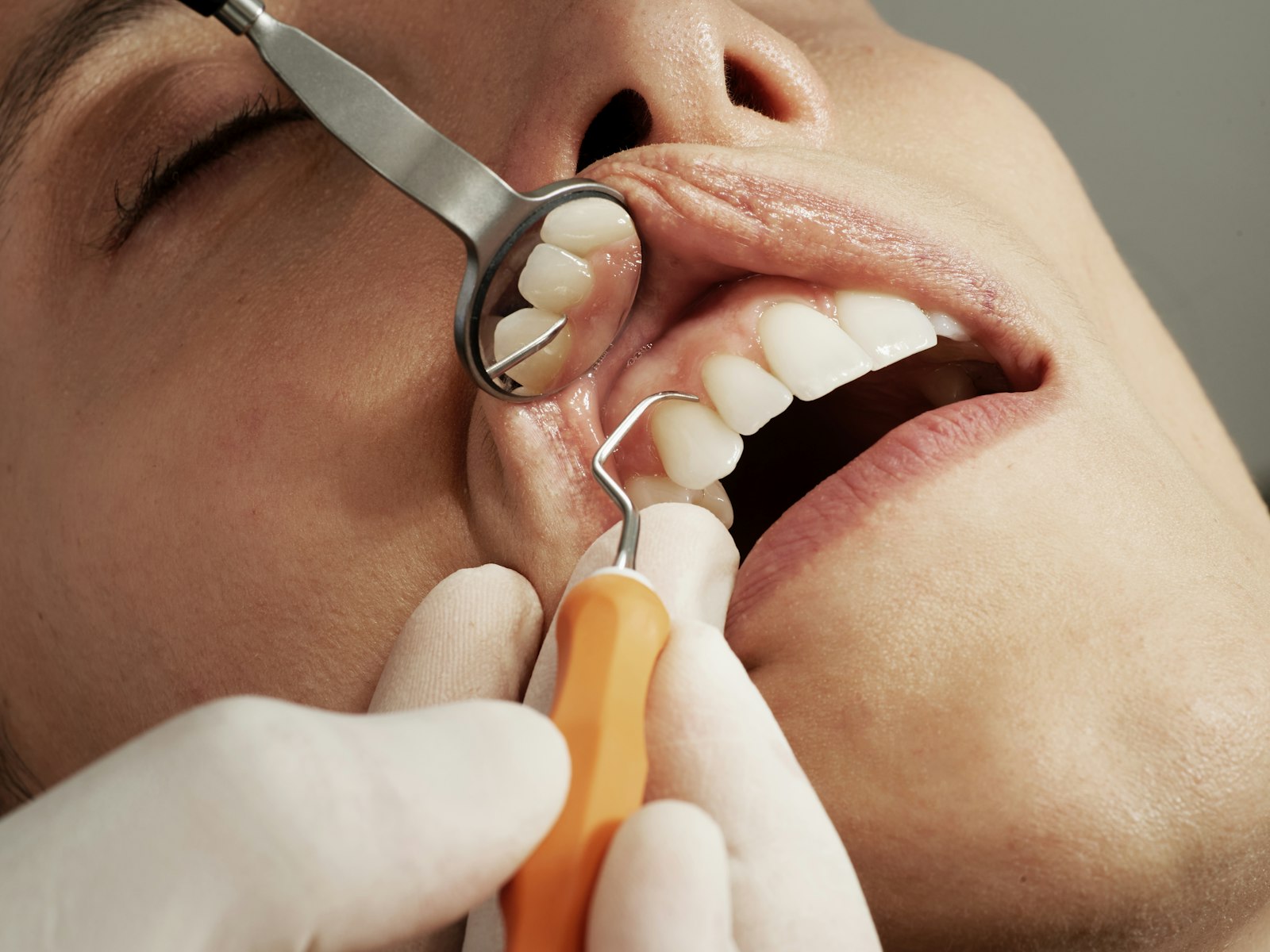
The knocked-out tooth is the one that cannot wait
An adult tooth that has been knocked out is the most time-sensitive dental emergency, and it is where the kit is most useful. Handle the tooth by the crown, the white part you normally see, and avoid touching the root. If it is dirty, rinse it for a few seconds in milk or saline; do not scrub it, and avoid water.
If the person is conscious and the tooth is clean, try to push it back into the socket the right way round and have them bite gently on gauze to hold it. If that is not possible, put it in milk or saline in your container. An older child or adult can instead hold it inside the cheek. Never let the tooth dry out. Then see a dentist immediately. Replanting works best within about 15 minutes, and the outlook is poor once the root has been dry for over 60 minutes.
Baby teeth are different. A knocked-out baby tooth should never be put back, because doing so can damage the adult tooth developing underneath. Bring the child to a dentist as soon as possible so the mouth and other teeth can be checked. Victoria's Better Health Channel gives similar first aid advice for both situations.
Using the kit for other mishaps
A lost filling or crown
Gently clean and dry the area. A small amount of temporary filling material can be pressed into a hole, or used to hold a clean crown back in position for a day or two. It is a stopgap to protect the tooth and reduce sensitivity, so book in to have it repaired properly. Never use superglue or household adhesives in the mouth.
A chipped or broken tooth
Rinse with warm water and press gauze on any bleeding. Soften a piece of orthodontic wax and mould it over a sharp edge so it does not cut the tongue or cheek. If you find the broken piece, keep it moist in milk or saliva in a sealed container and bring it with you, since it can sometimes be used in the repair.
Cuts to the lip, tongue or gum
The mouth has a rich blood supply, so small cuts can look dramatic. Fold a gauze square and hold firm, steady pressure on the area without lifting it to check every minute. Most bleeding in the mouth slows with pressure. If it does not, or the cut is deep or gaping, seek urgent care.
When home first aid is not enough
Go to a hospital emergency department or call 000 for a suspected broken jaw, bleeding that will not stop, a head injury, or swelling of the face or neck that affects breathing or swallowing. For a lost filling, a chipped tooth or a toothache without these warning signs, a same-day or next-day dental appointment is usually the right step. Do not place a painkiller tablet against the gum or tooth; swallow it as directed instead.
Our articles on dental first aid supplies for home and dental emergencies after hours and on public holidays cover more situations, and our emergency dental care page explains how we see urgent problems.
A smaller kit for the sports bag
For weekend sport, a cut-down version is enough: gauze, a sealed container, a small carton of long-life milk or a saline ampoule, gloves and the phone numbers card. A well-fitted mouthguard remains the better protection for contact sport, and the kit is there for when an injury happens anyway.
Questions we are often asked
Can I store a knocked-out tooth in water?
Avoid it. Water can damage the cells on the root surface. Milk, saline or the person's own saliva are better choices while you get to a dentist.
Should I put a knocked-out baby tooth back in?
No. Keep the child calm, control any bleeding with gauze and see a dentist as soon as possible.
How quickly do I need to see a dentist?
For a knocked-out adult tooth, immediately, with the tooth replanted (ideally within 15 minutes) or kept in milk or saline. For other injuries, as soon as you can, usually the same or next day.
Prevention starts before the emergency
Regular check-ups can pick up cracked fillings and weakened teeth before they break at an awkward time. When you are ready, see our current offers or book with our general dentists in Melrose Park.