

People who are blind or have low vision can look after their teeth and gums very effectively, and most of the adjustments involve touch, routine and a few well-chosen tools rather than sight. This guide to low vision blind dental care tips covers everyday brushing and flossing, how to check your own mouth, how to tell the dental team what works for you, and what to expect when visiting the clinic. Everyone's vision and preferences are different, so treat these as options to try, not rules.
Key Takeaways
- Brushing and flossing can be done by touch and routine, using a set order so no area is missed.
- Tactile marks on a toothbrush, floss holders, interdental brushes and electric brushes with timers or pressure feedback may all help.
- You can check your own mouth by touch, and noticing what is normal for you makes changes easier to spot.
- Telling the dental team what helps, such as describing instruments before use, is welcome and often makes visits smoother.
- Practical details like guide dog access, arm cues and large print or emailed information can usually be arranged in advance.
- Regular check-ups remain worthwhile, and it is sensible to book sooner if you notice bleeding, pain, swelling or a change in your mouth.
Brushing and Flossing by Touch and Routine
Good oral care depends far more on consistency than on seeing what you are doing. Many people who are blind or have low vision build a fixed sequence, for example, outer surfaces of the upper teeth left to right, then the inner surfaces, then the chewing surfaces, then the lower teeth in the same order. Repeating the same pattern each time helps you cover every area without needing to see it.
Toothbrush and toothpaste
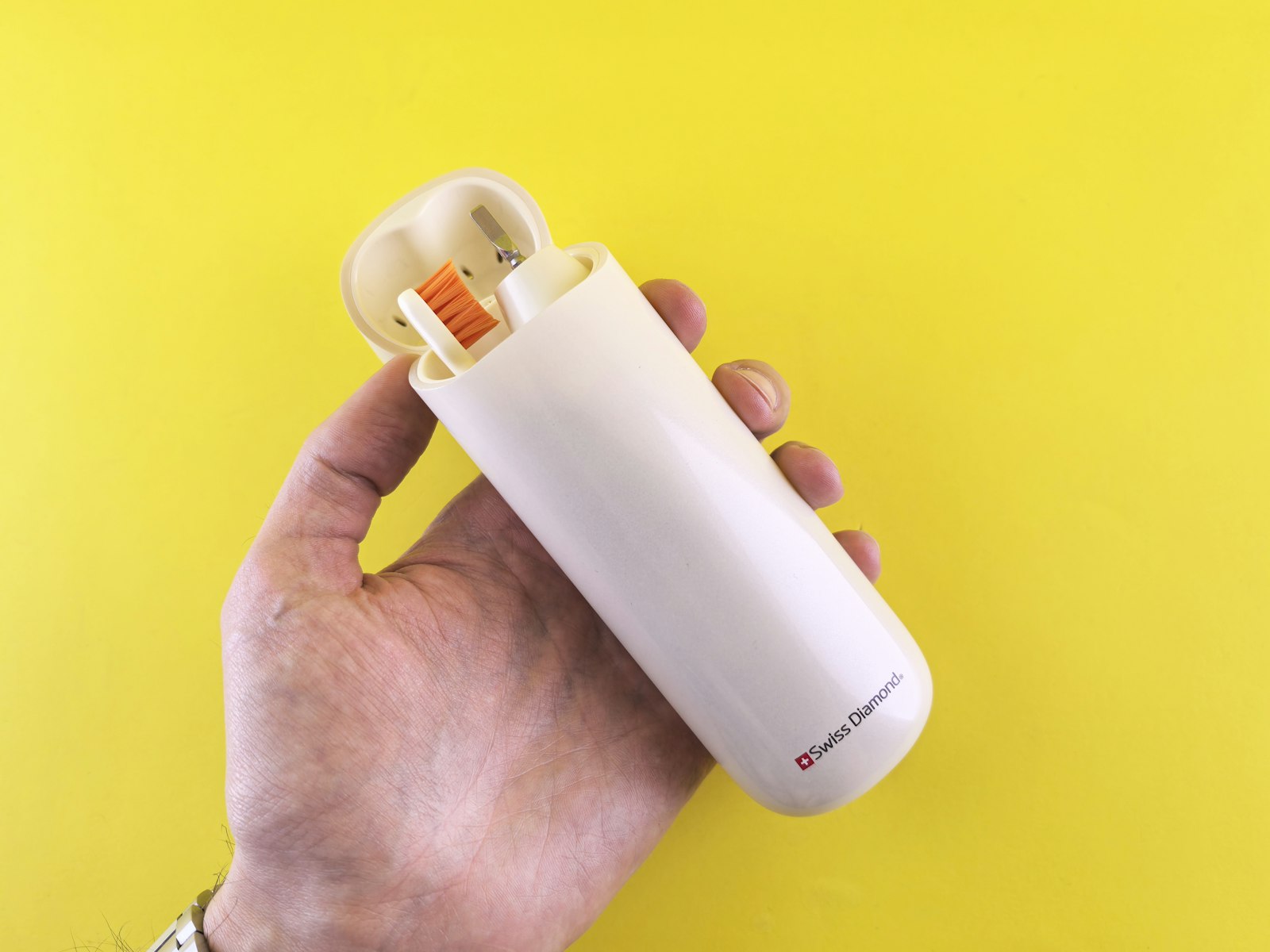
- Mark your toothbrush with a rubber band, a raised dot sticker or a small tie so you can tell it apart from others.
- Place toothpaste along the bristles by feeling for the bristle edge with your fingertip, or use a pump-style dispenser if that suits you better.
- Use a soft brush and gentle pressure. Scrubbing hard does not clean better and may irritate gums.
Electric toothbrushes and timers
Many electric toothbrushes have a built-in two-minute timer, quadrant pacing pulses and pressure feedback that vibrates or changes pitch when you press too hard. These can be useful when you cannot rely on visual cues. Your phone may also help: features such as VoiceOver on iPhone and TalkBack on Android can read out a timer, and talking timers are widely available. Features vary between models and devices, so it is worth checking what suits you.
Flossing and cleaning between teeth
Floss holders, floss picks and interdental brushes can be easier to handle than a length of thread. Interdental brushes also come in sizes that your dentist or hygienist can help you choose. Feeling the resistance as the brush passes between teeth gives useful feedback. Take your time and be gentle if your gums feel tender.
A Daily Task, a Technique and a Helpful Tool
| Daily task | Practical technique | Helpful tool |
|---|---|---|
| Identifying your toothbrush | Mark the handle so you can find it by touch | Rubber band, raised dot or tie |
| Applying toothpaste | Feel the bristles with a fingertip and squeeze along them | Pump dispenser or a small pea-sized guide with a finger |
| Brushing for two minutes | Follow the same sequence each time, upper then lower | Electric brush with timer and quadrant pacing |
| Brushing gently enough | Let the bristles do the work | Pressure-sensing electric brush |
| Cleaning between teeth | Guide the tool between teeth and feel for resistance | Floss holder or interdental brush |
| Keeping time | Set a spoken or audible timer | Phone screen reader, talking timer or smart speaker |
| Remembering the routine | Link it to something you do every day | Phone reminders or a household routine |
Checking Your Own Mouth by Touch
Once a month or so, wash your hands and gently run a clean finger or your tongue around your mouth. You are getting to know what is normal for you: the smoothness of your teeth, the firmness of your gums, and the feel of your cheeks and the roof of your mouth. Things to note include bleeding when you brush, a rough or sharp edge on a tooth, a lump or swelling, a sore spot that does not settle, or a tooth that feels loose.
None of these automatically means something serious, but they are good reasons to book an appointment. Bad breath or a bad taste that does not go away may also be worth mentioning. If pain or swelling is significant, contact a dentist or your GP promptly.
Telling the Dental Team What Helps
You know your needs best, and the team at Lumi Dental welcomes hearing them. When you book, or at the start of your visit, it can help to mention:
- How much you can see, and what you would prefer us to do, without needing to explain your medical history in detail.
- That you would like instruments and each step described before they are used, for example, "I am going to place a small mirror in your mouth now."
- Whether you would like a gentle hand on the arm as a cue before touch, or a verbal warning instead.
- If you are bringing a guide dog, so we can arrange space and a comfortable spot for your dog.
- How you prefer to receive information: large print, an emailed document that works with your screen reader, or a phone call.
Many people who use screen readers find emailed appointment reminders easier than paper letters. Let the team know which format you prefer and we can typically arrange it.
Getting to and Around the Clinic
A little planning can make the trip easier. Ask about the best way to reach the entrance, whether there is any step or change in surface, and where the reception desk is. On arrival, a team member can meet you at the door, describe the layout and offer an arm to guide you if you would like one. Feel free to say no to help you do not need. If you use a white cane or guide dog, tell us how you like to be guided through the clinic and to the treatment room.
Support From Family, Friends and Caregivers
Some people prefer to manage their oral care independently, while others like some support. If a family member or caregiver helps, it may be useful to set up a simple system, such as putting toothbrushes and floss in the same place each day, and to agree on how much help is wanted. A caregiver can also be present at appointments if you would like, and the team can explain things directly to you first.
Different needs call for different approaches. Our pieces on autism-friendly dental visits and oral care with an intellectual disability are about other needs and are not specific to vision, but you may find them helpful if they apply to you or someone you support. If the thought of visiting makes you nervous, our guide on overcoming dental anxiety may also help.

When to Book a Check-Up
Regular check-ups and cleans help catch small problems early, and how often you visit depends on your own risk of decay and gum disease. Many adults visit about every six months, though your dentist may suggest a different schedule. Book sooner if you notice bleeding gums, pain, sensitivity, swelling, a chipped tooth or something that feels different in your mouth. Some conditions that affect vision, and some medications, can also affect your mouth, so it is worth sharing your health history with us.
Research and organisations such as Vision Australia and the Australian Institute of Health and Welfare have described how common vision loss is, and it affects people of all ages. You are far from alone, and dental teams see many patients with a range of vision needs.
Common Questions
How can I brush my teeth properly if I cannot see?
You can brush effectively by following the same sequence every time and using a soft brush. An electric brush with a timer and pressure feedback may help you cover every surface without visual cues.
What is the easiest way to floss with low vision?
Floss holders, floss picks and interdental brushes are typically easier to handle than loose floss. Your dentist or hygienist can show you which size and style suits your teeth.
Can I bring my guide dog to the dental clinic?
Yes, please let us know when you book so we can prepare a comfortable space. Assistance animals are generally welcome, and the team is happy to talk through any needs.
How can the dental team help me feel comfortable?
Ask them to describe each step and instrument before using it, and tell them if you prefer a spoken warning or a hand on your arm. These small changes often make appointments calmer.
Can I get appointment information in a format I can read?
Often, yes. Many clinics can send emails compatible with screen readers or provide large print. Let the team know which format works for you.
How can I tell if something is wrong in my mouth?
Get to know what feels normal by checking gently by touch each month. Bleeding, lumps, sharp edges, loose teeth or sores that do not heal are worth having checked.
Booking a Visit at Lumi Dental
If you would like a check-up with a team that will listen to what works for you, Lumi Dental in Melrose Park, Sydney, is here to help. See our current deals for the new patient offer, or read more about general dentistry at Lumi Dental. You are welcome to book a free consult and receive a written quote for any recommended treatment.


