

Yes, a problem in the upper neck can be felt as an ache in the jaw, around the ear or across the back teeth. The connection runs through shared nerve pathways in the brainstem rather than through slouching, and it is much less common than an ordinary dental cause. So the order of investigation matters: teeth and jaw joint first, neck second.
Some jaw and tooth pain is not a dental or neck problem at all
Before anything else, a few patterns need emergency care. Call Triple Zero (000) if:
- jaw, tooth or facial pain comes on with exertion, or arrives with chest pain, arm or shoulder pain, sweating, breathlessness or nausea. Heart pain can occasionally be felt only in the jaw or teeth, and missing it is dangerous. Our article on jaw pain and the heart covers this pattern in detail.
- a sudden, severe, one-sided neck or head pain starts abruptly or does not ease with usual pain relief. A tear in a neck artery can present this way, sometimes with neurological symptoms appearing later.
- there is any new weakness, facial droop, slurred speech, change in vision, numbness, unsteadiness or confusion.
- fever comes with neck stiffness, headache, light sensitivity or a rash.
- swelling of the face or neck comes with fever, drooling, a changed voice, or trouble swallowing or breathing.
Two other situations need a doctor the same day. A new headache after about 50, especially with a tender scalp or a jaw that tires while chewing, can be giant cell arteritis, which can affect sight. A jaw that has locked and will not open also needs prompt attention. For advice at any hour, the healthdirect helpline is on 1800 022 222.
The brainstem cannot always tell neck from face
Sensation from the face, teeth and jaw travels mainly in the trigeminal nerve. Sensation from the top of the neck travels in the upper cervical nerves. Both sets of fibres end on the same relay neurons low in the brainstem and upper spinal cord, a region Bartsch and Goadsby described as the trigeminocervical complex. When two sources feed into one relay, the brain sometimes attributes neck input to the face. The pain does not travel; the brain mislabels where it began.
That shared relay also explains why the reverse happens. Jaw muscle pain can be felt in the temple, the ear or the side of the head, and people with long-standing jaw problems often report neck tension too.
Muscle trigger points and where they refer
Travell and Simons mapped how tender spots in certain muscles refer pain elsewhere. In a study of 230 people with jaw disorders (Wright, Journal of the American Dental Association, 2000), firm pressure on tender spots produced pain somewhere else in most of them. The cheek, ear and forehead were the most common places that pain was felt, and the upper trapezius in the neck, the masseter (the main chewing muscle) and the area of the lateral pterygoid were the most common sources.
These maps come from clinical observation. Different examiners do not reliably agree on where trigger points are, so the maps help explain symptoms but do not diagnose them.
Posture has a weaker case than the internet suggests
Forward head posture is widely blamed for jaw pain. The research does not back that up well. Systematic reviews comparing people with temporomandibular disorders and people without them have not found a consistent difference in head or neck posture between the two groups. Reviews of forward head posture and neck pain show mixed findings, with a link reported in some adult groups but not clearly in adolescents.
"Text neck" is a popular phrase, not a diagnosis. A study of young adults published in the European Spine Journal (Damasceno and colleagues, 2018) did not find a clear association between phone use posture and neck pain. Holding any position for a long time can leave muscles sore, which is a smaller claim than posture causing a jaw disorder. Posture has not been shown to cause jaw pain, but it has not been ruled out as one contributor among several. The same caution applies to sleeping position and jaw pain.
What is better supported is that neck pain and jaw disorders often occur together. People with neck pain or cervicogenic headache show more jaw muscle tenderness and jaw dysfunction on average. Those studies look at a single point in time, so they cannot say whether the neck drives the jaw, the reverse, or whether both reflect a nervous system that has become more sensitive to pain overall.
Clues from the pain itself
The features of the pain are the most useful thing you can describe at an appointment. This comparison is a guide, not a diagnosis.
| What you notice | More likely tooth or jaw joint | More likely neck |
|---|---|---|
| Hot, cold or sweet sets it off | Yes, especially if cold lingers | Not typical |
| Biting on one tooth hurts | Yes, suggests the root area or a crack | Not typical |
| You can point to a single tooth | Often | Referred pain tends to be vague and spread |
| Turning or tilting the head changes it | Uncommon | Suggestive, especially with a stiff neck |
| Ache near the ear and jaw angle, tired jaw on waking | Jaw joint or clenching | Can coexist |
| One-sided headache starting at the back of the neck | Uncommon | Fits cervicogenic headache |
| Several teeth ache but a dental check finds nothing | Less likely once decay, cracks and gum disease are excluded | Fits muscle referral |
Pain brought on by walking uphill or other effort fits neither column. That is a call to Triple Zero (000).
A healthy tooth can still ache
Toothache without a dental cause, often called non-odontogenic toothache, is a recognised group of conditions. The causes include muscle referral, nerve pain, sinus disease, headache disorders such as migraine, heart pain and some causes that remain unexplained. Our articles on sinus-related toothache, trigeminal neuralgia and migraine and the teeth each cover one of these routes in more depth.
This matters because a root canal or extraction on a healthy tooth cannot be reversed and will not relieve referred pain. When the tests do not point to a tooth, a careful dentist may recommend waiting, monitoring or referring on rather than treating.
Start with a dental check, then widen the search
A tooth that hurts to bite on or reacts to temperature needs a dental diagnosis, and neck massage, physiotherapy or dry needling will not settle an inflamed nerve or a gum infection. Assuming the neck is responsible can let a dental problem progress.
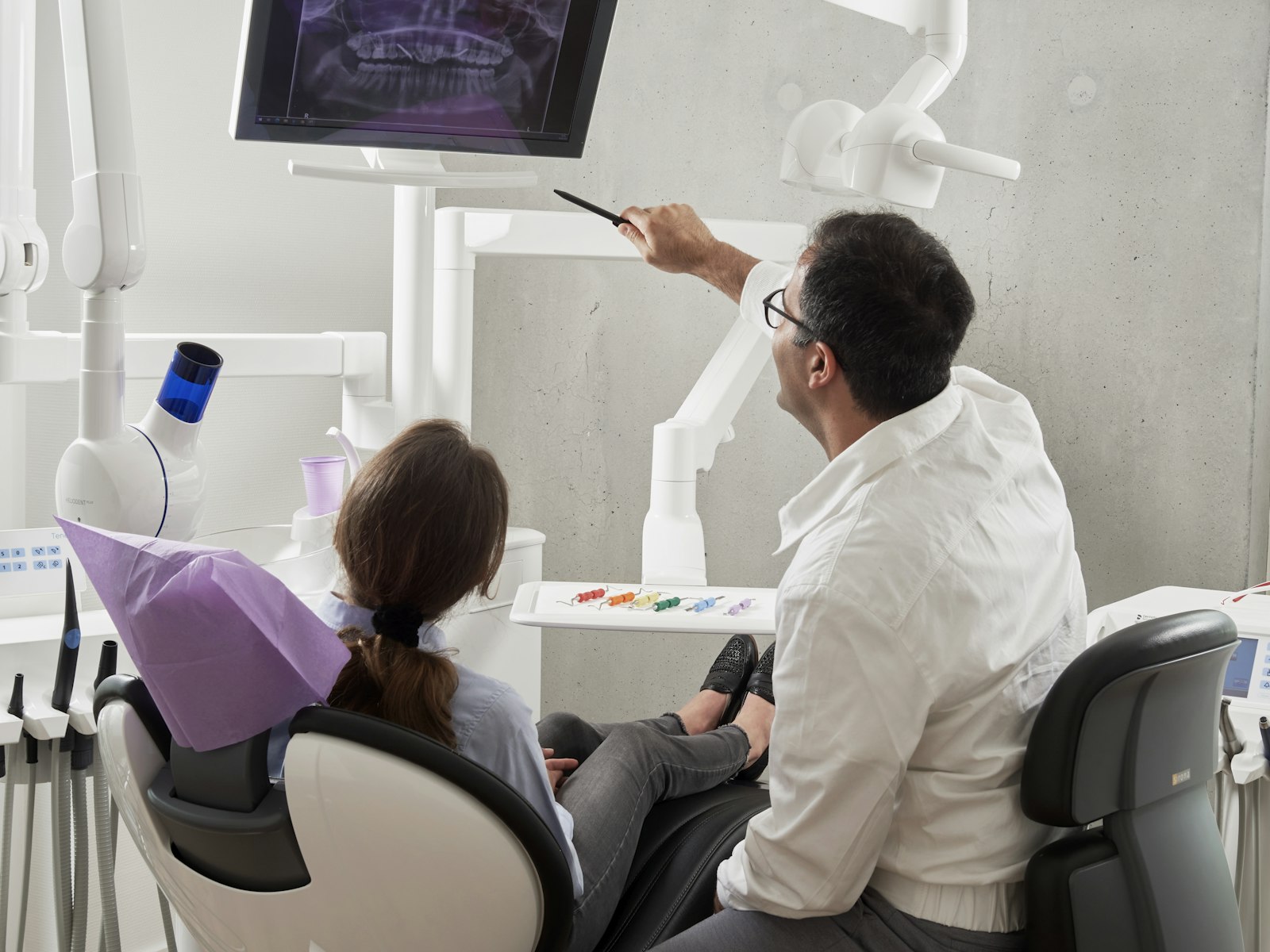
A dental assessment for this kind of pain usually includes testing individual teeth, checking how the teeth come together, examining the jaw joints and chewing muscles, and taking X-rays where needed. If none of that finds a cause, the result is still useful. It removes the most common explanations and points the next clinician in a better direction. If the joint itself is the main source, our guide to TMJ jaw pain covers assessment and treatment options.
Your GP and a physiotherapist
Once dental causes are excluded and the pain looks muscular or neck-related, physiotherapy is a sensible next step. Manual therapy and exercise are widely used, and although most of the trials behind them are of low quality, the results are encouraging. There is no strong trial evidence that treating the neck reliably resolves jaw pain, so it is reasonable to expect improvement rather than a cure.
In Australia, Medicare-rebated allied health care is arranged through a GP rather than a dentist. Under a GP chronic condition management plan, eligible patients can access up to five allied health services a calendar year, and extra services may be available for Aboriginal and Torres Strait Islander patients. Your GP decides eligibility.
For pain in the jaw muscles and joint, a stabilisation splint worn at night is a common option because it is reversible. Whether it relieves jaw pain is uncertain: a 2024 Cochrane review of splints for jaw disorders found the evidence very uncertain, and a Cochrane review of splints for sleep grinding also called for better-designed studies before firm conclusions are drawn.
What people ask about the neck and the jaw
Can a stiff neck make my teeth hurt?
It can. Referred pain from the upper neck tends to be a dull, spread-out ache across several teeth on one side rather than a sharp pain in a single tooth. A dental cause is still far more likely and should be checked first.
Will fixing my posture fix my jaw pain?
That has not been shown. Studies have not found a consistent posture difference in people with jaw disorders. Changing position and taking breaks may ease muscle fatigue, but posture correction is not a treatment for a jaw disorder on its own.
My dentist says the tooth is fine but it still aches. What next?
A normal dental examination is meaningful information. The usual next step is your GP, who can look at non-dental causes and refer on to a physiotherapist, neurologist or other practitioner if needed.
Should I go to a physio or a dentist first?
The dentist first, to exclude a dental cause. Then physiotherapy if the pain appears muscular. If pain comes with exertion or chest or arm symptoms, call Triple Zero (000) instead of either.
If jaw or tooth pain has been going on and nobody has examined the teeth themselves, the team at Lumi Dental in Melrose Park can test the teeth, check the joint and muscles, take X-rays where needed and tell you clearly if the cause does not look dental. You can book online, see our current offers, or visit our emergency dentist page for urgent problems.
This article is general information only and is not a diagnosis or personal advice. Facial and jaw pain has many possible causes, some of them medical rather than dental. Please see a dental or medical professional about your own situation, and call Triple Zero (000) in an emergency.