

When a cold or hay fever leaves your upper back teeth aching on one side, the sinuses are a likely suspect. The roots of the upper molars and premolars sit just below the maxillary sinuses, so swelling and pressure in the sinus can be felt in the teeth. The tricky part is that the reverse also happens: an infected upper tooth can inflame the sinus above it, and the two problems can feel very alike.
Teeth and sinus share very little space
The maxillary sinuses are air spaces inside the cheekbones, one on each side. Their floor sits directly over the roots of the upper back teeth, and in many people only a thin plate of bone separates the two. Sometimes a root tip even pushes up into the sinus floor.
When the sinus lining swells during a viral infection or an allergy flare, mucus can stop draining freely and pressure builds. The nerves that supply the upper teeth run close to that lining, so the brain can read sinus pressure as tooth pain. This is called referred pain. Better Health Channel lists aching teeth in the upper jaw among the recognised symptoms of sinusitis.
Clues that point to the sinus rather than a tooth
No list of symptoms can replace an examination, but some patterns lean one way or the other.
| What you notice | More typical of a sinus cause | More typical of a tooth cause |
|---|---|---|
| Where it hurts | Several upper back teeth on one side, hard to pick one | One tooth you can usually point to |
| What it feels like | A dull ache or pressure | Sharp, or lingering pain after hot or cold |
| What makes it worse | Bending forward, lying down, sudden head movement | Biting, chewing or a cold drink on that tooth |
| What else is going on | Blocked or runny nose, pressure under the eyes or in the cheek | Gum swelling, a bad taste, a broken filling |
| How it changes | Fades as the congestion clears | Stays the same or gets worse once the cold is gone |
If you genuinely cannot work out which tooth hurts, that in itself is a hint worth noting. Our article on why tooth pain can be hard to place explains how a dentist narrows it down.
A tooth can also be the cause of the sinus problem
Infection at the root tip of an upper molar, advanced gum disease around it, or a complication after dental work can spread upward into the sinus. This is known as odontogenic sinusitis. A 2023 systematic review and meta-analysis by Vitali and colleagues in the Journal of Endodontics pooled CT-based studies and estimated that around half of maxillary sinusitis cases may have a dental origin, although the authors rated the quality of many included studies as limited.
The practical point is that sinus symptoms affecting only one side, especially with a foul taste or smell, or sinusitis that keeps coming back on the same side, deserve a dental check as well as a medical one. Treating the sinus alone may not settle it if a tooth is feeding the infection. Our guide to the signs of a tooth abscess describes what a dental infection can look like.
How a dentist tells them apart
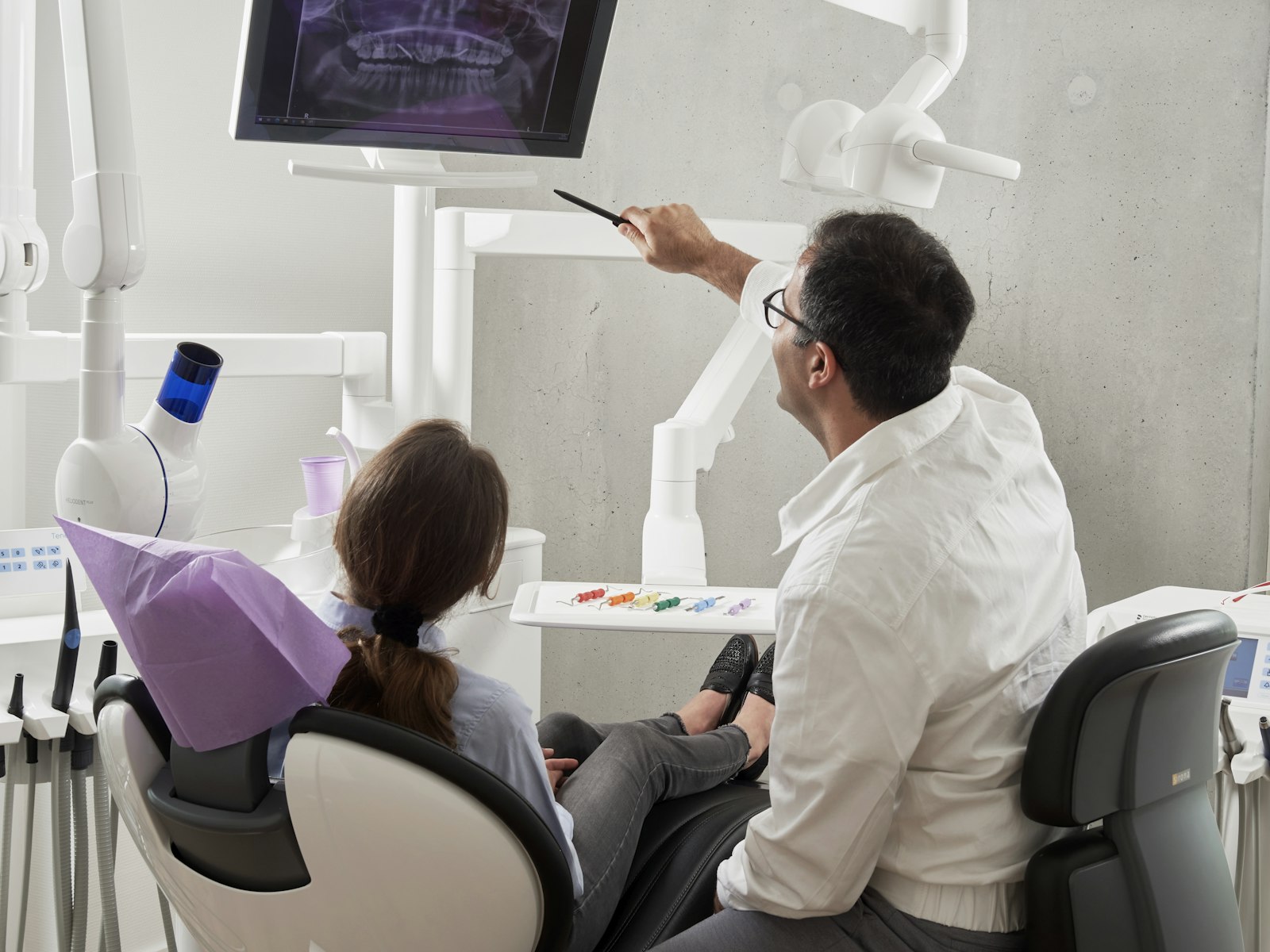
The dentist will ask when the pain started, if you have recently had a cold or allergy flare, and what sets it off. Each upper tooth can then be tested by tapping gently, checking how it responds to cold, and looking for cracks, deep decay or leaking fillings. The gums are checked for pockets and swelling.
X-rays show the roots and the bone around them. An OPG gives a broad view of both sides of the upper jaw, and a 3D scan can show the relationship between a root tip and the sinus floor in more detail when a plain X-ray leaves questions. Lumi Dental has an Orthophos 3D X-ray unit that takes both. If the teeth look healthy and the picture fits sinus congestion, the dentist will usually suggest you see your GP.
Easing sinus-related tooth pain at home
When the sinus is the cause, the tooth pain usually fades as the congestion does. Better Health Channel notes that most people recover from sinusitis in about a week without antibiotics. In the meantime, these measures may help:
- Steam inhalation, or a warm shower, to help loosen mucus.
- A comfortably warm compress held against the cheek.
- Over-the-counter pain relief such as paracetamol, taken as directed on the pack.
- Sleeping with your head a little raised, since lying flat often makes the pressure feel worse.
Decongestant nasal sprays are best used for only a few days. Using them for longer can make nasal swelling worse. A pharmacist can advise on what suits you, especially if you take other medicines.
When to book in, and with whom
See a dentist if the pain settles on one tooth, is sharp or lingers after hot and cold, is still there once your nose has cleared, or comes with swelling of the gum or face. Those signs suggest the tooth itself needs attention, and dental problems do not settle when the congestion does.
See your GP if you have a high temperature, severe or worsening facial pain, swelling around the eye, or sinus symptoms that drag on well beyond a week or so. Seek urgent care for facial swelling that is spreading, trouble swallowing or breathing, or swelling that affects your vision. If the pain is severe and you are not sure what to do, our guide on what to do in a dental emergency can help, and for other patterns of pain see our article on toothache at night.
Questions we are often asked
Why does it only hurt on one side?
Each maxillary sinus serves one side of the face, and congestion is often worse on one side. A tooth infection is also usually one-sided, which is why one-sided pain alone does not settle the question.
Can lower teeth hurt from the sinuses?
Not usually. The maxillary sinuses sit above the upper teeth only. Pain in the lower teeth points more towards a dental or jaw cause.
My cold is gone but the tooth still aches. What now?
Book a dental check. Pain that outlasts the congestion is more likely to be coming from the tooth or its gum.
Not sure whether it is a tooth or your sinus?
Our dentists at Lumi Dental can examine and X-ray the area to find where the pain is coming from, and emergency appointments are available. You can book online, see new patient offers on our current deals page, or read about general dental care at Lumi Dental in Melrose Park.