

If you are trying to work out whether you have trigeminal neuralgia or toothache, start with one rule: pain that lasts seconds and is set off by a light touch behaves very differently from pain that lasts minutes to hours and is set off by hot or cold. That single distinction sorts most cases before anyone takes an X-ray. Trigeminal neuralgia is uncommon, with annual incidence usually reported at 4 to 8 per 100,000 people, more often in women, and typically starting after the age of 50. Toothache is enormously common. So the odds always favour the tooth. The problem is what happens in the minority of cases where they do not.
Key takeaways
- Trigeminal neuralgia pain is brief. The international headache classification requires attacks lasting from a fraction of a second up to 2 minutes.
- It is triggered by innocuous things, a breeze, shaving, brushing, a light touch on the cheek, rather than by hot, cold or sweet.
- Pain from a tooth usually lingers after the trigger goes, often for minutes, and often disturbs sleep.
- Between roughly half and three quarters of patients in published series had dental treatment before the correct diagnosis, but those figures come from surgical referral centres and are almost certainly inflated.
- A dentist's job here is to rule the teeth in or out. Diagnosing a nerve condition is a medical role, and the pathway runs through your GP to a neurologist.
- Carbamazepine is the best supported first line medicine, though expert consensus notes a greater than 50 percent failure rate for long term control over 5 to 10 years.
The single rule, in more detail
Nerve pain and tooth pain are produced by different machinery, and they behave accordingly.
Trigeminal neuralgia is a paroxysmal condition. The pain arrives suddenly, is severe, and is described as electric shock like, shooting, stabbing or sharp. It is strictly on one side, stays within one or more divisions of the trigeminal nerve, and does not radiate beyond that territory. Between attacks there is often nothing at all, which is why people describe good days and bad days rather than a constant ache. Some patients do have a continuous background pain in the same area as well, and the classification recognises that as a subtype.
Pain from a tooth is inflammatory. The pulp inside a tooth is a confined space with a poor blood supply, and when it becomes inflamed the pressure has nowhere to go. Cold or heat sets it off, and the pain then takes its time to fade, sometimes thirty seconds, sometimes an hour. Lying down makes it worse because blood flow to the head increases, which is why so many people ring on a Monday morning after a bad night. Our article on toothache at night goes through why that happens and what helps in the meantime.
What the formal criteria say
The third edition of the International Classification of Headache Disorders lists trigeminal neuralgia under code 13.1.1. To meet it, a person needs recurrent paroxysms of unilateral facial pain, in one or more divisions of the trigeminal nerve, with no radiation beyond that distribution, and each paroxysm lasting from a fraction of a second to 2 minutes. The pain must be severe, and electric shock like, shooting, stabbing or sharp in quality. It must be precipitated by innocuous stimuli within the affected area.
Those last two words do a lot of work. Innocuous stimuli means things that should not hurt. A cold wind on the face. Shaving. Putting on makeup. Chewing on that side. Brushing the teeth, which is exactly why so many people conclude the problem must be a tooth.
The classification also splits the condition three ways. Classical trigeminal neuralgia is attributed to compression of the nerve root by a blood vessel. Secondary trigeminal neuralgia is caused by an identifiable underlying disease. Idiopathic is what is left when investigation finds nothing. Each of those can be either purely paroxysmal, or accompanied by continuous background pain. Trigeminal neuralgia secondary to multiple sclerosis is separately recognised, is more often bilateral, and tends to be more refractory to treatment.
Sorting one from the other
The table below is the shortcut I use in my own head during an examination. No single row is conclusive on its own. The pattern across all of them usually is.
| Feature | Typical of toothache from the tooth | Typical of trigeminal neuralgia |
|---|---|---|
| Duration of an episode | Seconds to hours, often lingering well after the trigger stops | A fraction of a second to 2 minutes, then gone |
| Quality | Throbbing, aching, dull, pressure like, sometimes sharp on biting | Electric shock like, shooting, stabbing or sharp, and severe |
| Triggers | Hot, cold, sweet foods, biting pressure, lying down | Light touch, wind on the face, shaving, washing, talking, brushing |
| Pain free intervals | Uncommon once the pulp is badly inflamed, the ache tends to persist | Common, often complete between attacks, sometimes for weeks or months |
| Night pain | Frequently wakes the patient, worse lying flat | Attacks during sleep are unusual |
| Response to local anaesthetic | Numbing the offending tooth reliably stops the pain | Numbing a tooth does not resolve the attacks, though a regional block may briefly reduce them |
| X-ray findings | Often shows decay, a deep restoration, a crack or a shadow at the root tip | Usually normal, or shows unrelated findings that get blamed |
Why teeth get treated by mistake
This is the part of the topic that deserves care, because the numbers get quoted loosely.
Published series report a wide range. One neurosurgical series found that of 41 patients who first consulted a dentist, 27 went on to receive invasive treatment including extractions, root canal treatment and implants. Larger series report that 53 percent of patients underwent invasive dental procedures before diagnosis. Another reports that 75.7 percent first attended a dental clinic, 41.8 percent had a dental procedure, and 19.6 percent had root canal treatment before the diagnosis was made. An older and frequently cited series found 73 percent had a dental assessment first, and that 65 percent of those had between 1 and 32 teeth extracted.
The range is roughly half to three quarters, and it should be read with a large grain of salt. Every one of those figures comes from a surgical referral centre. Patients who reach a neurosurgical clinic are, by definition, the ones whose condition was severe, prolonged or difficult to diagnose. The people who saw a GP, got the right diagnosis quickly and responded to medication never appear in those series at all. Selection bias here is not a technicality. It almost certainly inflates the figures well above what happens in the general population.
The useful lesson survives the caveat. Irreversible dental treatment should not be done on a tooth that has no findings, on the basis of pain alone. If the tooth tests normal, responds normally to cold, has no decay, no crack and a clean X-ray, then taking it out is unlikely to help and cannot be undone.

Other things that imitate toothache
Trigeminal neuralgia is not the only impostor, and it is not the most common one. A cracked tooth produces a sharp jolt on releasing a bite that can be maddeningly hard to localise, and our page on cracked tooth syndrome covers how that is diagnosed. Maxillary sinusitis presses on the roots of upper back teeth and can make several of them ache at once, worse when you bend forward, which is set out in our article on sinus toothache and referred pain. Jaw joint and muscle pain refers into the teeth and the ear, and we cover that overlap in our piece on whether a tooth can cause ear pain.
Cluster headache, temporomandibular disorders, atypical facial pain and, rarely, cardiac pain referring to the jaw all belong on the list too. The point is that facial pain has a long differential, and the tooth is only the first suspect because it is the most common one.
Who to see, and in what order
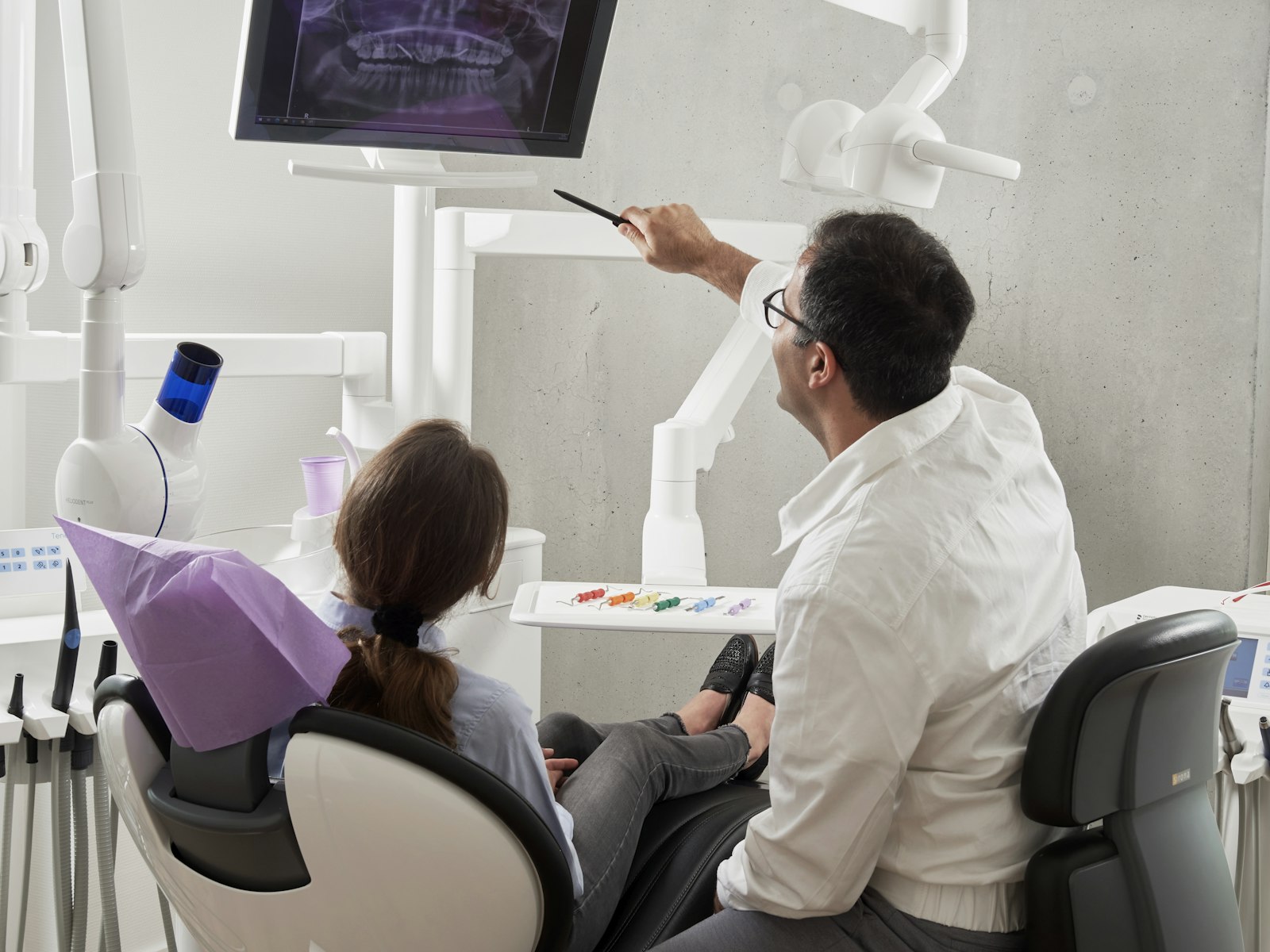
A dentist has a defined job in this. It is to establish whether the teeth are the source. That means an examination, sensibility testing of the suspect teeth, checking for cracks and biting pain, periodontal probing, and appropriate X-rays. If the teeth account for the pain, treatment follows. If they do not, the correct next step is a referral, not a procedure.
From there the pathway is medical. See your GP, describe the pain in terms of duration, quality and trigger, and expect a referral to a neurologist. Imaging, usually MRI, is used to look for vascular compression or an underlying cause, which is how the classical, secondary and idiopathic categories get separated. A dentist is not the person who diagnoses a nerve condition, and a neurologist is not the person who decides whether a tooth needs a root canal. Both assessments are often needed. Our guide to dental specialists explained sets out who does what on the dental side.
How trigeminal neuralgia is usually treated
Medical management comes first. Carbamazepine is the best supported first line medicine and often works impressively well at the start, which is itself considered supportive of the diagnosis. Expectations should be set realistically though. Expert consensus notes a failure rate greater than 50 percent for long term pain control over 5 to 10 years, whether through loss of effect or side effects that people cannot tolerate. Other medicines are used when it fails.
Surgical options exist for medically refractory cases, including procedures aimed at the compressing vessel and various ablative techniques. Those decisions sit with a neurologist and a neurosurgeon. Where the condition is secondary to multiple sclerosis, treatment tends to be harder and the pain is more often bilateral.
None of that is dental treatment, which is the whole point of getting the diagnosis right early.
Common questions
How do I know if my face pain is a tooth or a nerve?
Time the attacks and note what sets them off. Seconds of electric shock pain triggered by touch, wind or shaving points away from the tooth. Minutes to hours of throbbing triggered by hot, cold or sweet, and worse lying down, points towards it. A dentist can test the teeth and settle the dental half of the question.
Can a dentist diagnose trigeminal neuralgia?
A dentist can and should raise the possibility, and can rule the teeth in or out with testing and X-rays. The diagnosis itself is made medically, usually by a neurologist after imaging. Ask for a referral to your GP if the dental examination comes back clear.
Will pulling the tooth stop trigeminal neuralgia?
No. Series from referral centres describe patients who had multiple extractions, root canals and even implants before the correct diagnosis, and the pain continued. If a tooth has no decay, no crack and a normal X-ray, removing it is unlikely to help and cannot be reversed.
Is trigeminal neuralgia common?
No. Annual incidence is usually reported at 4 to 8 per 100,000 people, with a female predominance and onset typically after the age of 50. Toothache is vastly more common, which is why the teeth are always assessed first.
Why does brushing my teeth trigger the pain?
Because trigeminal neuralgia is set off by innocuous stimuli in the affected nerve territory, and a toothbrush on the gum or lip qualifies. That trigger is one of the reasons the condition is so often mistaken for a dental problem in the first place.
Getting the dental side checked
If you have facial pain and want the teeth properly assessed before anything irreversible is considered, the team at Lumi Dental sees patients Monday to Saturday at Melrose Park, with Sunday appointments by arrangement. An examination with X-rays and sensibility testing is the starting point, and if the teeth are clear you will leave with a clear recommendation to see your GP rather than a treatment plan. New patients can find the current first visit offer on the current deals page.
This article is general information only and is not a substitute for personal dental or medical advice. Facial pain that is severe, persistent or accompanied by numbness, weakness or vision changes should be assessed by a doctor promptly.