



An oral lichenoid drug reaction is the mouth reacting to a medicine you take for something else entirely. It shows up as white lacy lines, sore red patches or shallow ulcers, most often on the inner cheeks, and it can look exactly like oral lichen planus under both the eye and the microscope. The one feature that sets it apart is its cause: a systemic drug is driving it, and the patches usually settle once that trigger is identified and changed. Because many of the medicines involved are extremely common, this is worth understanding for anyone with a long-running sore patch in the mouth.
Key takeaways
- An oral lichenoid drug reaction looks like oral lichen planus but is triggered by a medicine.
- Common triggers include some blood pressure tablets, anti-inflammatories, diabetes tablets, allopurinol for gout and certain reflux medicines.
- The reaction can appear weeks to as long as two years after starting the drug, which makes the link easy to miss.
- The one rule that solves most cases is a careful medicines history, not a different lab test.
- Never stop a prescribed medicine on your own. Any change is made with the doctor who prescribed it.
The one rule that cracks most cases
Because a lichenoid drug reaction and ordinary oral lichen planus look the same to the eye and even on a biopsy, the thing that separates them is the story, not a scan. The decisive question is whether a new medicine started, or a dose changed, in the months or year or two before the patches appeared. A reaction can begin as soon as a few weeks after a drug starts, but the average delay is one to two months and it can stretch to around two years. That long lag is exactly why patients and clinicians often fail to connect the two at first.

Which medicines are most often involved
The list is long because the reaction is an immune response that many drug families can set off. The ones seen most often in everyday practice include nonsteroidal anti-inflammatory drugs such as ibuprofen and naproxen, beta blockers and ACE inhibitors used for blood pressure, sulfonylureas used for type 2 diabetes, allopurinol for gout, proton pump inhibitors used for reflux, some antimalarials, methyldopa and certain antiepileptic medicines such as carbamazepine. This does not mean these medicines are dangerous or that most people who take them will react. It simply means that when a stubborn lichenoid patch appears, the medicines list is the first place to look.
| Drug family | Common everyday use |
|---|---|
| NSAIDs (ibuprofen, naproxen) | Pain and inflammation |
| ACE inhibitors and beta blockers | Blood pressure |
| Sulfonylureas | Type 2 diabetes |
| Allopurinol | Gout |
| Proton pump inhibitors | Reflux and heartburn |
| Some antimalarials and antiepileptics | Various |
What it looks and feels like
Most people notice white lines in a lacy or fern-like pattern, sometimes with red, raw or ulcerated areas mixed in. The inner cheeks are the classic site, but the tongue, gums and lips can be involved. Mild cases cause little more than roughness, while more active patches sting with spicy, acidic or hot food. A useful contrast is that a reaction caused by a metal filling pressing against the cheek tends to sit only where the cheek touches that filling, whereas a drug reaction is usually more widespread and often appears on both sides.
How it is diagnosed
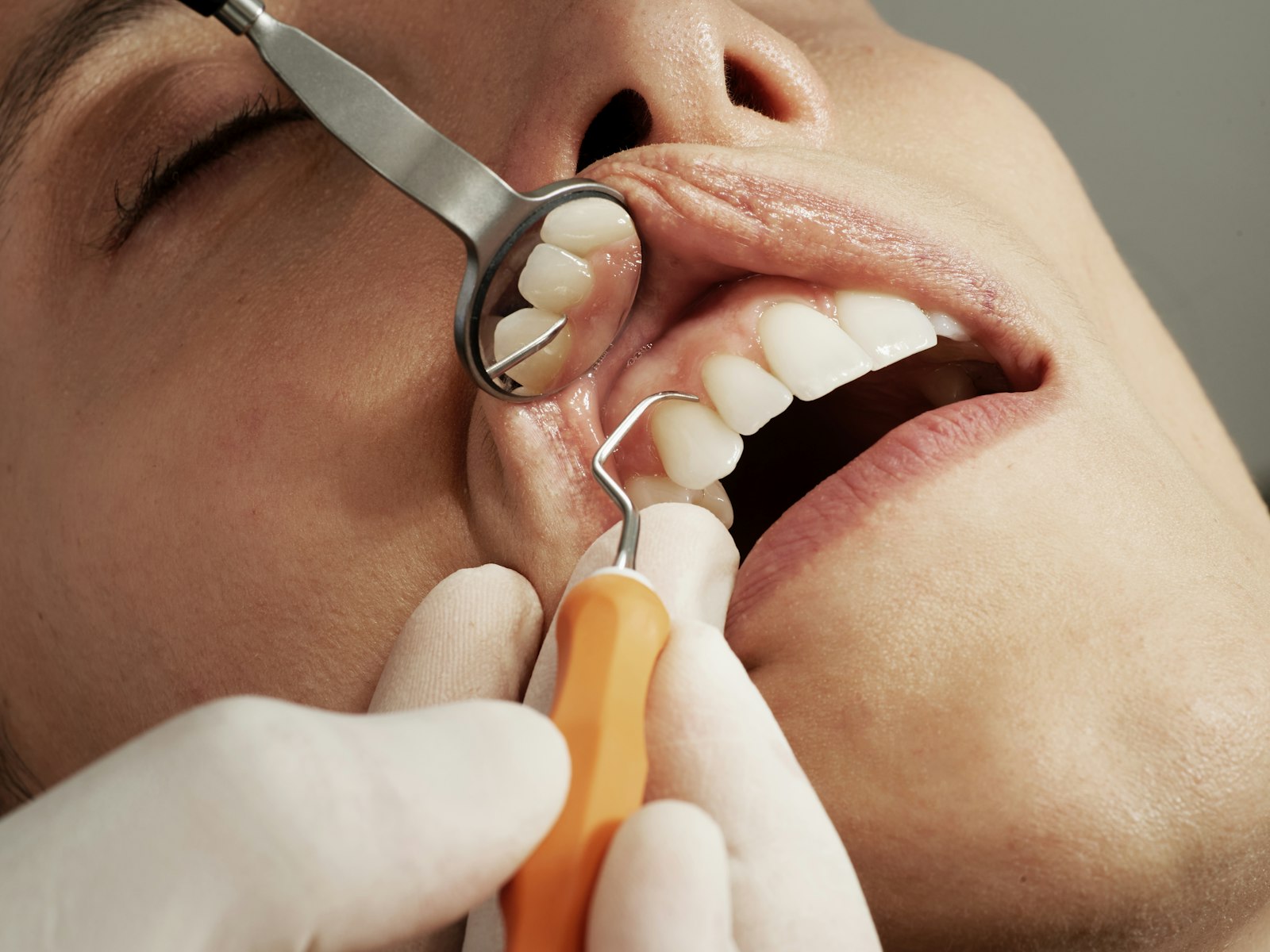
Your dentist will examine the pattern, ask a detailed medicines history including anything started in the past two years, and check whether the patches sit against fillings or dentures. A biopsy may be taken, mainly to rule out other causes rather than to prove the drug link, because the microscope cannot reliably tell a lichenoid reaction from lichen planus. The practical diagnosis often comes from a trial: with the prescribing doctor, a suspected medicine is switched to an alternative, and improvement over the following weeks to months confirms the cause. For the related idiopathic condition, our guide to oral lichen planus is a helpful companion.
Treatment and management
The most effective treatment is removing the trigger, which is always done in partnership with the doctor who prescribed the medicine, never by stopping it yourself. If the medicine is essential and cannot be changed, the patches are managed to keep them comfortable. This may involve a topical corticosteroid prescribed by your dentist, a bland diet that avoids spicy and acidic foods during flares, and excellent gentle oral hygiene to keep the gums calm. Where a metal restoration is clearly contributing, replacing it can help that localised area. Because long-standing patches deserve monitoring, your dentist will usually arrange periodic reviews.
Why monitoring matters
Like oral lichen planus, lichenoid changes are considered worth keeping an eye on over time, since a small number of long-standing white or red patches in the mouth can change. This is not a cause for alarm, but it is the reason any patch that lasts more than two weeks should be examined rather than ignored. Our guide to oral cancer screening explains how these checks work, and the article on white and red patches in the mouth covers related findings.
Frequently asked questions
Will the patches go away if I change the medicine?
Usually yes, but slowly. After the trigger is changed by your doctor, a lichenoid reaction often takes weeks to a few months to settle, not days. Patience is part of the process.
Is this the same as an allergy?
It is an immune-mediated reaction rather than a classic allergy. It does not mean you are allergic to the whole drug family, and your doctor can usually find a suitable alternative.
Can a filling cause the same thing?
Yes. A reaction to a nearby metal restoration produces an identical-looking patch, but it stays in contact with the filling rather than spreading. Replacing the restoration can resolve that local area.
Is it contagious?
No. Lichenoid reactions are not infectious and cannot be passed to anyone else.
Should I stop my tablet straight away?
No. Stopping a blood pressure, diabetes or heart medicine without advice can be risky. Bring the issue to your dentist and doctor so any change is managed safely.
The bottom line
A sore or lacy patch in the mouth that will not settle is worth investigating, and a medicine you take every day can be the hidden cause. The fix is rarely complicated once the link is found, but it always belongs in the hands of your dentist and doctor working together. The team at Lumi Dental can examine the patch, take a full history and coordinate care. New patients can see current options on our current offers page or book a check with our general dentistry team. This is general information, not a diagnosis, and Lumi Dental does not list its own prices here.

