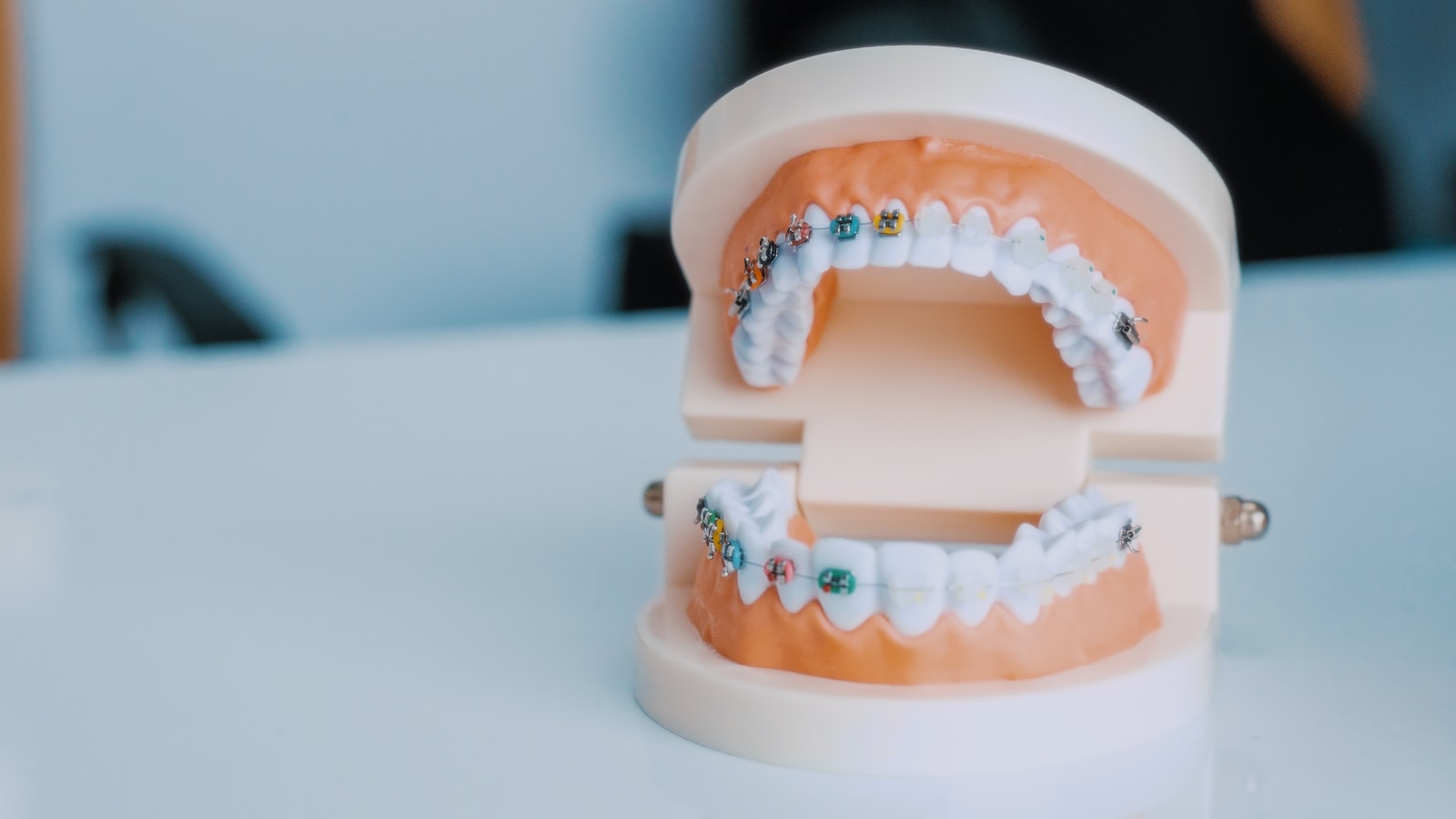

A smile midline sitting slightly off centre is common, usually goes unnoticed by everyone except the person it belongs to, and only warrants treatment when the deviation is large enough to see and the cause is something that can actually be moved. The first job is not treatment at all. It is working out which of four very different things is producing the effect, because tooth position, jaw growth, soft tissue and camera angle all look similar in a photograph and lead to completely different answers.
Key takeaways
- The dental midline sits between your two upper front teeth, while the facial midline runs through the centre of your face, and they are separate reference lines that often do not coincide.
- Published acceptability thresholds range from roughly 1mm to 4mm depending on the study and the raters, so there is no single agreed figure for normal.
- Deviations up to about 2mm frequently go unnoticed by laypeople and by dentists.
- Small mismatches are common, with population studies of children and adolescents citing figures around 44 to 55 per cent in the 0 to 1mm band.
- The cause decides the answer, and a purely dental shift, a skeletal asymmetry and a soft tissue asymmetry are managed very differently.
- Midline deviation generally affects how attractive a smile is judged to be less than disproportion in the width and length of the individual front teeth.
Two midlines, not one
The dental midline is the vertical line running between the two upper central incisors, and there is a second one between the two lower centrals. The facial midline is a reference vertical drawn through central facial landmarks, commonly the glabella between the brows and the philtrum above the lip, and it is used in smile analysis as the line the teeth are compared against.
Those two lines are independent. Your teeth can be perfectly symmetrical to one another and still sit slightly to one side of the face. Your face can be slightly asymmetrical while the teeth sit exactly where they should relative to each other. Most people who say their smile looks off centre are describing a mismatch between the two, without knowing which one has moved.
There is a further complication worth naming early. Studies define the facial midline using different landmarks, so the millimetre figures published across the literature are not perfectly comparable with one another. A 2mm deviation measured one way is not necessarily a 2mm deviation measured another way.
How much is actually noticeable
This is where the research is genuinely useful, because it puts numbers on something that otherwise gets argued about. A 2013 study looking at the acceptable deviation between the facial and dental midlines in a dentate population reported a mean acceptable threshold of about 2.2mm, with a standard deviation of about 1.5mm. A separate study that accounted for facial type found an overall acceptability threshold of about 2.92mm with a standard deviation of about 1.10mm. A 2022 retrospective observational study recommended keeping the anterior tooth midline within about 2mm of the facial midline as a working clinical guideline.
Perception research follows a similar pattern. Deviations up to around 2mm often went unnoticed by both laypeople and dentists. Around 3mm was noticeable but still frequently rated as attractive. Around 4mm was rated least attractive of the ranges tested. Orthodontists, unsurprisingly, are consistently more sensitive to small discrepancies than laypeople are, which is worth remembering if a clinician points out something no one else has ever mentioned.
The honest summary is that there is no single agreed tolerance. Figures across the literature run from roughly 1mm to 4mm depending on how the study was designed and who was doing the rating, and there is no Australian prevalence data to anchor any of it locally.
It is more common than most people assume
Population studies of children and adolescents have found that small dental-to-facial midline mismatches are the norm rather than the exception, with cited figures around 44 to 55 per cent having a deviation in the 0 to 1mm range. Perfect coincidence of the two lines is not the default state of a human face.
There is a second finding worth holding onto. Midline deviation generally has a smaller effect on how attractive a smile is perceived to be than disproportion in the width and length of the individual front teeth. If you are scrutinising a photo of your own smile and something feels off, the centre line is not always the thing that is bothering you, even if it is the thing you have noticed.
It is also worth separating the upper and lower midlines. The lower dental midline shifts more readily and is less visible in an ordinary smile, since the lower teeth are often partly hidden by the lip. A clinician will record both, because they matter for how the bite fits together, but a lower midline discrepancy on its own rarely drives a cosmetic complaint.
Where the shift is actually coming from
Six broad categories cover most of what walks through the door. The table below separates them by where the problem physically sits, because that is what determines the options.
| Cause type | Where it sits | Common triggers | Typically noticeable | Non-surgical options | Surgery considered |
|---|---|---|---|---|---|
| Dental (tooth position) | Teeth within the jaw | Crowding, rotation, tipping, tooth size difference between sides | Small to moderate | Fixed appliances or clear aligners, often with asymmetric elastics | Rarely |
| Past orthodontic asymmetry | Teeth within the jaw | Asymmetric extraction pattern, relapse after treatment, lost retention | Small to moderate | Repeat or refinement orthodontics | Rarely |
| Skeletal jaw asymmetry | Upper or lower jaw bone | Asymmetric growth, genetics, early childhood trauma | Moderate to marked | Orthodontics can camouflage mild cases | Yes, for more severe cases |
| Childhood habit related | Jaw and tooth position together | Long-standing one-sided habits during growth | Varies widely | Depends how much is skeletal versus dental | Sometimes |
| Soft tissue and muscle asymmetry | Lips and facial muscles | Near-universal natural asymmetry in how the face moves | Only when smiling | Usually nothing dental is indicated | No |
| Untreated missing tooth with drifting neighbours | Teeth within the jaw | Early loss of a baby or adult tooth, missing or peg-shaped lateral incisor | Moderate, and worsens over time | Orthodontics, space management, restorative work | Rarely |
Two rows in that table deserve a caution. Habit related asymmetry is usually a mix of dental and skeletal, and how much of each is present determines everything about the plan. Soft tissue asymmetry is frequently mistaken for a dental problem, because it only shows up when you are smiling, which is precisely the moment people look most closely at their own teeth.
Dental causes, which are the most common
When the jaws are symmetrical and only the teeth have moved, the usual suspects are well documented. Early loss of a baby tooth or an adult tooth lets the neighbouring teeth drift into the space, dragging the centre line with them. Congenitally missing or peg-shaped lateral incisors create a size mismatch between the two sides of the arch. A single rotated or tipped tooth takes up more or less width than it should. Crowding pushes the whole front segment toward the side with more room.
All of those share one feature: the correction involves moving teeth, not bone. Where the cause is purely tooth position, correction is generally described in the literature as achievable with fixed appliances or clear aligners, often using asymmetric elastics to pull the arch back toward centre. That is also the situation where a general discussion of how crooked teeth are straightened is directly relevant, though that article covers alignment broadly. This one is about the centre line specifically, which behaves differently from general crowding and is sometimes worse after alignment rather than better if it was not planned for.
Where a missing tooth is driving the drift, the sequencing question gets more involved, and we cover that separately in our piece on whether you can have braces with missing teeth.
Skeletal causes, which are a different conversation
Sometimes the teeth are not the problem. Asymmetric growth of the upper or lower jaw shifts the entire dental arch to one side, and the teeth sitting in that arch come along for the ride. Documented contributors include genetics, trauma in early childhood, and long-standing one-sided habits during the growing years.
Mild skeletal asymmetry can often be camouflaged orthodontically, meaning the teeth are moved to disguise a bone discrepancy that is still there underneath. More severe skeletal cases are described in the literature as needing combined orthodontic and surgical management, which is orthognathic surgery planned jointly between an orthodontist and an oral and maxillofacial surgeon. That is a long, staged process, and it is not something anyone should be talked into or out of on the basis of a photograph.
This is the main reason a blanket claim that braces fix midline shifts is unsafe. They often can. When the cause sits in the bone rather than the teeth, they may only be part of the answer.

The camera, and the way your face moves
Natural facial asymmetry is close to universal, and that includes asymmetric lip and muscle movement during a smile. One corner lifts a fraction higher or a fraction sooner than the other. That is distinct from a true dental midline shift, but the two compound each other, and in a still photograph they are almost impossible to separate.
Camera angle does the rest. A face photographed even slightly off axis will show one side of the arch foreshortened, which shifts where the centre appears to sit. Selfie cameras add lens distortion at close range. If your smile looks off centre in photos but not in the mirror, angle and asymmetric muscle movement are the first two things to rule out, and our article on why teeth look different in photos goes through the mechanics of that in more detail.
A proper assessment uses standardised photographs taken square on, with the head positioned consistently, alongside a clinical look at the face and jaws. It is unglamorous but it is the only way to know whether there is anything to treat.
What can usually be done
Where the cause is tooth position, orthodontic correction is the standard route, using either fixed appliances or clear aligners. The practical differences between those two for an adult are covered in our comparison of braces and aligners for adults. Correcting a midline usually requires asymmetric mechanics, so it tends to add time and planning compared with straightforward alignment.
Case report literature also documents purely restorative correction with composite bonding or veneers, where the cause is tooth shape or position rather than skeletal, and where the deviation is small. That approach changes the apparent centre by reshaping the teeth rather than moving them, and it comes with the usual trade-offs of any restorative work on healthy teeth, which we set out in our comparison of composite bonding and veneers.
Where the cause is skeletal and significant, combined orthodontic and surgical planning is the documented pathway. Where the cause is soft tissue asymmetry alone, the honest answer is often that nothing dental is indicated, and that is a legitimate result of an assessment rather than a failure of one.
Timing matters as well. In a growing child, some asymmetries are better addressed while growth is still available to work with, while others are best left until growth has finished so the result holds. In an adult, growth is no longer a variable, which simplifies the planning but also removes several of the options that exist during childhood. For parents, that is the practical reason an early orthodontic assessment is worth having even when nothing is going to be treated yet.
Common questions
Why is my smile crooked?
A crooked-looking smile can come from tooth position, from the jaws sitting asymmetrically, from asymmetric lip and muscle movement, or from the angle of the photograph you are looking at. Those causes are not interchangeable, and they are separated by a clinical examination and standardised photographs rather than by guesswork.
Why does my smile look off centre?
Usually because the line between your two upper front teeth does not coincide with the centre line of your face. That mismatch is common and small deviations are frequently unnoticed. What matters is how large it is and whether it originates in the teeth or in the bone.
Is it normal for your smile not to be centred?
Yes. Population studies of children and adolescents put a large proportion, with cited figures around 44 to 55 per cent, in the 0 to 1mm deviation band, and perfect coincidence between the dental and facial midlines is not the human default. Deviations up to about 2mm are often not noticed by anyone, including dentists.
Can braces fix a midline shift?
Often, when the shift comes from tooth position. Fixed appliances and clear aligners can move the arch back toward centre, usually with asymmetric elastics. Where the underlying cause is asymmetric jaw growth, orthodontics alone may only camouflage it, and more severe skeletal cases are described in the literature as requiring combined orthodontic and surgical management.
How do I fix my uneven smile?
Start with a diagnosis rather than a treatment. The same appearance can come from four different places, and each has its own pathway. An examination that includes facial and jaw assessment, not just a look at the teeth, is what separates them.
Why does my smile look uneven in photos but not in the mirror?
Camera angle, lens distortion at close range and asymmetric muscle movement are the usual explanations. A mirror shows you a reversed image that you have grown used to, while a photograph presents an unfamiliar version of your face and freezes a single moment of a moving smile.
If your midline is bothering you
The most useful thing you can do is get it looked at properly rather than measured against a photo. The team at Lumi Dental in Melrose Park offers a complimentary cosmetic consultation where we can assess where the shift is actually coming from, tell you plainly whether it is likely to be treatable, and give you a written quote for anything you decide to pursue. Any current offers are listed on our current deals page.
This article is general information only and is not a substitute for personalised advice from a dental practitioner who has examined you.