
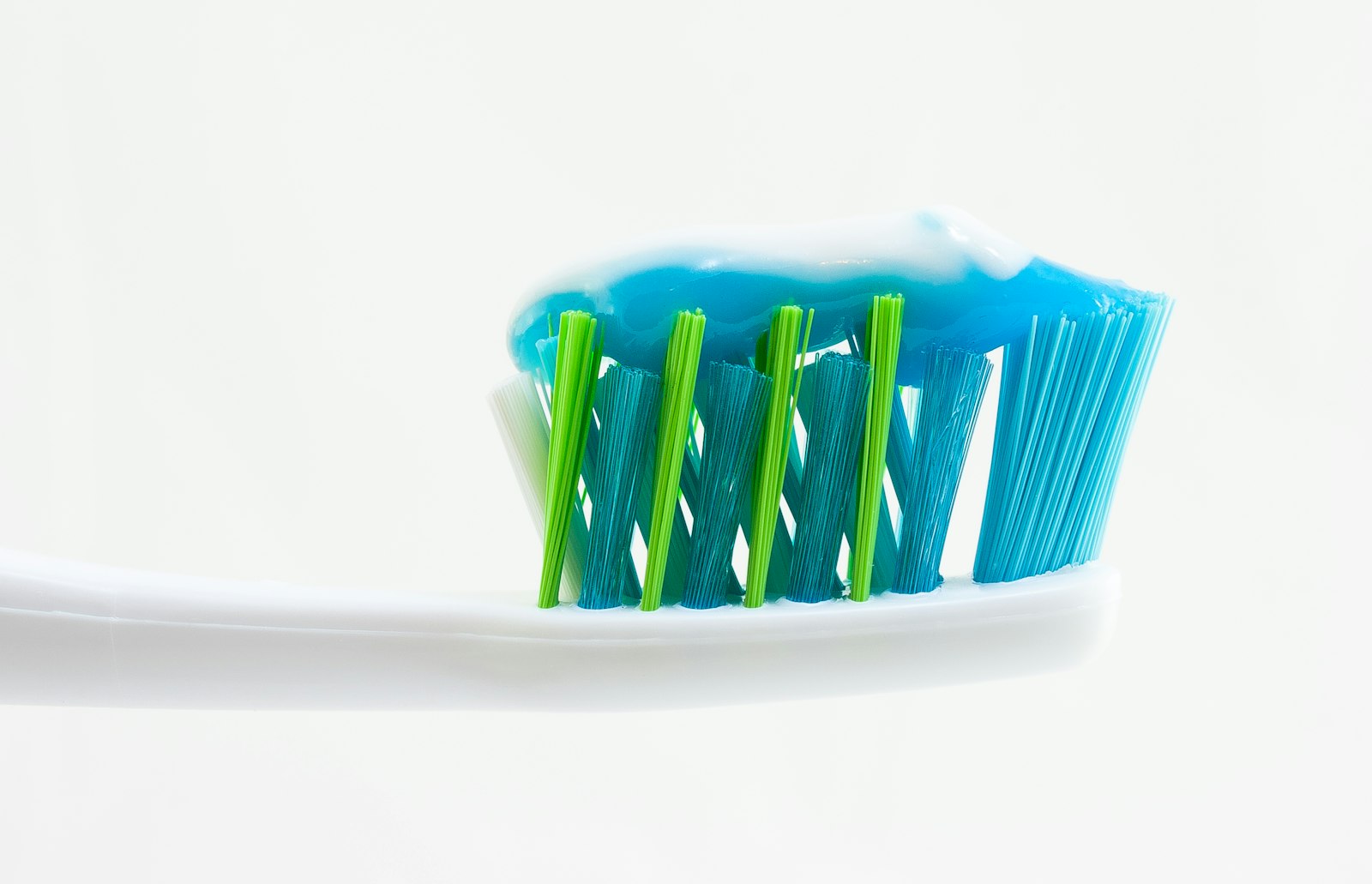

Toothpaste tablets can work, but only if they contain fluoride at around 1000 parts per million or more. The tablet format itself is not the issue. The chewing step, the gritty texture and the packaging are all matters of preference. What decides whether a product protects your teeth is what is in it, and a large share of toothpaste tablets on the market are fluoride free.
Key takeaways
- Toothpaste tablets are chewed first, then brushed in with a wet toothbrush. The main appeal is plastic free packaging and easy travel.
- The caries reduction evidence for fluoride rests on a minimum of about 1000 ppm used twice daily, with an average reduction in decay of roughly 24 per cent reported across studies.
- Many tablet brands are fluoride free or use hydroxyapatite. Hydroxyapatite has a growing evidence base, but not equivalent in volume or duration to fluoride.
- An abrasivity rating of 250 RDA or less is regarded as safe for lifelong use. Tablet brands often do not publish their RDA.
- There is limited clinical trial evidence for tablets specifically preventing decay, as opposed to evidence for their ingredients.
- A fluoride free tablet is not a fair swap for anyone with a history of decay, and is not appropriate as a child's only toothpaste if that child is at risk of decay.
How toothpaste tablets are used
You take one tablet, chew it until it breaks down into a paste, then brush with a wet toothbrush as usual. Most come in a glass jar, a tin or a refillable pouch. They are solid, so airline liquid limits do not apply, and they will not burst in a bag.
Why people switch
Plastic tubes are difficult to recycle because they combine layers of plastic and aluminium. That is a genuine problem and a reasonable thing to care about. Travel convenience is the second common reason. Some people simply prefer the dosing, since one tablet is one dose and there is no guesswork about how much to squeeze out.
The habit change nobody warns you about
The chewing step adds time before brushing starts. In practice some people shorten the actual brushing to compensate, which is the opposite of what you want. Two minutes of brushing is two minutes of brushing, not two minutes including chewing.
Fluoride is the whole question
What the evidence rests on
Fluoride toothpaste is one of the better evidenced interventions in preventive healthcare. The effect is dose dependent, and the body of trials sits on formulations of at least about 1000 ppm used twice a day. Across those studies, an average reduction in decay of roughly 24 per cent is reported compared with non-fluoride toothpaste. Pastes below 1000 ppm have not shown a reliable benefit in the same way. The Australian Dental Association supports fluoride toothpaste as a core part of daily care.
Where tablets fall down
A substantial share of tablet brands, particularly those marketed on natural or zero waste positioning, contain no fluoride at all. Some do, and the good ones state the ppm clearly on the packaging or website. If a brand does not publish a ppm figure, treat that as an answer in itself.
What about hydroxyapatite?
Hydroxyapatite is the mineral enamel is largely made from, and biomimetic calcium phosphate pastes have accumulated a genuine and growing evidence base, with several trials suggesting comparable performance to fluoride in specific populations. It is a legitimate area of research rather than marketing invention. It is also not equivalent to fluoride in the volume, duration or breadth of evidence behind it. For someone with no decay history who wants to avoid fluoride for their own reasons, it is a defensible choice. For someone with a string of fillings, it is not the option I would reach for first.
| Factor | Toothpaste tablets | Conventional fluoride paste |
|---|---|---|
| Fluoride content | Varies widely, many brands are fluoride free, ppm often not published | Standard adult pastes contain around 1000 to 1500 ppm, clearly labelled |
| Evidence base | Limited clinical trial evidence for tablets specifically preventing decay | Large, long-standing body of trials showing roughly 24 per cent average reduction in decay |
| Abrasivity | RDA frequently not published, some feel gritty in use | RDA usually available on request, mainstream pastes sit well under the 250 safe threshold |
| Convenience | Solid, so no airline liquid limits and no leaking, but requires chewing first | Familiar, no extra step, bulkier and subject to liquid rules when flying |
| Packaging waste | Usually glass, tin or compostable refill pouches, generally plastic free | Multilayer plastic and aluminium tube, difficult to recycle in most kerbside systems |
| Cost per use | Typically higher per brushing | Typically lower per brushing, widely available in supermarkets |
Abrasivity and what it means for enamel
The RDA scale
Relative Dentine Abrasivity measures how much a paste wears tooth structure. A rating of 250 or less is regarded as safe, and lifelong use at that level produces limited dentine wear and virtually no enamel wear. Most mainstream pastes sit far below that ceiling.
Why tablets are harder to assess
Tablet brands frequently do not publish an RDA figure. Some contain calcium carbonate or silica as the abrasive, and the texture before the tablet fully breaks down can feel coarse. That grittiness is not proof of harm, but the absence of a published figure means you are taking it on trust. If you already have gumline notching or exposed root surfaces, ask before switching.
Practical points from the chair
Texture and adjustment
Most people find the first week odd. There is less foam, a different taste, and a chalky phase before the tablet dissolves. Nearly everyone who sticks with it adapts within a fortnight.
Cost
Per brushing, tablets are usually the more expensive option. It is a modest difference in absolute terms, and for people motivated by the packaging it is often an acceptable trade.
Who I would be cautious about
Anyone with a recent history of decay, exposed root surfaces, dry mouth, orthodontic appliances or a high sugar intake should stay on a proven fluoride paste, and in some cases a high fluoride prescription paste. Dry mouth in particular raises risk considerably, as our article on dry mouth and its causes explains. Early demineralisation can show as chalky marks, and our guide to white spots on teeth covers what those look like.
Technique still matters more than product
No toothpaste compensates for rushed brushing or skipped flossing. If your gums bleed, the product is not the fix, and our piece on bleeding gums when brushing explains why. Spit after brushing rather than rinsing with water, so the fluoride stays on the teeth longer.
Children and toothpaste tablets
Children's fluoride amounts should follow Australian Dental Association age-based guidance, which sets out different concentrations and smear or pea sized amounts by age, and recommends supervision so young children do not swallow toothpaste. Tablets complicate this, because a tablet is a fixed dose that cannot be reduced to a smear, and a chewable product looks a great deal like a sweet to a small child.
A fluoride free tablet is not appropriate as the only toothpaste for a child at risk of decay. If your child has already had a filling, discussed in our article on a child's first filling, this is a conversation to have with your dentist before switching products.
The balanced conclusion
If reducing plastic matters to you, a fluoride containing tablet from a brand that publishes its ppm is a reasonable option, and I would not talk anyone out of it. A plain fluoride paste remains the better evidenced choice, and it is cheaper and easier to find. A fluoride free tablet is a personal care product rather than a preventive one, and it is not a fair swap for anyone with a decay history. If the packaging is the sticking point, a fluoride tablet, a recyclable tube programme or simply buying larger tubes less often all reduce waste without giving up the active ingredient.
Frequently asked questions
Do toothpaste tablets contain fluoride?
Some do and many do not. Check the packaging for a ppm figure. If the brand does not state one, assume the product is fluoride free or that the concentration is not being disclosed.
Are toothpaste tablets as effective as toothpaste?
A tablet with an adequate fluoride concentration should behave similarly, but there is limited clinical trial evidence for tablets specifically. Fluoride free tablets do not carry the same preventive evidence.
Are toothpaste tablets safe for enamel?
They can be, though most brands do not publish an abrasivity rating. Anything at 250 RDA or less is regarded as safe for lifelong use. Without a published figure you are relying on the manufacturer.
Can children use toothpaste tablets?
Take advice first. Children need age appropriate fluoride amounts and supervised dosing, a fixed tablet cannot be reduced to a smear, and a chewable product can look like a lolly to a young child.
How do you use a toothpaste tablet?
Chew one until it breaks into a paste, then brush with a wet toothbrush for two full minutes. Spit rather than rinsing afterwards, so any fluoride stays in contact with the teeth.
Is hydroxyapatite as effective as fluoride?
Hydroxyapatite has a real and growing evidence base, with some trials showing comparable results. It does not yet match fluoride for volume or duration of evidence, so it is a reasonable option for low risk people rather than a straight replacement for everyone.
Bring your products to your next visit at Lumi Dental
If you are thinking about switching, bring the packet along and the team at Lumi Dental in Melrose Park can look at the ingredients with you and match a product to your actual decay risk rather than guesswork. Have a look at our current new-patient offers, or read more about general dentistry at Lumi Dental. We are open Monday to Saturday, with Sunday by appointment.
This article is general information only and is not a substitute for personal dental advice. Every mouth is different, so please see a dentist for advice about your own teeth.


