For an Australian passport, you are not supposed to smile at all. The Australian Passport Office photo guidelines ask for a neutral expression, "not smiling, laughing or frowning", with eyes open and mouth closed. Since your teeth should not be visible in a compliant photo, their colour or alignment has no bearing on whether it is accepted.
The Australian rules leave no room for a smile
A common belief is that a small closed-mouth smile is fine. Under the current Australian guidelines it is not: the expression must be neutral. The only exception to the closed-mouth rule is for babies and children under three, where a photo with an open mouth is acceptable. Glasses have their own rule: if you need to wear them for medical reasons, you will need a medical certificate, and the frames cannot cover your eyes or reflect light from the lenses.
The Passport Office suggests using an experienced professional passport photographer and checking that their photos meet the guidelines. Rules can be updated, so it is worth reading the current version on the Passport Office website before your appointment.
Visa photos follow the issuing country's rules
A visa photo is set by the country you are applying to, not by Australia, and requirements differ in size, background and expression. Some are close to the Australian rules and some are not, so do not assume. Check the embassy or immigration department page for the exact specification, because a photo that suits an Australian passport may be the wrong size for another country's visa.

Light, distance and a relaxed jaw shape the result
With the mouth closed and the face neutral, the things that change how the photo looks are mostly technical. Harsh overhead light throws shadows under the eyes and nose. A camera held too close distorts proportions: Ward and colleagues (JAMA Facial Plastic Surgery, 2018) showed with a mathematical model that short-distance photos, such as a phone at arm's length, make the nose appear larger than it is. A photographer working from further back avoids most of that.
The other factor is tension. Many people tighten their jaw or press their lips together when told to hold still, and a clenched jaw can make a neutral face look stern. Before the shot, let your teeth part slightly behind closed lips, drop your shoulders and breathe out. That small reset often makes more visible difference than anything done to the teeth.
If you notice you clench a lot, not just in front of a camera, that habit can cause jaw pain and wear on the teeth over time, and it is worth mentioning at your next check-up.
Why the photo still feels like a big deal
A passport photo stays with you for years. It is checked at airports, used as identification and seen by people who have never met you, so it is natural to care about how you look in it. For most people the worry is really about how they feel walking into the appointment rather than anything the camera will record. That is a fair reason to look after your teeth, as long as the expectations are realistic.
If you want to freshen your smile before you travel
Travel often coincides with something bigger, such as a wedding overseas, a new job or seeing family after years apart, where the camera will catch you smiling. If you would like your teeth to look brighter for those moments, professional whitening is the option most people consider first.
At Lumi, whitening starts with an examination, because decay, gum problems or worn enamel should be dealt with first. Our options are Lumi Home, a take-home course with custom trays and Boutique gels, and Lumi Refresh and Lumi Radiance, which combine an in-chair session with take-home whitening. Results build up over the course, vary between people and are never guaranteed to reach a particular shade. Fillings, crowns and veneers keep their colour, so they may look different from the surrounding teeth afterwards.
Give yourself several weeks before you fly. That leaves time for the check-up, the whitening course and a review, and lets any temporary sensitivity settle well before departure.
Not every concern is about overall shade. Chalky patches are covered in our guide to white spots on teeth, and thinning, yellowing enamel is explained in our article on enamel erosion, since whitening will not help either in the same way. People also ask about a gap between the front teeth or black triangles near the gums; both can often be treated, but neither will show in a closed-mouth passport photo.
What people ask before a passport photo
Can I smile slightly with my mouth closed in an Australian passport photo?
No. The Australian Passport Office guidelines ask for a neutral expression, not smiling, laughing or frowning, with the mouth closed.
Will crooked or discoloured teeth get my photo rejected?
No. Your teeth should not be visible in a compliant photo. Acceptance depends on things like expression, lighting, background, framing and a clear view of your eyes.
Is whitening worth doing before a passport photo?
It will not change the photo, because your mouth will be closed. It may be worth considering if you want your smile to look brighter in everyday life and in the holiday photos that follow.
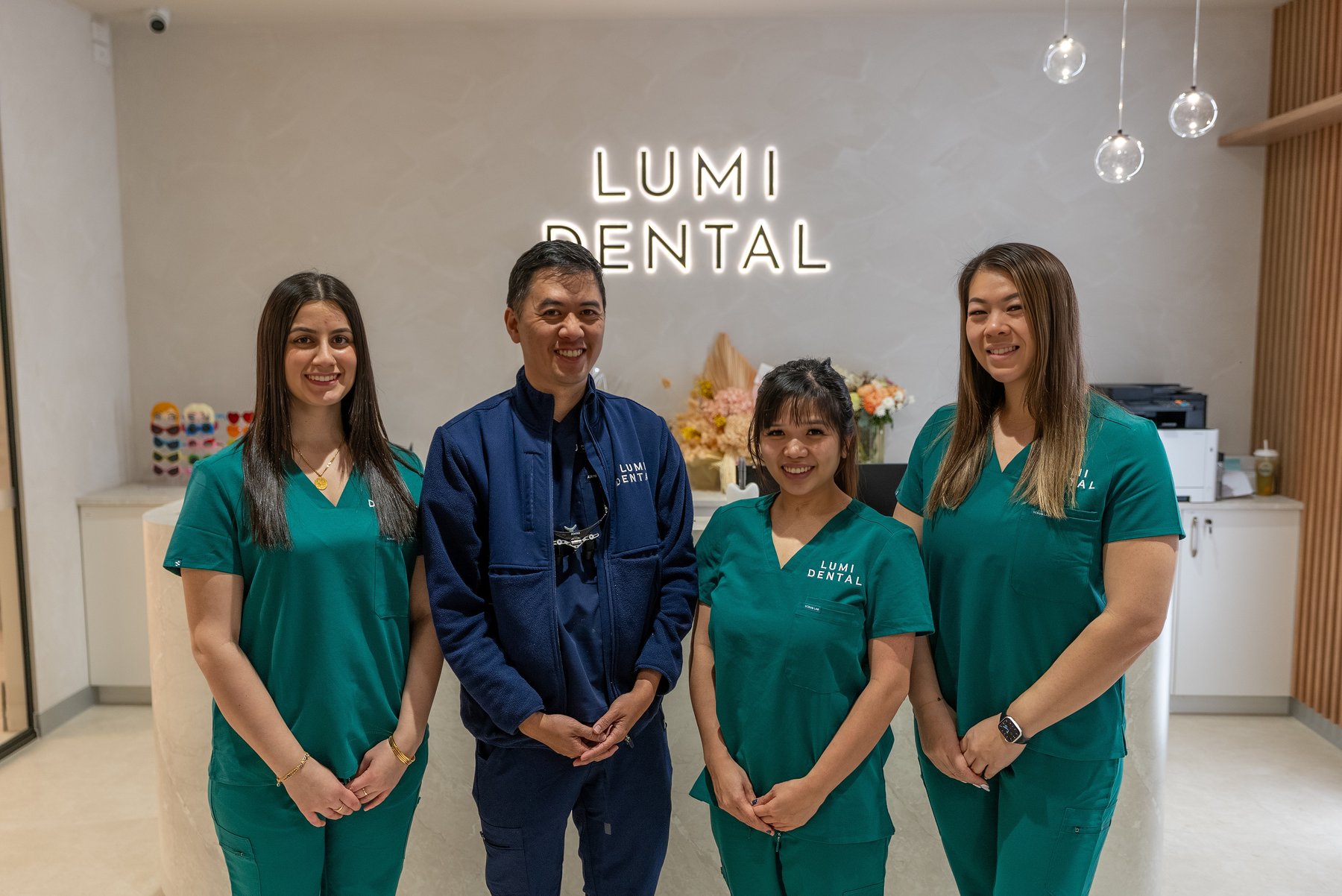
If you would like to talk about whitening before a trip or a move overseas, the Lumi Dental team in Melrose Park can check your teeth and explain realistic timing. Free consults are available for cosmetic treatment; see our current offers or visit our teeth whitening page.