Most of what a dental 3D printer makes never ends up as a permanent part of your mouth. Printers mostly produce the working tools of dentistry: models, implant guides, splints, trays and temporary crowns. Permanent ceramic crowns are still, for good reasons, carved out of a solid block by a milling machine. Knowing where that line sits makes it much easier to judge what a practice is really offering you.
A printer builds up, a mill cuts away
The two digital manufacturing methods start from the same 3D design, usually taken from an intraoral scan. A printer then builds the object layer by layer from a liquid resin that is hardened with light. A milling machine starts with a solid puck of ceramic, resin or metal and grinds away everything that is not the restoration.
That difference explains most of the trade-offs. Printing wastes very little material and copes well with intricate shapes such as a surgical guide or a full arch model. Milling works with dense, factory-made materials whose strength is already known, which is why it still dominates for anything that has to survive years of chewing. Neither is the newer, better version of the other. They suit different jobs.
The everyday list of printed items
In many Australian practices and dental laboratories today, printers are used to produce:
- study and working models, which are increasingly replacing plaster
- surgical guides that direct the drill during implant placement
- occlusal splints and night guards
- custom impression trays
- temporary crowns and bridges
- denture bases and try-in dentures
- the models over which clear aligners are formed
Printed permanent crowns in resin are available and being studied, and printed zirconia exists in research laboratories. Neither is yet a routine choice for a long-term crown. If a printed permanent crown is suggested, treat it as an option with trade-offs to discuss, not as an upgrade.
Item by item: how it is made and the catch
This is a genuine comparison, so a table helps. Each row lists the main limitation as well as the benefit.
| Item | Usual method today | What it means for you | The catch |
|---|---|---|---|
| Models | Printed | No plaster impression, and a model can be reprinted from the saved scan | Some printed models change shape slightly over weeks of storage, depending on the resin and design |
| Implant guides | Printed | A planned position carried into surgery | Small deviations still occur, so the plan keeps a safety margin from nerves and sinuses |
| Night guards and splints | Printed, milled or lab-processed | A good fit, often made quickly | Printed splint resins usually wear faster than milled or heat-cured acrylic |
| Temporary crowns | Printed or milled | A neater, better-fitting temporary while you wait | Designed for weeks or months, not years |
| Dentures | Increasingly printed or milled | A stored digital design that can be remade if a denture is lost | Milled denture bases are generally stronger than printed ones |
| Permanent ceramic crowns | Milled or lab-made | The established option for long-term crowns | Printed ceramics are not yet at the same level of accuracy and reliability |
Implant guides are where printing helps most
For implants, the printed guide is the piece of this technology with the clearest clinical payoff. The implant position is planned on a 3D X-ray combined with a scan of the teeth, and the guide is printed to hold the drill to that plan. A systematic review and meta-analysis of static guided surgery (Tahmaseb and colleagues, Clinical Oral Implants Research, 2018) pooled 20 clinical studies and found a mean error of about 1.2 mm at the entry point, 1.4 mm at the tip of the implant and 3.5 degrees of angle. Accuracy was better where some natural teeth remained than in jaws with no teeth.
The same review judged that accuracy clinically acceptable in most situations, while advising a safety margin of at least 2 mm. That is why careful planning keeps room around nerves and sinuses rather than relying on the guide alone. Our article on guided implant surgery explains how the plan becomes a guide.
Printed night guards fit well but may not last as long
A printed guard can be made from a stored scan in a short time, which is useful when one is lost or cracked. Laboratory testing has generally found printed splint resins less wear resistant and less strong than milled or heat-cured acrylic, and the angle at which a splint is printed can affect its strength. For someone who grinds heavily, that may mean replacing a printed guard sooner. It is worth asking which method is being used and why. If you are unsure which appliance you need at all, our comparison of a night guard and a sports mouthguard sets out the differences.
Dentures: a better process, materials still catching up
Digital dentures can mean fewer appointments and a design that is kept on file, so a lost denture can be remade without starting again. A network meta-analysis of laboratory studies (Vincze and colleagues, Dental Materials, 2025) found milled acrylic denture bases ranked at or near the top for strength and surface quality, while printed bases performed lowest. Results vary between materials and systems, which is why a denture plan is best built around what matters most to you, such as strength, comfort, cost or speed, rather than around the machine used.
Temporary versus permanent crowns
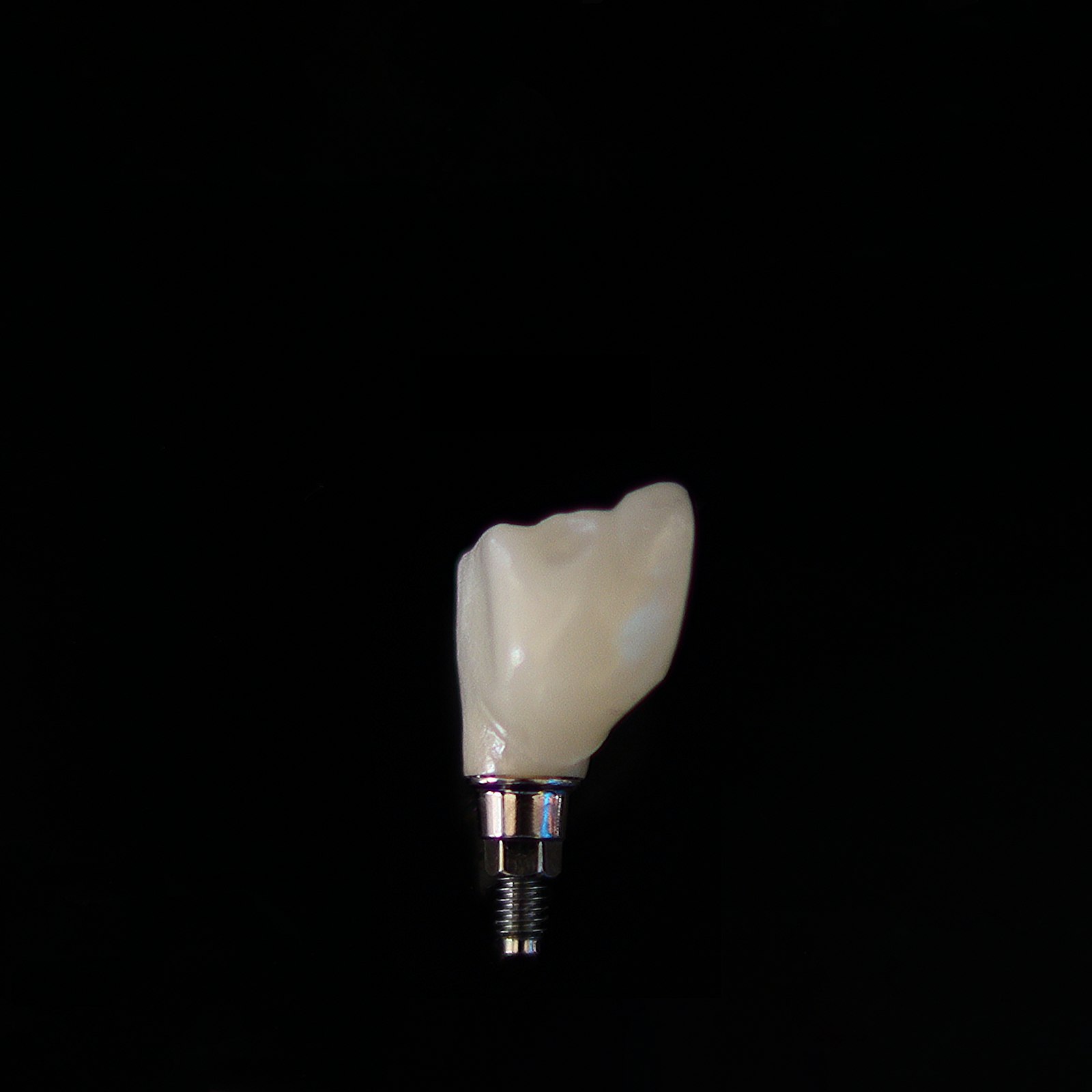
Printed temporary crowns generally perform well for the period they are meant to cover. Permanent crowns are a harder test. Clinical studies of printed resin crowns and bridges are still few and mostly short term, and reviews conclude the evidence is not yet strong enough to make printed resin a first choice for permanent work. For now, long-lasting crowns are usually milled or made by a dental technician from ceramic or zirconia. Our guide to crown materials compares the options, and how your crown is made follows one through the laboratory.
What happens after printing affects safety
A print straight off the machine is not finished. Unreacted resin has to be washed off and the object cured again under light. Laboratory research on printed resins has found that post-processing conditions, including how long items are cured, affect how cells respond to the material. Two practices using the same resin can therefore end up with different results depending on how carefully they follow the manufacturer's process. Asking how printed items are washed and cured tells you more than asking which printer a clinic owns.
The TGA sets the rules in Australia
In Australia, devices made for an individual patient are regulated by the Therapeutic Goods Administration. Changes to the regulation of personalised medical devices took effect on 25 February 2021, introducing categories such as patient-matched devices and narrowing the custom-made device exemption to rare, one-off designs. Whether a particular practitioner-made device must be included on the Australian Register of Therapeutic Goods depends on the type of device, and the obligations around safety, records and advertising apply either way. An in-house printed device should not be described as TGA approved unless it actually is.
The comfort gain comes from the scanner
Much of what patients like about digital dentistry happens before anything is printed. A digital scan replaces the tray of impression putty for many treatments. A 2026 systematic review and meta-analysis in children (Garcovich and colleagues, International Journal of Paediatric Dentistry) found scanning was faster and more comfortable than conventional impressions, with less gagging and breathing difficulty. Our comparison of a digital scan and a traditional impression describes both appointments.
Digital steps can sometimes reduce the number of visits, particularly for dentures and guided implant work, but this depends on the case and the laboratory involved. Ask about your own plan rather than assuming a general timeframe.

At Lumi Dental we use a 3D intraoral scanner and a 3D X-ray for planning, and we work with an in-house lab. Permanent ceramic crowns are made by established milling and laboratory methods.
Questions we are often asked
Is a 3D printed crown as strong as a normal crown?
For temporary crowns, printed resin usually does its job well. For long-term crowns, current evidence favours milled or laboratory-made ceramic and zirconia, and printed resins are still being evaluated.
Is printing more accurate than milling?
For high-precision fixed work such as crowns, milling remains the established method. Printing is more efficient with material and suits complex or removable designs. The methods complement each other.
Should I choose a printed night guard?
It can be a good choice, especially as a fast replacement. If you grind heavily, ask whether a milled or heat-cured guard would last longer for you.
If a crown, night guard, denture or implant is on the table and you would like the choices explained plainly, the team at Lumi Dental in Melrose Park is happy to go through them. You can see what a first visit includes on our current deals page or book online. After an examination, you will usually receive a written treatment plan, often by email.
This article is general information only and is not a substitute for personal dental advice. Materials, techniques and regulatory requirements change, and the right approach depends on your own teeth and priorities. Please see a dental professional about your own situation.