

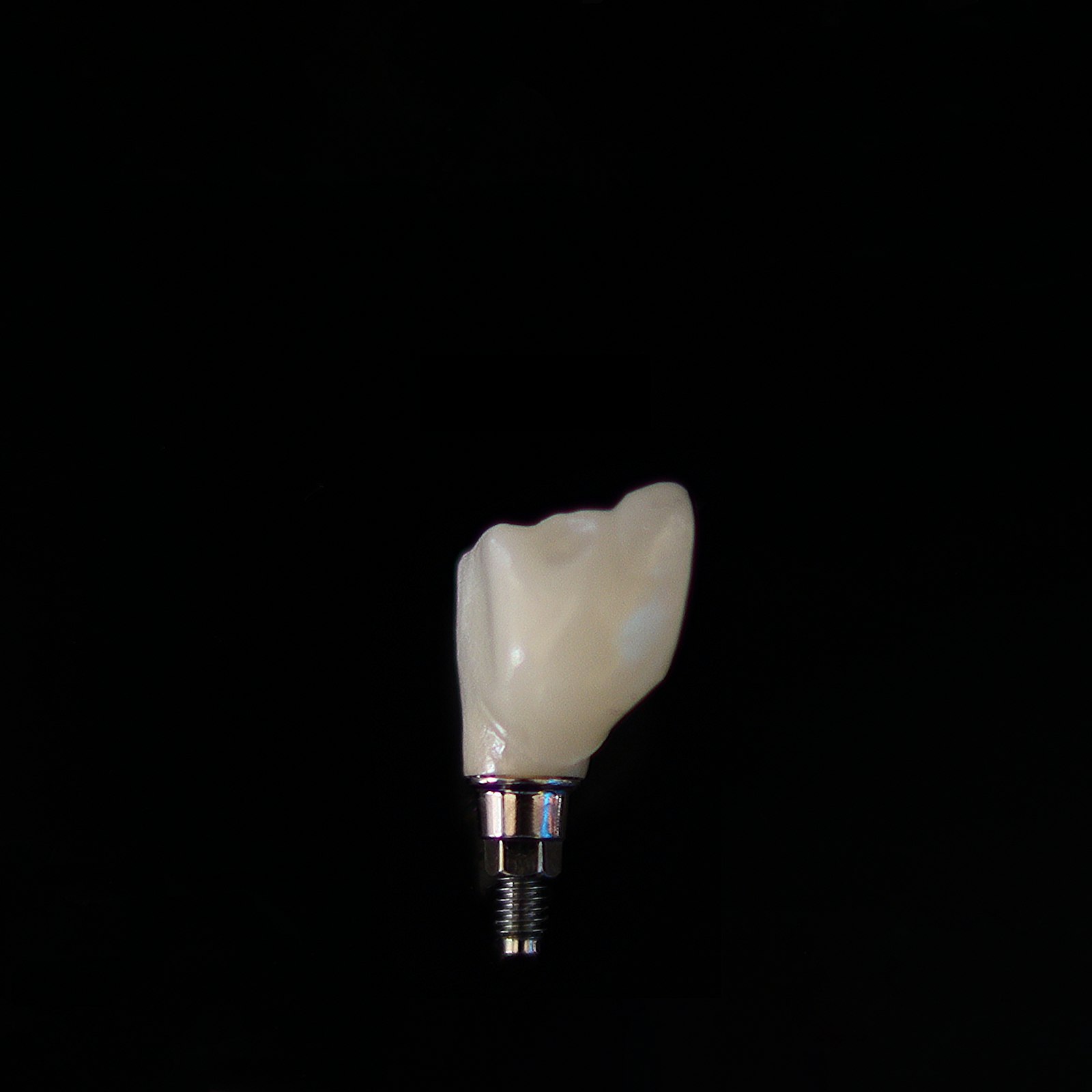

The biggest single improvement in dental implants over the last two decades is not the implant itself, it is the planning. Guided implant surgery uses a three-dimensional scan of your jaw and a digital plan to design exactly where an implant should sit, then a custom guide transfers that plan precisely to the mouth. The principle is simple: plan the implant fully before placing it. Doing the thinking on screen, where every nerve, sinus and millimetre of bone is visible, makes the procedure more predictable.
Key takeaways
- Guided implant surgery plans the implant on a 3D scan first, then uses a custom guide to place it accurately.
- It improves precision around important structures such as nerves and the sinus, and can allow a less invasive approach.
- Pooled studies report average deviations of roughly 1.1 mm at the entry point, 1.4 mm at the tip, and about 3.5 degrees of angle.
- Fully guided placement tends to be more accurate than freehand or pilot-only methods.
- It is especially useful in tight or complex sites and for placing several implants in a planned position.
What guided implant surgery is
In a guided workflow, a cone-beam CT scan and a digital scan of your teeth are combined into a 3D model of your jaw. On that model, the implant position, angle and depth are planned in software, accounting for the bone available and the structures to avoid. From the plan, a surgical guide is made, either a printed template that fits over the teeth (static guidance) or a real-time navigation system that tracks the drill on screen (dynamic guidance). Both aim to place the implant exactly where it was planned. The implant then fuses with the bone over the following months, a process we explain in our guide to osseointegration.

How accurate is it
Guided surgery is accurate, though no method is perfect. A large systematic review and meta-analysis reported an average deviation of about 1.11 mm at the implant entry point, 1.40 mm at the tip, and an angular deviation of around 3.5 degrees. Fully guided protocols were significantly more accurate than pilot-guided ones. Dynamic navigation showed slightly better angles than static guides in some laboratory comparisons, but in clinical studies the two perform similarly, and robotic systems sit at the most precise end. The honest summary is that guided placement narrows the margin for error compared with freehand, which matters most when space is tight.
Why the precision matters
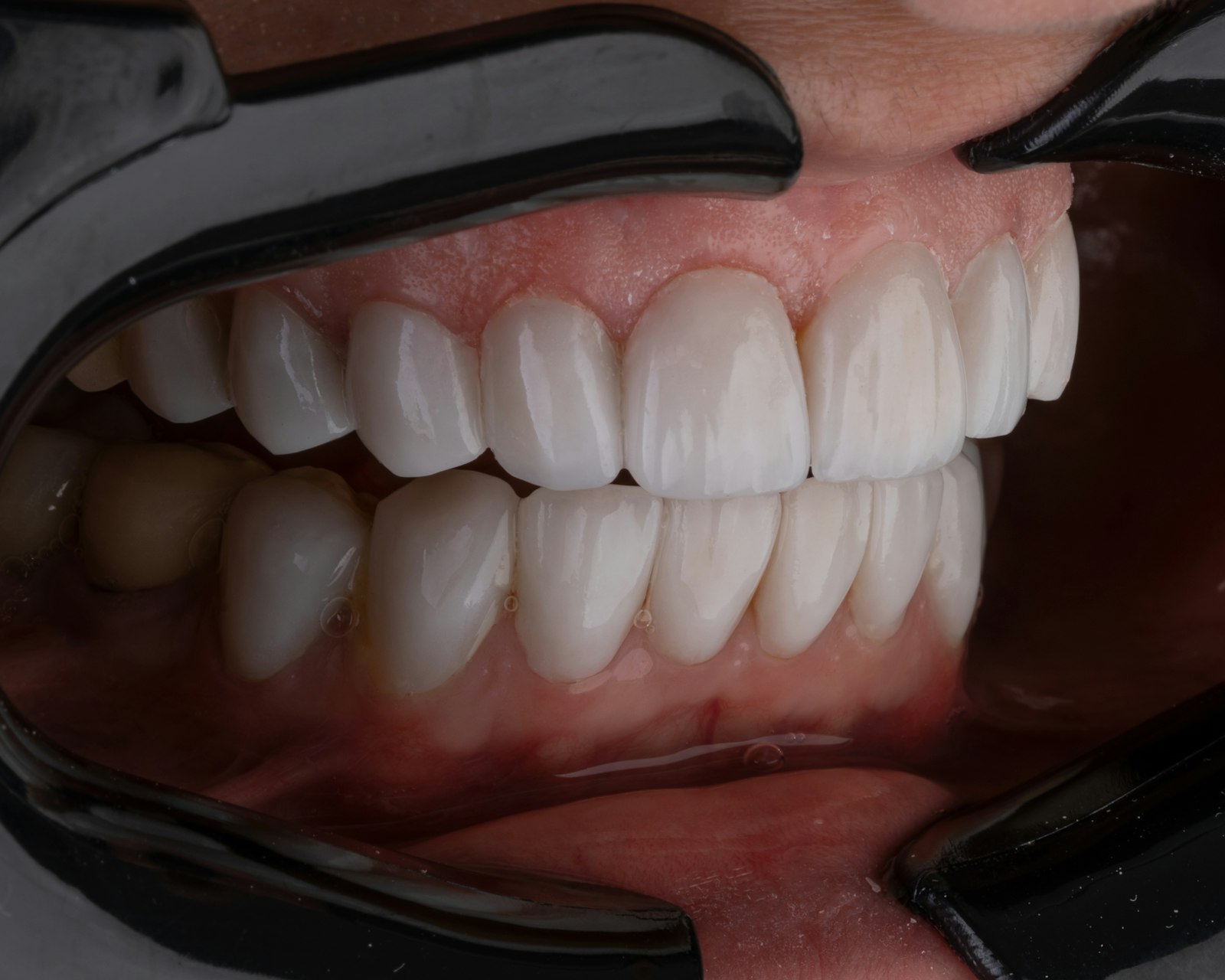
Placing an implant in the ideal position is not only about the surgery, it is about the result. An implant set at the right angle and depth supports a crown that looks natural, cleans easily and distributes bite forces well. Precise planning also keeps a safe distance from the nerve in the lower jaw and the sinus in the upper jaw. In many cases, guidance allows a flapless approach, where the implant is placed through a small opening rather than lifting the gum, which can mean less swelling and a smoother recovery. For complex full-arch work, the same planning underpins treatments like those in our full-arch implant guide.
Is it always needed
Guided surgery is a tool, not a requirement for every case. A straightforward single implant in a roomy site with plenty of bone can be placed very successfully without a printed guide. The value rises with complexity: little space, important structures nearby, thin or irregular bone, or several implants that must line up for a bridge. Your dentist will judge when the planning effort clearly improves safety and the final result. The timing of placement also varies, which our guide on immediate versus delayed placement explains.
What it costs
Guided surgery may add the cost of the 3D scan, the digital planning and the guide to an implant case, though it can also save time and reduce surprises. As a general market guide only, implant treatment in Australia commonly runs into the thousands of dollars per implant depending on the case, with guidance forming part of the overall plan rather than a large separate fee in many practices. These are general ranges, not a quote, and the team at Lumi Dental does not list its own prices here. The clearest way to understand your case is a consultation with a written plan. Explore our dental implant options, see current offers on our pricing page, or book a complimentary consult.
Frequently asked questions
Is guided implant surgery safer?
It improves precision around important structures such as the nerve and sinus, and lets the dentist rehearse the placement on a 3D plan first. That added control is why it is often chosen for tight or complex sites, though experienced freehand placement is also safe in simple cases.
Does it hurt less?
Often the recovery is smoother, because guidance can allow a flapless approach through a small opening rather than lifting the gum. Comfort still depends on the case and your own healing.
How accurate is the guide?
Studies report average deviations of roughly 1.1 mm at the entry, 1.4 mm at the tip and about 3.5 degrees of angle, with fully guided methods the most accurate. It is precise but not flawless, which is why planning leaves a safety margin.
Do I need a CT scan?
Guided surgery relies on a cone-beam CT scan to build the 3D plan. The scan shows the bone volume and the structures to avoid, which is what makes accurate planning possible.
Is it worth it for a single implant?
Sometimes. A simple single implant with ample bone may not need a guide, while a tight or aesthetically demanding site benefits from one. Your dentist will advise where it adds real value.
Guided implant surgery brings the planning forward, so the placement is the predictable last step rather than the moment of guesswork. To find out whether it suits your case, the team at Lumi Dental in Melrose Park is glad to help.

