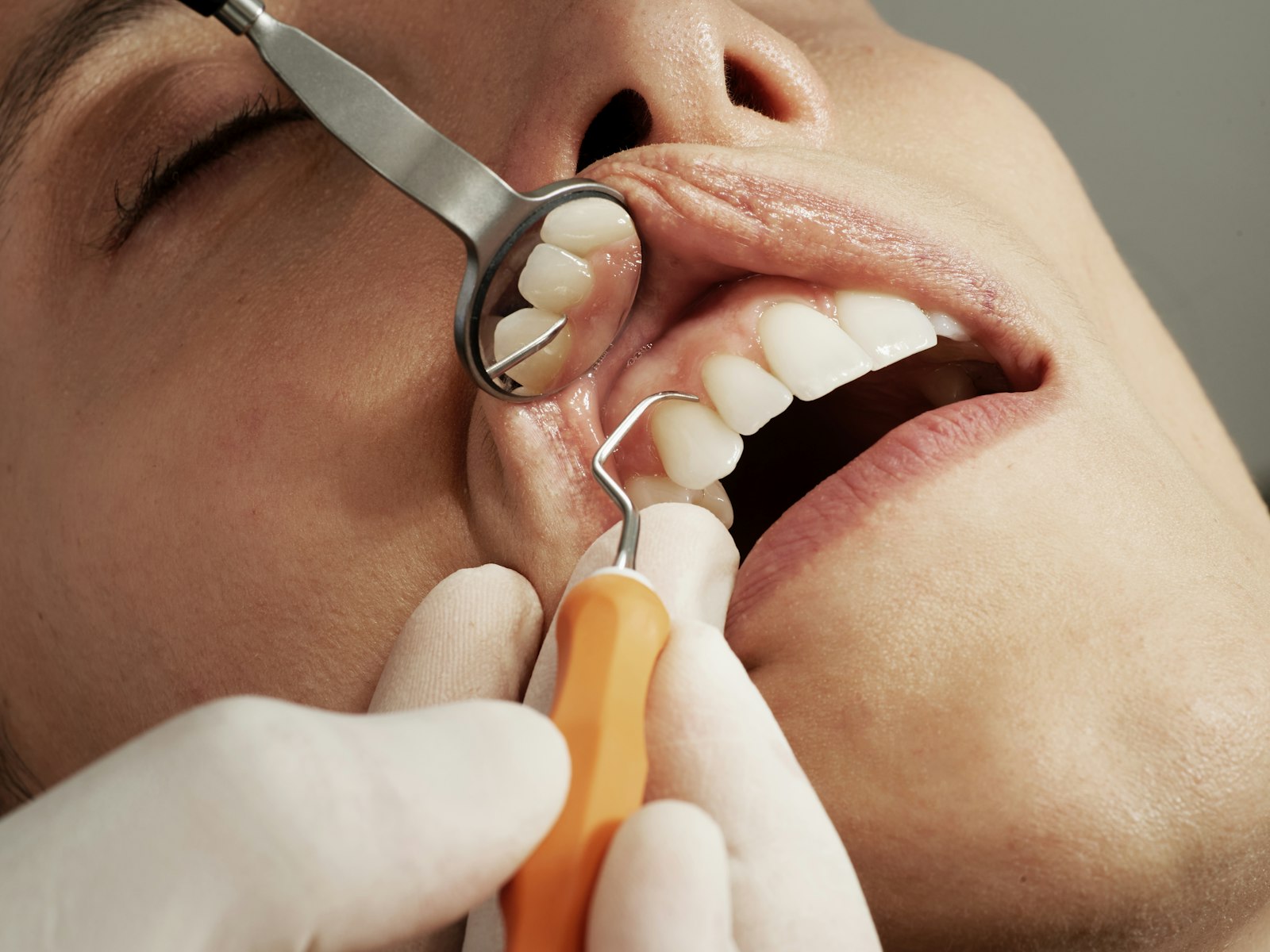

For most everyday dental work, a digital scan and a putty impression give your dentist an equally accurate model of your teeth, so the real difference is how the appointment feels and how long it takes. That is the short answer to the digital scan vs dental impression question. In one published comparison, the total treatment time was 75.5 minutes for the conventional route and 12 minutes for the digital one. Comfort scores also run significantly higher for scanning. Accuracy, for the great majority of cases, is a draw.
Key Takeaways
- An intraoral scanner is a small wand-shaped camera that takes thousands of images and stitches them into a 3D model on a screen.
- A conventional impression uses a tray of soft putty or silicone held in the mouth until it sets.
- Reviews and laboratory studies generally find no statistically significant difference in accuracy between the two for most everyday clinical situations.
- Patients report significantly better comfort with scanning, and children in particular are more comfortable with it.
- Putty is still the better tool in some situations, including certain full denture techniques and margins that sit deep under bleeding gum tissue.
- The cost to you is generally the same either way, because the equipment cost sits with the practice.
What Each Method Actually Is
A conventional impression is the one most people remember. Your dentist loads a tray with putty or silicone, seats it over your teeth, and holds it still while the material sets. The set tray is a negative copy of your teeth. A laboratory pours plaster into it to create a solid model, and the crown, denture or appliance is built on that model.
A digital scan replaces the tray with a camera. The wand is roughly the size of an electric toothbrush head. Your dentist moves it slowly across the biting surfaces, then the inside and outside of each tooth. Software captures thousands of individual frames and assembles them into a 3D model you can watch appear on the monitor. There is no material in your mouth and nothing has to set.
What Happens to the File Afterwards
This part rarely gets explained, and it matters more than people expect. A physical impression has to be disinfected, packed and physically transported to the laboratory. If it is damaged in transit, or the technician finds a bubble or a drag mark in the critical margin area, you come back and the whole impression is retaken.
A digital file is sent electronically the moment the scan is approved. If the laboratory needs it again, it is re-sent in seconds. If one small area was captured poorly, that area alone can be re-scanned and merged, rather than the whole impression being redone. Nothing gets lost in the post and nothing warps.
Accuracy: An Honest Answer
Manufacturer marketing tends to claim digital is dramatically more accurate. The published evidence is more measured. Umbrella reviews and laboratory comparisons generally find no statistically significant difference in accuracy between intraoral scanning, plaster models poured from conventional impressions, and digitised plaster models, across most routine clinical scenarios.
Accuracy does vary in real conditions. Different scanner systems perform differently. Moisture, blood and saliva interfere, because a scanner works on line of sight. Capturing a single crown is more reliable than capturing a complete arch, where small errors can accumulate along the span. A skilled operator with good moisture control matters more than which method is chosen.
| Feature | Intraoral digital scan | Putty impression |
|---|---|---|
| How it feels | A small camera moving over the teeth, no material in the mouth, you can pause at any point | A full tray of setting material held in place, a strong taste and a sense of fullness |
| Chairside time | Typically a few minutes, and lab processing time is shorter too | Longer, including tray selection, mixing, setting time and disinfection |
| Gagging risk | Low, the wand can be lifted out instantly if you need a break | Higher, nausea and gagging are the most commonly reported complaints |
| Accuracy | Comparable for most everyday cases, affected by moisture and arch length | Comparable for most everyday cases, affected by bubbles, drags and material handling |
| What happens if it needs redoing | Often just the small problem area is re-scanned and merged | The full impression is usually retaken from the start |
Comfort, and Why It Is a Real Clinical Argument
Comfort is not a soft benefit here. If a patient cannot tolerate an impression, the record is poor, and a poor record produces a crown that does not fit. The most frequently reported problems with conventional impressions are discomfort, nausea and gagging, jaw joint soreness from holding the mouth open around a bulky tray, a feeling that it is taking a very long time, and shortness of breath.
Patient comfort scores are significantly higher for digital impressions, and patients significantly prefer intraoral scanners when asked directly. Randomised comparisons in children found the same thing, with significantly better comfort during scanning.
In my experience, the patients this changes most are the ones who have avoided treatment for years because of a bad impression memory. If you gag easily, say so before your appointment rather than during it. It is a concrete, specific reason to ask whether your case can be scanned instead. If you find dental appointments difficult generally, our guide on managing a strong gag reflex at the dentist covers the other techniques that help.
When a Putty Impression Is Still the Better Choice
A conventional impression is not obsolete, and any page that tells you otherwise is selling equipment. There are situations where putty is genuinely preferred.
Certain Full Denture Work
Some denture impression techniques deliberately capture the movement and shape of the soft tissues under gentle pressure, because a denture rests on gum rather than teeth. The material itself does useful work there. A static optical scan of the same tissues does not capture that behaviour in the same way. If you are researching this area, our guide to denture costs in Sydney explains how the different denture types are made.
Margins Below Inflamed Gum
A scanner needs a clear line of sight. Where a crown preparation margin sits below the gum and the tissue is bleeding, the camera simply cannot see the edge it needs to record. Putty can sometimes be displaced into that space with retraction cord and capture what the camera cannot. The better answer is usually to settle the gum health first, which is worth reading about in our article on why gums bleed when brushing.
Does It Cost You More?
Generally, no. The scanner is a capital cost for the practice, not a line item on your account. The item numbers billed for a crown, an aligner record or a mouthguard do not usually change based on how the record was captured. If you want to understand what a specific piece of treatment involves, the honest approach is an assessment and a written quote rather than a figure quoted over the phone. Current offers are listed on our current deals page.
Where Scanning Is Used Day to Day
Digital scanning is used at Lumi Dental for crown and onlay work, bridges, implant crowns, clear aligner records, mouthguards, night guards and study models. It is also useful for showing you what your dentist is seeing, because a 3D model on a screen is far easier to follow than a plaster model. If you are weighing up restoration options, our comparison of inlays, onlays, crowns and fillings may help you understand what is being recorded and why.
Common Questions
Does a digital dental scan hurt?
No. Nothing is injected and nothing sets in your mouth. You feel the smooth tip of the wand touching your teeth and gums lightly as it moves. Some people find the tip a little cool at first. If you need a pause, your dentist simply lifts the wand out and resumes where it stopped.
Is a digital scan more accurate than a putty impression?
For most everyday cases the published evidence finds no statistically significant difference. Accuracy depends more on moisture control, the operator's technique and how much of the arch is being captured than on which method is used. Both can produce an excellent result and both can produce a poor one.
Can I have a digital scan if I gag badly?
This is one of the strongest reasons to ask for it. There is no tray, no bulk of material at the back of the mouth, and the scan can be stopped instantly. Tell the practice when you book so time can be planned for a slower, staged scan.
How long does an intraoral scan take?
A single arch typically takes a few minutes. Full upper and lower arches with a bite record usually still finish well inside a normal appointment. Chairside and laboratory processing times are both shorter than the conventional route.
Is there radiation involved in a digital scan?
No. An intraoral scanner is a camera using visible or structured light. It is not an X-ray and involves no ionising radiation. X-rays are a separate record with a separate purpose, explained in our guide to bitewing and OPG dental X-ray types.
What if my dentist still uses putty?
That is not a red flag. Conventional impressions remain a valid, well-evidenced technique and some clinicians produce outstanding work with them. It is reasonable to ask which method suits your particular case and why, especially if you have had a difficult impression before.
This article is general information only and is not a substitute for personal dental advice. Every mouth is different, and the right approach for you depends on an examination by a registered dental practitioner.
If you have been putting off a crown, a mouthguard or aligner records because of a bad impression experience, it is worth asking what your options are. The team at Lumi Dental in Melrose Park uses digital scanning for most records and can talk you through what your treatment would involve, with a written quote after assessment. You can see current offers on our current deals page or read more about what is available from our general dentist in Melrose Park.