The name All-on-X makes it sound like a single product with a single price, so it can be a shock when two quotes for the same mouth are many thousands of dollars apart. Most of that gap comes from what is fitted on top of the implants and what the quote leaves out, not from the surgery itself. Once you know which questions to ask, quotes become much easier to compare.
Four implants and one fixed bridge
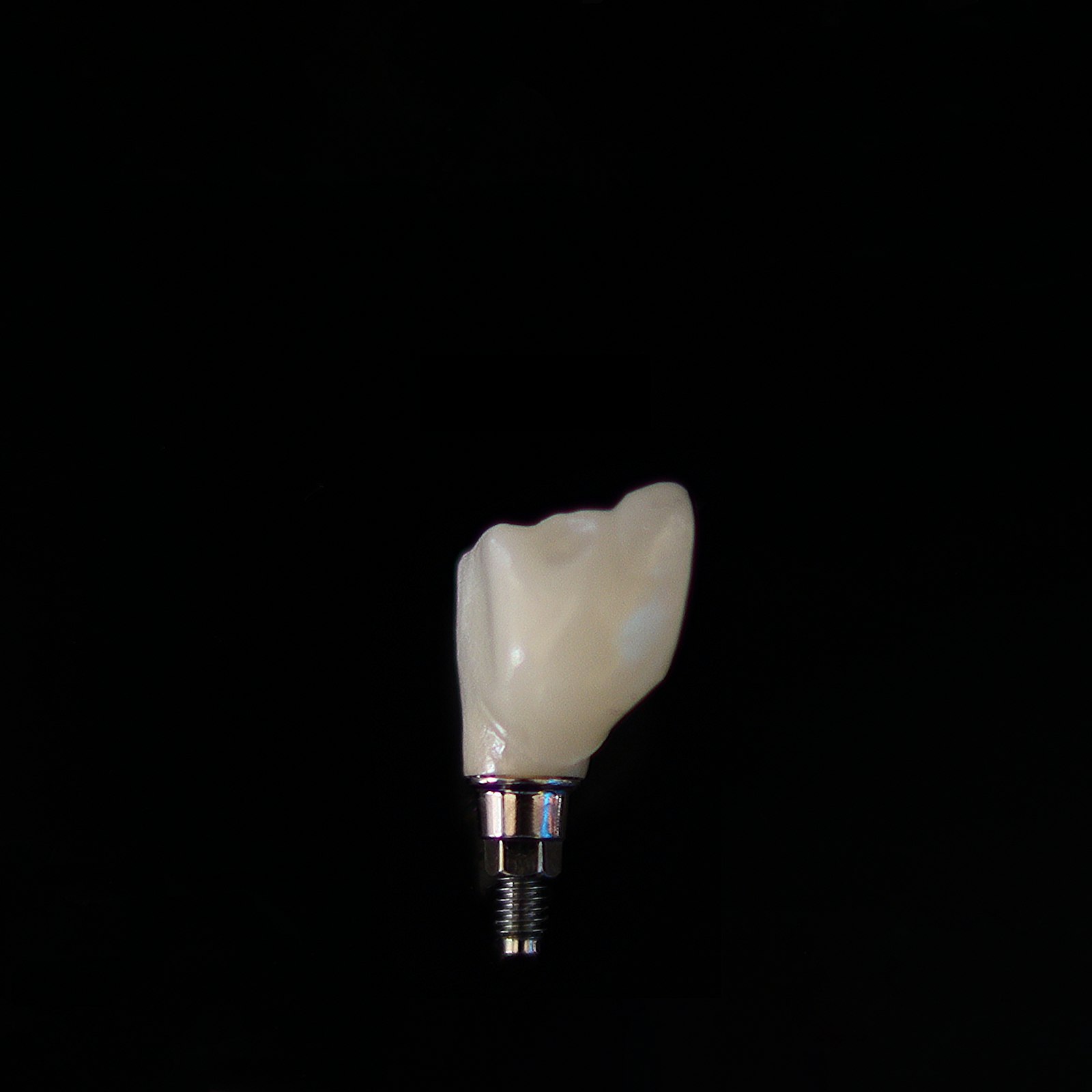
A four-implant full-arch bridge replaces every tooth in the upper or lower jaw with a bridge that is screwed onto four implants. Two implants usually go in near the front of the jaw and two further back, tilted so they can reach good bone while avoiding structures such as the sinuses or the nerve in the lower jaw. That tilting is the reason the technique can often avoid bone grafting that would otherwise be needed in a jaw that has shrunk.
The teeth do not come out at night. Only your dentist can unscrew the bridge, which is the main difference from a denture and the reason many people find it feels closer to having their own teeth. If you are still deciding between the broad options for missing teeth, our comparison of implants, bridges and dentures is a good place to start.
Full-arch treatment is most often considered by people who have already lost most of their teeth or whose remaining teeth cannot be saved. In the national adult oral health study run in 2017 to 2018, reported by the Australian Institute of Health and Welfare, about one in five Australians aged 75 and over had no natural teeth left.
Typical market ranges
Fees for full-arch implant treatment vary widely in Australia. Published fee guides from Australian practices in 2026 put a full-arch implant bridge at around $20,000 to $35,000 per arch, and about $40,000 to $65,000 for both arches. These are general market ranges, not Lumi Dental fees, and quotes above and below them are common. For comparison, a single implant with a crown typically falls in the range of $4,000 to $7,000 in the Australian market.
We do not publish our own All-on-X fees in blog articles because the cost depends so much on the individual case. You will receive a written, itemised plan after your consultation, and any current offers are on our current deals page. For single implants, our dental implant cost guide explains the same pricing principles.
The temporary bridge and the final bridge are not the same thing
Treatment usually involves two sets of teeth. The first is a provisional bridge, often acrylic, fitted on or shortly after the day of surgery so you are not left without teeth while the implants heal. It is designed for that healing period. The second is the definitive bridge, made once the implants have bonded with the bone. Definitive bridges are made from several materials, including acrylic on a metal frame and zirconia, and they differ in strength, appearance, repairability and cost.
This is where many quotes part ways. A lower figure may cover the implants and the provisional bridge only, with the definitive bridge charged later or not mentioned. A higher figure may include the final bridge in a stronger material. Neither is wrong, but they are not quotes for the same thing.
Questions that make two quotes comparable
- Does the fee include the final bridge, and what is it made of?
- Are the extractions, 3D scan and planning included?
- Is bone grafting expected, and is it priced in?
- Which sedation or anaesthetic option is planned, and is it included?
- How many reviews and adjustments are covered after the bridge is fitted?
- What happens, and what does it cost, if the provisional bridge breaks during healing?
Asking for the answers in writing is the simplest protection against surprises. At Lumi Dental, implants are planned with 3D imaging on our Orthophos X-ray unit and placed at the practice. IV sedation is available at Lumi for full-arch surgery, alongside happy gas, inhaled pain relief and oral sedation. We do not provide general anaesthetic and refer to another provider when it is needed.

From planning to final teeth
Treatment begins with an examination, 3D imaging and a discussion of your health, medicines and habits. If you are suitable, the plan sets out where each implant will go and what the bridge will be made of.
On the day of surgery, any remaining teeth in the arch are removed, the four implants are placed, and in many cases a fixed provisional bridge is attached the same day or within a few days. Whether immediate teeth are possible depends on how firmly the implants are held by the bone when they go in.
Over the following months the bone grows onto the implant surface, a process called osseointegration. You eat a softer diet during this time, especially in the early weeks. Once the implants are stable, the final bridge is designed from scans of your mouth and fitted, followed by bite checks and adjustments.

Recovery in the first fortnight
Swelling, bruising and tenderness are expected for the first few days and are usually managed with cold packs, soft food and the pain relief your dentist recommends. Many people are surprised that it is more manageable than they feared. The useful test is the direction of change: things should improve a little each day. Pain that is getting worse after the first few days, swelling that spreads, or a fever are reasons to call your dentist straight away. Our extraction recovery guide covers the same warning signs.
How long the result lasts
Implants and bridges age differently. An overview of eight systematic reviews (Figueiredo and colleagues, Oral and Maxillofacial Surgery, 2025) found reported cumulative implant survival for full-arch bridges on four implants of 94.8% to 99.3%, with results comparable to full-arch treatment using more implants. The authors also noted that much of the underlying research was of low methodological quality, so these figures are a guide rather than a promise.
The bridge is the part that wears. Teeth can chip, acrylic wears and stains over time, and screws sometimes loosen, so repairs or a replacement bridge at some point are part of planning for the long term. Cleaning under the bridge, attending regular reviews and wearing a night guard if you grind all help. Our implant aftercare guide shows how to clean around a full-arch bridge.
Who may not be suited, or needs extra preparation
The deciding factors are the amount and quality of bone and your general health. Smoking slows healing and is associated with a higher risk of implant problems. Poorly controlled diabetes, some medicines that affect bone, and active gum infection all need attention before surgery. Heavy grinding puts extra load on the bridge. None of these automatically rules treatment out, but they can change the plan, the timeline or the cost.
Other ways to replace a full arch
A full-arch bridge on six implants rather than four may be preferred when bone is softer or bite forces are higher; our article on four compared with six implants explains the trade-offs. An implant-retained overdenture clips onto two or more implants for stability but is removed for cleaning, and it usually costs less than a fixed bridge. A conventional full denture is the most affordable choice, though it can move when eating and does nothing to slow the gradual shrinking of the jawbone after teeth are lost. Implants place load on the bone around them, which may help maintain it in those areas. Our guides to denture costs and dental bridge costs cover those options.
Ways people spread the cost
Private health insurance with major dental or extras cover may pay part of the implant and bridge components, but annual limits mean it usually covers a small share of a full arch. Many practices offer payment plans or arrange dental finance. In limited circumstances, people can apply for early release of superannuation on compassionate grounds for dental treatment; the Australian Taxation Office assesses these applications against strict conditions, not the dental practice. Our article on what health insurance covers for dental goes into more detail.
Questions about All-on-X fees
Why is one quote so much cheaper than another?
Usually because it covers different things, most often the provisional bridge only rather than the final bridge, or it leaves out extractions, grafting or sedation. Compare itemised plans line by line.
Is the consultation fee credited to treatment?
Some practices do this and some do not. Lumi Dental offers free consults for implant treatment; see our current deals for details.
Will I have teeth on the day of surgery?
Often, yes, when the implants are firm enough to support a provisional bridge straight away. Your dentist will tell you after planning whether that is likely in your case.
Do I need bone grafting?
The tilted back implants are designed to reduce the need for grafting, but some people still need it. A 3D scan is the only reliable way to tell.
Replacing a full arch is a big clinical and financial decision, and it deserves an unhurried conversation. You can book a dental implant consultation at our Melrose Park practice to talk through your options and receive a written plan. Our page on full-arch implants at Lumi explains how treatment is planned, and if you live outside Sydney, our guide to travelling interstate for dental treatment covers how the visits can be grouped.
This article is general information and is not a substitute for personal dental advice. Treatment options, suitability and costs vary between individuals and should be assessed by a registered dental practitioner.