

A sweetener tablet stirred into a flat white and a can of diet cola both contain no sugar, yet they are very different for your teeth. Neither feeds the bacteria behind tooth decay. The cola, though, is acidic, and acid can dissolve enamel whatever the drink is sweetened with. So swapping sugar for stevia, aspartame or sucralose lowers your decay risk while leaving the erosion risk exactly where the drink puts it.
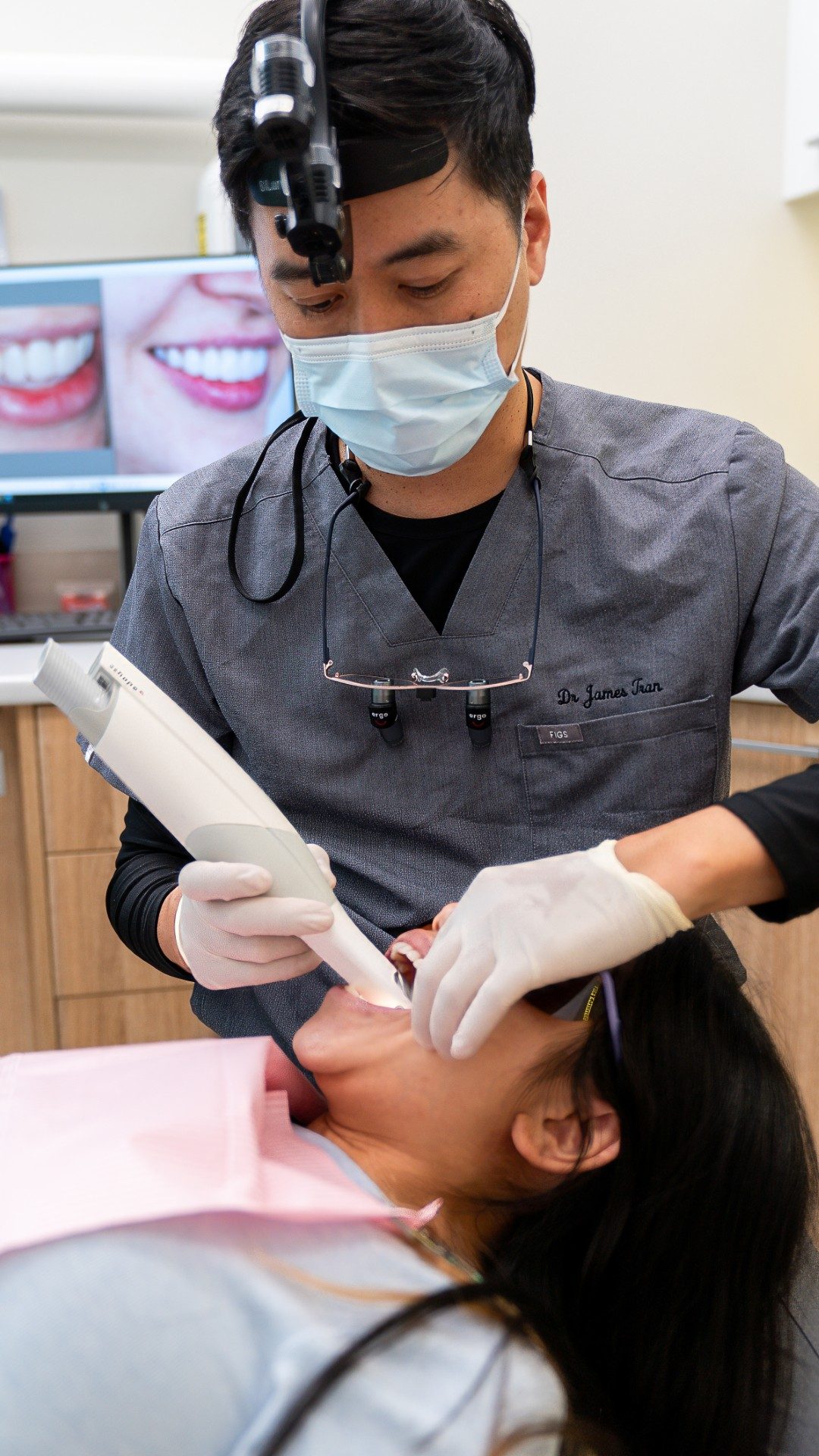
Written by Dr James Tran, BDent (University of Sydney), MICOI, GradDip (Oral Implants), general dentist at Lumi Dental in Melrose Park.
Sweeteners give decay bacteria nothing to work with
Decay starts under plaque. Bacteria on the tooth surface ferment sugars into acid, the enamel under the plaque gradually loses mineral, and a cavity can form over months, usually in a groove or between teeth. Our article on how sugar leads to decay goes through that process.
Intense sweeteners such as aspartame, sucralose, acesulphame potassium, saccharin and stevia are not fermentable sugars, so plaque bacteria cannot use them to make acid. Swapping a teaspoon of sugar in tea for a sweetener tablet removes that source of decay entirely.
Diet drinks are a different story because of acid
Erosion does not need bacteria. The acid is already in the drink, and it softens and dissolves enamel wherever it touches. Over time the softened surface wears away with chewing and brushing, leaving front teeth that look smooth, shiny and thin at the edges, sometimes with a yellow tinge where dentine shows through. Our guide to enamel erosion covers the signs.
The Australian Dental Association's consumer site, teeth.org.au, notes that sugar-free soft drinks have a low pH, which makes them acidic, and that drinking acidic drinks regularly can wear teeth away. The Better Health Channel lists soft drinks, including sugar-free ones, among high-acid drinks, along with energy drinks, sports drinks, cordials, vitamin waters and kombucha.
The ADA has also reported laboratory research in which recently extracted human teeth were left in a range of drinks for 24 hours, which the researchers treated as roughly a year's worth of exposure. The worst damage came from sugary soft drinks and their sugar-free versions, with flavoured sparkling water causing less. Teeth sitting in a container are not the same as teeth in a mouth with saliva, so this shows what the acid can do rather than predicting any one person's wear.
Reading the label for acid, not just sugar
A no-sugar label tells you nothing about acidity, so it is worth checking the ingredient list for food acids. Better Health singles out three food acid numbers as especially bad for teeth: 330 (citric acid), 331 (sodium citrate) and 338 (phosphoric acid). As a quick guide, a drink that is fizzy, citrus, cola, fruit-flavoured, an energy drink or a sports drink is likely to be acidic whatever sweetens it. Tea, coffee and milk are not acidic in the same way, so a sweetener added to them is a clear improvement on sugar.

How the common sweeteners compare
Food Standards Australia New Zealand gives each permitted intense sweetener a code number, shown in brackets below. Sugar alcohols such as xylitol, sorbitol, maltitol and erythritol are used in larger amounts in sugar-free lollies and gum.
| Sweetener | Fed on by decay bacteria? | What to know |
|---|---|---|
| Stevia (steviol glycosides, 960) | No | Plant-derived. The 2024 review discussed below found only one trial that included it, alongside maltitol. |
| Aspartame (951) | No | Common in diet cola, where the acid rather than the sweetener is the concern for teeth. |
| Sucralose (955) | No | Used in many zero-sugar drinks; no clinical trials on decay bacteria were found in a recent review. |
| Acesulphame potassium (950) | No | Found in drinks, confectionery and some toothpastes. |
| Saccharin (954) | No | A long-established sweetener, also used in some medicines and toothpastes. |
| Xylitol | No | A sugar alcohol with the most trial evidence, mostly in chewing gum, showing lower decay bacteria counts. |
| Sorbitol and maltitol | Very little | Sugar alcohols in sugar-free lollies and syrups; see our article on sugar-free syrups and sorbitol. |
| Erythritol | No | A sugar alcohol; in one trial, erythritol and xylitol reduced one type of decay-related bacterium. |
What the trials have and have not tested
A 2024 systematic review by Liang and colleagues in the International Dental Journal gathered 32 clinical trials of sugar substitutes and decay-causing bacteria. Thirty-one of them studied xylitol and other sugar alcohols, and most of those found a reduction in decay bacteria in plaque or saliva. Only one trial included stevia, in a product that also contained maltitol, and the reviewers found no trials of sucralose, saccharin or aspartame. Almost half of the included studies were judged to be at high risk of bias.
That is a gap in the research rather than a sign of harm. Because intense sweeteners are not fermentable sugars, there is no known way for plaque to turn them into acid. What the gap does mean is that claims of intense sweeteners actively protecting teeth go further than the evidence.
Sugar-free lollies and gum pull in opposite directions
Sugar-free lollies are usually sweetened with sugar alcohols but flavoured with the same fruit acids as regular lollies, and Better Health lists fruit-flavoured lollies as a high-acid food. A sour sugar-free lolly dissolved slowly in the mouth bathes the teeth in acid even though it contains no sugar.
Sugar-free chewing gum works the other way. Better Health recommends it after meals because chewing increases saliva flow, and saliva washes acid away and helps neutralise it. Our article on sugar-free gum and your teeth looks at this in more detail, and xylitol for teeth weighs up the sweetener with the most research behind it.
Less saliva means more risk from every acidic drink
Better Health describes saliva as a powerful natural defence against erosion: it rinses acid away, neutralises it and repairs very early erosion, although it cannot rebuild tooth surface that has already been lost. Some medicines, dehydration, too much caffeine and conditions that affect the salivary glands, such as Sjogren's disease, all reduce saliva. If your mouth is often dry, diet drinks deserve more caution; our guide to dry mouth explains what can help.
Reflux adds a second source of acid from inside the body. Someone with untreated reflux and a daily diet drink habit is exposing their teeth to acid from both directions, which is worth mentioning to your dentist and your doctor.
Habits that soften the impact of a diet drink
- Have it with a meal, and finish it rather than sipping it over an afternoon, so the teeth face one acid exposure instead of many.
- Follow it with water or milk, which teeth.org.au lists among the best drinks for teeth.
- You do not need to time your brushing around the drink: a 2024 scoping review in Caries Research (Fernández and colleagues) found that brushing with fluoride toothpaste soon after an acid exposure does not add measurable wear. Rinsing with water after the drink is a reasonable habit.
- Brush with a soft brush and fluoride toothpaste. Better Health notes recent studies suggest stannous fluoride is effective in reducing erosion.
- Chew sugar-free gum after meals to boost saliva.
At a check-up at Lumi Dental, the dentist looks for early erosion such as shiny flattened enamel, thinning front edges and small cups on the chewing surfaces. A 3D intraoral scan can record the tooth surfaces so wear can be compared at later visits, and our oral health therapists can apply fluoride and talk through drinks and timing that suit your day. More about routine care is on our general dentistry page.
Common sweetener questions
Is diet cola bad for my teeth?
It does not cause decay, but it can cause erosion. Cola contains phosphoric acid (338), one of the food acids Better Health flags as especially bad for teeth, so the enamel is exposed to acid whichever sweetener is used.
Can stevia cause cavities?
No. Stevia is not a fermentable sugar, so plaque bacteria cannot turn it into acid. A stevia-sweetened fizzy drink can still be acidic, though.
Is a sugar-free soft drink better than a regular one?
For decay, yes. For erosion, not really, because the acid is much the same. If your front teeth already look thin or feel sensitive, contact us to arrange an examination rather than simply changing brands.
Which sweetener is kindest to teeth?
Xylitol, mainly in chewing gum, has the most consistent trial evidence for lowering decay bacteria, and the chewing itself boosts saliva.
Booking a check for early erosion
If diet drinks or sugar-free lollies are part of your week, a check-up can pick up early erosion while there is still time to slow it. You can see our current offers or book with a dentist or oral health therapist at Lumi Dental in Melrose Park.
Sources
- Australian Dental Association (teeth.org.au): Sugary drinks effect on teeth
- Better Health Channel: Dental erosion
- Australian Dental Association: Research confirms sugar-free beverages may erode tooth enamel
- Liang and colleagues, International Dental Journal (2024): Clinical effects of sugar substitutes on cariogenic bacteria, a systematic review and meta-analysis
- Fernández and colleagues, Caries Research (2024): Should we wait to brush our teeth? A scoping review regarding dental caries and erosive tooth wear
About the author

Dr James Tran is a general dentist at Lumi Dental in Melrose Park. He holds a BDent from the University of Sydney and a Graduate Diploma in Oral Implants, and is a Master of the International Congress of Oral Implantologists (MICOI).
This article is general information only and is not a substitute for an examination and individual advice from a registered dental practitioner. Suitability for any treatment varies from person to person.








