

You can keep your teeth and gums healthy while one arm is in a cast or sling by brushing twice a day with the hand you have, setting up the basin so nothing needs two hands, and letting an electric toothbrush or water flosser do the fine movement. Brushing and flossing with one hand feels clumsy for the first few days, then gets easier. One NHS hand therapy leaflet says a forearm cast for a broken wrist usually stays on for 6 to 8 weeks when no operation is needed, which is long enough for plaque and gum problems to build if cleaning slips.
Written by Dr James Tran, BDent (University of Sydney), MICOI, GradDip (Oral Implants), general dentist at Lumi Dental in Melrose Park.
The short version
- A wrist cast, sling, shoulder repair or hand surgery can leave you one-handed for several weeks, often with your weaker hand.
- Sit at the basin, brace your elbow on the bench and brush in the same order every time.
- An electric toothbrush does the scrubbing movement for you; a Cochrane review found modestly less plaque with powered brushes.
- Rest the brush on the bench to add toothpaste, and use floss picks, long-handled interdental brushes or a water flosser between teeth. Our guide to floss picks and string floss compares them.
- Keep the cast dry: cover it, and keep the injured arm out of the basin.
- Routine check-ups can wait until the arm is free, but a toothache, broken tooth or swelling should not.
How long you may be brushing one-handed
It depends on the injury. A hand therapy leaflet from South Tees Hospitals NHS Foundation Trust says a forearm cast for a broken wrist usually stays on for 2 to 4 weeks after an operation to fix the bone, or 6 to 8 weeks if no operation is needed. Shoulder, hand and carpal tunnel surgery each have their own timelines. Your surgeon, fracture clinic or hand therapist sets yours and decides what the injured arm can do.
The leaflet says the casted arm can be used for light activities only. Whether holding a toothbrush counts is a question for your treating team, so ask first. For most people the practical answer is to brush with the other hand for a few weeks.
The single rule: brush with the hand you have, let tools do the fine work
If you are temporarily one-handed, brush twice a day with your free hand, let an electric brush or a water flosser do the fine movement, and put off non-urgent dental work until the injured arm is free. Do not put off a toothache, a broken tooth or swelling.
A few weeks of less than perfect brushing is unlikely to cause lasting harm. What I see more often is the routine falling apart because it is awkward, and gums left with plaque soon become inflamed and bleed.
Brushing with your other hand
An occupational therapy leaflet on one-handed living from Cambridge University Hospitals points out that the dominant hand usually does the work while the other hand steadies things. With one hand out of action, steady objects another way and give yourself more time:
- Sit down. A stool at the basin steadies you when a sling throws your balance.
- Brace your elbow on the bench. Your forearm then pivots from a fixed point, so the strokes stay small.
- Use a mirror. Your weaker hand does not yet know where the brush is.
- Work in quarters. Same order every time, outside then inside. The inner surfaces on the brushing-hand side are the ones most often missed.
- Use a timer. Two minutes feels long with the wrong hand.
Why an electric brush helps
An electric brush makes the small scrubbing movements for you, so your hand only has to guide the head slowly from tooth to tooth. A Cochrane review of 56 trials with more than 5,000 participants found powered brushes reduced plaque by 11% over one to three months and by 21% after three months compared with manual brushing, with smaller reductions in gum inflammation. The evidence was rated moderate quality and the long-term importance is unclear. Our comparison of electric and manual toothbrushes covers choosing one.
If a stroke has affected one hand rather than a temporary injury, the advice is similar but the timeline is longer; our article on oral care after a stroke covers that situation.
Toothpaste, flossing and rinsing with one hand
The Cambridge leaflet suggests laying the toothbrush on the basin or another flat surface to apply toothpaste, or squeezing the toothpaste straight into your mouth. A flip-top cap or pump dispenser saves unscrewing a lid. String floss needs two hands, so swap it for a tool you can hold in one:
- Floss picks hold a short length of floss on a handle.
- Interdental brushes with a long handle suit wider gaps and are easier to angle.
- A water flosser needs only one hand to aim it. Lean well over the basin with your mouth almost closed so the water runs out into the sink rather than down your arm. Our guide on how to use a water flosser explains the settings.
| Task | One-handed method | Helpful tool |
|---|---|---|
| Brushing | Sit, brace the elbow, work in quarters with a mirror | Electric toothbrush with a timer |
| Toothpaste | Lay the brush on the bench, or squeeze paste into the mouth | Flip-top tube or pump dispenser |
| Cleaning between teeth | Hold the handle like a pen and guide it gently | Floss picks, long-handled interdental brushes, water flosser |
| Denture, retainer or aligner care | Clean over a basin half-filled with water or a towel | Denture brush, soaking cleaner, a non-slip mat |
| Mouthwash | Pour into a cup on the bench, not straight from the bottle | Pump-top bottle or pre-filled cup |
Keeping the cast dry at the basin
The South Tees leaflet is firm: do not get a forearm cast wet. You can cover it with a bag sealed with tape when washing, but do not put it under water. At the basin, keep the injured arm out of the way, resting against your chest, and cover the cast first if you use a water flosser. The leaflet also suggests keeping the injured hand raised above the elbow when you can, to help with swelling.
Dentures, retainers, night guards and aligners
Removable appliances are easy to drop one-handed. The Better Health Channel advises cleaning dentures over a hand basin half-filled with water or covered with a towel, so they will not break if you drop them, and warns against holding a lower denture by its ends because the pressure can snap it. Use cold water, never hot, as heat can change the shape.
- Lay a towel or non-slip mat on the bench and brush the appliance resting on it, steadied with your fingertips.
- A soaking cleaner does much of the work with no scrubbing needed; check that it suits your appliance.
- Clear aligners and retainers have their own cleaning rules. See our guides to caring for clear aligners and denture care.
If you cannot take aligners out or put them back safely with one hand, contact the dentist managing your treatment.
Pain relief, dry mouth and snacking
Your doctor advises on pain relief after a fracture or surgery. Some pain medicines can leave the mouth dry, which makes decay more likely, so sip water and ask your pharmacist whether yours might. Weeks at home can also mean more snacking; keeping sweet foods to mealtimes gives your teeth a break.
When to book anyway, and telling the team
Routine check-ups and cosmetic work can usually wait until the arm is free. A toothache, a broken tooth or swelling should not; see our emergency dental appointments page. A fall that broke a wrist can also chip a tooth.
When you book, tell the team about the injury so the chair, armrest and your position can be adjusted to support the arm. If lying back in a sling is uncomfortable, say so; I would rather adjust the chair than have you hold an awkward position.
If both hands are affected
A family member or carer can brush for you, with you seated and the helper standing beside or slightly behind you, using a soft or electric brush along the gumline. An oral health therapist can show your helper how.
How we approach this at Lumi Dental
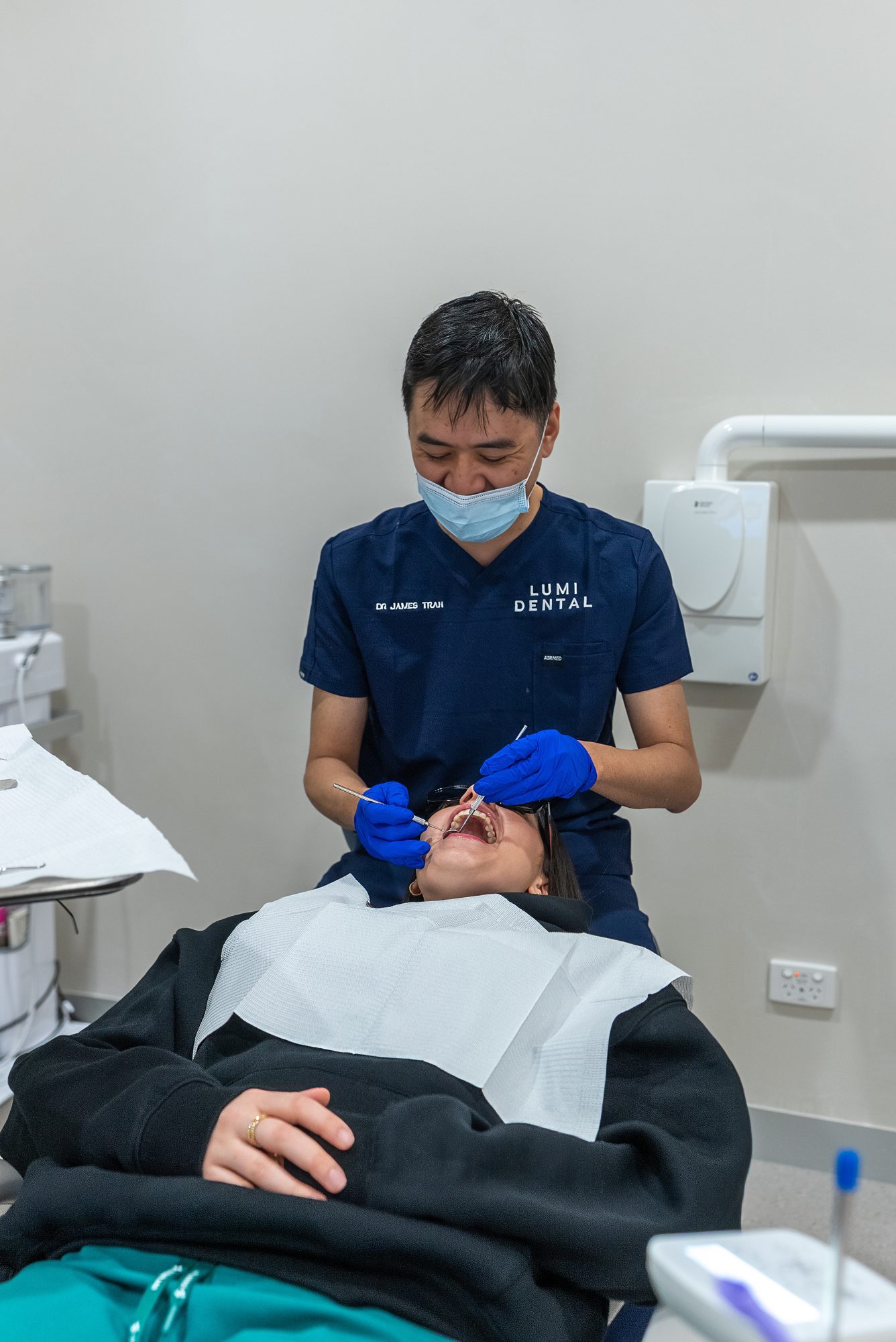
At Lumi Dental in Melrose Park, a dentist checks your teeth and gums, and the oral health therapists can show you one-handed brushing and cleaning between the teeth with the tools you have at home. If you have a cast, sling or recent hand surgery, let the team know when you book so the chair and timing suit your injury. Decisions about the injured arm stay with your treating doctor or hand therapist. Read more about general dentistry at Lumi Dental.
Questions patients ask
How do you brush your teeth with a broken wrist?
Brush with your other hand, sitting at the basin with your elbow braced on the bench. An electric brush makes it easier.
Can I use my hand in a cast to hold my toothbrush?
Only if your doctor or hand therapist has said light use is fine and it does not hurt. Most people find it simpler to use the free hand for a few weeks.
How do I floss with one hand?
Swap string floss for floss picks, long-handled interdental brushes or a water flosser. Each can be held and guided with one hand.
Should I cancel my dental check-up while my arm is in a cast?
You can usually move a routine check-up until the arm is free. Do not delay for toothache, a broken tooth or swelling, and tell the team about your injury when you book.
Is it bad if I miss brushing for a few days after surgery?
A day or two is unlikely to cause lasting harm. Get back to twice-daily brushing as soon as you can, even if it is slower than usual.
Book a check-up at Lumi Dental, Melrose Park
Once your arm is free, or sooner if something hurts, the team at Lumi Dental can check your teeth and gums and help you get your routine back on track. See current offers for new patients and book through our general dentist in Melrose Park page; a written quote follows the examination if any treatment is needed. Patients come from Melrose Park, Ryde, Parramatta, Ermington and Rydalmere, with on-site parking at Melrose Central.
Sources
- South Tees Hospitals NHS Foundation Trust: Advice for patients in a forearm cast
- Cambridge University Hospitals: One-handed living tips
- Cochrane: Powered or electric toothbrushes compared to manual toothbrushes for maintaining oral health
- Better Health Channel: Dentures
About the author

Dr James Tran is a general dentist at Lumi Dental in Melrose Park. He holds a BDent from the University of Sydney and a Graduate Diploma in Oral Implants, and is a Member of the International Congress of Oral Implantologists (MICOI).
This article is general information only and is not a substitute for an examination and individual advice from a registered dental practitioner. Suitability for any treatment varies from person to person.







