Researchers have argued about the dark spaces at the corners of a smile for more than fifty years, and they still do not agree on how much they matter. Those spaces, called buccal corridors, appear in every smile to some degree. The case for treating yours depends far more on your bite, your arch shape and how much they bother you than on any ideal measurement.
Shadow between the back teeth and the cheeks
When you smile broadly, your lips pull back wider than the curve of your upper teeth. The gap between the outer surfaces of the back teeth and the inside corners of the mouth shows up as shadow. "Buccal" just means towards the cheek.
The size of that shadow is not fixed. It depends on the width of the upper arch, where the upper jaw sits, the size and tilt of the back teeth, how mobile the lips are, and how wide the smile is at that moment. A laughing photo and a polite posed smile of the same person can look quite different.
Researchers usually describe buccal corridors as a proportion rather than in millimetres, so that faces of different sizes can be compared. The calculation takes the distance between the corners of the mouth, subtracts the visible width of the upper teeth, and expresses the difference as a percentage of the mouth width. That number was designed for research, not as a score anyone needs to hit.
Two well-known studies, two different answers
A 2005 study in the American Journal of Orthodontics and Dentofacial Orthopedics (Moore and colleagues) digitally altered photos of ten people to create smiles ranging from narrow, with about 28% of the smile width in shadow, to broad, at about 2%. A panel of 30 adult laypeople judged broader smiles with minimal corridors as more attractive, and the authors suggested large buccal corridors be noted in orthodontic planning.
A 2011 systematic review in The Angle Orthodontist (Janson and colleagues) reached a more cautious conclusion. Looking at studies that used real rather than digitally altered smiles, it found that buccal corridor size alone did not seem to affect how attractive a smile was rated.
So one line of research says broader smiles are preferred, while another says the effect fades when real smiles are judged. Both are part of the evidence, and neither settles the question.
Why the studies keep disagreeing
Much of the disagreement comes from method. Some studies use posed smiles and others capture spontaneous ones, which changes how far the lips retract. Some alter a single photo digitally, which isolates one feature but can look artificial, while others compare real people whose smiles differ in many ways at once. Raters vary too: dentists, orthodontists and the general public do not always notice the same things, and preferences differ between cultures. Some studies show only the mouth, others the whole face.
Change any of those factors and the result can shift. The fairest summary is that buccal corridor size may influence how a smile is perceived in some settings, that the effect is not consistent enough to define a target, and that a clinician's eye is not necessarily the same as everyone else's. If you dislike what you see in your own photos, that is still a valid reason to ask about it.
A narrow upper jaw is the usual structural reason
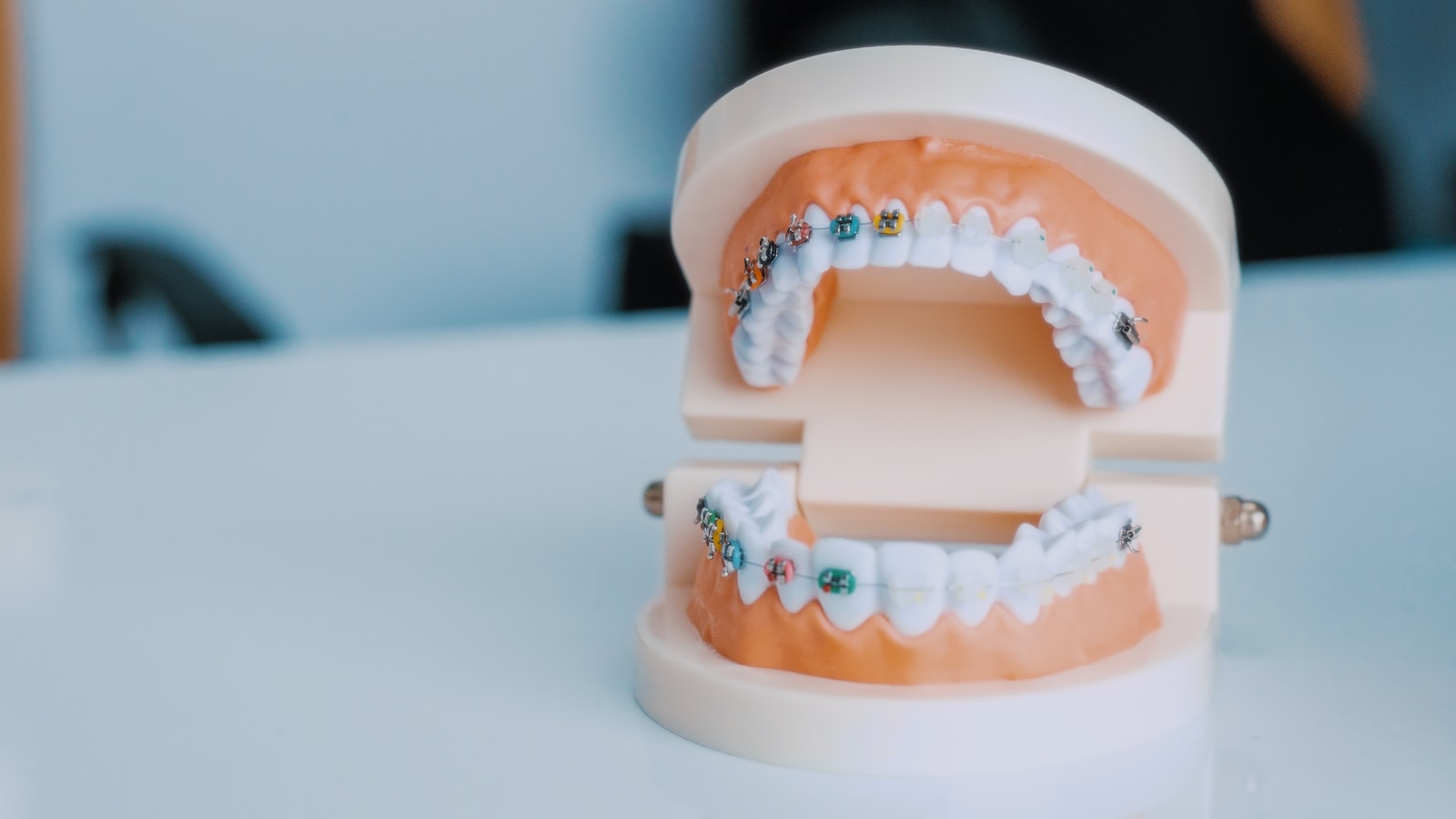
Prominent buccal corridors most often reflect the shape of the upper arch. A narrow upper jaw, described clinically as a transverse maxillary deficiency, is the common structural cause. An upper jaw that sits further back can also widen the shadow at the corners, and back teeth that are small or tipped inwards can add to it.
A narrow upper jaw often brings other findings with it: a high, narrow palate, a crossbite where some upper back teeth bite inside the lowers, and crowding of the front teeth. Once a crossbite is involved, the discussion is no longer only about appearance. That is why an assessment looks at the bite and the palate, not just at a smile photo.
Smile width is also only one part of how a smile reads. If your concern is that the smile looks off centre, our article on smile midlines covers that. If individual teeth look short or square, see our piece on tooth width and length proportions.
Moving the arch versus changing the teeth
Treatments fall into two groups: those that change the width of the arch, and those that only change how wide the teeth appear. The distinction matters when you compare options.
| Approach | What changes | Who it may suit | Points to weigh |
|---|---|---|---|
| Fixed braces with arch expansion | The position and angle of teeth across the arch, which can widen it | People with a narrow dental arch, often with crowding or a crossbite | Takes time and needs long-term retainers |
| Clear aligners with expansion movements | Mainly the tilt of the teeth outwards rather than the bone beneath | Milder dental narrowness where the jaw width is close to normal | More limited for true expansion; not a skeletal correction |
| Palatal expansion in growing children | The width of the upper jaw itself, while growth allows | Children and some teenagers with a narrow upper jaw | Timing depends on growth |
| Miniscrew-assisted palatal expansion (MARPE) | The skeletal width of the upper jaw in suitable adults | Adults with a skeletal transverse deficiency who are good candidates | Needs careful assessment; not everyone is suitable |
| Surgically assisted expansion | The skeletal width of the upper jaw after surgical release | Adults with more severe skeletal narrowing | A surgical procedure planned with a registered specialist |
| Veneers or crowns | How wide the teeth look, not the arch | People whose arch width is acceptable and who want less visible shadow | A visual change only; needs tooth preparation in many cases and has a natural limit |
| No treatment | Nothing | Anyone without a bite problem who is not bothered by the look | A reasonable choice given the mixed evidence |
At Lumi we provide fixed braces and clear aligners, and we place MARPE appliances for suitable adults; our article on adult palatal expansion explains how it works. We are general dentists, and complex cases may be referred to a registered orthodontist. For more on the mechanics of tooth movement, see our guides to how crooked teeth are straightened and braces and aligners for adults.
Veneers change the look, not the arch
Adding a little width to several upper teeth with veneers or crowns brings tooth surface closer to the corners of the mouth, so less shadow shows. For someone whose arch is already a reasonable width, that can be enough.
It cannot widen a narrow jaw, fix a crossbite or change the palate. There is also a limit to how much width can be added before teeth look out of proportion, the contacts between teeth become awkward, or more enamel needs to be removed. If the real issue is arch width, restorations are a cosmetic workaround and should be described that way. Digital smile design can help you see what a proposed change might look like before any work starts.
Questions people ask about narrow smiles
Why does my smile look narrow in photos but not in the mirror?
Lip position, camera angle, lens and lighting all change how much shadow shows. A phone camera held close to the face may exaggerate the corners. If the narrowness only appears in certain photos, the cause may be the photo rather than your teeth.
Can braces or aligners reduce the dark corners?
They can, by widening the dental arch, though how much depends on whether the narrowness is in the teeth or the jaw. That needs an examination of the bite and palate rather than a judgement from a photo.
Is it too late to widen my upper jaw as an adult?
Not always. Dental expansion with braces or aligners is possible in adults, and some suitable adults can have skeletal expansion with MARPE. More severe skeletal narrowing may need surgically assisted expansion. Children have more growth available, which is why timing is part of the discussion.
Should buccal corridors be treated at all?
If you have a crossbite, crowding or another bite problem, those can be good reasons for treatment on their own. If the only issue is appearance and it does not bother you, leaving things as they are is a perfectly reasonable choice.
Getting an opinion on your smile width
If your smile looks narrower than you would like, or someone has mentioned buccal corridors and you want another view, we offer a free cosmetic consult at our Melrose Park practice. We can look at whether the narrowness is dental, skeletal or simply how you smile, and talk through what each option can and cannot change. Other offers are listed on our current deals page.
This article is general information only and is not personal dental or orthodontic advice. Arch width, bite and facial proportions differ from person to person, and treatment suitability and outcomes vary. Please speak with a dentist or orthodontist about your own situation before making a decision.