



Call centre and customer service work can lead to daytime jaw clenching, dry mouth and worn or sensitive teeth, largely because tense calls, long hours of talking and time-limited breaks all land on the mouth at once. Many people who clench during the day have no idea they are doing it until a dentist points out flattened teeth or they notice a tight jaw at the end of a shift. Research estimates of awake clenching, known as awake bruxism, vary widely, with studies reporting figures from under one in ten to around one in three adults, and it has been linked with stress and jaw muscle pain. If you spend your day on the phones or a live chat queue, this guide explains what is happening and gives you a simple between-call reset to protect your teeth and jaw.
Key Takeaways
- Difficult calls can trigger daytime clenching that most people do not notice while it is happening.
- Talking for hours dries the mouth, and a dry mouth is more prone to decay and bad breath.
- Headsets and forward-head posture at a desk can strain the jaw and neck muscles.
- Sipping sweet coffee, soft drinks or lollies across a shift keeps plaque acidic for long periods.
- A quick "lips together, teeth apart, tongue resting" check between calls can help break the clenching habit.
- A dentist may suggest a splint or night guard to protect teeth, but it protects rather than cures.
Why Difficult Calls Make You Clench
When a caller is upset or a conversation is going badly, your body reacts as it would to any stress: shoulders rise, breathing becomes shallow, and the jaw muscles tighten. Holding your teeth together while you concentrate, listen or wait for a system to load is extremely common. Because it is silent and you are focused on the caller, it can go on for hours without you noticing.
Teeth are designed to touch only briefly while chewing and swallowing. At rest, they should be slightly apart. Sustained clenching loads the teeth, the jaw joints and the chewing muscles far longer than they are built for. Over time this may lead to:
- Tired, aching jaw muscles by the end of a shift
- Tension headaches around the temples
- Tooth sensitivity or teeth that feel bruised
- Flattened, chipped or cracked teeth
- Clicking, stiffness or discomfort in the jaw joint
Daytime clenching and night-time grinding often go together but are not the same thing. Our article on jaw clenching versus teeth grinding explains the difference and why so many clenchers also get tension headaches.

Talking All Day and Dry Mouth
Speaking for hours moves a lot of air across the tongue and gums, and many people breathe through their mouth between sentences. Add air conditioning and not drinking enough water because breaks are timed, and the mouth can become dry and sticky by mid-shift.
Saliva is your mouth's natural protection. It washes away food, neutralises acid and helps repair early enamel damage. When it dries up, plaque builds faster, breath can turn stale and decay risk rises, especially along the gumline. People who speak for a living, such as teachers and presenters, face the same issue, which we cover in public speaking, teaching, dry mouth and jaw clenching.
Headsets, Posture and Jaw Strain
Hours at a desk often lead to a forward-head posture, where the head drifts in front of the shoulders to look at a screen. This position changes how the jaw rests and can increase tension in the neck and jaw muscles. A headset that presses on the side of the head, or tilting your head to hold a handset against your shoulder, can add to it.
Simple desk changes that may help:
- Raise your screen so the top is roughly at eye level.
- Choose a lightweight headset that sits comfortably and switch sides if it is single-ear.
- Keep your shoulders relaxed and your feet flat on the floor.
- Stand or stretch briefly between calls if your role allows it.
Gamers spend similar hours hunched at screens with intense focus. Our article on gaming, esports, jaw clenching and teeth grinding has more on desk-bound clenching, and our guide to weightlifting and teeth clenching covers clenching under physical effort.
Sweet Drinks and Grazing Across a Shift
When you are tied to a queue, it is tempting to keep a sweet coffee, a soft drink or a bag of lollies on the desk and graze through the shift. Each sip or lolly can lower the pH in your mouth for around 20 to 30 minutes, so frequent top-ups can keep teeth under acid attack for most of the day. Combined with a dry mouth, this is a common recipe for decay between teeth and along the gumline.
Keeping sweet drinks and snacks to your scheduled breaks, drinking water at the desk, and chewing sugar-free gum after eating are small changes that make a real difference. If gum is not allowed on calls, keep it for breaks.
The Between-Call Reset
The single most useful habit for daytime clenching is noticing it. A simple posture check is "lips together, teeth apart, tongue resting". Your lips touch lightly, your back teeth are slightly apart, and the tip of your tongue rests gently behind your upper front teeth. Many people find a small sticker on their monitor or headset reminds them to check in.
| When | Reset step | Why it helps |
|---|---|---|
| After every call | Check: lips together, teeth apart, tongue resting | Interrupts clenching before it builds |
| After a difficult call | Three slow breaths through the nose, drop the shoulders | Helps release jaw, neck and shoulder tension |
| Every hour or so | A few sips of water | Keeps saliva flowing and the mouth moist |
| Mid-shift break | Gentle jaw stretch: open slowly, hold, close; massage the jaw muscles in small circles | Eases muscle fatigue |
| Lunch break | Eat, then brush or rinse with water and chew sugar-free gum | Clears sugar and supports acid neutralising |
| End of shift | Notice jaw tightness or headache and jot it down | Helps you and your dentist spot patterns |
When a Dentist May Suggest a Splint or Night Guard
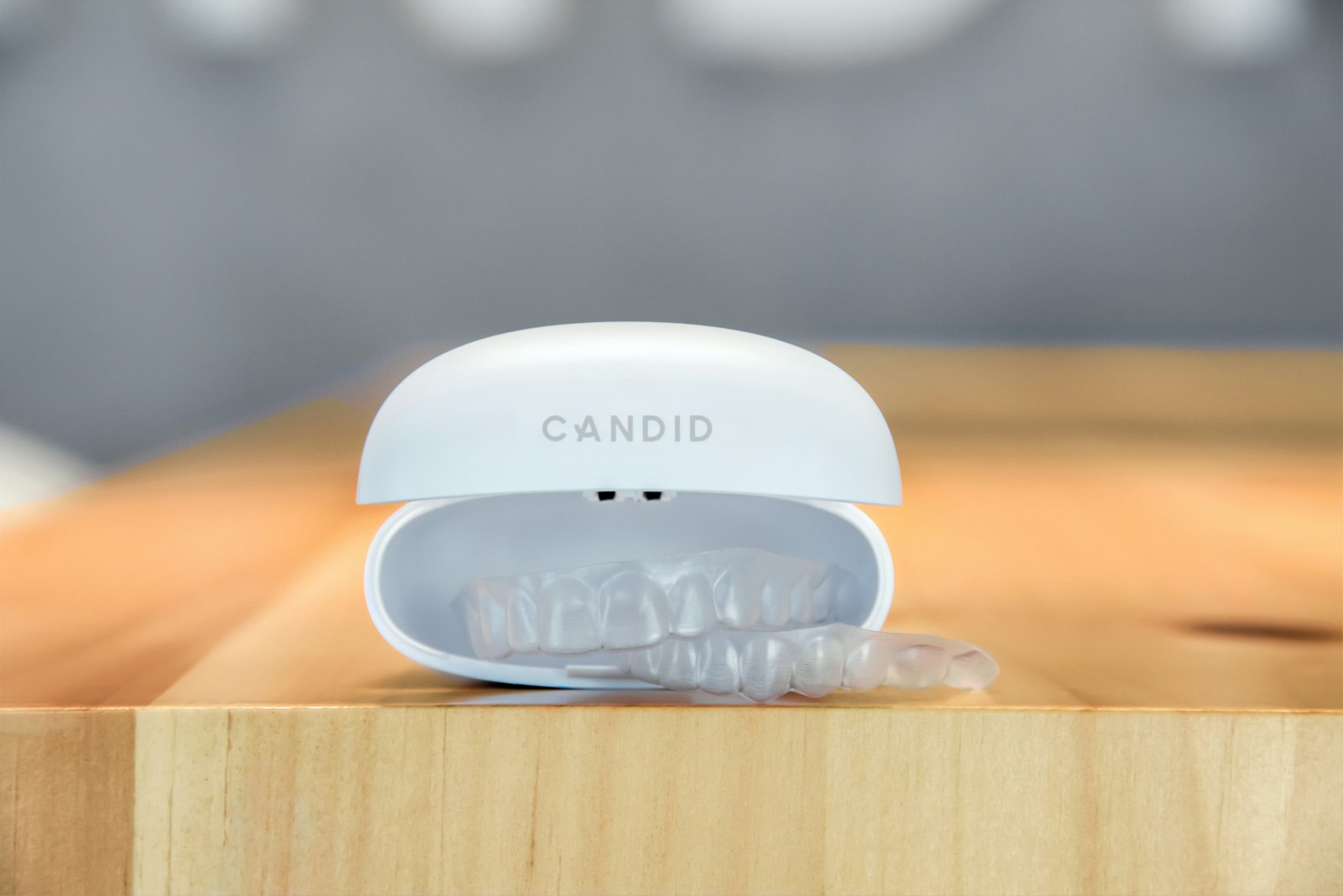
If your dentist sees signs of wear, cracks or muscle tenderness, or you report regular jaw pain and headaches, they may suggest a custom-made occlusal splint, often called a night guard. Most are worn at night because that is when grinding forces are highest, but some people with heavy daytime clenching are advised to wear a thin appliance at certain times during the day.
It helps to understand what a splint does and does not do. A splint spreads and cushions the forces on your teeth and can help protect them from further wear. It does not stop the underlying habit. That is why daytime awareness, stress management and posture still matter. In some cases where muscle pain is severe, other options may be discussed, such as those in our article on Botox for TMJ, jaw clenching and teeth grinding.
When to get assessed
Book a dental assessment if you have jaw pain that lasts more than a couple of weeks, a jaw that locks, catches or will not open fully, regular headaches you suspect are linked to clenching, or teeth that are chipping or becoming sensitive. Your dentist may refer you to a GP or physiotherapist where that suits the problem.
Stress, Wellbeing and Support at Work
Clenching is often the body's way of carrying the pressure of a demanding role. Many workplaces offer an Employee Assistance Program (EAP) with free, confidential support, and your GP is a good first stop if stress is affecting your sleep or wellbeing. Small things such as proper breaks, time outdoors and regular exercise can also ease tension that ends up in your jaw. Looking after the stress side and the dental side together tends to work better than either alone.
Common Questions
Why does my jaw hurt after work?
A sore jaw after a shift is often caused by clenching during the day, especially during stressful calls or intense concentration. Poor desk posture and headset pressure can add to the strain.
How do I stop clenching my teeth during the day?
Start by noticing it. Use the "lips together, teeth apart, tongue resting" check after every call, and use reminders such as a sticker on your screen to build the habit.
Can talking all day cause dry mouth?
Yes, talking for long periods can dry the mouth, particularly if you mouth-breathe between sentences or cannot drink water often. Regular sips of water help keep saliva flowing.
Will a night guard stop me clenching?
A night guard protects your teeth from clenching and grinding forces, but it does not cure the habit. Awareness, stress management and posture changes are still needed.
Can a headset cause jaw pain?
A heavy or tight headset, combined with forward-head posture, may contribute to jaw and neck tension. A lighter headset and a better screen height can help.
Is it bad to chew gum at my desk?
Sugar-free gum after eating can help your teeth by stimulating saliva. If you already have jaw pain from clenching, keep chewing gum brief, as long chewing sessions can tire the jaw muscles further.
Protect Your Teeth and Jaw
If you work in a call centre or customer service role and notice jaw tightness, headaches or worn teeth, the team at Lumi Dental in Melrose Park, Sydney can check for signs of clenching and talk through options such as a custom splint. See our new patient offer on the current deals page, read more about our general dentistry in Melrose Park, and ask about a free consult and written quote before any treatment.

