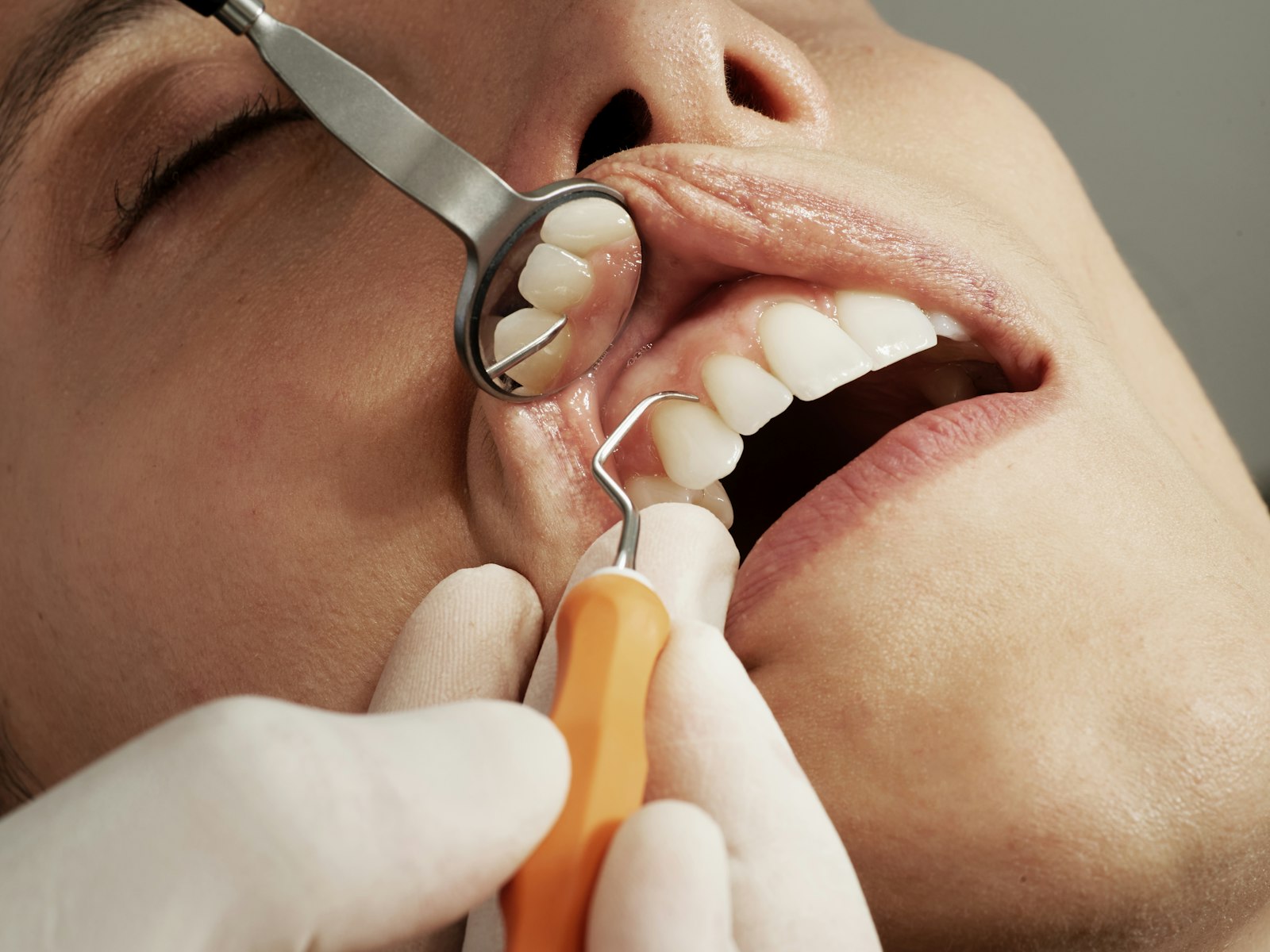

Sometimes a dentist looks at a tooth and says a spot is one to watch rather than one to fill. That usually means the decay is still at an early, unbroken stage, where the enamel has lost some mineral but the surface has not yet collapsed. At that point the process can often be stopped, and the softened enamel can partly harden again. A hole that has already formed is different: enamel does not grow back, so a cavity usually needs a filling.
Decay starts beneath an intact surface
Every time you eat or drink something sugary, plaque bacteria make acid, and that acid draws calcium and phosphate out of the enamel. Between those acid attacks, saliva and fluoride put some of that mineral back. Dentists call the two sides demineralisation and remineralisation.
When losses and gains roughly balance, nothing much changes. When the acid side wins week after week, mineral is lost from just under the outer layer, which stays in place for a while like a thin crust over a weakened zone. Eventually that crust breaks. From then on the lesion is cavitated, plaque settles into the gap, and home care alone can no longer keep it clean.
A chalky white mark means there is still time
The earliest visible sign is a white spot lesion: a dull, opaque patch that looks different from the shiny enamel around it. They often sit along the gumline, between teeth, or around the brackets of braces. The surface feels smooth because it has not broken.
With better cleaning, fluoride and fewer sugar hits, many of these lesions stop progressing. Some become harder and less noticeable. It is worth knowing that the mark does not always disappear completely. An arrested lesion can stay faintly white or pick up a light stain, which is a sign it has healed over rather than a sign it is still active. Your dentist or OHT judges activity by how the surface looks and feels, not by colour alone.

Fluoride does most of the repair
Fluoride helps in two ways. It speeds up the return of calcium and phosphate into weakened enamel, and the mineral it helps form is more resistant to the next acid attack than the original. That is why a fluoride toothpaste is the first recommendation for an early lesion, and why a dentist or OHT may also paint on a fluoride varnish at your visit to give the area a stronger dose. In suitable cases, a dentist may also use silver diamine fluoride to help stop early decay, although it stains the decayed area black.
You may also hear about creams that contain CPP-ACP, a milk-protein complex that carries calcium and phosphate. They are sometimes suggested as an extra step, especially for people with braces. A 2024 meta-analysis in Caries Research (Golzio Navarro Cavalcante and colleagues) found that adding CPP-ACP to fluoride did not do clearly better than fluoride on its own for white spot lesions, and the certainty of the evidence was very low. These products are not harmful for most people, but they are an add-on rather than a replacement. People with a milk protein allergy should avoid them.
Hydroxyapatite toothpastes are another option people ask about. An 18-month randomised trial in adults, published in Frontiers in Public Health in 2023 (Paszynska and colleagues), found a fluoride-free hydroxyapatite paste was not inferior to a standard fluoride paste for preventing new decay. Some of the authors worked for the company that makes the product, and the evidence base is still much smaller than it is for fluoride, which remains the standard recommendation in Australia.
Daily habits decide which way a spot goes
An early lesion responds to what happens in your mouth every day, not to one visit. The changes that help most are ordinary ones.
- Brush twice a day with a fluoride toothpaste, then spit out the excess without rinsing, so some fluoride stays on the teeth.
- Clean between your teeth once a day, since many early lesions start where a brush cannot reach.
- Cut down how often you have sugary or acidic food and drink. How often matters as well as how much, as our article on how sugar leads to decay explains.
- Sugar-free gum after meals can increase saliva flow, which helps buffer acid.
A dry mouth from medicines, mouth breathing or certain health conditions tips the balance toward decay, so mention it if it applies to you.
Once the surface breaks, a filling is the fix
When the enamel has given way, or the decay has spread into the softer dentine underneath, remineralisation cannot rebuild what is missing. Left alone, the cavity usually grows, and if it reaches the nerve the tooth may need root canal treatment or removal rather than a filling.
Signs that you may be past the early stage include a hole or rough spot your tongue can feel, food catching in the same place, a dark shadow in the tooth, or a twinge with sweet or cold things. Early cavities often cause no symptoms at all, which is why X-rays at check-ups are useful for finding decay between teeth. If you do need a filling, our guide to how long fillings last covers what to expect afterwards.
What patients ask about early decay
Can a cavity heal on its own?
No. Once there is a break in the enamel, the lost tooth structure does not regrow. Decay that is still beneath an intact surface can be stopped and partly remineralised, but a cavity usually needs a filling.
How long does it take for a white spot to improve?
There is no fixed timeline. It depends on how deep the lesion is and how consistently your habits change. Your dentist or OHT will usually note the spot and compare it at your next visits to see whether it is stable, improving or getting worse.
If I fix my diet, can I skip the dentist?
It is hard to tell an early lesion from a small cavity by looking in a mirror, and decay between teeth is often invisible without an X-ray. Regular check-ups are how early lesions are found while they can still be managed without a drill.
Early decay is far easier to deal with than a cavity, so it pays to have it looked at sooner rather than later. If you would like a dentist or OHT to check a spot that has worried you, book with a general dentist at Lumi Dental in Melrose Park or see our current offers.