If you have had a dentist or OHT paint fluoride onto your teeth as an adult and wondered whether that was a children's treatment, it is not. Fluoride varnish was first studied mostly in children, but it is also used for adults whose teeth are more likely to decay, and there is trial evidence that it helps prevent cavities on exposed root surfaces in older adults.
Written by Dr James Tran, dentist at Lumi Dental.
A thin coating that holds fluoride against the tooth
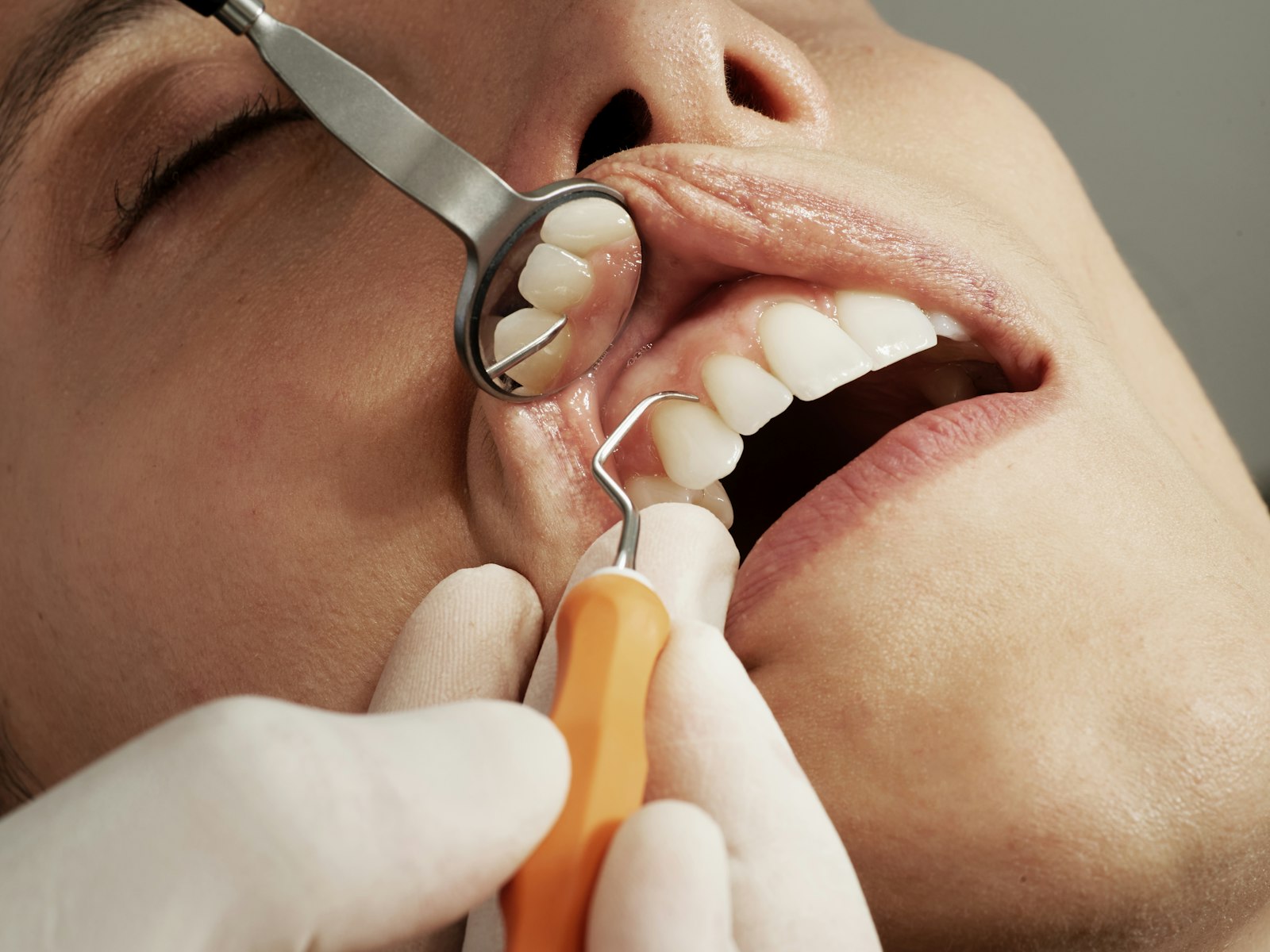
Varnish is a sticky, resin-based coating that contains a high concentration of fluoride, commonly 5% sodium fluoride (about 2.26% fluoride). After the teeth are dried, it is brushed on in a thin layer and sets when it meets saliva. Because it clings to the tooth for hours rather than being rinsed or spat away in a minute or two, the enamel and root surface have much longer to take up fluoride than they do from toothpaste.
That fluoride helps in two ways. It supports remineralisation, where minerals lost during acid attacks are put back into the surface, and the rebuilt surface tends to resist acid better than before. On exposed roots, a varnish layer can also cover tiny open channels in the dentine, which is why some people notice less sensitivity afterwards.
The evidence is strongest in children, but adults are catching up
Most of the research comes from children. A Cochrane review by Marinho and colleagues in 2013 pooled 22 trials and estimated that varnish reduced decayed, missing and filled surfaces in permanent teeth by about 43% compared with no varnish or placebo. The reviewers rated that evidence as moderate quality, because many of the trials had a high risk of bias.
Adult research is smaller but points the same way. A systematic review of professionally applied fluoride in older adults, published by Chan and colleagues in the Journal of Dentistry in 2022, included seven trials and concluded that 5% sodium fluoride varnish helped prevent root decay. Guidance from the American Dental Association panel (Weyant and colleagues, 2013) also lists 2.26% fluoride varnish among the professional options for people at risk of decay, adults included.
Who is likely to get something out of it
An adult with low decay risk and healthy teeth may get little extra benefit beyond fluoride toothpaste. Varnish earns its place when the odds of new decay are higher, for example when someone has:
- receding gums with roots showing, since root surfaces are softer than enamel and decay more readily (our article on gum recession causes and treatment explains why gums pull back)
- a dry mouth from medicines, cancer treatment or a medical condition
- several new fillings or areas of decay in recent years
- braces or other appliances that make some areas hard to keep clean
- sensitive spots near the gumline
Many of these become more common with age, which is why root decay in older adults is one of the main reasons dentists suggest varnish for grown-ups.
How often depends on your risk
There is no single schedule. For someone with a dry mouth and a run of new cavities, your dentist or OHT may suggest varnish at each recall visit, which could be a few times a year. For someone with one sensitive area and otherwise healthy teeth, it may be occasional or not needed at all. The interval is set after looking at your decay history, saliva, diet and X-rays, and reviewed as things change. It fits easily onto the end of a scale and clean and adds only a couple of minutes.
On the day, and the few hours after
There is no needle and nothing to numb. The teeth are dried with air or cotton rolls, the varnish is painted on, and it sets within moments. It can feel slightly sticky or waxy, and some varnishes leave a faint yellowish tint until you brush.
Afterwards you will be given instructions for the product used. These usually include sticking to soft food and avoiding hot drinks, alcohol and hard or crunchy food for a few hours, and waiting before you brush so the varnish has time to work. Some varnishes contain colophony, a pine resin, so mention any allergy to resins, plasters or adhesives before it is applied.
It adds to daily care rather than replacing it
Varnish is one layer of protection. It works alongside brushing twice a day with fluoride toothpaste, cleaning between the teeth, keeping sugary and acidic snacks to mealtimes where possible, and regular check-ups. It cannot reverse a cavity that has already broken through the surface, and it will not make up for missed brushing. If you are wondering where other add-ons fit, our article do you need mouthwash looks at that question too.
Common questions
Is varnish safe for adults?
It is widely used in children and adults. Only a thin layer is applied and it sticks to the teeth rather than being swallowed in one go, so very little fluoride is ingested. Tell your dentist or OHT about any resin or colophony allergy first.
Will it stop my teeth being sensitive?
It may help. By sealing exposed dentine near the gumline, varnish can reduce the sharp twinge from cold or sweet things, and some people notice more relief after repeat applications. A sensitivity toothpaste at home often works well alongside it.
Do I still need it if my tap water has fluoride?
Fluoridated water gives a low, steady background exposure that benefits most people. Varnish is a concentrated dose aimed at teeth that are at higher risk. If your risk is raised, having both is reasonable, and your dentist or OHT can tell you if it is worth adding.
Find out if varnish suits you
The simplest way to know if varnish would help is a check-up, where your dentist or OHT can look at your decay risk and talk through options. You can book through our general dentistry page at our Melrose Park practice, or see current offers on our deals page. This article is general information and not a substitute for personal dental advice.