

Fine surface lines and small chips do not usually stop you from whitening your teeth. A true crack is different, and it should be assessed and treated before any whitening gel is used. The three problems often get lumped together as a "crack", but they sit at different depths in the tooth, and that depth decides whether whitening is comfortable, what it can achieve and what order the treatment should follow.
Written by Dr James Tran, BDent (University of Sydney), MICOI, GradDip (Oral Implants), general dentist at Lumi Dental in Melrose Park.
A painless hairline is usually a craze line
The American Association of Endodontists (AAE) describes craze lines as tiny cracks that affect only the outer enamel. They are extremely common in adult teeth, shallow and painless, and are mainly a cosmetic issue. Most people notice them on the front teeth, often as faint vertical lines that show up more in certain light.
What usually makes them visible is stain. Tea, coffee, red wine and tobacco settle into the line and leave a brown or grey thread against lighter enamel. Whitening gel lightens that stain along with the surrounding tooth, so the contrast drops and the lines often become less noticeable. The gel does not close or seal a line, and a deep, darkly stained one may still be faintly visible afterwards.
During a whitening course the lines can briefly look chalkier or brighter than the rest of the tooth. Whitening temporarily dries out the enamel, and this usually evens out over the following days, so it is best to judge the result a few days after the final session.
Pain on biting means the tooth needs checking first
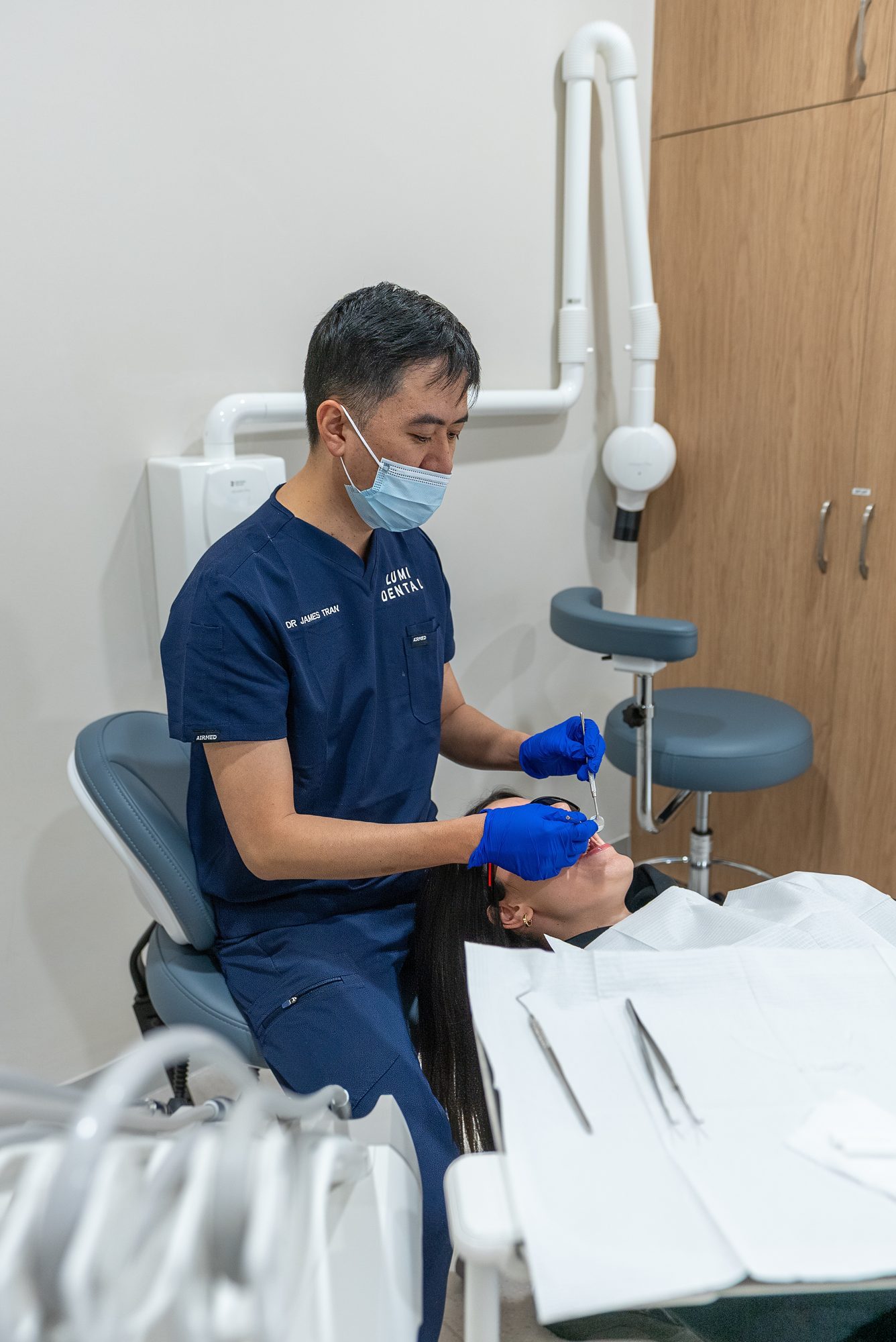
A true crack runs deeper. The AAE describes it as a crack extending from the chewing surface vertically toward the root, and notes that, unlike a broken bone, it will not heal. Typical signs are a sharp pain when you bite down or let go, or a twinge with cold, often on one tooth that is hard to pin down. Our guide to craze lines versus a cracked tooth covers the warning signs in more detail.
The American Dental Association notes that hydrogen peroxide can pass from enamel and dentine to the pulp within 15 minutes of exposure even in an intact tooth. A crack gives the gel a more direct route into the dentine, which is why whitening a cracked tooth is likely to be painful while doing nothing to fix the crack. The AAE adds that without treatment a crack can worsen, and that once it extends below the gum line the tooth usually cannot be saved.
So with a suspected crack, the tooth is diagnosed and protected first, often with a restoration or crown. If a crown is planned, whitening the neighbouring teeth beforehand allows the crown to be matched to the lighter shade, because a crown will not change colour later. Our article on cracked tooth syndrome explains the symptoms and the treatment options.
Chipped edges are whitened first and repaired after
According to the AAE, chipped teeth account for the majority of dental injuries, and most can be repaired by reattaching the broken piece or with a tooth-coloured bonded filling or crown. If a piece has just broken off, the NHS advises keeping it in milk or saliva and taking it to a dentist, who may be able to reattach it.
For a chip that is otherwise stable, whitening can usually go ahead on the enamel. If the chip has exposed dentine and that tooth stings with the gel, it can be left out of the trays until it is repaired. The bigger issue is colour. teeth.org.au notes that whitening does not change the colour of porcelain crowns, veneers or white composite fillings, so a repair matched to your current shade may look darker once the surrounding teeth lighten. Whitening first and repairing afterwards lets the bonding be matched to the new colour.
The repair also should not be done the day whitening finishes. The ADA notes that bleaching may alter the enamel surface and reduce the bond strength of composite. A 2019 paper in the Journal of Clinical and Experimental Dentistry (Nari-Ratih and Widyastuti) describes this reduction as temporary, with suggested waiting times before bonding ranging from 24 hours to 4 weeks. Our guides to repairing a chipped front tooth and whitening before veneers or bonding go through the timing, and the composite bonding page describes the repair itself.
Simple tests tell the three apart
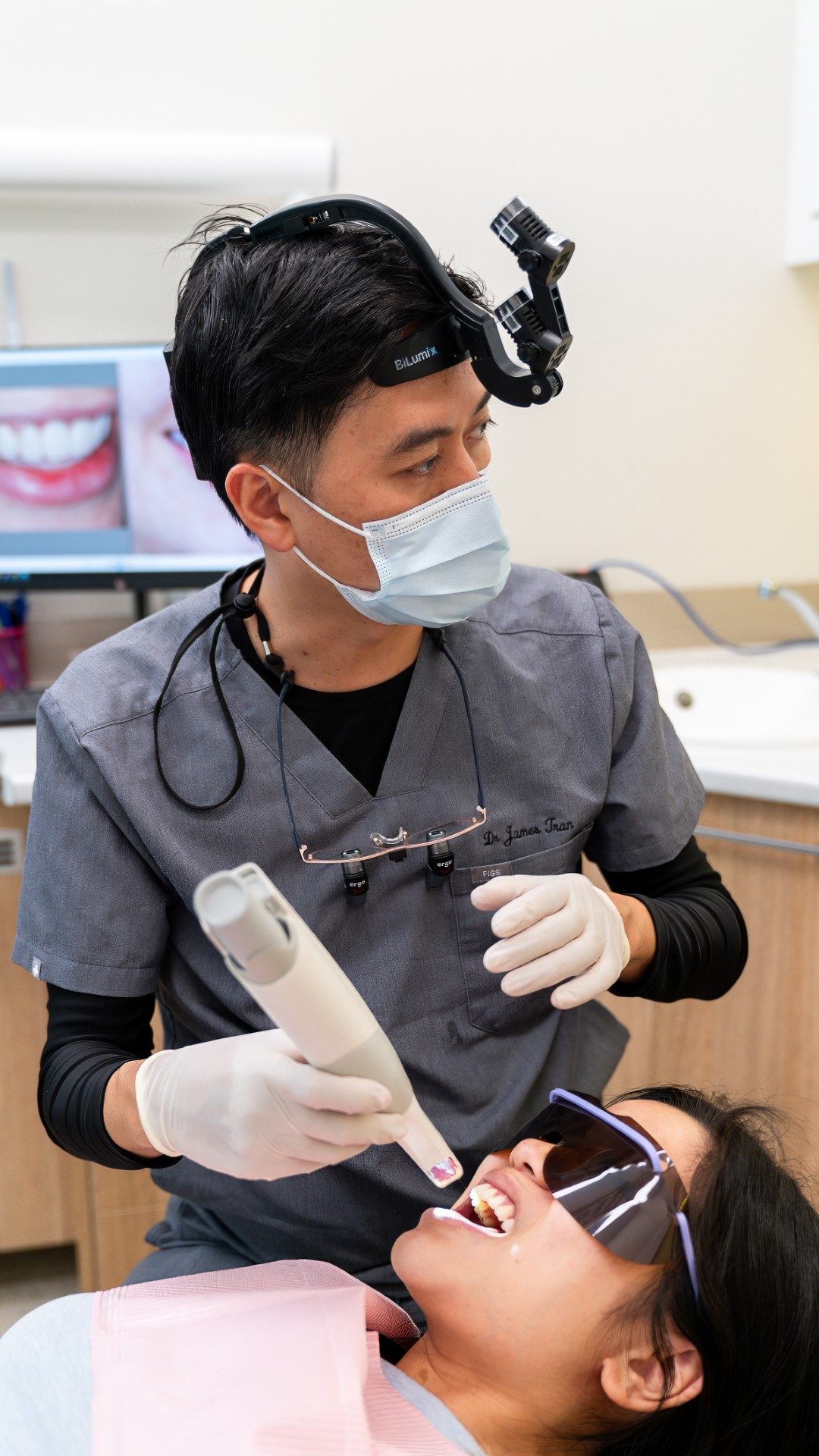
Before whitening, a dentist checks which of the three you have. A bright light held against the tooth passes through a tooth with only craze lines, while a deeper crack tends to block the light so that part of the tooth looks darker. Biting on a small instrument, one cusp at a time, can bring on the pain of a crack. A cold test checks how the nerve responds, and an X-ray helps rule out decay or a failing filling as the real cause, even though cracks themselves often do not show on X-rays. At Lumi Dental, clinical photographs also record any lines before whitening so they can be compared afterwards.
If a line or chip still shows after whitening
Whitening changes colour, not shape. A chip that has shortened a tooth, or a line that remains visible after a full course, may suit composite bonding, which can rebuild an edge or mask a line, or a porcelain veneer for a tooth with many lines or more damage. Either one is matched to the whitened shade. Our comparison of composite bonding and veneers sets out the differences.
What people ask about lines and chips
Can whitening make craze lines deeper?
There is no good evidence that whitening gel widens or deepens a craze line. Any brighter look during treatment is usually temporary drying of the enamel and settles within days.
Should I whiten before or after fixing a chipped tooth?
For a stable chip, whitening first usually works best, because the bonding can then be matched to the lighter shade. Your dentist will advise how long to wait between the two.
What if one tooth hurts during whitening?
Stop using the gel on that tooth and have it checked. Pain focused on one tooth, especially when biting, can be a sign of a crack, decay or a leaking filling rather than ordinary whitening sensitivity. Our guide to whitening around fillings and bonding covers related situations.
If you have noticed lines or a chipped edge and want to know where to start, a free cosmetic consult at Lumi Dental in Melrose Park can sort out which one you have and the order that makes sense. Our options, Lumi Home, Lumi Refresh and Lumi Radiance, are explained on the teeth whitening page.
Sources
- American Association of Endodontists: Cracked teeth
- NHS: Chipped, broken or cracked tooth
- American Dental Association: Whitening (Oral Health Topics)
- Australian Dental Association (teeth.org.au): Teeth whitening
- Nari-Ratih D, Widyastuti A. Effect of antioxidants on the shear bond strength of composite resin to enamel following extra-coronal bleaching. Journal of Clinical and Experimental Dentistry, 2019
About the author

Dr James Tran is a general dentist at Lumi Dental in Melrose Park. He holds a BDent from the University of Sydney and a Graduate Diploma in Oral Implants, and is a Master of the International Congress of Oral Implantologists (MICOI).
This article is general information only and is not a substitute for an examination and individual advice from a registered dental practitioner. Suitability for any treatment varies from person to person.








