The trial most often quoted when collagen is linked to healthier gums involved 39 people and lasted 90 days. That is the scale of the evidence so far: one small, encouraging study in a particular group of patients, and not much else in people. It is enough to call collagen interesting for gums, and not enough to call it a treatment.
Gums and tooth ligaments are built on collagen
Collagen is a structural protein that gives tissues their strength. In the mouth it forms much of the framework of the gums and of the periodontal ligament, the band of fibres that holds each tooth in its socket. Gum disease involves the breakdown of that framework as inflammation spreads below the gumline, which is why the idea of feeding it with extra collagen sounds appealing.
The catch is digestion. Collagen powders and capsules are proteins, so the gut breaks them down into small peptides and amino acids, as it does with any protein in your diet. The body then uses those building blocks wherever it needs them. Swallowing collagen does not send collagen straight to your gums, so any benefit has to be shown in trials rather than assumed from the biology.
What the 2022 trial found, and who was in it
The study is a randomised, placebo-controlled trial by Jockel-Schneider and colleagues, published in Nutrients in 2022. The 39 participants were already in periodontal aftercare, meaning they had been treated for gum disease and were coming back for regular maintenance. Everyone had a professional clean at the start. Then 20 took a daily 5 g sachet of a specific collagen peptide product and 19 took a placebo, until a check at day 90.
Both groups improved, which is expected after a professional clean. The collagen group improved more. The share of gum sites still bleeding when gently probed fell from 10.4% to 3.0% in the collagen group, compared with 14.2% to 9.4% in the placebo group, and a combined measure of inflamed gum surface also dropped further with collagen. Plaque levels fell in both groups without a meaningful difference between them, so the effect was not explained by better cleaning.
The authors list the limits themselves: a small group, three months of follow-up with no longer-term data, and no record of what participants ate. It is also worth knowing that both the collagen and the placebo sachets were supplied by the company that makes the product. None of this makes the result wrong. It means it needs repeating, in larger groups and over longer periods, before anyone can say how much collagen adds in everyday life.
What collagen has not been shown to do
No trial has shown that collagen treats active periodontitis on its own. The study above tested it as an add-on after a professional clean, in people whose disease was already under control. If your gums bleed, have pulled back, or teeth feel loose, a supplement is not a substitute for an assessment and cleaning below the gumline.
Collagen has also not been shown to regrow gum that has already receded, rebuild bone around the teeth, or strengthen teeth themselves. Results seen with one specific collagen product at one dose cannot be assumed for other products, and a claim on a tub is not the same thing as trial evidence.
Cleaning still does the heavy lifting
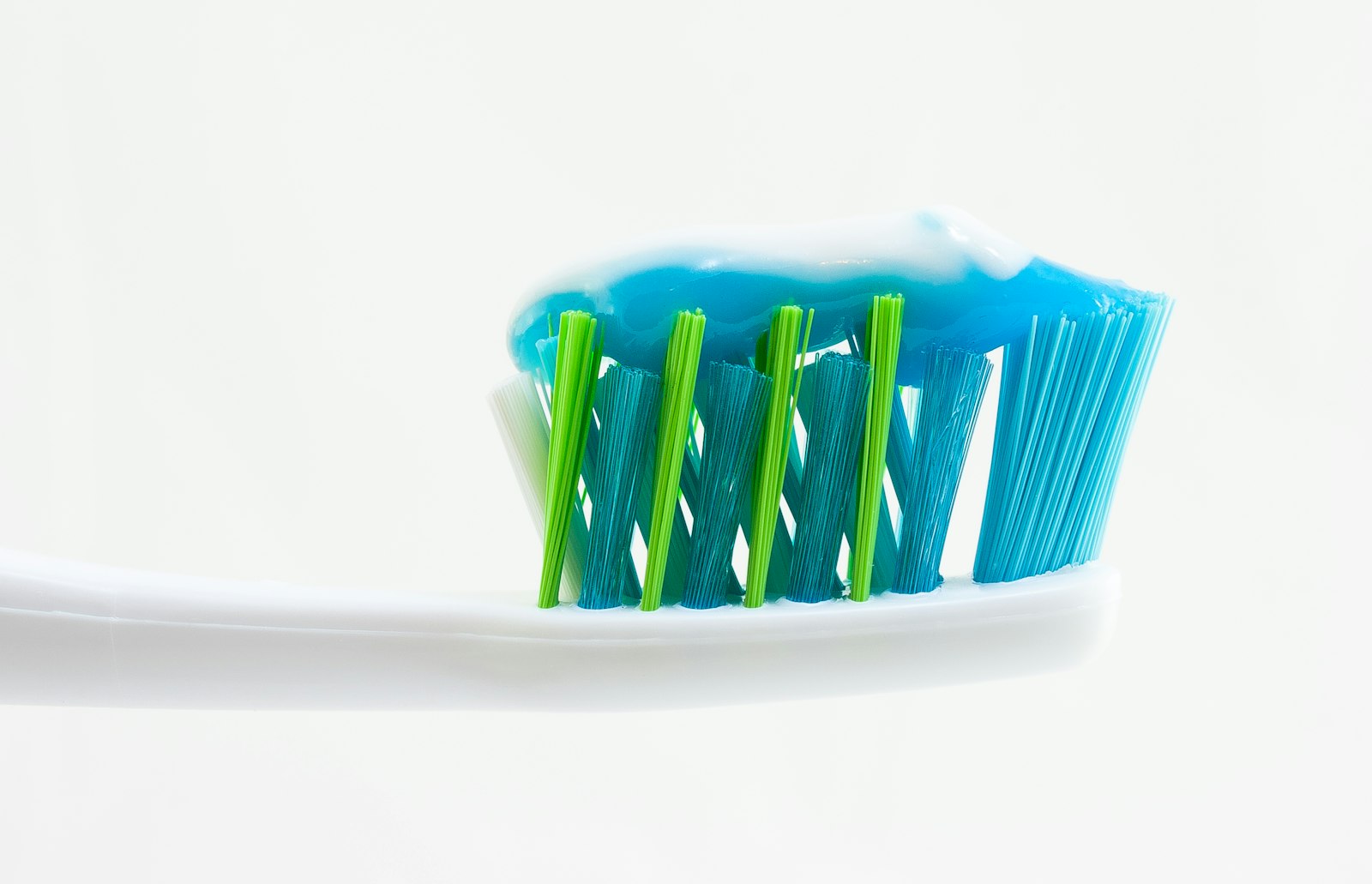
Gum inflammation is driven by plaque sitting along and between the teeth, so the measures that physically remove plaque come first. Brushing twice a day with a fluoride toothpaste is the base. Cleaning between the teeth adds to it: a Cochrane review by Worthington and colleagues (2019) found that floss or interdental brushes used alongside brushing may reduce gum inflammation or plaque more than brushing alone, with interdental brushes possibly doing better than floss. The review rated that evidence as low to very low certainty and noted that many studies were short, which is a useful reminder that even everyday advice has limits.
For anyone who already has periodontitis, regular professional care is what keeps it stable: a dentist or OHT removes hardened deposits that a toothbrush cannot, measures the gum pockets, and watches for change over time. Our guide to the stages of gum disease explains what those measurements mean.
Collagen, if it turns out to help, would sit on top of all of this as a possible extra. It belongs in the same evidence bracket as oral probiotics and xylitol: a plausible idea, some small studies, and no strong case yet.
If you already take collagen
There is no reason from a gum point of view to stop if you take it for other reasons. Just do not let it replace daily cleaning or check-ups. Mention it, along with any other supplements, when your dentist asks about your health, particularly before an extraction, implant or gum surgery, so your records are complete. If you are weighing up spending money on collagen mainly for your gums, the evidence so far is too thin to suggest it ahead of an interdental brush and a professional clean.
What patients ask about collagen
Can collagen make receding gums grow back?
There is no evidence that it can. Once gum has receded it does not grow back on its own. A dentist can work out why it happened, stop it getting worse, and discuss whether a gum graft or other treatment is worth considering.
Is this the same collagen used in gum surgery?
No. Some dental procedures place collagen membranes or matrices directly into the treated area, where they act as a scaffold. A drink or capsule is digested like food, so it works in a completely different way.
Should I take collagen if I have gum disease?
Treat the gum disease first. The one trial with a positive result looked at people whose gum disease had already been treated and who were in regular maintenance. A supplement should not delay an assessment if your gums bleed or teeth feel loose.
A gum check is the most direct way to find out how your gums are going and whether anything needs treating. Book with our general dentist team, or see the current new patient offers before your first visit at Lumi Dental in Melrose Park.
Sources: Jockel-Schneider Y and colleagues, Impact of a specific collagen peptide food supplement on periodontal inflammation in aftercare patients: a randomised controlled trial, Nutrients, 2022; Worthington HV and colleagues, Home use of interdental cleaning devices, in addition to toothbrushing, for preventing and controlling periodontal diseases and dental caries, Cochrane Database of Systematic Reviews, 2019.