The single most useful thing to know about gum disease is where the line falls between the stage you can undo and the stage you can only control. Gingivitis, the first stage, affects only the gum surface and can clear up completely. Once the bone and fibres around a tooth start to break down, the condition is periodontitis, and the lost support does not come back by itself. Clinical surveys suggest about three in ten Australian adults have moderate or severe periodontitis, often without knowing.
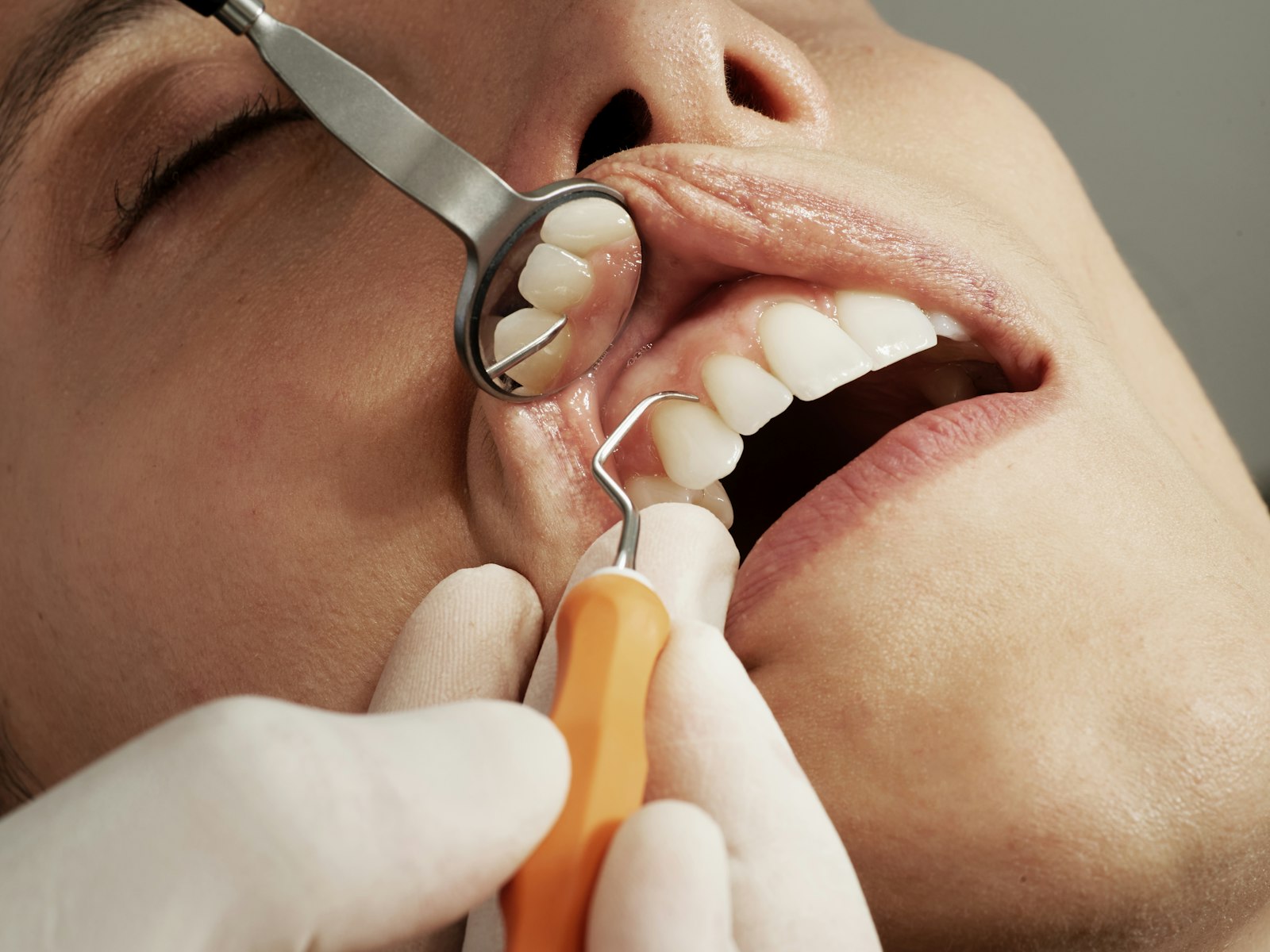
Everything starts with plaque left at the gum line
Plaque is the soft layer of bacteria that builds up on teeth every day. Where it sits against the gums, the body reacts with inflammation. Plaque that is not removed can harden into tartar, also called calculus, which a toothbrush cannot remove and which gives bacteria a rough surface to cling to. Our guide to plaque versus tartar explains how one turns into the other.
Not everyone with plaque goes on to lose bone. Smoking, diabetes, some medicines that dry the mouth, pregnancy hormones and family history all make the gums more likely to break down, and some of these can also make the disease move faster.
Gingivitis: inflamed gums, no damage yet
In gingivitis the gums look redder and puffier than the firm pale pink of healthy gum, and they bleed when you brush or floss. It rarely hurts. Underneath, the bone and the fibres attaching gum to tooth are still intact.
Because nothing has been lost, gingivitis can be reversed. Removing plaque thoroughly each day and having a professional scale and clean usually lets the gums settle. Healthdirect advises seeing a dentist if your gums still bleed after three to four days of good brushing and flossing. Our article on bleeding gums covers the other causes worth ruling out.

Periodontitis: once bone is lost, the goal is control
If inflammation continues, it can travel below the gum line. The fibres that hold the gum to the tooth detach, the bone around the root starts to shrink, and a pocket forms between gum and tooth. Pockets hold more bacteria and are impossible to clean at home, so the process tends to continue unless it is treated.
Dentists describe periodontitis by how much support has been lost. Since 2018 an international classification (Tonetti and colleagues, published in the Journal of Periodontology and the Journal of Clinical Periodontology) has used four stages, I to IV, for severity and complexity, and three grades, A to C, for how quickly the disease appears to be progressing. In everyday terms the stages run like this:
| Severity | What is happening under the gum | What you might notice |
|---|---|---|
| Early (stage I) | First loss of attachment and bone, shallow pockets | Bleeding, perhaps bad breath; often nothing at all |
| Moderate (stage II) | More bone loss and deeper pockets | Gums starting to recede, food catching between teeth |
| Severe (stage III) | Substantial bone loss, some teeth may have been lost | Teeth feeling loose, gaps opening, tenderness when chewing |
| Advanced (stage IV) | Extensive loss of support affecting how the teeth bite and function | Drifting or mobile teeth, difficulty chewing, several teeth lost |
At every stage of periodontitis, treatment can usually stop or slow further loss. Deep cleaning below the gum line removes the bacteria and tartar from the roots, and regular maintenance visits keep them from building up again. More advanced cases may need gum surgery or a referral; our article on periodontist vs general dentist for gum disease explains who usually does what. Costs rise with severity, which our overview of gum disease treatment costs sets out.
How your stage is worked out
A dentist or OHT gently measures the depth of the gap around each tooth with a thin probe, records any bleeding, recession or looseness, and uses X-rays to see the bone level. Together these give the stage, and your medical history and smoking status help indicate the grade. The record also becomes a baseline for checking whether treatment is working.
Effects beyond the mouth
Periodontitis has been linked with diabetes, and the relationship appears to run both ways: high blood sugar makes gum disease worse, and treating gum disease can modestly improve blood sugar control. Our article on diabetes and gum disease looks at the research.
Common questions
Can gum disease be cured?
Gingivitis can be fully reversed. Periodontitis cannot be undone in the sense of regrowing lost bone, but it can be brought under control so that it stops getting worse.
Will I lose my teeth?
Not necessarily. Many people with periodontitis keep their teeth when the disease is treated and they keep up maintenance visits. The risk of losing teeth rises when advanced disease is left untreated.
Is it normal for gums to bleed a little?
Healthy gums do not usually bleed with normal brushing. Bleeding is the earliest sign of gingivitis and a reason to clean more carefully, not less.
Finding out which stage you are at
If your gums bleed, look swollen or your teeth have started to move, an examination will show which stage you are at and what, if anything, needs doing. Current examination and hygiene offers are on our offers page, or you can book a general check-up to get a clear picture of your gum health.