

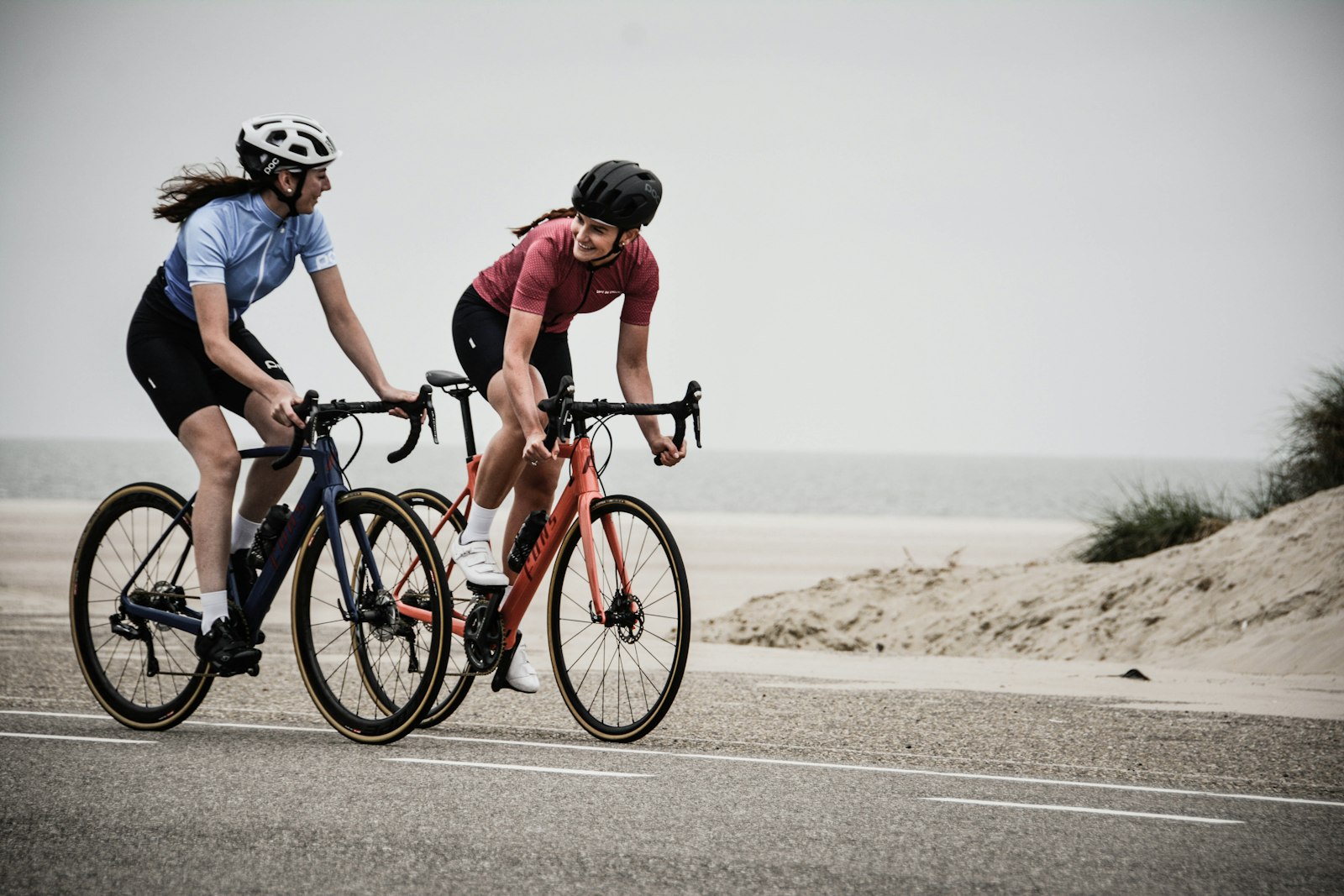

Cyclists face a dental risk that most other endurance athletes do not: a fall at speed can chip, loosen or knock out a tooth in an instant, and knowing what to do in the first few minutes can be the difference between saving that tooth and losing it. Road cycling, gravel riding and mountain biking all carry a genuine risk of dental trauma from a crash, on top of the acid exposure that comes from sipping sports drinks and gels during long rides, and the jaw clenching many riders do without noticing on a hard climb. This is a different picture from general endurance sports, where dry mouth from heavy breathing tends to be the main concern. For cyclists, impact and trauma deserve just as much attention as hydration habits.
Key Takeaways
- Falls are a real and specific dental risk for cyclists, and a knocked-out or badly chipped tooth needs urgent dental attention, ideally within 30 to 60 minutes.
- A tooth that has been knocked out whole should be kept moist, in milk or the rider's own saliva, and never scrubbed or left to dry out.
- Sports drinks and gels are usually acidic, and sipping them repeatedly during a long ride, especially while breathing heavily through the mouth, increases the time acid sits against the teeth.
- Some riders clench or grind their jaw unconsciously during hard efforts or climbs, which can contribute to jaw tension, headaches and worn tooth surfaces over time.
- A correctly fitted mouthguard, rather than a generic boil-and-bite version, offers meaningfully better protection for higher-risk disciplines like mountain biking, cyclocross and gravel racing.
- This article focuses on cycling-specific risks. Our piece on marathon runners and endurance athletes covers the general dry mouth and hydration side of endurance sport in more depth.
Why Cycling Carries a Unique Dental Trauma Risk
Running, swimming and most other endurance sports rarely put teeth in direct danger. Cycling is different. A rider travelling at speed who comes off their bike, whether from a mechanical failure, a collision, loose gravel or simply losing balance clipping in or out of pedals, can strike their face and mouth on the handlebars, the road surface or another rider. This risk applies across disciplines, from a commuter on a wet road to a mountain biker navigating technical terrain, and it is one of the more common causes of dental trauma seen in sports medicine and dental emergency settings.
The most serious outcomes are a tooth knocked out completely (avulsion), a tooth pushed out of position, or a significant chip or fracture through the visible part of the tooth. Softer tissue injuries to the lips, tongue and inside of the cheek are also common in a fall, and these can bleed heavily even when the underlying injury is relatively minor.
What to Do Immediately if a Tooth Is Knocked Out or Chipped in a Fall
Acting quickly and correctly in the minutes after a cycling fall genuinely changes the outcome for a knocked-out tooth.
- Find the tooth and pick it up by the crown, the white part, never by the root.
- If it is visibly dirty, rinse it briefly in milk or saline, never tap water, and never scrub it.
- If you are confident and it is not too painful, try gently reinserting the tooth into its socket and biting down softly on a clean cloth to hold it in place.
- If reinsertion is not possible, keep the tooth moist in a small container of milk, or by holding it inside the rider's cheek, never in a dry tissue or wrapped in a jersey.
- Get to a dentist or emergency department as quickly as possible. A tooth reimplanted within 30 to 60 minutes has a meaningfully better chance of survival than one left out longer.
- For a chipped or fractured tooth, keep any broken fragment if you can find it, and see a dentist the same day even if there is no pain.
If the fall has also caused a suspected jaw fracture, heavy uncontrolled bleeding, or loss of consciousness, this becomes an emergency department matter first. Our article on when to go to hospital for a dental problem explains how to judge that distinction if you are ever unsure in the moment.
Sports Drinks, Gels and Acid Exposure on Long Rides
Away from crash risk, the second major cycling-specific issue is chemical rather than physical. Long rides are commonly fuelled with sports drinks, energy gels and chews, most of which are formulated to be acidic to help with taste and preservation. On a two or three hour ride, many cyclists sip a sports drink repeatedly rather than drinking it in one go, which means the teeth spend a much longer total time bathed in a mildly acidic liquid than if the same volume were consumed at a single sitting.
This pattern is worsened by exertion itself. Heavy breathing through the mouth during hard efforts reduces the amount of saliva available to buffer that acid and rinse it away, since saliva production naturally slows during intense exercise and mouth breathing bypasses much of its usual protective effect. The combination of frequent acid exposure and reduced saliva is a recognised contributor to enamel erosion in endurance athletes generally, and cyclists who fuel with gels and drinks on nearly every long ride are a clear example of this pattern in practice.
Reducing Acid Exposure Without Compromising Fuelling
The goal is not to avoid sports nutrition, since proper fuelling matters for performance and safety on long rides. Rinsing the mouth with plain water after a gel or a round of sports drink, using a hydration pack or bottle to chase an acidic gel rather than swishing it around, and finishing a ride with a plain water bottle rather than more sports drink all reduce the total acid contact time without changing what is actually being consumed for energy.
Jaw Clenching on Climbs
Many cyclists clench their jaw without realising it, particularly during a hard seated climb, a sprint, or a technical descent that requires intense concentration. This is a similar physiological pattern to the jaw clenching seen in other high-focus, high-tension situations, and it can leave riders with jaw soreness, tension headaches or a tired, achy feeling around the temples after a hard ride. Over months and years, habitual clenching can also contribute to flattened or worn tooth surfaces, particularly on the back teeth. Our article on jaw clenching in high-pressure work covers a very similar mechanism in a completely different setting, which is a useful comparison if you are trying to understand why this happens.
Consciously relaxing the jaw on climbs, breathing steadily rather than holding tension in the face, and mentioning any regular jaw soreness to a dentist are all reasonable steps. A dentist can also assess whether a night guard would help if clenching is affecting sleep or causing wear beyond what is expected from cycling alone.
Mouthguards for Road, Gravel and Mountain Biking
Mouthguards are standard in contact sports, but many cyclists never consider one, even in disciplines with a real fall risk. A generic boil-and-bite mouthguard from a sports store offers some protection but tends to fit loosely, which can affect breathing and comfort on a long ride, and it may be removed and not worn consistently as a result. A custom-fitted mouthguard, made from an impression of the rider's own teeth, sits more securely, is easier to breathe and talk with, and is more likely to actually be worn.
| Mouthguard type | Typical cost range | Fit and protection | Best suited to |
|---|---|---|---|
| Stock (off-the-shelf) | Roughly $10 to $30 | Loose, bulky, minimal customisation | Occasional or very casual riding only |
| Boil-and-bite | Roughly $20 to $60 | Moderate fit, softens and reshapes with heat | Regular gravel or mountain biking on a budget |
| Custom-fitted (dentist made) | Roughly $150 to $400 | Precise fit, comfortable for extended wear, best impact protection | Mountain biking, cyclocross, gravel racing and frequent group rides |
These figures are general Australian market ranges rather than a quote for any particular provider, and actual pricing varies by clinic and by how many teeth need to be covered.
Common Questions
What should I do if I knock out a tooth in a cycling fall?
Pick the tooth up by the crown, keep it moist in milk or your own saliva, try to gently reinsert it if possible, and get to a dentist or emergency department within 30 to 60 minutes for the best chance of saving it.
Are sports drinks bad for cyclists' teeth?
Sports drinks and gels are usually acidic, and sipping them repeatedly over a long ride increases the time that acid sits against the teeth, which can contribute to enamel erosion over time.
Why does jaw clenching happen more on climbs?
Hard efforts that require intense focus and exertion, like a steep climb, commonly trigger unconscious jaw clenching in the same way other high-tension situations do, which can lead to jaw soreness or tooth wear over time.
Do I really need a mouthguard for road cycling?
For casual road riding the risk is lower, but for mountain biking, gravel racing, cyclocross or group riding at speed, a properly fitted mouthguard offers meaningful protection against a fall-related dental injury.
Is a chipped tooth from a cycling fall an emergency?
A chipped or fractured tooth should be seen by a dentist the same day even without pain, since the crack may extend further than it appears and could affect the nerve.
How is this different from general endurance athlete dental advice?
General endurance athlete advice focuses mainly on dry mouth from heavy breathing during long efforts, while cycling carries the additional and distinct risk of dental trauma from falls, which is the focus of this article.
If a fall has chipped, loosened or cost you a tooth, or if you simply want a mouthguard properly assessed before your next big ride, the team at Lumi Dental can help. We offer a free consult and written quote, whether that means emergency trauma care or discussing options like dental implants for a tooth that could not be saved. Visit current deals to see what is currently available.

