
Many people who have recently resettled in NSW carry a toothache for months because they are not sure who to call, whether they will have to pay, or whether they qualify at all. The public dental system can help, but it has its own rules, and they are not the ones most people expect. Your visa or refugee status is not what makes you eligible. A Medicare card and a concession card are.
This page sets out the order in which things usually happen, what the public system offers, how waiting times actually work, and how to get an interpreter.
Medicare and a concession card come first
People granted a refugee or humanitarian visa (the 200 series of permanent visas) are eligible for Medicare, and people seeking asylum may also be eligible depending on their visa. If you arrived through a humanitarian settlement provider, your caseworker will usually help you enrol. If you need an interpreter for any Services Australia appointment, ask for one.
The card that matters most for dental care is a Centrelink concession card. NSW public dental eligibility for adults is built around it, so once you hold one, a large part of the system opens up.
Use the GP health assessment in your first year
Medicare funds a health assessment with a GP for refugees and other humanitarian entrants. It must be done within 12 months of arriving in Australia or of the grant of your visa, and it can only be claimed once. Tell the GP about any tooth pain, bleeding gums or broken teeth at that visit. The GP can then help you contact public dental services or write a referral.
The public dental rules in NSW
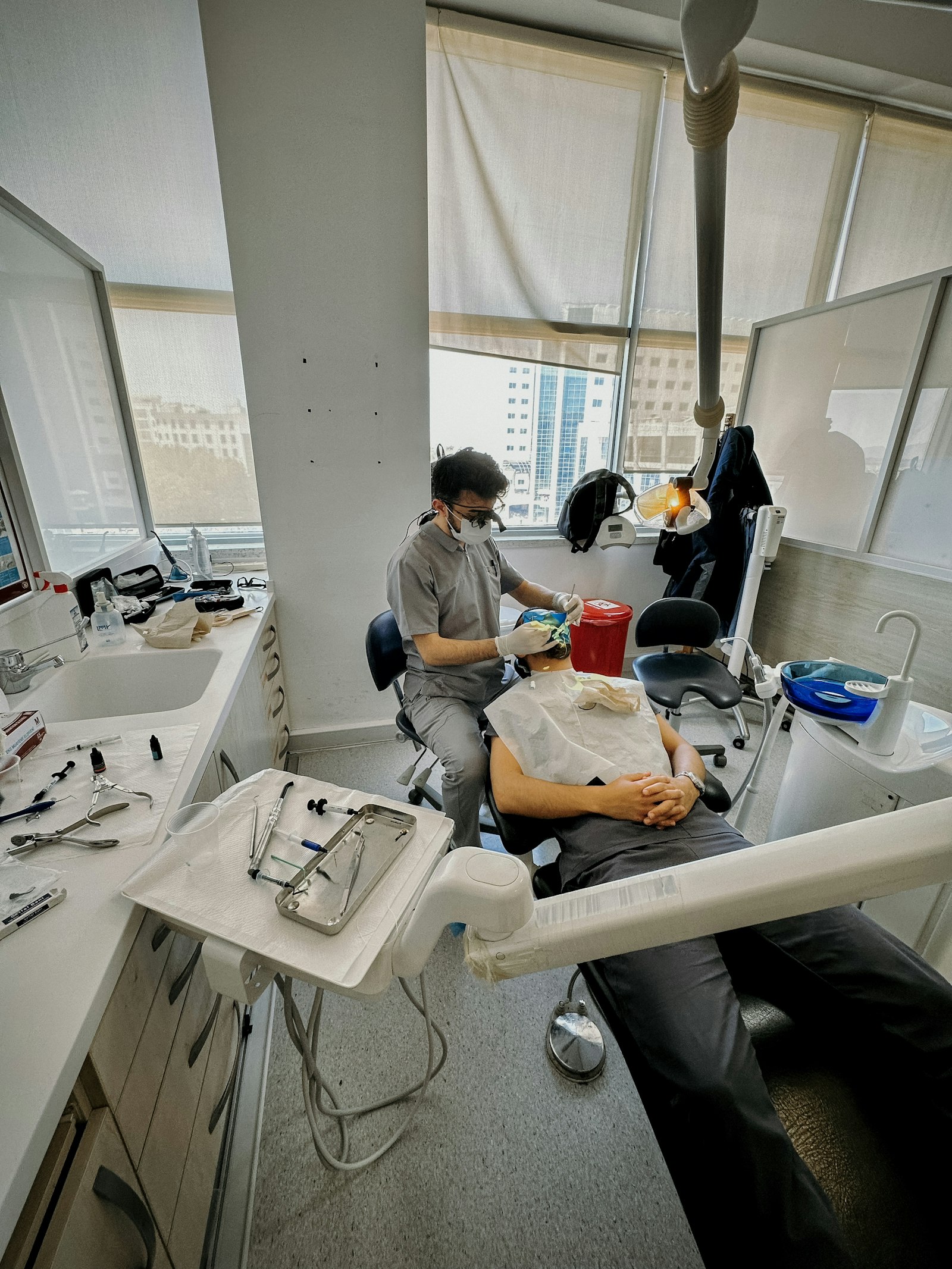
The NSW Health policy on eligibility for public oral health care sets separate tests for adults and children.
Adults (18 and over) must live in NSW, be eligible for Medicare, and hold, or be listed as a dependant on, an eligible Australian Government concession card, such as a Health Care Card or Pensioner Concession Card. A NSW state discount card for older residents does not qualify on its own.
Children and young people under 18 must live in NSW and be eligible for Medicare. A parent or guardian signs a Child Dental Benefits Schedule bulk billing consent form, even if the child is not eligible for that scheme or has used up the benefit. NSW public dental care is free for all children under 18 with a Medicare card.
When you arrive, you show your Medicare card and, for adults, your concession card. Digital cards through myGov or the Express Plus Medicare app may be accepted, and staff may ask for a second form of identification such as a driver licence or NSW Photo Card.
When you are seeking asylum and cannot show eligibility
The same NSW policy contains a provision that many people never hear about. A person seeking asylum who cannot prove eligibility may be given an episodic course of emergency or urgent dental care, at the discretion of the local oral health service. Proof of eligibility is not required, but the person must be referred by a recognised agency, and further treatment is considered case by case. In practice that means asking your settlement service, refugee health service or a support organisation to make the referral, rather than presenting on your own.
Medicare eligibility for people on bridging visas varies with the visa and the stage of the application. A dental practice cannot work this out for you. Services Australia, your caseworker or a refugee legal service can.
One phone number gets you into the public system
NSW public dental services are not walk-in clinics. You start by calling the statewide number, 1800 679 336. A staff member asks a set of questions about pain, swelling, medical conditions and your circumstances, and uses the answers to decide how soon you should be seen. Tell them at the start of the call if you need an interpreter. Interpreter help is also available through the Translating and Interpreting Service on 131 450.
Before you call, have your Medicare number and concession card details ready, and be ready to say if you are in pain or have swelling.
Urgent problems and routine care move at different speeds
People in pain sometimes do not call because they have heard the public waiting list is long. The long wait applies to routine care. Urgent problems are assessed separately under the NSW Health oral health access policy (PD2024_034), which sets these recommended maximum waiting times for adults:
- A dental emergency, such as facial swelling that seems to come from a tooth, recent injury to the teeth or bleeding that will not stop after an extraction: 1 day.
- Tooth pain that wakes you at night: 7 days.
- Tooth pain during the day: 30 days.
Routine care for adults can have a recommended maximum wait of up to 545 days. Refugees and asylum seekers are named in the policy as a priority population, along with some other groups. These are targets set by NSW Health, not guaranteed appointment dates, and waits differ between districts. Since the 2024 revision there is a single waiting list, so you can be treated for an urgent problem while you wait for a full course of care.
If you have swelling spreading to the eye or neck, a high fever, or trouble swallowing or breathing, go straight to a hospital emergency department.
Vouchers for private clinics
Sometimes the public service gives an eligible patient a voucher to have specific treatment at a participating private clinic, under the NSW Oral Health Fee for Service Scheme. Take the voucher and your identification to the clinic named on it, or ask the public service which clinics take part.
Getting an interpreter at the dentist
In NSW public health services, the clinic arranges a professional health care interpreter for you. You cannot book one yourself, so ask when the appointment is made.
For private dental appointments, the Translating and Interpreting Service (TIS National) on 131 450 provides phone interpreting. Ask the clinic when you book how they arrange an interpreter and whether there is any cost. Family members can help with simple things like directions, though for consent and treatment discussions a professional interpreter is safer. Our article on interpreters and language support at the dentist explains the options in more detail.

A first dental visit in Australia is mostly talking and looking
Dental care may have worked differently where you lived before. At a first appointment, the dentist or OHT asks about your health and any medicines, looks at your teeth, gums, tongue and the inside of your cheeks, and often takes X-rays. Treatment usually starts at a later visit, unless you are in pain and want it fixed straight away.
You can ask for everything to be explained before it happens, take breaks, and stop at any point. Many people who have been through difficult experiences find that going slowly makes dental visits easier, and a good dental team will expect that request. Our guides to an adult first dental visit and managing dental anxiety describe what happens in more detail.
Why dental problems build up after displacement
Research from many countries shows the same pattern. A 2016 scoping review in Globalization and Health (Keboa and colleagues) found that refugee populations carried a higher burden of oral disease and had less access to care than even the least advantaged groups in their host countries. A 2024 scoping review in Frontiers in Oral Health (Asfari and colleagues) found that language, cost, unfamiliar systems and cultural differences were the main barriers once people had resettled.
The cause is interrupted access, not a lack of care about teeth. Housing, school enrolment, English classes and work all compete for attention in the first years. People who are homeless or have been in custody face similar gaps, as we describe in dental care when you are homeless and dental care in prison and after release.
What people ask us
Is dental care free for refugees?
Not automatically. Public dental care in NSW is free for adults who meet the eligibility rules, which depend on Medicare and a concession card, and for children under 18 with a Medicare card. Refugee status can affect how you are prioritised, but it is not the eligibility test.
What should I bring to a dental appointment?
Your Medicare card, your concession card if you have one, and photo identification. Bring a list of your medicines and any letters from doctors. A parent or guardian should come with a child.
Can I see a private dentist instead?
Yes. Private dentists charge fees, and private health insurance, if you have it, may cover part of the cost. Ask for a written estimate before treatment starts.
Where to go from here
Rules about Medicare, visas and eligibility change, so check your own situation with Services Australia or your settlement provider. For public dental care, including urgent problems, call 1800 679 336.
Lumi Dental in Melrose Park is a private practice. We cannot decide Medicare or visa eligibility and we do not replace the public system, but we can see you for a general check-up and examination and explain what we find in plain language. If you need an interpreter, mention it when you book. Our current offers page shows what is available for new patients.
Sources
- NSW Health. PD2026_023 Eligibility for Public Dental Services. health.nsw.gov.au
- NSW Health. PD2024_034 Oral Health Access. health.nsw.gov.au
- NSW Health. NSW public dental services. health.nsw.gov.au
- Keboa MT, Hiles N, Macdonald ME. The oral health of refugees and asylum seekers: a scoping review. Global Health. 2016. PubMed
- Asfari E, et al. Exploring refugees' experience of accessing dental health services in host countries: a scoping review. Front Oral Health. 2024. PubMed
This article is general information only and is not a substitute for an examination, and it is not migration, visa or legal advice. Please speak with a dental practitioner about your own situation.