

Yes, most people taking an antidepressant can have dental implants, but selective serotonin reuptake inhibitors (SSRIs) have been linked in research with a higher implant failure rate, so planning starts with your medicine list, a letter to your prescriber and a closer look at bone, gums, grinding and dry mouth before surgery is booked. A cohort study in the Journal of Dental Research reported that around 10.6% of implants failed in patients taking SSRIs compared with around 4.6% in non-users, and a meta-analysis pooling 11 studies reported roughly two and a half times the failure risk with antidepressant use, both observational findings with real limitations. This is the deep dive promised in our guide to antidepressants and your teeth, and nothing in it is a reason to change a medicine: that decision sits with the doctor who prescribes it.
Written by Dr James Tran, BDent (University of Sydney), MICOI, GradDip (Oral Implants), general dentist at Lumi Dental in Melrose Park.
The short version
- Research has reported a higher dental implant failure rate in people taking SSRIs; the studies are retrospective and cannot separate the medicine from smoking, grinding or gum disease.
- The proposed mechanism is serotonin's role in bone: SSRIs have been reported to reduce bone formation, and implants rely on bone healing onto the surface.
- Other groups bring their own checks: dry mouth with SSRIs, SNRIs and tricyclics, teeth grinding with some SSRIs, and care with local anaesthetic for tricyclics.
- The dentist never stops or changes an antidepressant. The team at Lumi Dental writes to your GP or specialist before planning surgery.
- What changes is the planning: bone measured on a 3D X-ray, grinding and dry mouth managed, gums settled, and healing given time before the implant carries load.
- Most implants in antidepressant users still succeed.
What the research reports on SSRIs and implant failure
The study most often quoted is a retrospective cohort from McGill University in the Journal of Dental Research. It followed 916 implants in 490 patients, 51 of them taking an SSRI, for three to 67 months. Ten of the 94 implants in SSRI users failed, against 38 of the 822 in non-users, giving failure rates of around 10.6% and 4.6%. The hazard ratio was large but came with a very wide confidence interval, which means the true size of the effect is uncertain. Smaller-diameter implants (4 mm or less) and smoking were also associated with failure, and the authors could not tell from patient files what dose was taken or for how long.
Two systematic reviews have pooled the studies since. One in the International Journal of Oral and Maxillofacial Surgery combined five observational studies, around 2,000 participants and 5,300 implants, and calculated a risk ratio of about 3.7 for antidepressant users, but concluded that the studies lacked methodological rigour, leaving insufficient evidence for a firm association. A later review in the International Journal of Oral and Maxillofacial Implants pooled 11 studies and reported a risk ratio of around 2.4, with SSRI users, alone or combined with other antidepressants, at higher risk than people on no antidepressant. It noted limited evidence that sertraline may have more influence than other SSRIs, and called for further studies.
How I read this for a patient in the chair: the association keeps turning up, its size is uncertain, and none of these studies can prove the tablet is the cause rather than the company it keeps, since depression and anxiety travel with smoking, clenching, poor sleep, dry mouth and missed check-ups. Our guide to dental implant failure signs explains what failure looks like.
Why serotonin matters to bone
An implant succeeds when bone grows onto its surface and locks it in place, a process called osseointegration. The McGill authors framed their study around the observation that SSRIs have been reported to reduce bone formation and increase fracture risk, and that osseointegration depends on bone metabolism, so a drug that changes serotonin signalling in bone could plausibly slow early healing.
A review of oral health in patients on antidepressant therapy adds the soft-tissue side. Serotonin contributes to collagen synthesis, fibroblast growth and new blood vessel formation, and SSRIs reduce platelet aggregation, which the authors suggest may slow tissue repair. All of this is proposed mechanism rather than settled fact. Our article on how dental implants fuse to bone explains the healing timeline this could affect.
SNRIs, tricyclics and the other groups
The failure research is mostly about SSRIs, but the planning checks apply across the antidepressant classes. The same review describes salivary gland hypofunction as one of the most consistent side effects of antidepressant therapy, across SSRIs, SNRIs and tricyclics. A dry mouth loses its natural cleansing, so more plaque sits around the implant and more decay starts beside it. Bruxism is reported with some SSRIs, fluoxetine among them, and clenching loads an implant in a way a natural tooth, with its shock-absorbing ligament, tolerates better.
Tricyclics such as amitriptyline, along with bupropion and St John's wort, may potentiate the cardiovascular effects of adrenaline, so the local anaesthetic is chosen and dosed with that in mind. Anti-inflammatory painkillers combined with an SSRI may add to bleeding, which shapes the pain relief after surgery, though the bleeding risk from SSRIs themselves appears small: the review cites 92 SSRI users having 145 invasive procedures with a single return visit for bleeding. Our guide to implants when you grind your teeth covers the night guard side.

What the implant team checks first
In my experience the medicine list is where the consultation starts, and it is a list rather than a single name: the antidepressant, anything for sleep or anxiety, bone medicines, blood thinners and whatever is bought over the counter. Then the dentist looks at the things the research cannot separate from the medicine, the same checks our article on who is a candidate for implants describes for smoking, diabetes and bone.
| Factor | Why it matters for an implant | What is usually done |
|---|---|---|
| SSRI or other antidepressant | Research has reported a higher failure rate; bone healing may be slower | Letter to the GP or specialist; medicine never changed by the dentist; generous healing time |
| Teeth grinding or clenching | Overloads a healing implant; can loosen or fracture parts later | Night guard made; implant kept out of heavy load early |
| Dry mouth | More plaque, decay beside the implant, gum inflammation | Saliva substitutes, fluoride, water sipping, shorter cleaning recall |
| Gum disease, past or present | The main risk indicator for bone loss around implants | Gum therapy and stable gums before surgery |
| Smoking | Associated with failure in the same cohort study | Support to cut down or stop around surgery |
| Bone volume and density | Decides implant size and whether grafting is needed | 3D X-ray (CBCT) measurement; wider or longer implant where bone allows |
The letter to your doctor is not a request to change anything; it tells the prescriber what is planned and asks whether there is anything about your health the dentist should know.
The single rule: if you take an antidepressant, plan the implant slowly
Slow planning is the practical response to an uncertain risk. For patients on an SSRI I usually prefer the widest and longest implant the bone comfortably allows, given the cohort finding on small-diameter implants, and I lean towards a conventional healing period under the gum rather than fitting a tooth on the day of surgery. A night guard is made where there is any sign of grinding, dry mouth is managed from the first visit, and the maintenance recall is set at three to four months for the first year.
How we approach this at Lumi Dental
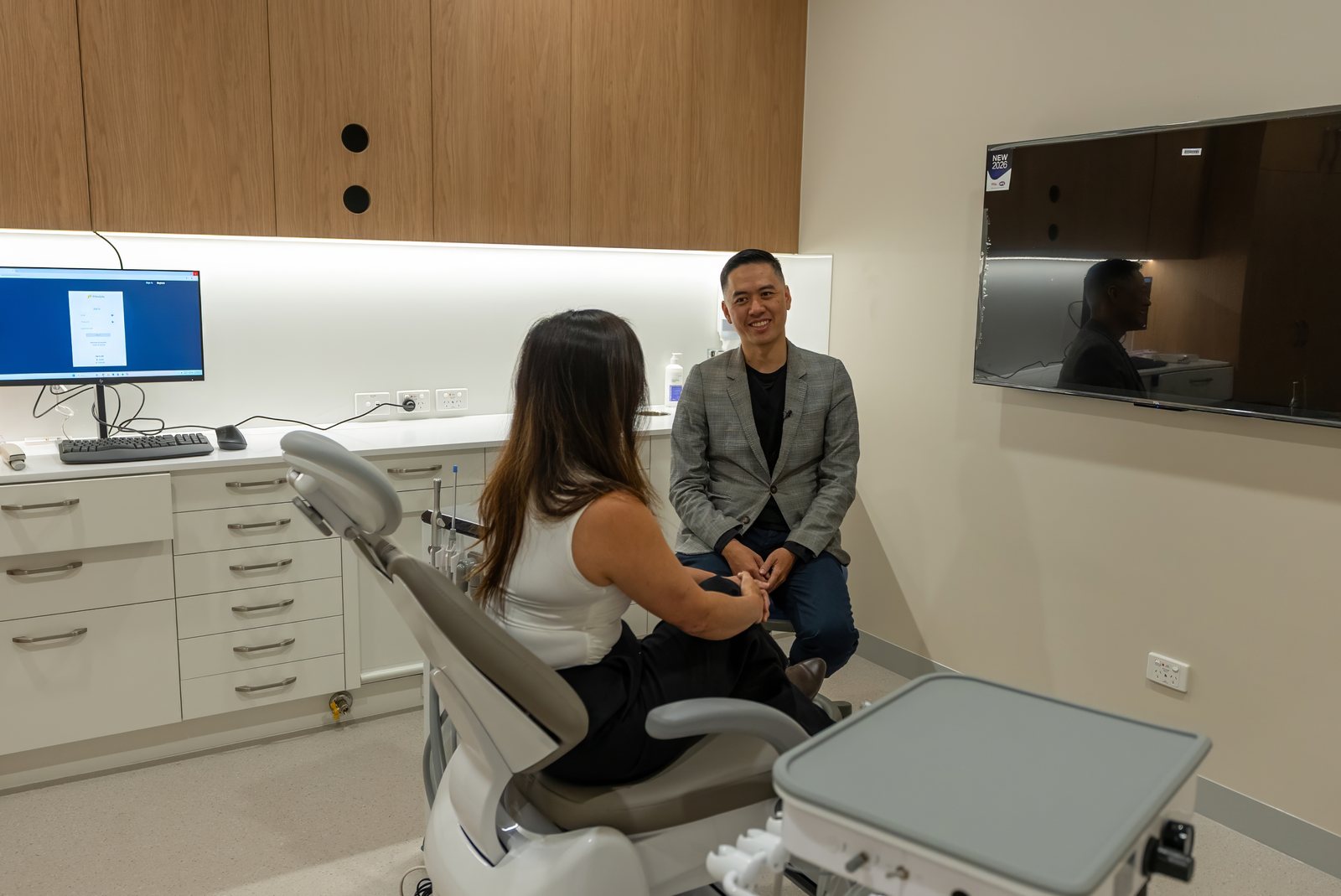
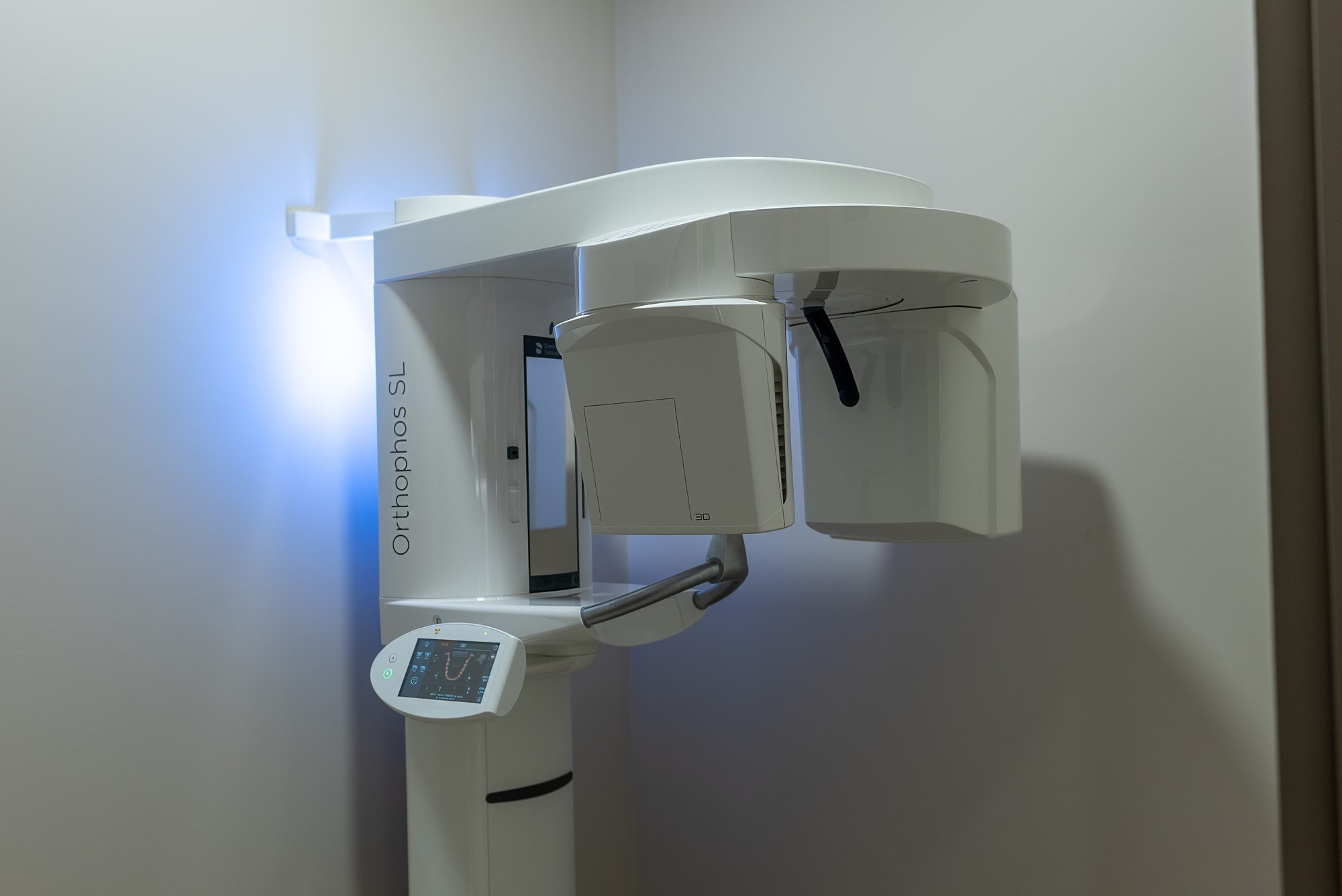
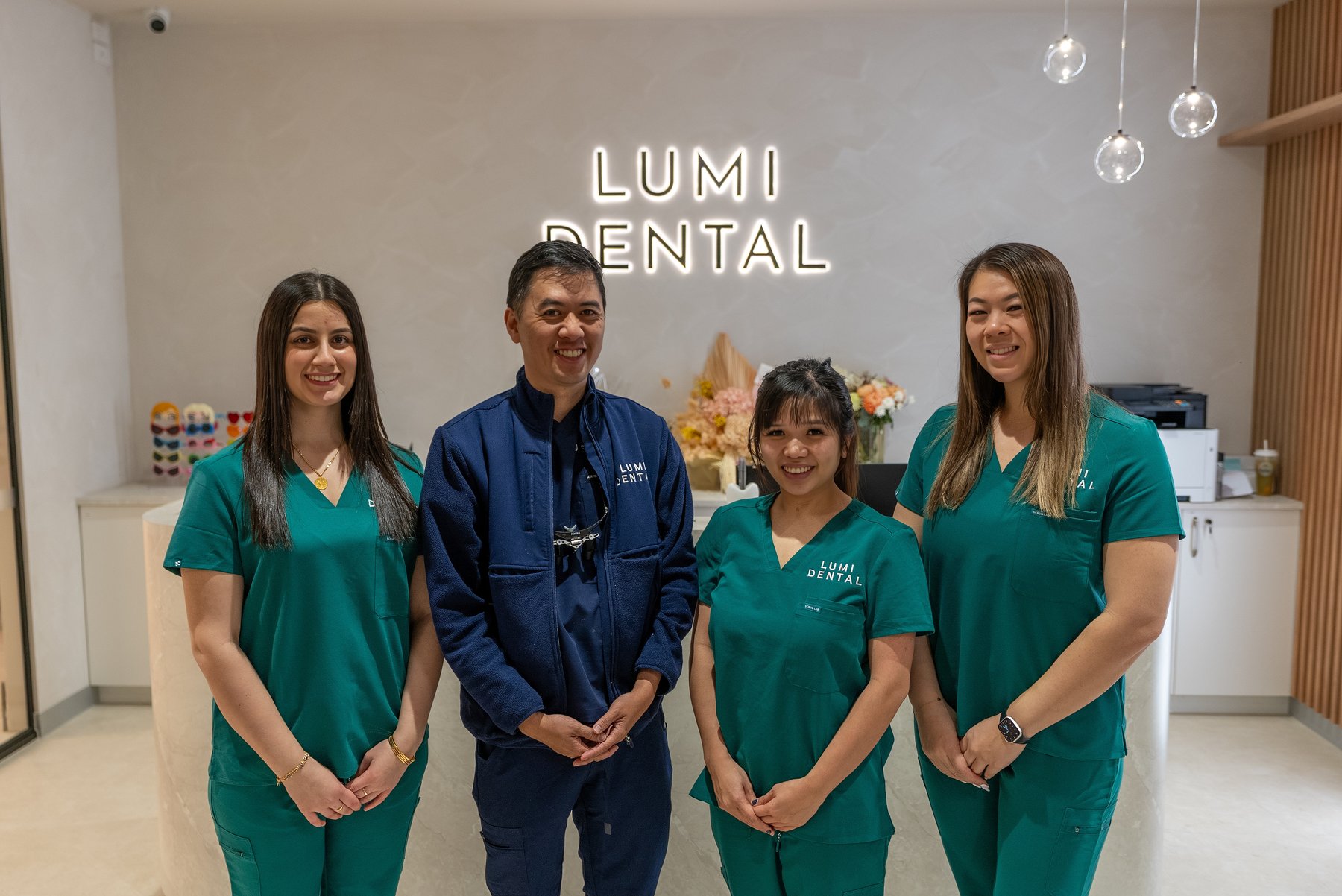
At Lumi Dental in Melrose Park an implant consultation begins with a full medicine history, an examination by a dentist, a 3D intraoral scan and an in-house 3D X-ray (CBCT) to measure the bone. The team at Lumi Dental writes to your GP or specialist before planning surgery, and the oral health therapists settle any gum inflammation and set up a dry-mouth and cleaning routine before the implant date. Patients who find surgery hard to face can ask about IV sedation, which is available at the practice. Read more about dental implants at Lumi Dental.
Questions patients ask
Can I get dental implants if I take antidepressants?
Usually, yes. Antidepressant use is a factor the dentist plans around, not a bar to treatment, and most implants in people on these medicines heal normally. Expect a letter to your prescriber and extra attention to bone, gums and grinding.
Do SSRIs cause dental implants to fail?
Research has reported a higher failure rate in SSRI users, around 10.6% against 4.6% in one cohort, but the studies are observational and cannot prove the medicine is the cause rather than smoking, clenching or gum disease. It is a reason for careful planning, not a prediction.
Should I stop my antidepressant before implant surgery?
No, not without talking to the doctor who prescribes it. The dentist never stops or changes an antidepressant; the team at Lumi Dental writes to your GP or specialist before planning surgery so the decision stays with them.
Does sertraline affect dental implants more than other antidepressants?
One meta-analysis reported limited evidence that sertraline may have more influence on implant failure than other SSRIs, and said further studies were needed. It is a note for the planning conversation, not a reason to change medicines.
Do antidepressants slow healing after implant surgery?
Reviews describe delayed wound healing and dry mouth as possible effects, while bleeding problems after procedures appear rare. Good cleaning, saliva support and a longer healing period are the usual answers; our guide to dry mouth covers the saliva side.
Taking an antidepressant and considering implants? Complimentary implant consult in Melrose Park
If you take an antidepressant and have been wondering whether an implant is still an option, the team at Lumi Dental in Melrose Park can go through your medicine list, measure the bone on a 3D X-ray and write to your doctor before anything is planned. Contact Lumi Dental to book a complimentary implant consult, or read about dental implants at the practice. Patients visit from Ryde, Parramatta, Ermington and Rydalmere, with on-site parking.
Sources
- PubMed (Journal of Dental Research): Selective serotonin reuptake inhibitors and the risk of osseointegrated implant failure, a cohort study
- PubMed (International Journal of Oral and Maxillofacial Implants): The effect of antidepressants on dental implant failure, a systematic review and meta-analysis
- PubMed (International Journal of Oral and Maxillofacial Surgery): Is there an association between the use of antidepressants and complications involving dental implants? A systematic review and meta-analysis
- PMC: Oral health considerations in patients receiving antidepressant therapy, clinical implications and management strategies
About the author

Dr James Tran is a general dentist at Lumi Dental in Melrose Park. He holds a BDent from the University of Sydney and a Graduate Diploma in Oral Implants, and is a Member of the International Congress of Oral Implantologists (MICOI).
This article is general information only and is not a substitute for an examination and individual advice from a registered dental practitioner. Suitability for any treatment varies from person to person.








